


Close Menu
Savannah HeraldSavannah Herald
    We're Social
    • Twitter
    • Facebook
    • YouTube

    Subscribe to Updates

    Get the latest creative news from FooBar about art, design and business.

    Trending
    • Mathematicians stunned by AI’s biggest breakthrough in mathematics yet
    • Lincolnville (South Carolina) Hometown Festival – Savannah Herald
    • Risk of snakebites increasing as reptiles adapt to changing world, says study | Snakes
    • USMNT’s Chris Richards has torn ligaments in ankle, putting World Cup status in doubt | USA
    • Easy Blueberry Vodka Lemonade – Kenneth Temple
    • Diabolic review – Mormon-country horror takes ayahuasca down to the creepy cellar | Movies
    • The Malbon x HVN Collab Brings the Cool Girls to the Golf Course
    • ChudTheBuilder is not inevitable or permanent
    Facebook X (Twitter) Instagram YouTube
    Login
    Savannah HeraldSavannah Herald
    Savannah HeraldSavannah Herald
    Home » Risk of snakebites increasing as reptiles adapt to changing world, says study | Snakes
    Health

    Risk of snakebites increasing as reptiles adapt to changing world, says study | Snakes

    Savannah HeraldBy Savannah HeraldMay 21, 20264 Mins Read
    Facebook Twitter Pinterest LinkedIn WhatsApp Reddit Tumblr Email
    Risk of snakebites increasing as reptiles adapt to changing world, says study | Snakes
    Share
    Facebook Twitter LinkedIn Pinterest Email

    Health Watch: Wellness, Research & Healthy Living Tips

    Key takeaways
    • Study published in PLOS Neglected Tropical Diseases mapped 508 medically important snakes at 1 km², projecting human overlap to 2050 and 2090.
    • Most species, including puff adders, coral snakes and copperheads, face habitat loss and possible extinction from heat and land conversion.
    • Deadly snakes like cottonmouth, kraits and black mamba are projected to move into densely populated regions, exposing unprepared communities.
    • Findings can guide where to stockpile antivenom, bolster healthcare access, and prioritize conservation and preparedness in high-risk areas.

    The risk of snakebites is increasing across the world as reptiles shift their habitats to cope with rising temperatures and growing human pressures, a study of venomous snakes has found.

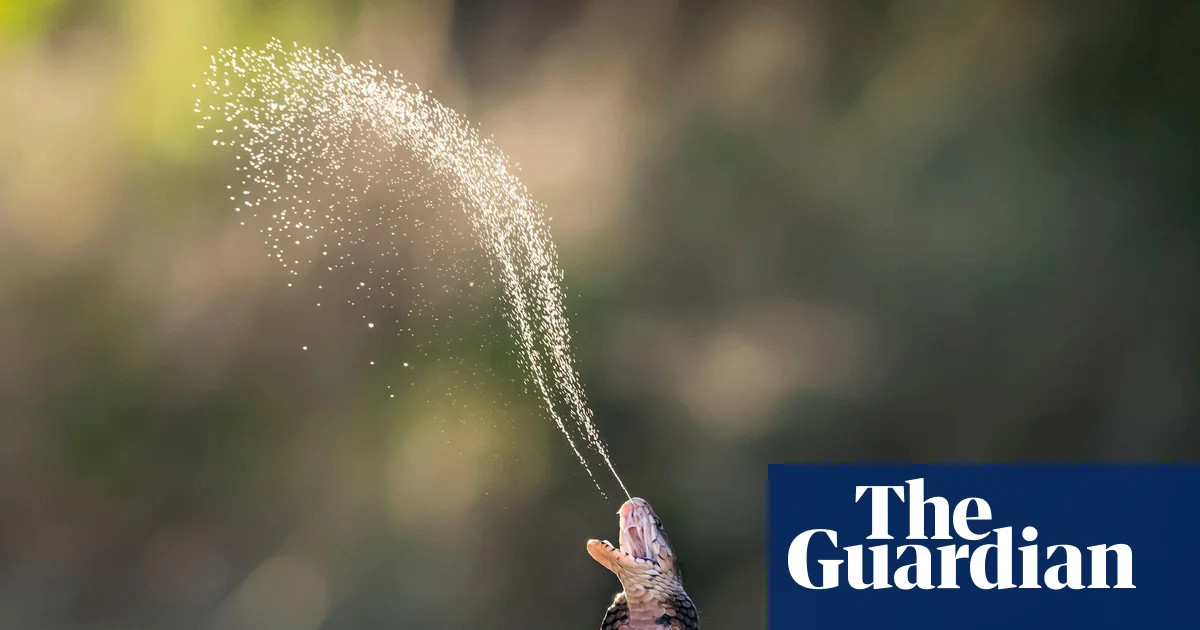
    Spitting cobras in Africa, vipers in Europe and South America, cottonmouth moccasins in North America and kraits in Asia are coming into greater contact with people as a result of climate disruption and landscape change, according to the research, which was led by the World Health Organization.

    This trend is forecast to become more pronounced in the coming decades as snakes – like many other species – adjust their range to escape hotter conditions.

    Most species will suffer a decline of habitat, but a significant number of the deadliest snakes are likely to spread more widely, taking them into areas where they have not been seen before and potentially affecting billions of people.

    “The overlap between humans and venomous snakes will be greater,” said one of the authors, David Williams of the WHO and the University of Melbourne. “You could consider this a risk of walking out of the back door, stumbling and getting bitten.”

    Snakebite statistics are sketchy because many happen in remote areas and go unreported. But the authors of the new paper say there are about 4m cases every year, mostly in the tropics. The vast majority are not dangerous, but there are 138,000 deaths and 400,000 disabilities annually – almost half of which occur in south Asia. Until now the distribution of risk was understood at a local or national level, with little analysis of how this could alter in the future as a result of climate and demographic trends.

    The study, published in PLOS Neglected Tropical Diseases on Thursday, aims to fill that knowledge gap. Using public and private databases, citizen science platforms, museum records, scientific literature and expert observations, the researchers mapped the distributions of all 508 medically important snake species across the planet to a granularity of 1 sq km. They then projected how rising temperatures would alter their overlap with human populations by 2050 and 2090.

    They found the greatest risk was to the snakes themselves. Most species, including puff adders in Africa, coral snakes in the Amazon and copperheads in Papua New Guinea and Australia, will struggle as a result of hotter weather and the conversion of forests, wetland and grasslands into ranches, monocultures and towns. Some could be pushed closer to extinction.

    Others are likely to move. The black mamba, for example, is expected to retreat from the coast of Kenya and many areas of Ethiopia, Eritrea, Congo and Djibouti and expand in South Africa and parts of Nigeria and Somalia.

    The black mamba could expand in South Africa and parts of Nigeria and Somalia. Photograph: blickwinkel/Alamy

    In some cases, the shift of range is likely to take venomous snakes into places where human populations are unaccustomed to such a threat. Cottonmouth moccasins in the US are forecast to head as far north as New York. Kraits in Asia could migrate from the forests of Myanmar and the Chinese province of Yunnan to the densely populated central and northern cities of China. The European viper, which is found in the UK, is expected to have more human encounters, though other types of viper may decline. In India, which registers about 60,000 snakebite deaths each year, the deadliest snakes – including common cobras, Russell’s vipers and kraits – are projected to move from the south to the north, which has more people.

    “In 50 years, species will appear where they have not been found before, putting them into contact with people who have not been used to this particular problem in the past,” Williams said. He predicted that in some countries there would be encounters in farmyards or near water sources. In others, near playgrounds or running tracks.

    Dangers are amplified in poor, remote areas where people work barefoot in fields and have little access to healthcare. Wealthier countries such as Australia have many venomous species of snake but very low mortality rates because farm workers are more likely to wear boots, use tractors and live close to clinics with antivenoms.

    The researchers say the new study should help health authorities to target resources on areas at high risk and to prepare for the changes that lie ahead – for both humans and snakes.

    “Our predictions can be used to decide where to stockpile which antivenom, how to ensure adequate capacity of individual health facilities, how to improve healthcare accessibility of remote at-risk communities, and where to focus conservation efforts for threatened snake species,” the authors said in a statement.

    Read the full article on the original source


    Disease Prevention Fitness and Nutrition Fitness Trends Health News Health Policy Healthcare Innovation Healthy Habits Healthy Living Immune Health Lifestyle Medicine Medical Breakthroughs medical research Men's health Mental Health Awareness Nutrition News Public health Self-Care Strategies Stress Management Wellness Tips Women's health
    Share. Facebook Twitter Pinterest LinkedIn WhatsApp Reddit Tumblr Email
    Savannah Herald
    • Website

    Related Posts

    Local May 21, 2026

    Mathematicians stunned by AI’s biggest breakthrough in mathematics yet

    Health May 21, 2026

    Our Promise to You on What Would’ve Been the 53rd Anniversary of Roe v Wade

    Local May 20, 2026

    Can we harness quantum effects to create a new kind of healthcare?

    Health May 20, 2026

    The mysterious reason why women get hotter from age 18 to 42

    Health May 20, 2026

    The State of Healthcare Access in Georgia: What’s Working—and What Still Needs to Change

    Health May 20, 2026

    Polycystic Ovary Syndrome (PCOS) Is Now PMOS

    Comments are closed.

    Don't Miss
    Local October 6, 2025By Savannah Herald02 Mins Read

    Public Hearing | Fiscal Year 2026 Budget – November 3 & 17, 2025

    October 6, 2025

    City of Pooler Area Update: The City of Pooler is pleased to reveal the upcoming…

    Performance Under Pressure: What African Leaders Must Unlearn to Endure – African Business Innovation

    April 18, 2026

    The Source |Honoring 101 Years Of Malcolm X, A Legacy That Still Speaks Truth To Power

    May 19, 2026

    Pat Neely ~ Beyond The Grill

    April 15, 2026

    How to get No Man’s Sky Voyagers Twitch Drops campaign rewards – Destructoid

    September 3, 2025
    Archives
    • May 2026
    • April 2026
    • March 2026
    • February 2026
    • January 2026
    • December 2025
    • November 2025
    • October 2025
    • September 2025
    • August 2025
    • July 2025
    • June 2025
    • May 2025
    • April 2025
    • March 2025
    • February 2025
    Categories
    • Art & Literature
    • Beauty
    • Black History
    • Business
    • Climate
    • Education
    • Employment
    • Entertainment
    • Faith
    • Fashion
    • Food
    • Gaming
    • Georgia Politics
    • HBCUs
    • Health
    • Health Inspections
    • Investing
    • Lifestyle
    • Local
    • Lowcountry News
    • National
    • National Opinion
    • News
    • Politics
    • Real Estate
    • Senior Living
    • Sports
    • State
    • Tech
    • Transportation
    • Travel
    • World
    Savannah Herald Newsletter

    Subscribe to Updates

    A round up interesting pic’s, post and articles in the C-Port and around the world.

    About Us
    About Us

    The Savannah Herald is your trusted source for the pulse of Coastal Georgia and the Low County of South Carolina. We're committed to delivering timely news that resonates with the African American community.

    From local politics to business developments, we're here to keep you informed and engaged. Our mission is to amplify the voices and stories that matter, shining a light on our collective experiences and achievements.
    We cover:
    🏛️ Politics
    💼 Business
    🎭 Entertainment
    🏀 Sports
    🩺 Health
    💻 Technology
    Savannah Herald: Savannah's Black Voice 💪🏾

    Our Picks

    Shingles vaccine linked with decrease threat of many frequent coronary heart issues

    May 2, 2026

    Living a Jewish life means leaving traces along the trail

    November 20, 2025

    French surgeon sentenced to 20 years for sex abuse of nearly 300 people | Sexual Assault News

    August 28, 2025

    Godfather of AI Says 2026 Could Be the “Job Shock” Year | Vantage with Palki Sharma

    January 2, 2026

    Fire Breaks Out at an Information Facility Rented by Elon Musk’s X

    August 28, 2025
    Categories
    • Art & Literature
    • Beauty
    • Black History
    • Business
    • Climate
    • Education
    • Employment
    • Entertainment
    • Faith
    • Fashion
    • Food
    • Gaming
    • Georgia Politics
    • HBCUs
    • Health
    • Health Inspections
    • Investing
    • Lifestyle
    • Local
    • Lowcountry News
    • National
    • National Opinion
    • News
    • Politics
    • Real Estate
    • Senior Living
    • Sports
    • State
    • Tech
    • Transportation
    • Travel
    • World
    Copyright © 2002-2026 Savannahherald.com All Rights Reserved. A Veteran-Owned Business

    Type above and press Enter to search. Press Esc to cancel.

    Manage Consent
    To provide the best experiences, we use technologies like cookies to store and/or access device information. Consenting to these technologies will allow us to process data such as browsing behavior or unique IDs on this site. Not consenting or withdrawing consent, may adversely affect certain features and functions.
    Functional Always active
    The technical storage or access is strictly necessary for the legitimate purpose of enabling the use of a specific service explicitly requested by the subscriber or user, or for the sole purpose of carrying out the transmission of a communication over an electronic communications network.
    Preferences
    The technical storage or access is necessary for the legitimate purpose of storing preferences that are not requested by the subscriber or user.
    Statistics
    The technical storage or access that is used exclusively for statistical purposes. The technical storage or access that is used exclusively for anonymous statistical purposes. Without a subpoena, voluntary compliance on the part of your Internet Service Provider, or additional records from a third party, information stored or retrieved for this purpose alone cannot usually be used to identify you.
    Marketing
    The technical storage or access is required to create user profiles to send advertising, or to track the user on a website or across several websites for similar marketing purposes.
    • Manage options
    • Manage services
    • Manage {vendor_count} vendors
    • Read more about these purposes
    View preferences
    • {title}
    • {title}
    • {title}
    Ad Blocker Enabled!
    Ad Blocker Enabled!
    Our website is made possible by displaying online advertisements to our visitors. Please support us by disabling your Ad Blocker.

    Sign In or Register

    Welcome Back!

    Login below or Register Now.

    Lost password?

    Register Now!

    Already registered? Login.

    A password will be e-mailed to you.