


Close Menu
Savannah HeraldSavannah Herald
    • Home
    • News
      • Local
      • State
      • National
      • World
      • HBCUs
    • Events
    • Directories
    • Weather
    • Traffic
    • Sports
    • Politics
    • Lifestyle
      • Faith
      • Senior Living
      • Health
      • Travel
      • Beauty
      • Fashion
      • Food
      • Art & Literature
    • Business
      • Real Estate
      • Entertainment
      • Investing
      • Education
    • Guides
      • Summer Camp Guide
      • Juneteenth Guide
      • Black History Savannah
      • MLK Guide Savannah
    We're Social
    • Twitter
    • Facebook
    • YouTube

    Subscribe to Updates

    Get the latest creative news from FooBar about art, design and business.

    Trending
    • ‘Grandpa Thinks It’s the 1960s’: White Man Caught on Video Using N-Word with Hard ‘R’ Sparks Backlash Online and Condemnation from New York Restaurant
    • Science educator helps Pakistani children ‘imagine solutions’
    • Greatest science books: How Rachel Carson’s Silent Spring changed the world in 1962
    • Wall Street Is Going Gaga for SpaceX
    • Karl-Anthony Towns says he felt late mother’s presence in NBA Finals Game 1
    • Nick Bilton, New ‘60 Minutes’ Chief, Pledges Independence
    • Perfect Vegan Strawberry Muffins | Jessica in the Kitchen
    • Deadly Listeria outbreak traced to Clover Hill cheese
    Facebook X (Twitter) Instagram YouTube
    Login
    Savannah HeraldSavannah Herald
    Savannah HeraldSavannah Herald
    Home » Greatest science books: How Rachel Carson’s Silent Spring changed the world in 1962
    Health

    Greatest science books: How Rachel Carson’s Silent Spring changed the world in 1962

    Savannah HeraldBy Savannah HeraldJune 4, 20265 Mins Read
    Facebook Twitter Pinterest LinkedIn WhatsApp Reddit Tumblr Email
    Greatest science books: How Rachel Carson's Silent Spring changed the world in 1962
    Share
    Facebook Twitter LinkedIn Pinterest Email

    Health Watch: Wellness, Research & Healthy Living Tips

    Key takeaways
    • Silent Spring exposed how pesticides spread through soil, water, and air, killing wildlife and harming human health.
    • She emphasized ecological interconnectedness, showing poisons move through food webs and disrupt symbiosis like fungal-root relationships.
    • Her bravery and scientific rigor withstood chemical industry attacks, offered pest-control alternatives, and foresaw broader environmental threats like climate change.

    How does Rachel Carson’s Silent Spring hold up today?

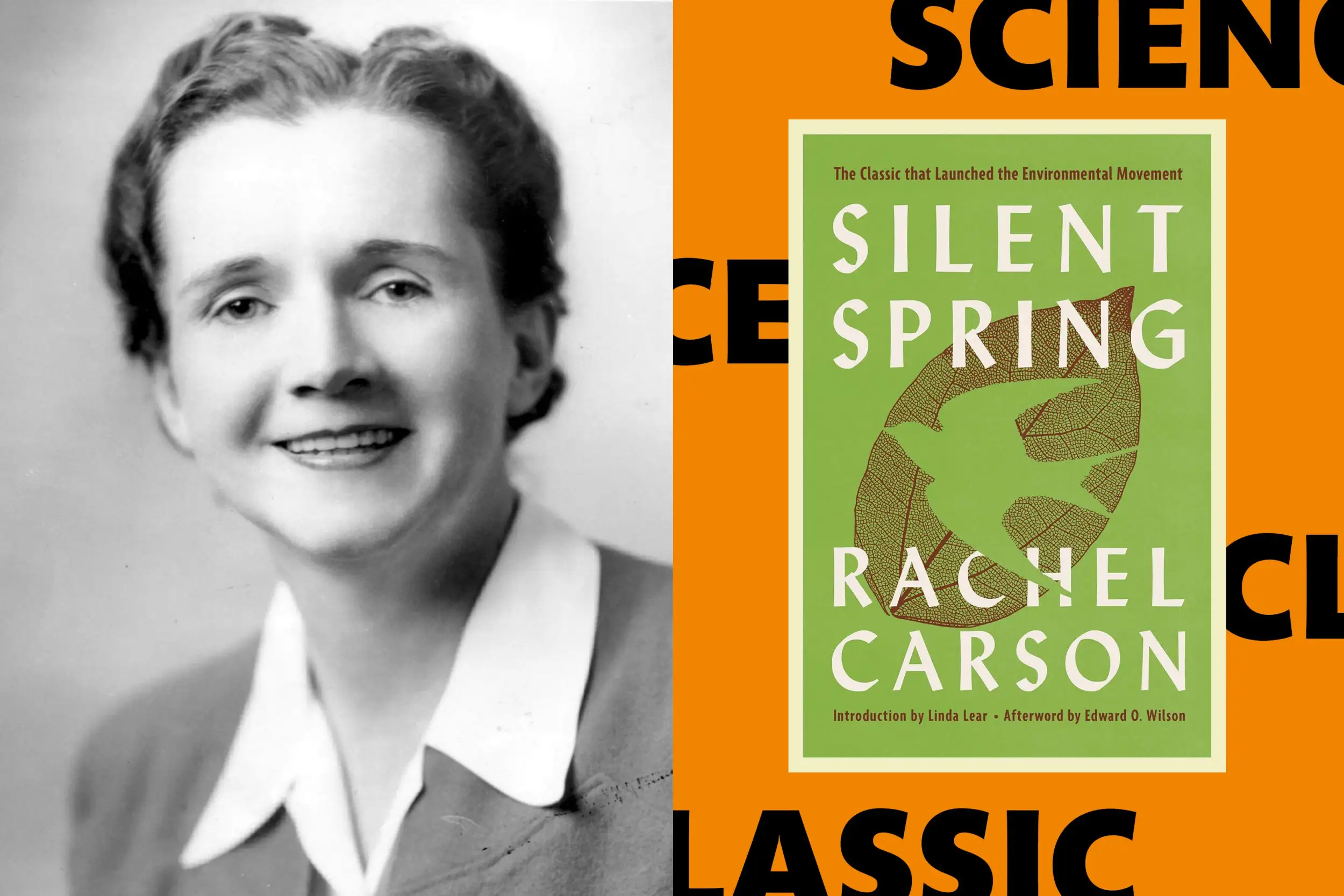
    Rachel Carson was a marine biologist who wrote three books about life in the ocean, before a letter, published in The Boston Herald, prompted a change of focus. The letter described the deadly impact of the pesticide DDT (dichlorodiphenyltrichloroethane) on a bird population in Massachusetts. Carson set off to research the environmental effects of pesticides: she pencilled in “Silent Spring” as the title for a chapter on birds, but her agent suggested that it worked for the book as a whole.

    And what a move that was. Silent Spring was pivotal in a way very few books are, birthing the modern environmental movement. As the writer Margaret Atwood has said, people thought one way before Carson’s book was published in 1962 and another way after it. President John F. Kennedy was moved to order an investigation into the effects of DDT and other pesticides, citing Silent Spring as the reason why. The book led to the creation of the Environmental Protection Agency in 1970, and also inspired laws like the US Clean Air Act (1963), the Wilderness Act (1964), the National Environmental Policy Act (1969), the Environmental Protection Agency (1970), the Clean Water Act (1972) and the Endangered Species Act (1973).

    Carson begins Silent Spring with a description of a fictional town in the US. Trees and flowers once thrived there, and the town was noisy with birds and insects, but now it is threadbare and quiet. Reflecting what people all over the US were seeing in their own backyards, Carson shows how industrial and agricultural pollution had killed off large amounts of the living world and was directly affecting human health. The destruction had taken only a few decades.

    DDT was first employed as an insecticide in 1939, and was used by the Allies to wipe out mosquitoes and lice in Asia during the second world war. After 1945, DDT was widely used to kill insect pests such as fire ants and, in a campaign against malaria backed by the World Health Organization, mosquitoes. Other chemically related compounds called organophosphates were also developed and used on an industrial scale, sprayed over crops and private land with an indiscriminate impact. Silent Spring documents the spread of insecticides and herbicides through groundwater and the air, exerting their effects far from the intended target. The book changed the world – to an extent. Its reputation shouldn’t make us assume we have averted ecosystem destruction.

    As biologist Dave Goulson has noted in his book Silent Earth, in Carson’s day there were 37 types of chemical pesticide on the market, but today there are 900 different active ingredients licensed in the US and 500 in the European Union. The Trump administration is dismantling the environmental legislation brought in after Silent Spring, and organophosphates are still used in many parts of the world. Even in countries where they have been banned, other kinds of pesticides, such as neonicotinoids, have taken their place.

    Carson put her knowledge of ecology, and of the interconnectedness of food webs, into her writing. It seems strange now, but that understanding was poorly developed among scientists and the public in the 1960s. “Seldom if ever does nature operate in closed and separate compartments,” she wrote. “We spray our elms and the following springs are silent of robin song, not because we sprayed the robins directly but because the poison travelled, step by step, through the now familiar elm-earthworm-robin cycle. These are matters of record, observable, part of the visible world around us. They reflect the web of life – or death – that scientists know as ecology.”

    Silent Spring was also a work of personal bravery. The chemical industry spent hundreds of thousands of dollars trying to discredit Carson. Tragically, in 1964, two years after the book’s publication and aged only 56, she died of cancer. It’s possible that the very chemical carcinogens Carson documented in her book caused her condition.

    Thanks to Carson and generations of biologists after her, we know that pesticides have off-target impacts on dozens of species in an ecosystem. As I found in my book Togetherness, we are now discovering that pesticides also affect symbiosis, when two different species form an intimate, often mutually beneficial, relationship. Though Carson doesn’t use the word “symbiosis”, she knew about the deep effect that pollution was having on inter-species relationships, writing about experiments that showed pesticides disrupted the fungal-root relationship at the heart of what would become known as the wood wide web.

    Carson was pro-science, offered solutions to crop protection from insects and was already aware of the impact of climate change. Most important of all, perhaps, was her ecological sensibility. “The history of life on Earth,” Carson writes, “has been a history of interaction between living things and their surroundings.”

    Silent Spring is essential reading for this insight into the history of life – but into its future, too. As Carson said: “Man is a part of nature, and his war against nature is inevitably a war against himself”.

    Topics:

    Read the full article on the original source


    Share. Facebook Twitter Pinterest LinkedIn WhatsApp Reddit Tumblr Email
    Savannah Herald
    • Website

    Related Posts

    June 4, 2026

    Science educator helps Pakistani children ‘imagine solutions’

    Health June 4, 2026

    Sisal: The Resilient Plant Powering Sustainable Industries

    June 4, 2026

    NASA Says Goodbye to its Longtime Mars MAVEN Mission

    Health June 3, 2026

    Cheryl Burke: If You Miss the Old Me, Please Unfollow

    Health June 3, 2026

    Black Midwives Say Laws Are Limiting Maternal Care, So They Are Suing These Southern States

    Health June 3, 2026

    Cancer is now a story of the good, the bad and the ugly – but also hope | Devi Sridhar

    Comments are closed.

    Don't Miss
    Faith March 2, 2026By Savannah Herald07 Mins Read

    At Brazil’s Carnival, the country’s religions fight for respect on a global stage

    March 2, 2026

    Faith & Reflection: Voices from the Black Church and Beyond (RNS) — Rio de Janeiro’s…

    Addressing Sleep Issues Early Could Have A Huge Health Benefit

    April 2, 2026

    Unpicking the genes of fibromyalgia loses brand-new light on its reasons

    October 27, 2025

    Over 1,400 Believed Dead After Afghanistan Earthquake — What To Know And How To Help

    September 3, 2025

    Ekurhuleni Women Legends bring soccer, mentorship and hope to Kwa-Thema community

    April 30, 2026
    Archives
    • June 2026
    • May 2026
    • April 2026
    • March 2026
    • February 2026
    • January 2026
    • December 2025
    • November 2025
    • October 2025
    • September 2025
    • August 2025
    • July 2025
    • June 2025
    • May 2025
    • April 2025
    • March 2025
    • February 2025
    Categories
    • Art & Literature
    • Beauty
    • Black History
    • Business
    • Climate
    • Culture
    • Education
    • Employment
    • Entertainment
    • Faith
    • Fashion
    • Food
    • Gaming
    • Georgia Politics
    • HBCUs
    • Health
    • Health Inspections
    • Investing
    • Lifestyle
    • Local
    • Lowcountry News
    • National
    • National Opinion
    • News
    • Politics
    • Real Estate
    • Senior Living
    • Sports
    • State
    • Tech
    • Transportation
    • Travel
    • World
    Savannah Herald Newsletter

    Subscribe to Updates

    A round up interesting pic’s, post and articles in the C-Port and around the world.

    About Us
    About Us

    The Savannah Herald is your trusted source for the pulse of Coastal Georgia and the Low County of South Carolina. We're committed to delivering timely news that resonates with the African American community.

    From local politics to business developments, we're here to keep you informed and engaged. Our mission is to amplify the voices and stories that matter, shining a light on our collective experiences and achievements.
    We cover:
    🏛️ Politics
    💼 Business
    🎭 Entertainment
    🏀 Sports
    🩺 Health
    💻 Technology
    Savannah Herald: Savannah's Black Voice 💪🏾

    Our Picks

    Elon Musk impersonators scam victims with fake Tesla and cash giveaways

    May 7, 2026

    Long Co. Health Dept. Temporarily Closed Due to Water Interruption

    March 19, 2026

    Brittany Webb is Joining Museum of Fine Arts, Houston as Curator of Modern and Contemporary Art: ‘There is A Lot That Attracted Me to the MFAH’

    May 7, 2026

    Thousands Expected To Attend May Day Protests Across US

    May 3, 2026

    Federal Reserve Bank of Atlanta

    August 4, 2025
    Categories
    • Art & Literature
    • Beauty
    • Black History
    • Business
    • Climate
    • Culture
    • Education
    • Employment
    • Entertainment
    • Faith
    • Fashion
    • Food
    • Gaming
    • Georgia Politics
    • HBCUs
    • Health
    • Health Inspections
    • Investing
    • Lifestyle
    • Local
    • Lowcountry News
    • National
    • National Opinion
    • News
    • Politics
    • Real Estate
    • Senior Living
    • Sports
    • State
    • Tech
    • Transportation
    • Travel
    • World
    Copyright © 2002-2026 Savannahherald.com All Rights Reserved. A Veteran-Owned Business

    Type above and press Enter to search. Press Esc to cancel.

    Manage Consent
    To provide the best experiences, we use technologies like cookies to store and/or access device information. Consenting to these technologies will allow us to process data such as browsing behavior or unique IDs on this site. Not consenting or withdrawing consent, may adversely affect certain features and functions.
    Functional Always active
    The technical storage or access is strictly necessary for the legitimate purpose of enabling the use of a specific service explicitly requested by the subscriber or user, or for the sole purpose of carrying out the transmission of a communication over an electronic communications network.
    Preferences
    The technical storage or access is necessary for the legitimate purpose of storing preferences that are not requested by the subscriber or user.
    Statistics
    The technical storage or access that is used exclusively for statistical purposes. The technical storage or access that is used exclusively for anonymous statistical purposes. Without a subpoena, voluntary compliance on the part of your Internet Service Provider, or additional records from a third party, information stored or retrieved for this purpose alone cannot usually be used to identify you.
    Marketing
    The technical storage or access is required to create user profiles to send advertising, or to track the user on a website or across several websites for similar marketing purposes.
    • Manage options
    • Manage services
    • Manage {vendor_count} vendors
    • Read more about these purposes
    View preferences
    • {title}
    • {title}
    • {title}
    Ad Blocker Enabled!
    Ad Blocker Enabled!
    Our website is made possible by displaying online advertisements to our visitors. Please support us by disabling your Ad Blocker.

    Sign In or Register

    Welcome Back!

    Login below or Register Now.

    Lost password?

    Register Now!

    Already registered? Login.

    A password will be e-mailed to you.