




Wellness That Matters: Black Health News & Community Care
- Riaan diagnosed with Cockayne syndrome; CSA gene dysfunction impairs DNA repair and causes progressive, fatal disease.
- Founded Riaan Research Initiative and raised $4 million to develop a first-in-human gene therapy and move it to clinic.
- Weighed the risks of first-in-human gene therapy: brain surgery, prolonged immunosuppression, and uncertain benefit for an advanced-stage child.
- Procedure completed; Riaan is clinically stable with early encouraging signs, long-term efficacy unknown; team intends to seek FDA approval to treat others.
I was a side character in a typical Western, strutting around the saloon, dodging tumbleweeds and trouble. Suddenly, our neurosurgeon popped up behind the swinging doors, a huge grin on his chiseled face: “It’s time for the surgery!”
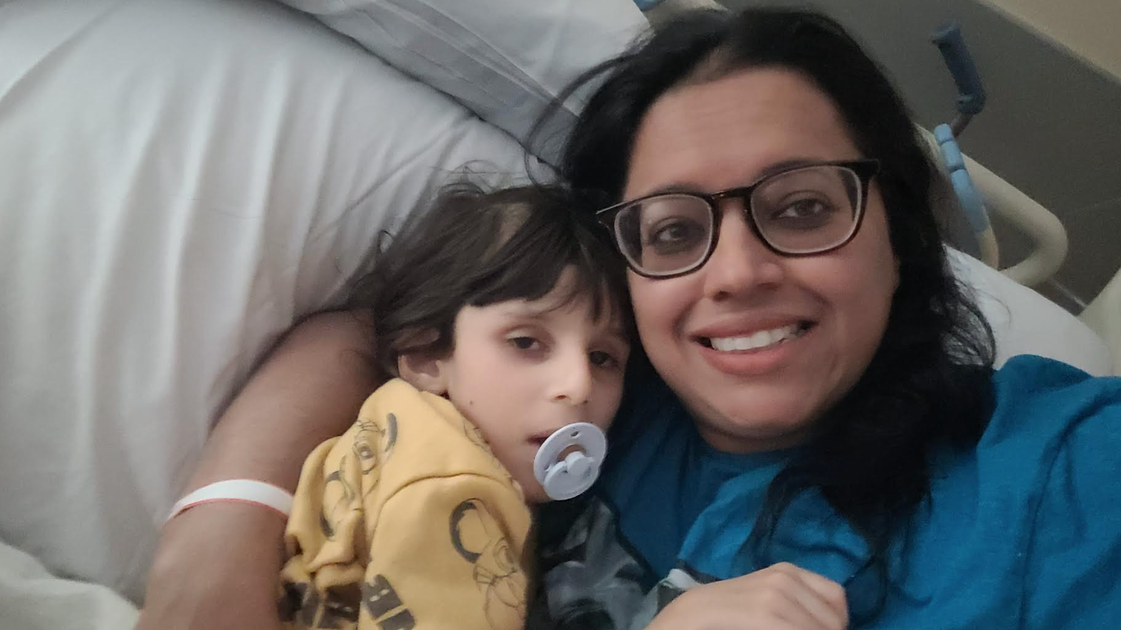
“We’re not ready!” I yelled. I woke up, in a panic, lying on a hospital bed in New York City. Next to me was my 6-year-old son Riaan, his EEG cords falling off his head, his frail body drowning in a hospital gown. Thankfully, he remained asleep. Flushed, I ran to the nurses’ station and begged them to cool our room. I felt like I couldn’t breathe.
The next day, on April 21, 2026, Riaan was scheduled to become the first child in the world to receive a first-in-human gene therapy for Cockayne syndrome.
Cockayne syndrome is an ultra-rare genetic disorder that causes progressive disease and early death. It was not included on our prenatal genetic screenings. We heard of it for the first time when Riaan was diagnosed at 15 months old. In Riaan, a gene called CSA, critical to DNA repair, transcription, and cellular health, does not function properly. The gene therapy sought to deliver a healthy copy of CSA into his brain, in hopes of restoring protein production and halting disease progression.
When Riaan was first diagnosed, we were told his life expectancy was five years because his disease was severe. He was born small (5 pounds, 6 ounces), developed cataracts in both eyes as an infant, and missed developmental milestones. He didn’t gain head control until he was a year old and struggled to eat and grow. Sometimes it took an hour to feed him just two ounces of breast milk. Today, at age 6, he still fits into onesies meant for an 18-month-old.
When I first heard the diagnosis, I was not devastated because Riaan would be disabled; I was devastated because we were told he would die — and soon. That first night, the grief and shock were so overwhelming, I didn’t see how my body could survive it. But I did wake up, and the weather outside of my parents’ Florida home was so sunny, it felt obscene.
Riaan has always been happy, social, mischievous, and full of life. When he was diagnosed at 15 months old, he didn’t look like a child facing such a short clock. It was unsettling that the love between my husband, Richie, and me had created a fatal disease in our firstborn child.
After the unexpected diagnosis, I couldn’t bear our reality. I had to do something because I loved Riaan more than I’ve ever loved anyone before, and he deserved a chance at a longer, healthier life.
It was this love that propelled me into the unknown world of drug development. We launched Riaan Research Initiative and connected with scientists who understood the urgency. Through relentless storytelling, public advocacy, fundraising campaigns, and generous donors, we raised $4 million and moved the therapy from concept to clinic. The mountain seemed impossible to climb, and yet we somehow climbed it.
Drug development is not a 9-to-5 job. I poured years of day-and-night work, alongside our scientific, clinical, manufacturing and regulatory teams. I especially loved the review period following the submission of our Investigational New Drug application to the U.S. Food and Drug Administration. During those 30 days, the FDA sends clarification questions, and we have only days to respond. An incorrect or unsatisfying answer can lead to a clinical hold. As a lawyer, I found the process stressful, high-stakes, and invigorating. Then came the exhilarating email: we were cleared to proceed. In thanking the team, I quoted The Count of Monte Cristo: “All human wisdom is contained in these words: wait and hope.” We had done so much waiting and hoping, and the moment had finally come.

It’s quite a strange thing to be part of a process of making a drug for your child from scratch, and also funding its development. Yet none of this knowledge made it any easier to decide whether we were doing the right thing in giving it to him.
Richie and I struggled with how to proceed, and the agony of our dream finally becoming a reality. Riaan now had advanced disease, and the prospect of benefit was less certain. He was also happy and stable, and had never been hospitalized before. Was it right to force him to endure getting a hole drilled in his head, a week-long hospital stay, and months of immunosuppression despite children with his disease being more susceptible to side effects from anesthesia and medication? Was it right to subject him to the unknown consequences that come with a first-in-human gene therapy?
Gene therapy is not without its risks: patients have died from liver failure to catastrophic inflammatory responses to cerebral edema. Immunosuppression, required to prevent the body from attacking the gene therapy or producing a dangerous response, is no walk in the park either.
But this was the chance of a lifetime — both for Riaan and because if we could demonstrate it was safe for Riaan, we hoped it could provide proof of concept to support future administrations in other children. After all, there was no other drug. There was no other hope.
Gene therapy extended lifespan in neonatal mouse models with Cockayne syndrome and improved their quality of life. But Riaan was not a newborn mouse. He weighed 22 lbs, couldn’t sit independently, stand, walk, feed himself, or talk. Could we make that scientific leap from mouse to a human child?

Richie and I spent long nights on the couch, sometimes bickering, feeling the burden of having to make this impossible parenting decision.
“Why couldn’t we get easier parenting choices?”
“We’re also one of the only parents who have access to a treatment for their child’s rare disease. That’s a privilege we shouldn’t take lightly.”
“Yeah, but what if it kills him?”
I talked to families who had walked this path before us, and they were incredibly helpful. Not one said don’t do it.
We were also conflicted because Riaan, who is non-verbal, could not consent on his own. We have had six joyful and intense years together — he is the heartbeat, the shining star of our family. He loves pulling his little brother Jivan’s hair, and stealing his toys, and video chats with Nani Ji. We’ve even traveled to Bermuda, where he had the time of his life, swimming in infinity pools and enjoying the pink sand beaches. He was perfect as he was.
One day I asked him if he wanted the therapy and, if he did, to touch my nose. He immediately touched my nose. Usually, it took him a while, or he ignored my request. I took that as a sign.
Part of what gave me courage was the team around us — from the scientists and physicians at UMass Chan Medical School to the clinical team at Weill Cornell and so many more who felt securely part of our mission and committed to Riaan. Then there was our physician-scientist advisor, affectionately known in the gene therapy world as “Batman.” He was available at odd hours, armed with scientific literature and regulatory knowledge, helping us think through the hardest questions as dosing day approached.

I called the researcher I trust most and asked him to answer whether he would proceed if Riaan were his child. He said yes — he could not guarantee anything, no one could, but he would do it.
We decided to proceed. Once we said yes, we stopped asking “what if.” We’d focus our efforts on the procedure going well, and the treatment being beneficial.
The day of the procedure wasn’t easy. It had been delayed, and Riaan had not eaten or drunk by mouth all day. That evening, as he was finally wheeled into the operating room, I thought maybe it was written in the stars. As we handed our firstborn child to the surgical team, we felt like we were shepherds of Riaan’s destiny in ways we couldn’t quite understand. When we saw the actual gene therapy we had made — Riaan’s AAV9 dose in a ziplock bag — we finally understood the significance of the moment.
Riaan clung to us, crying.
Richie gently lowered him on the operating table, and the anesthesia team placed a mask on him. Our brave lion quickly went under, and he looked peaceful, yet fierce, in his Simba sweater, to execute a mission no child should ever have to undertake. We told him we loved him, and that we were proud of him. I said a prayer.
Richie and I walked back to our room like zombies. We could barely move or talk, or even look at each other. As the parent who had driven the treatment effort, I felt the heavy responsibility of the moment. But we had done everything we could in the face of this cruel diagnosis: it was out of our hands now.
Once I received the alert that the procedure was complete, I ran full speed to the Pediatrics Intensive Care Unit. In the hallway, the surgical team told me that Riaan had done extremely well. I wrapped my arms around our gifted neurosurgeon. But then I heard Riaan’s screams from the room, a sound I had never heard before. Absolutely terrified, I started shouting at the doctors: “What’s wrong with him? What happened?” Everyone told me he was OK; he just needs to see you.
My first glimpse of Riaan reminded me of “Frankenstein,” when the monster gains consciousness. My beautiful boy looked petrified, and there were multiple wires coming out of every part of him. He had some loose gauze on his head to cover his surgical incision, his mouth open, gasping for water. It took some time and Tylenol to calm him down.
That night, he slept on my arm — a restless sleep involving neuro exams every two hours. I didn’t dare move once, even fighting back a vicious sneeze. But the next day, he was much better, smiling and playing balloon volleyball with us. Physically, he was OK, and the team monitored him closely. A few days later, we left the hospital and stayed at a nearby hotel during the critical monitoring window. Three weeks later, we finally returned home to Queens.
It takes months, even years, to determine if the gene therapy has benefited him. He continues to be monitored closely via exams and bloodwork, which we are grateful for, but also find challenging and exhausting at times. If there is clinical benefit, we don’t know how long the changes will last.

It has been over three months since treatment, and Riaan remains clinically stable. These days, he wakes up demanding to listen to his favorite morning song, “The Circle of Life,” with a big smile on his face, ready to start the day, play with his brother, and go on outings. We have our happy Riaan back, and while it’s early, we’ve seen encouraging changes. But he will always have Cockayne syndrome, and the future remains unknown.
We were fortunate to manufacture enough drug for multiple children, and look forward to re-engaging with the FDA in the coming months to gain approval to treat other children with Cockayne syndrome. We are working to raise funds to cover the clinical costs.
While we were fortunate, parents should not have to become drug developers because their child’s disease is too rare and unprofitable for pharmaceutical companies to pursue. No family should have to raise millions, learn regulatory strategy, sit in manufacturing meetings, and then decide whether to hand their child over for a treatment they helped build. But because of love, we would do it again and again for Riaan and for the children who may come after him.
When Riaan was first born, I told him I’d do anything I could to protect him. This miraculous effort is my love letter to him.
Jo Kaur is a civil rights attorney turned drug developer. She is the founder of Riaan Research Initiative, a patient advocacy organization working to develop gene therapy treatments for Cockayne syndrome, a rare and fatal pediatric genetic disorder. Jo began the organization in 2021 after her son Riaan was diagnosed with the disease. She lives in New York City with her two children, Riaan and Jivan, and her husband, Richie.
Do you have a compelling personal story you’d like to see published on HuffPost? Find out what we’re looking for here and send us a pitch at pitch@huffpost.com.
Read the full article on the original site
