


Close Menu
Savannah HeraldSavannah Herald
    • Home
    • News
      • Local
      • State
      • National
      • World
      • HBCUs
    • Events
    • Directories
    • Weather
    • Traffic
    • Jobs
    • Sports
    • Politics
    • Lifestyle
      • Faith
      • Senior Living
      • Health
      • Travel
      • Beauty
      • Fashion
      • Food
      • Art & Literature
    • Business
      • Real Estate
      • Entertainment
      • Investing
      • Education
    • Guides
      • Back to School Savannah
      • Summer Camp Guide
      • Juneteenth Guide
      • Black History Savannah
      • MLK Guide Savannah
    We're Social
    • Twitter
    • Facebook
    • YouTube

    Subscribe to Updates

    Get the latest creative news from FooBar about art, design and business.

    Trending
    • Savannah’s Historic Forsyth Park Tennis Courts Renovation Completed • Savannah Herald
    • Scientist Eve Mérinville Says ‘Skincare Isn’t a Math Competition’ and Why Less Can Equal More
    • The Extra Down: Stoner, Furnish Embrace Leadership Along the Line
    • The APOL1 Gene: Salt, Slavery & Kidney Disease
    • HBCU News – Hornet Nation Shows Up for Delaware Veterans at Annual Stand Down & Employment Expo
    • Traffic Alert: Bay St. Reopens • Savannah Herald
    • Ultimate Relaxation Awaits at Spa Bliss Savannah
    • City of Savannah Celebrates Heritage Place Apartments Renovation, Rededication Ceremony • Savannah Herald
    Facebook X (Twitter) Instagram YouTube
    Login
    Savannah HeraldSavannah Herald
    Savannah HeraldSavannah Herald
    Home » The APOL1 Gene: Salt, Slavery & Kidney Disease
    Health

    The APOL1 Gene: Salt, Slavery & Kidney Disease

    Savannah HeraldBy Savannah HeraldSeptember 26, 20267 Mins Read
    Facebook Twitter Pinterest LinkedIn WhatsApp Reddit Tumblr Email
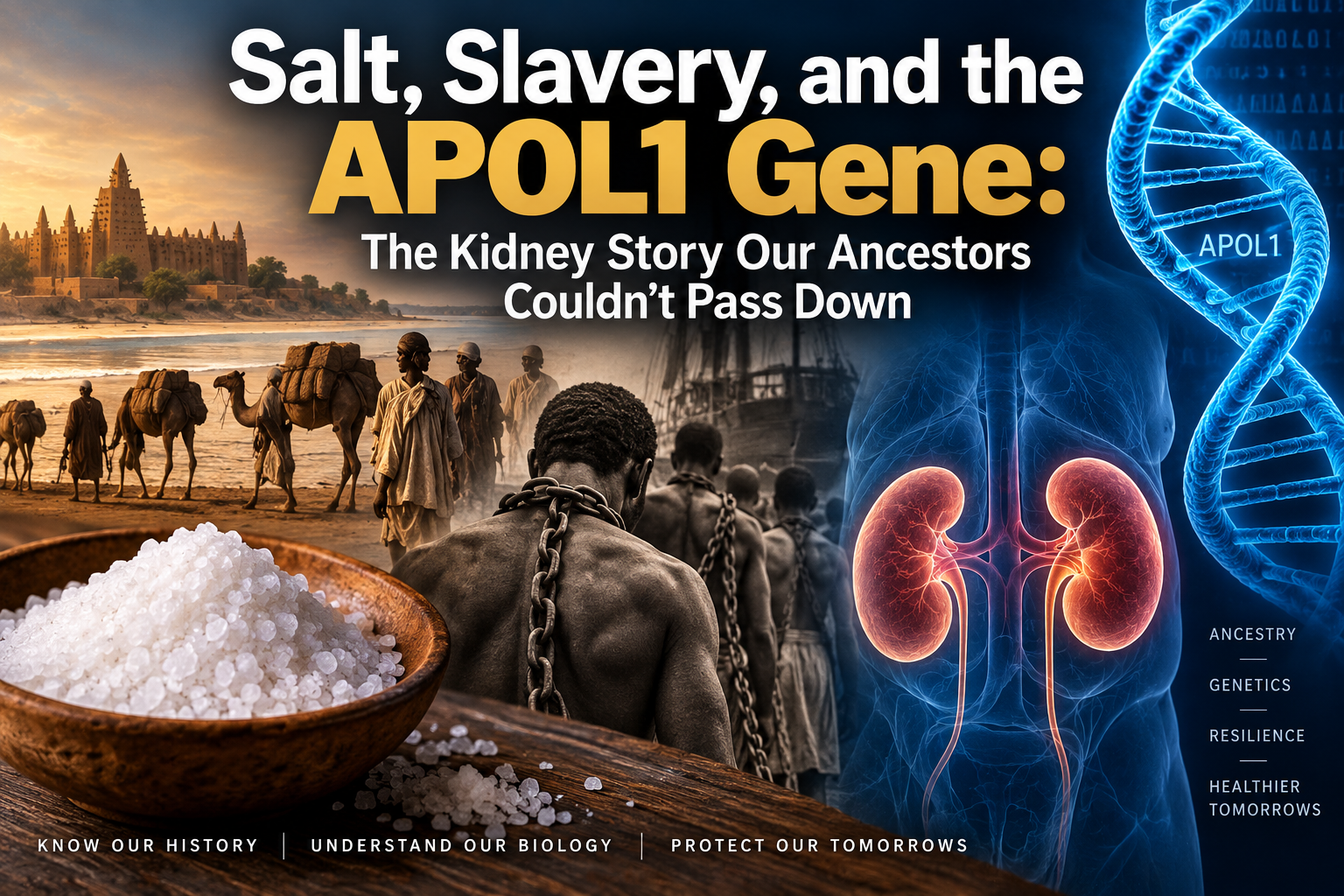
    Title graphic for the article blending a West African salt caravan, the transatlantic slave trade, and illuminated kidneys with an APOL1 DNA strand.
    Share
    Facebook Twitter LinkedIn Pinterest Email

    Wellness That Matters: Black Health News & Community Care

    Key takeaways
    • Dr. Constance B. Hilliard uncovered links between West African history, salt scarcity, and modern kidney disease risk.
    • Medieval trade made interior West Africans low-salt, coastal kingdoms controlled salt, and slave raids relocated low-salt populations to the Americas.
    • Genetic studies show interior populations frequently carry APOL1 variants, G1 and G2, protecting against sleeping sickness but increasing sodium retention.
    • Rapid dietary jump from ancestral low-salt to modern high-salt diets drives APOL1-mediated kidney disease among descendants of interior Africans.
    • Actionable steps: cut sodium (aim under 1,500 mg), request UACR and APOL1 testing, and share this story with loved ones.

    Every Black patient I have ever cared for who developed chronic kidney disease carried the same earlier label on their chart: salt-sensitive hypertension. In African Americans, 75 percent of patients with high blood pressure are salt sensitive, compared to 50 percent across all races. That number is one of the loudest warning bells in medicine. And for decades, while researchers chased a cure for the kidney disease itself, the warning bell kept ringing — and most of us never heard it.

    Recently, a historian helped me hear it clearly.

    The Historian Who Saw What Doctors Missed

    Dr. Constance B. Hilliard is a Harvard-trained professor at the University of North Texas and the author of Ancestral Genomics (Harvard University Press). She is not a physician. She is a genomic historian — someone who reads medieval African manuscripts and modern DNA studies side by side. I sat down with her on a recent episode of the Better Black Health Podcast to dig into her work, and the conversation reshaped how I talk about salt with my patients.

    Her story starts with a personal scare. While living in Japan in 2008, she was told she was in renal failure based on Japanese lab norms. When she got home, an American doctor looked at the same blood work and told her she was fine — because the “normal” ranges used in the United States have been calibrated against a population that already has widespread kidney damage among Black patients. That moment sent her digging into West African history. What she found connects directly to your kidneys.

    Gold for Salt — Pound for Pound

    If you walked through Timbuktu seven hundred years ago, you would have been standing in one of the wealthiest trading cities on Earth. Gold flowed north out of the African interior; salt was carried south across the Sahara on caravans of camels. Here is the part that should stop you cold: medieval trade records that Dr. Hilliard translated show that elites in the interior of West Africa were willing to trade their gold for rock salt pound for pound.

    Salt was that precious because nobody in the interior had it. Interior West African villagers lived hundreds of miles from the ocean. They got their food from plants, fish from inland rivers, and game animals. Their daily sodium intake is estimated at less than 500 milligrams a day — about one-tenth of what the average American eats now.

    Coastal West Africans were a different story. With the Atlantic on their doorstep, they had as much salt as they could haul. Their diet was high in sodium. And — this is the part the medical textbooks leave out — it was coastal kingdoms that conducted slave raids on the low-sodium villages of the interior. The people who were chained, marched as much as a thousand miles to the coast, and loaded onto slave ships were drawn overwhelmingly from interior populations who had never tasted table salt. They are the ancestors of most Black Americans alive today.

    A Gene That Matches the History

    Here is where the history meets the lab. Genetic studies of West African populations show a striking pattern. Interior populations carry the G1 and G2 variants of the APOL1 gene at high frequency. Coastal populations mostly carry the G0 variant, which is the version most non-Africans carry. (I’ve written about APOL1 and kidney disease in more detail here.)

    A Black woman in profile beside a glowing DNA double helix and illuminated kidneys, representing the APOL1 gene's link to kidney disease.

    The standard story — and it remains true — is that G1 and G2 protect against African sleeping sickness, the deadly infection spread by the tsetse fly. That is why these variants reached such high frequency in Africa. But Dr. Hilliard’s research adds something the medical literature missed for decades: G1 and G2 also appear to make the kidneys hold onto sodium. In a low-sodium environment like the interior of West Africa, that is a survival advantage. In a high-sodium environment like the modern United States, it is a slow-motion catastrophe.

    Coastal West Africans today consume sodium at levels roughly comparable to Americans, and they do not develop the kidney disease we see in Black Americans at anything close to the same rate. They do not carry G1 and G2.

    The Americans who do carry G1 and G2 are the descendants of those interior villagers. About one in three Black Americans carries at least one copy. They are the ones whose great-great-grandparents went from 500 mg of sodium a day to the 3,400 to 5,000 mg that fills the modern American grocery cart. That dietary jump — across just a handful of generations — is what is destroying our kidneys.

    Up to 11,000 Black Americans die every year from APOL1-mediated kidney disease (AMKD), which progresses fast and shows no symptoms until the damage is advanced. Most of them never hear a word about it.

    What “Soul Food” Got Mixed Up With

    I want to say this gently, because food carries memory and pride. The version of soul food that leans on salty hunks of preserved meat, ham hocks, heavy seasoning blends, and salt-cured everything is not what our West African ancestors ate. It is largely an inheritance of slavery and Reconstruction-era poverty, when salt was the cheapest way to preserve scraps of meat that nobody else wanted. Honoring that survival is not the same as eating that way today. Our actual ancestral diet — the one our DNA was shaped by — was low-salt, plant-and-fish heavy, and rich in potassium. Reclaiming that is the deeper tradition.

    Here’s What You Need To Do

    The American Heart Association recommends no more than 1,500 mg of sodium per day for Black Americans. Most of us are eating two to three times that. The three actions below all matter — pick one to start this week.

    1. Cut your sodium in half — start with the obvious offenders. Canned soup, cold cuts, fast food, bouillon, soy sauce, pizza, ham, sausage, and “seasoned” raw chicken (which is injected with a salt solution at the plant) are the worst sources. Read labels. Aim for under 1,500 mg/day. Studies show that even a modest salt reduction drops systolic blood pressure about 8 points in Black patients — a bigger effect than in any other group.
    2. Ask your doctor about your kidney function — and about APOL1. If you have a personal or family history of high blood pressure, kidney disease, or dialysis, ask specifically for a urine albumin-to-creatinine ratio (UACR) in addition to your routine creatinine. UACR catches kidney damage early, when there is still time to slow it down. APOL1 genetic testing is now available; if you or a family member is considering kidney donation, or you are showing early signs of kidney damage, knowing your APOL1 status matters.
    3. Share this story with the people you love. Our ancestral history was stolen from us during slavery. The piece that says your kidneys are sensitive to salt, and here is why is one of the most important pieces we can put back. Tell your mother. Tell your barber. Tell your pastor. Tell your children. AMKD is not a sentence — but only if we get to it before the damage is done.

    We have a saying in this work: better health starts with better information. This is one of those pieces of information that can change a life — maybe yours.

    To hear Dr. Hilliard tell this story in her own words, listen to our conversation on the Better Black Health Podcast. For deeper reading, see her book Ancestral Genomics (Harvard University Press) and her paper “The Mislaid Clue to APOL1 Kidney Disease Prevention in Blacks” in the Journal of Human Hypertension (2025).

    This same pattern — ancestry, environment, and biology colliding in ways our medical training never taught us to see — shows up again and again once you know how to look for it. I wrote Better Black Health: A Comprehensive Guide in the Age of Precision Medicine to walk through APOL1 and the other places where that collision is happening, and what you and your doctor can actually do about it.
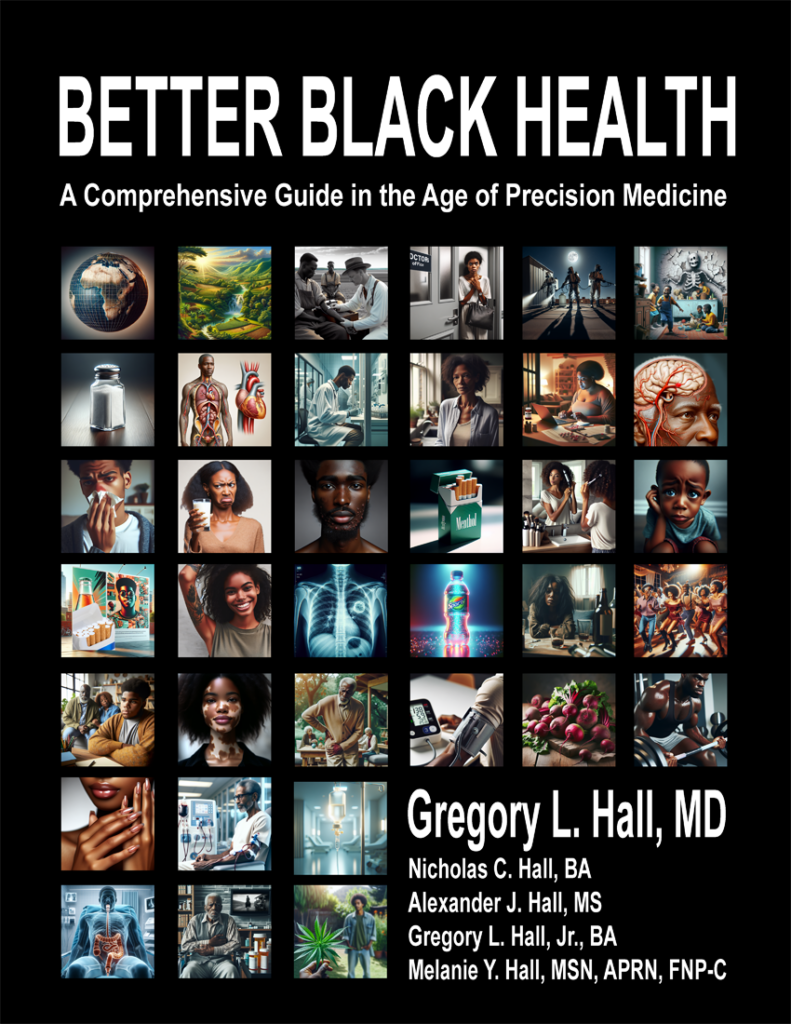
    Cover of Better Black Health: A Comprehensive Guide in the Age of Precision Medicine by Gregory L. Hall, MD.

    Read the full article on the original site


    Related Posts

    • Black Lesbian Couple Survive Alleged Racist Attack In Virginia
    • Stories of Black Britishness by Lubaina Himid
    • LPGA Tour: Celine Boutier wins ShopRite LPGA ahead of US Women’s Open as Ireland’s Lauren Walsh finishes third | Golf News
    • 9 Best Serums for Aging Skin That Target Dryness, Fine Lines, and Wrinkles
    • Pacia Anderson to be installed as St. Louis City’s 4th Poet Laureate
    • Starbucks Reports Strong Store Traffic and Rise in Quarterly Sales
    • Home Depot Foundation invests $10M in trades training
    • A database about the tiny fruit fly
    Black Health News Black Healthcare Access Black Mental Health Black Wellness Chronic Illness in Black Communities Community Health Updates Fitness and Nutrition News Georgia Health News Health and Healing Health and Wellness for Black Men Health Disparities Health Equity Healthcare Policy Local Health Headlines Mental Health in Black Communities Mental Wellness Public Health in the South Savannah Health Resources Therapy for Black Women Wellness for Women of Color
    Share. Facebook Twitter Pinterest LinkedIn WhatsApp Reddit Tumblr Email
    Savannah Herald
    • Website

    Related Posts

    Health September 26, 2026

    The Black Parenting Shift: Redefining the Way We Discipline – Free Press of Jacksonville

    Health September 26, 2026

    K-pop, BTS, and What the Grammys Get Wrong About Asian Music

    Health September 25, 2026

    Imhotep: The First Doctor in History

    Health September 25, 2026

    NHS staff suspected of snooping on patient data to face immediate suspension

    Health September 24, 2026

    Black Lung Disease Remains a Threat, but Federal Officials Delay Effort To Address It

    Health September 24, 2026

    NHS staff investigated over access to dead teenager’s medical records

    Comments are closed.

    Don't Miss
    Education June 9, 2026By Savannah Herald06 Mins Read

    Fall 2025 HBCU Career Opportunities: Guide to Student Success

    June 9, 2026

    From Campus to Classroom: Stories That Shape Education Last Updated on August 23, 2025 The…

    Understanding Entrepreneurship — Therapy for Black Girls

    August 28, 2025

    Getting Started with Vibe Coding Using Antigravity

    July 30, 2026

    European leaders to join Zelenskyy’s meeting with Trump : NPR

    July 4, 2026

    Woodville-Tompkins Student Embarks on International Exchange Opportunity Through Metro Savannah Rotary

    August 11, 2026
    Archives
    • September 2026
    • August 2026
    • July 2026
    • June 2026
    • May 2026
    • April 2026
    • March 2026
    • February 2026
    • January 2026
    • December 2025
    • November 2025
    • October 2025
    • September 2025
    • August 2025
    • July 2025
    • June 2025
    • May 2025
    • April 2025
    • March 2025
    • February 2025
    Categories
    • Art & Literature
    • Beauty
    • Black History
    • Business
    • Climate
    • Culture
    • Education
    • Employment
    • Entertainment
    • Faith
    • Fashion
    • Food
    • Gaming
    • Georgia Politics
    • HBCUs
    • Health
    • Health Inspections
    • Investing
    • Lifestyle
    • Local
    • Lowcountry News
    • National
    • National Opinion
    • News
    • Politics
    • Real Estate
    • Senior Living
    • Sports
    • State
    • Tech
    • Traffic
    • Transportation
    • Travel
    • Weather
    • World
    Savannah Herald Newsletter

    Subscribe to Updates

    A round up interesting pic’s, post and articles in the C-Port and around the world.

    About Us
    About Us

    The Savannah Herald is your trusted source for the pulse of Coastal Georgia and the Low County of South Carolina. We're committed to delivering timely news that resonates with the African American community.

    From local politics to business developments, we're here to keep you informed and engaged. Our mission is to amplify the voices and stories that matter, shining a light on our collective experiences and achievements.
    We cover:
    🏛️ Politics
    💼 Business
    🎭 Entertainment
    🏀 Sports
    🩺 Health
    💻 Technology
    Savannah Herald: Savannah's Black Voice 💪🏾

    Our Picks

    Gullah music and Brazilian jazz combine for Spoleto show

    June 30, 2026

    City of Savannah’s 2026 Earth Day Festival Set for April 24 • Savannah Herald

    May 14, 2026

    Your Silverado Questions Answered by Roosevelt Now! #shorts – BlackPressUSA

    May 7, 2026

    Brisket, Frito Pie or Breakfast Tacos? See Which Texas Favorite Won

    August 15, 2026

    A Letter to Bangkok and the New Wave of Expats — Minority Nomad

    September 3, 2025
    Categories
    • Art & Literature
    • Beauty
    • Black History
    • Business
    • Climate
    • Culture
    • Education
    • Employment
    • Entertainment
    • Faith
    • Fashion
    • Food
    • Gaming
    • Georgia Politics
    • HBCUs
    • Health
    • Health Inspections
    • Investing
    • Lifestyle
    • Local
    • Lowcountry News
    • National
    • National Opinion
    • News
    • Politics
    • Real Estate
    • Senior Living
    • Sports
    • State
    • Tech
    • Traffic
    • Transportation
    • Travel
    • Weather
    • World
    Copyright © 2002-2026 Savannahherald.com All Rights Reserved. A Veteran-Owned Business

    Type above and press Enter to search. Press Esc to cancel.

    Manage Consent
    To provide the best experiences, we use technologies like cookies to store and/or access device information. Consenting to these technologies will allow us to process data such as browsing behavior or unique IDs on this site. Not consenting or withdrawing consent, may adversely affect certain features and functions.
    Functional Always active
    The technical storage or access is strictly necessary for the legitimate purpose of enabling the use of a specific service explicitly requested by the subscriber or user, or for the sole purpose of carrying out the transmission of a communication over an electronic communications network.
    Preferences
    The technical storage or access is necessary for the legitimate purpose of storing preferences that are not requested by the subscriber or user.
    Statistics
    The technical storage or access that is used exclusively for statistical purposes. The technical storage or access that is used exclusively for anonymous statistical purposes. Without a subpoena, voluntary compliance on the part of your Internet Service Provider, or additional records from a third party, information stored or retrieved for this purpose alone cannot usually be used to identify you.
    Marketing
    The technical storage or access is required to create user profiles to send advertising, or to track the user on a website or across several websites for similar marketing purposes.
    • Manage options
    • Manage services
    • Manage {vendor_count} vendors
    • Read more about these purposes
    View preferences
    • {title}
    • {title}
    • {title}
    Ad Blocker Enabled!
    Ad Blocker Enabled!
    Our website is made possible by displaying online advertisements to our visitors. Please support us by disabling your Ad Blocker.

    Sign In or Register

    Welcome Back!

    Login below or Register Now.

    Lost password?

    Register Now!

    Already registered? Login.

    A password will be e-mailed to you.