




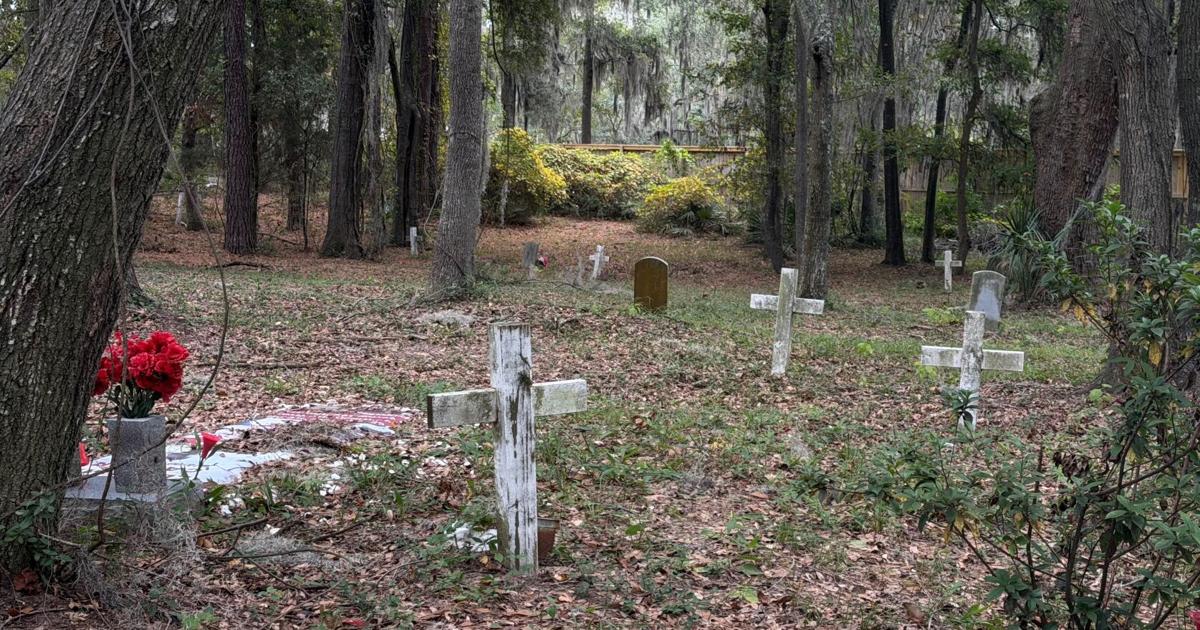
- Scanlonville Cemetery and Sol Legare School were added to the National Register of Historic Places, recognizing their importance to African American and Gullah Geechee history.
- The cemetery dates to 1870, while the 1948 school served Black children and later became a vocational school, health site and community center.
- National Register status brings no automatic protections, but can help local governments safeguard historic sites amid development pressures.
CHARLESTON — A multi-jurisdictional grant program helped get two historic settlement communities added to the National Register of Historic Places, a recognition that will help preserve the sites for posterity.
For years, the communities of Scanlonville in Mount Pleasant and Sol Legare on James Island have been working to ensure their history remains intact. Funding from a National Park Service grant helped secure the long-awaited recognition this fall.
The Scanlonville Cemetery was established in 1870 and is believed to be the final resting place for between 600 and 2,000 people. It’s the most tangible link to the Reconstruction-era origins of the settlement community that freedmen established to create a self-sustaining, productive and safe community.

The historic Scanlonville cemetery in Mount Pleasant on Nov. 6, 2026.
It’s the “most peaceful place in the world,” said Edward Lee of the East Cooper Civic Club. The community’s legal battle for recognition and preservation dates back to at least 1999.
Getting it included on the National Register “is a long-awaited recognition of the souls and spirits of the ancestors that form the basis and inspiration of an African American Community’s quest to provide a true and complete knowledge, understanding and appreciation of all history and contributions,” Lee said.
The Sol Legare School on James Island was built in 1948 for Black children before schools were integrated. It’s the oldest surviving school in the community. It later served as a vocational school, community health site and is now the community center.
“It’s the heart of the Sol Legare community,” said Bill “Cubby” Wilder of the Concerned Citizens of Sol Legare Community Foundation.

The Sol Legare School on James Island.
Being listed on the National Register is both a great achievement and one that is long overdue, he said.
With James Island being developed so quickly, leading some people to be priced out, getting it on the registry is a reassurance that the historic site isn’t going anywhere, he said.
National Register listings don’t come with automatic protections, but they allow state and local governments to activate protections. The city and county of Charleston have ordinances in place meant to ensure development and maintenance have minimal impact on the character of historic sites.
“It allows those communities to know that history does matter, and that their story is just as important as other stories as a part of our American fabric as we commemorate our 250th anniversary,” said Mike Allen, a retired National Park Service official who served as a technical advisor for the grant program.
Charleston acknowledged lack of recognition
The contributions of the African American people and communities that have made Charleston what it is today have been left out of the cultural heritage preservation efforts, the 2021 City Plan found.
“The city of Charleston was really behind,” senior planner Chloe Stuber said.
Ensuring that settlement communities are properly documented, recognized and protected is critical to preserving the city’s unique sense of place, especially in this time of “rapid gentrification and mounting development pressures,” the city plan said.
It recommended the city to prioritize documenting these communities and supporting preservation efforts, increase the number of markers and monuments for underrepresented communities, and elevate the voices and concerns of the people who live there.
That’s why, when the Preservation Society of Charleston learned about a grant from the National Park Service that could help implement these recommendations, the city jumped at the opportunity.
“There’s an interest in Charleston in making our historic registers more inclusive of the full spectrum of cultural history,” said Brian Turner, the president of the Preservation Society of Charleston. “It’s long overdue to recognize the contributions that Gullah Geechee communities have made to Charleston history.”
Gullah Geechee heritage preservation work
A $75,000 grant from the National Park Service, with a $25,000 match from the city and a $10,000 match from the Preservation Society of Charleston, funded the effort to document, recognize and preserve historic sites associated with Gullah Geechee and African American ancestral communities.
In addition to getting the two listings, there were about 20 other groups or individuals that were part of the preservation project. Several groups pursued getting historic markers. A few completed character appraisals, and many were connected with the Lowcountry Oral History Initiative to start documenting the stories passed down, Stuber said.
The approach was to build capacity for people to accomplish their goals in order to rebuild trust between local governments and the communities they’ve long-neglected, Stuber said.
“There is still a tremendous amount of work that needs to be done,” Stuber said. “This is really a long-haul kind of effort. … The more that we can support communities to tell their own stories, in their own words, on their own terms, the better.”
History that is passed down orally doesn’t always get properly documented or maintained, which is one reason the city lacks some information on these sites, Stuber said. Having good documentation of these communities is a great start that other efforts can jump off of, Turner said.
“It can be an empowering tool that helps people get at the table,” Turner said.
Getting historical markers can also be a rallying point that drives people to have a shared sense of community about their historic legacy and bridges the gaps between generations, Turner said.
Though the grant came to a close this spring, it gave the city much more information than it used to have, established relationships among community members and preservation groups and led to two initiatives being created, Stuber said.
The lasting initiatives are a partnership with the College of Charleston and the Gullah Geechee Cultural Heritage Corridor that will continue providing technical support for community-led preservation, and a quarterly gathering of planners and community advocates to share lessons and develop best practices.
