




Black Travelers: Explore Culture, Adventure & Connection
- Recognize how tourism behavior causes cultural extraction, turning Kyoto, Barcelona, and Bali into playgrounds for outsiders.
- When locals speak, listen and adapt; believe their critiques about disrespectful behavior and overcrowded neighborhoods.
- Choose locally owned hotels, tours, and restaurants, or companies that hire locals and reinvest in the community.
- Practice travel with humility: observe quietly, accept discomfort, and protect places so future travelers find real, uncurated moments.
One of the biggest reasons we travel, whether we admit it or not, is to experience something *different*. Something that pulls us out of our usual rhythm. New sounds, new smells, new flavors, new stories. Culture. That’s what makes a place feel alive. But here’s the thing I keep thinking about: if we’re not intentional, we end up contributing to the erasure of that very culture we came to experience.
All over the world, local communities are doing the hard work of preserving, restoring, and protecting their traditions—things like language, dance, rituals, crafts, foodways, and architecture. Not just because they’re “cool” or “colorful” or “Instagrammable,” but because those things carry meaning. They’re the heartbeat of a people.
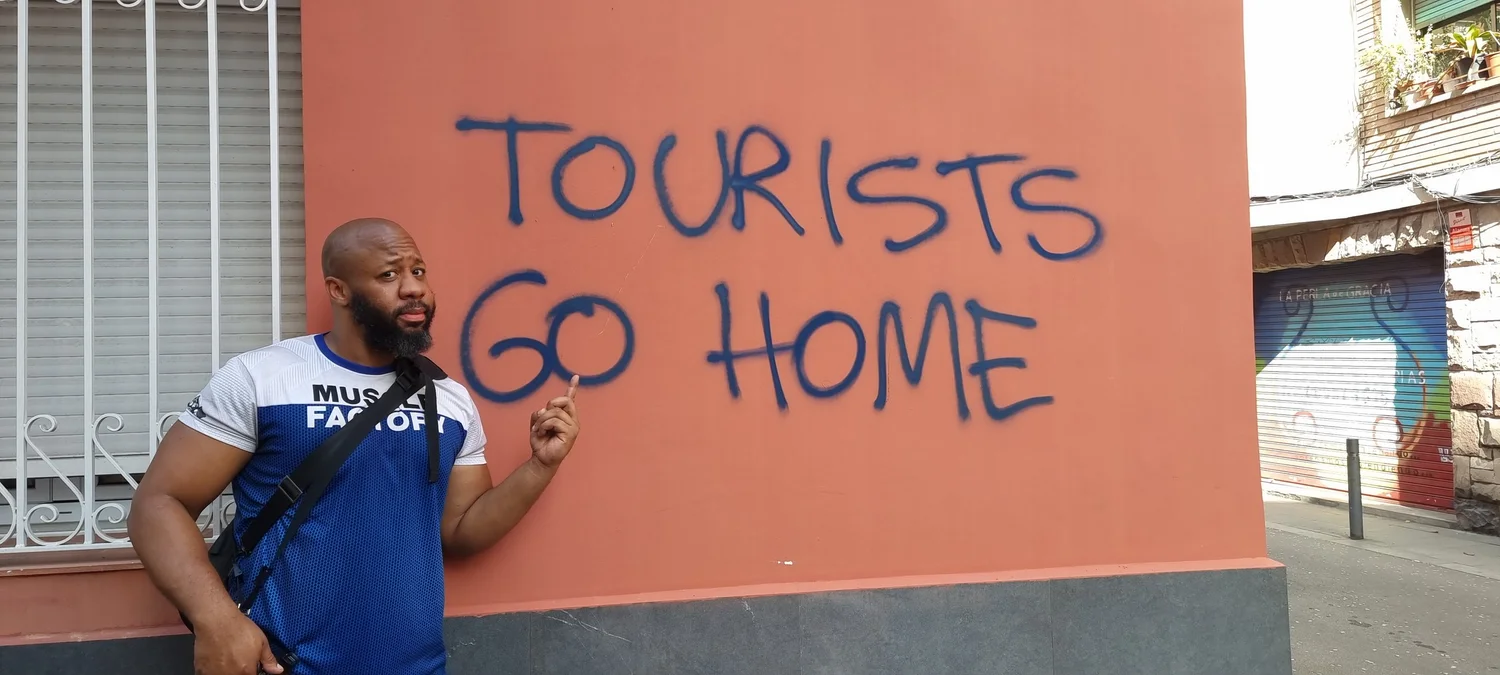
And yet, from Kyoto to Barcelona to Bali, we’re starting to hear it louder:
The anti-tourist sentiment isn’t just about numbers. It’s about behavior. It’s about the feeling locals get when their neighborhoods become museums, playgrounds, or marketplaces that serve outsiders more than residents. What was once a cultural exchange has morphed into cultural extraction.
I say all of this not from the sidelines, but from inside the mix.
I’ve lived in Bangkok for 12 years. And even in that time, I’ve developed a real apprehension toward areas that cater almost exclusively to tourists. Places where every menu is in English, where tuk-tuks blast Top 40s music, and every shop is selling the same knockoff souvenirs.
I’m by no means anti-tourist or anti-Western fare. Look, I love me some Cheesecake Factory and a Starbucks Reserve Nitro Brew like the next guy. Familiar comforts have their place—especially when you’re far from home. But when those comforts start replacing a neighborhood’s soul, when global sameness bulldozes local flavor, we lose something. And it’s not just the locals who lose—it’s all of us.
I’m young enough to understand the importance of social media and tourism in shaping the world today. I get it—algorithms drive a lot of where people go and how they behave when they get there. But I’m also old enough to have experienced cultures in a way that felt raw, humbling, and real.
I learned tango in Buenos Aires by attending Milongas where barely anyone spoke English, and the average age in the room was over 40. I smoked with Naga Sadhus in India during Kumbh Mela, sharing a sacred moment without a single word exchanged. I’ve had a Thai aunty flat-out refuse to serve me at her restaurant—until I learned enough Thai to order properly.
These weren’t curated “experiences.” They weren’t sponsored or designed for content. They were real. And they changed me.
I’m blessed to have had countless moments like that. But I worry that the next generation of explorers won’t. Not because they’re not curious or open, but because those moments are harder to find now. They’re being priced out, packaged up, or buried under tourist expectations.
Culture doesn’t need to be locked away in a museum. It doesn’t need to be frozen in time. It should grow. But it should grow on the terms of the people who live it, not because of the preferences of people passing through. If we say we love a place, we have to love it enough to let it *be* itself. So, what can we do now to mitigate our negative impact on local cultures while still exploring the world?
Start by listening when locals speak. Really listen. They know far more than we do about the place we’re standing in. And just because a country’s GDP relies heavily on tourism doesn’t mean its citizens can’t be critical of its effects. If they say certain behaviors are disrespectful or that certain areas are suffering under the weight of too many visitors, believe them. Adapt accordingly.
We also need to support businesses that put local communities first. That means choosing locally owned accommodations, tours, and restaurants whenever possible. And when that’s not available, seek out companies that prioritize hiring local staff and reinvesting in the community. Where your money goes matters.
Patronize places that don’t just market local culture, but empowers it.
And finally, travel with humility. Understand that not everything needs to be catered to your expectations. Not every space is for you. Sometimes the most respectful thing you can do is observe quietly, ask questions, and accept that some answers won’t be yours to receive.
Because the truth is: when you travel just to find a version of yourself, you’re not really traveling. You’re just moving around. The beauty of travel is in the discomfort. The growth. The learning. The surrender.
So yeah, let’s enjoy that Nitro Brew. Let’s snap some pics. Let’s marvel at this world and all the beauty it offers.
But let’s also protect the things that make each place unique. Let’s make sure the next generation of travelers can still stumble into a smoky Milonga, get humbled by a language barrier, or share a silent, sacred moment with someone they’ll never meet again.
Because *that’s* the kind of travel that stays with you. And that’s the kind of world worth fighting to preserve.
When we fail to support communities trying to preserve and protect their culture, we risk contributing to that erasure. Even if it’s unintentional. That’s why this matters so damn much to me. Why the way we travel matters.
We owe it to the world not just to witness it—but to help protect what makes it worth seeing.
See the full story on the original site
