




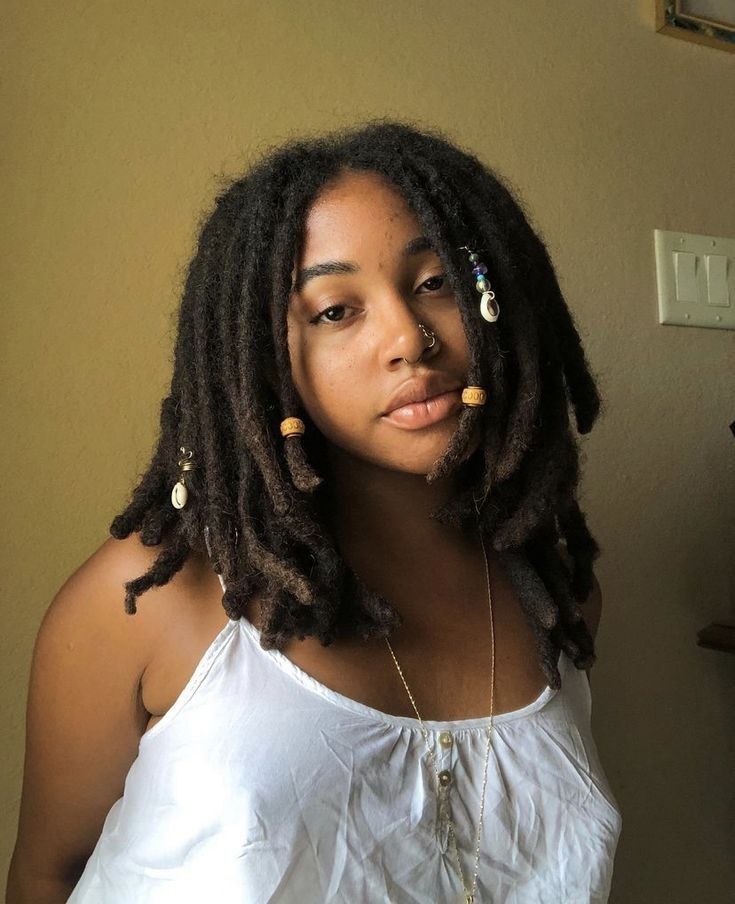
Glow & Grow: Black Beauty, Haircare, and Skincare Tips
- Start with loose methods: coils, two-strand twists, or finger-coiled free parts to let roots swell and create natural volume.
- Retwist infrequently and fluff gently: retwist every 6 to 8 weeks, untwist after two weeks, use root-lifting for instant volume.
- Hydrate with water, seal with lightweight oils like Jamaican castor oil, skip gels and waxes, and protect with satin or silk at night.
Fluffy dreads are having a moment—and honestly, they deserve it. There’s something effortlessly cool about soft, puffy locs that feel light, full, and free. If you’ve been dreaming of fat dreads that give “cloud-like bounce” instead of “crunchy commitment,” 😅 you’re not alone. Whether you’re just starting your loc journey or want to breathe new life into mature locs, this guide is here to help you achieve that dreamy, voluminous look.
What exactly are fluffy dreads?
Think of fluffy dreads as the laid-back cousin of traditional locs. While regular dreads tend to be tight and compact, puffy dreads have that soft, airy quality that makes them look fuller and more voluminous. They’re characterized by their loose texture, natural frizz that’s actually wanted (imagine that!), and an overall bouncy appearance that moves beautifully.
The appeal is obvious: fluffy locs give you more volume, a softer look, and honestly just feel more comfortable on your head. Plus, they photograph amazingly well, which doesn’t hurt when you’re trying to serve looks on the ‘gram.
Examples of puffy dreads
Think thick freeform locs that stand away from the scalp, soft frizz around each shaft, and chunkier semi-freeform locs with bounce. You’ll see puffy locs all over Pinterest and Instagram, especially in styles where the locs aren’t retwisted often or styled with braid-outs for more volume.


Know your foundation: parting, density, and starter method
Before we get into products or styling, let’s talk basics. How your locs are started makes a huge difference in how fluffy they can get.
If you haven’t locked up yet, consider beginning with coils, loosely done two-strand twists, or even finger-coiled “free parts.” These leave space for your hair to expand and swell over time—aka, the secret sauce to puffy dreads. Avoid tight braids or interlocking if softness is your goal. They compact the hair early on, leaving you with tighter, firmer locs from the jump.
How to make existing dreads more fluffy
Already locked? Don’t worry. You can still shift the vibe with a few easy tweaks to your routine.
Be gentle: less retwisting, more fluff
One of the biggest mistakes people make when chasing thick or fluffy locs is over-retwisting. We get it—fresh roots can feel like a reset. But if you’re aiming for volume, you’ll want to stretch that retwist schedule out.
Both Bianca Yasmeen and SoFine (two thick-loc queens we love) recommend retwisting every 6–8 weeks—or even less. The longer you go between retwists, the more time your roots have to swell naturally. In fact, Bianca suggests untwisting your retwist after two weeks just to give your roots a little freedom and fluff.
And when you do retwist? Keep it light. Don’t twist like you’re trying to start a fire. Tight twists thin your roots over time and make your locs stiff. Use light pressure, free-part if you can, and always listen to your scalp.
The fluffing technique
To add fluff to existing locs, you can try gently untwisting them slightly, working from root to tip. This creates micro-separations that add instant volume without damaging the internal structure. Do this on slightly damp hair for best results, and always be gentle – you’re encouraging fluffiness, not trying to unravel your hard work.
Lift your roots
Lifting your roots can also add volume. Very gently lift your roots away from your scalp. You can do this by gently massaging your scalp with your fingertips or using a pick to lift sections. This creates space at the base of your locs, making your entire head look fuller and more voluminous.
Maintaining your fluffy locs
Fluffy dreads are a commitment to a slightly different maintenance routine. You’ll need to resist the urge to constantly tidy them up, embrace a bit of controlled messiness, and invest in the right products that enhance rather than weigh down your volume.

Skip the tension: let your hair chill
Here’s your permission to say no to tight ponytails, snatched buns, and over-manipulated styles. High-tension styling might look cute for a day, but it’s a long-term loc killer. Tension at the root leads to thinning, which is the exact opposite of the fat dreadlocks look we’re going for.
Liliana Okibe warns against tight braid-outs, tight head wraps, and even sleeping on wet hair (it flattens locs and prevents that fluffy finish). Basically: if it’s pulling, compressing, or weighing your hair down, rethink it.
Hydrate, don’t suffocate: oil, water, and satin
Soft, bouncy locs start with moisture—but not too much. Hydrate regularly with water (a quick spritz goes a long way), then seal with lightweight oils. Haitian or Jamaican castor oil is a fave, especially for thickness. You can also try hemp seed, vitamin E oil, jojoba or argan oil if you want something lighter.
Pro tip: skip the gel. Thick gels, mousses, or waxes weigh your locs down and cause buildup. And buildup = stiffness, dullness, and lint—hard pass.
Avoid heavy creams and butters during your fluffiness journey. While these products might make your scalp happy, they’ll flatten your dreads faster than you can say “volume.”
Also, do yourself a favor and wrap your locs at night in silk or satin. Cotton pillowcases will rob your strands of moisture and leave them crunchy. A silk scarf + bonnet combo is elite, especially in drier climates or winter weather.
Washing techniques that enhance fluffiness
Your wash routine can make or break your fluffy dread goals. Use a clarifying shampoo to remove any product buildup that might be weighing your locs down. The excess buildup will prevent the loc matrix from forming and disrupt the stages of hair locking which can create points of weakness or thinning in the locs.
Condition with a light-weight water based conditioner.
Squeeze your locs gently instead of rubbing them. This maintains their shape while encouraging that airy texture. Always dry thoroughly – damp locs are heavy locs, and heavy locs are flat locs.
Let them breathe: low-maintenance = high reward
One of the most underrated tips? Sometimes the best thing you can do for your locs is nothing. Seriously. Letting them be—no retwist, no style, no product—can be the reset your hair didn’t know it needed.
During your first year especially, go light on manipulation. Let your locs puff, frizz, and swell. That’s part of the journey, and honestly, it’s where the fluff comes from. As Bianca says, “Your locs will swell before they settle.” Embrace it.
Dealing with common fluffy dread challenges
“My dreads look messy, not fluffy” – There’s a fine line between gorgeously tousled and straight-up unkempt. The key is maintaining some structure while encouraging volume. Regular (but not excessive) maintenance helps keep things looking intentional.
“The fluffiness doesn’t last” – This usually means product buildup or over-manipulation. Stick to lightweight products and resist the urge to constantly touch and adjust your locs.
“My dreads are fluffy but won’t stay up” – Fluffy locs can be harder to style simply because they’re fuller. Invest in good hair ties and don’t be afraid to use bobby pins strategically for updos.
A few parting puffs
Fluffy dreads don’t happen overnight, but with the right care, they will absolutely flourish. Think less stress, more softness. Skip the product overload, and don’t be afraid of a little frizz—fluffiness lives there.
Want more loc inspo? Follow us on Instagram @wetheunruly for tips, inspo and everyday Black hair magic. And if you’ve got your own fluffy loc routine, tag us! We’d love to see it.
FAQs
Fluffy dreads are locs that are soft, voluminous, and often less tightly maintained than traditional locs. They typically involve loose retwisting, minimal product use, and lower manipulation to encourage a fuller, puffier look.
To get fat dreadlocks, avoid frequent or tight retwisting, skip high-tension styles, moisturize regularly with water and light oils, and be patient—your roots need time to swell. Also, how you start your locs plays a big role; coils and loose two-strand twists are great for volume.
It’s possible, but it might take time and a shift in maintenance. You can gradually transition to looser techniques and avoid retightening too often. Letting your roots swell and minimizing tension can help encourage softness over time.
Skip the gels and waxes. Instead, use water, Haitian or Jamaican castor oil, and maybe hemp seed or vitamin E oil. These keep your locs moisturized and full without weighing them down or causing buildup.
Yes! Hair density, texture, and parting size will affect the final look, but with the right starter method and gentle care, anyone can achieve a fluffy, full loc journey.
Read the full article from the original source

