




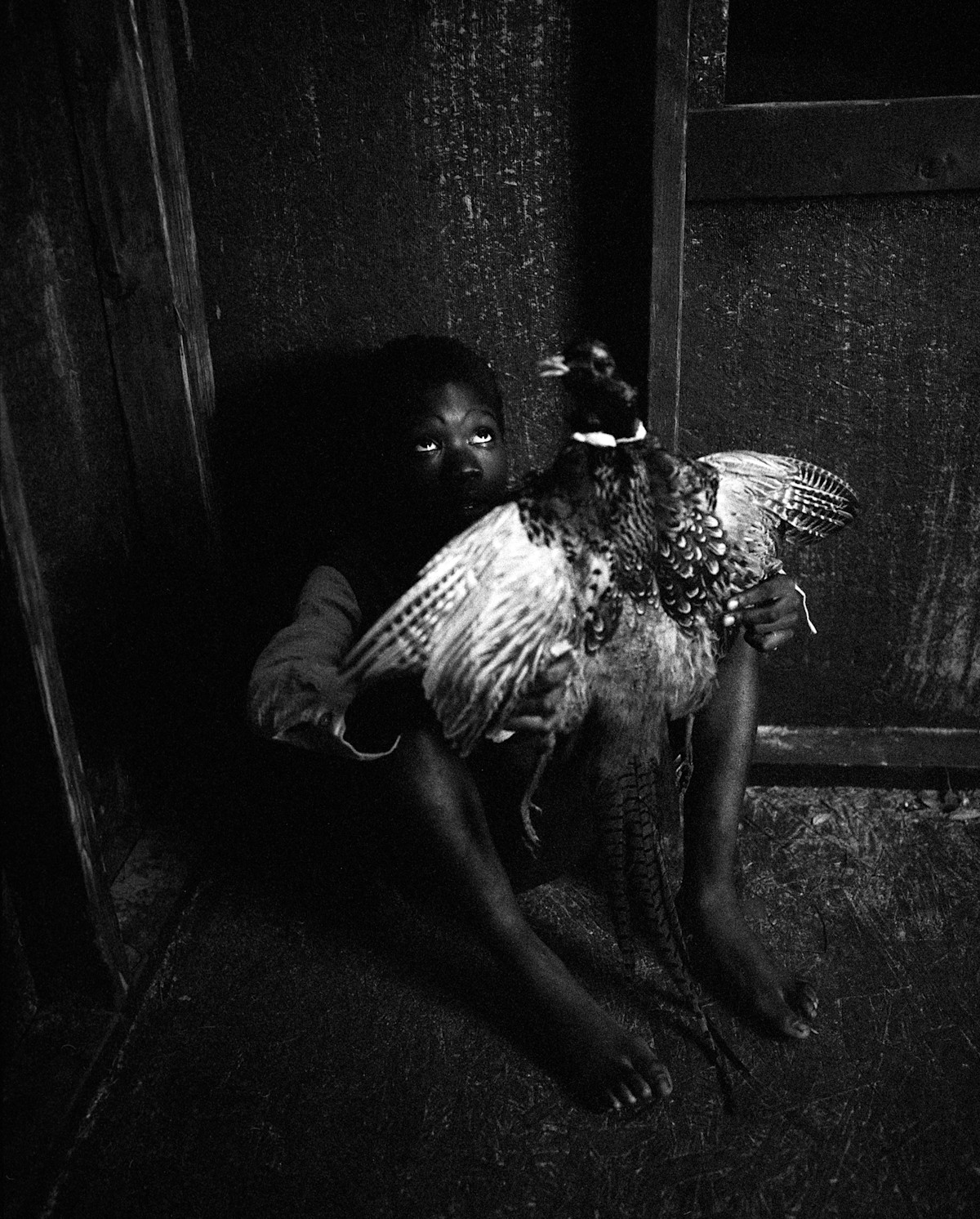
- African American Southern religiosity blends layered, convergent cosmologies influencing communal spiritual practices.
- Lowcountry mysticism draws from Hoodoo, rooted in West and Central African healing rites.
- Hoodoo endured as a fugitive tradition, often concealed within Black churches during enslavement.
- Despite fair depiction in the film Sinners via conjure woman Annie, Hoodoo is misrepresented and confused with Vodou and Louisiana Voodoo.
Born in Durham, North Carolina and raised in Dallas, Texas, Carter’s photography meditates on the emotional and spiritual inheritances of Black Southern life, absorbing the historical and sociopolitical forces that continue to mold its lived texture and, crucially, its moments of tenderness.
“My family is from Texas by way of Lake Providence, Louisiana. My grandfather was a pastor of a church for probably over 50 years,” she says. “He was also a theologian. So, I have these different ties to African American Southern Christian practices. But my grandfather, during his time in Lake Providence, had a lot of stories of different things that he’d seen, interesting stories about conjure men and root workers, who could make snakes move backwards and make transient men return home to their wives.”
What emerges from Carter’s reflection is a fusion of spiritual lineages that outsiders often mistake as incompatible. In truth, African American Southern religiosity has always held layered, convergent cosmologies. Lowcountry mysticism draws deeply from Hoodoo—an African American practice shaped from West and Central African healing rites. Long concealed within Black churches, it survived as a fugitive tradition under enslavement. Though recently depicted more fairly in Oscar-winning “Sinners” via the conjure woman Annie, seen throwing bones and working with a mojo bag, it remains widely misrepresented, sometimes confused with Vodou (of Haitian origin), and Louisiana Voodoo.
