



Science & Exploration: Check Out the World Via Study and Innovation
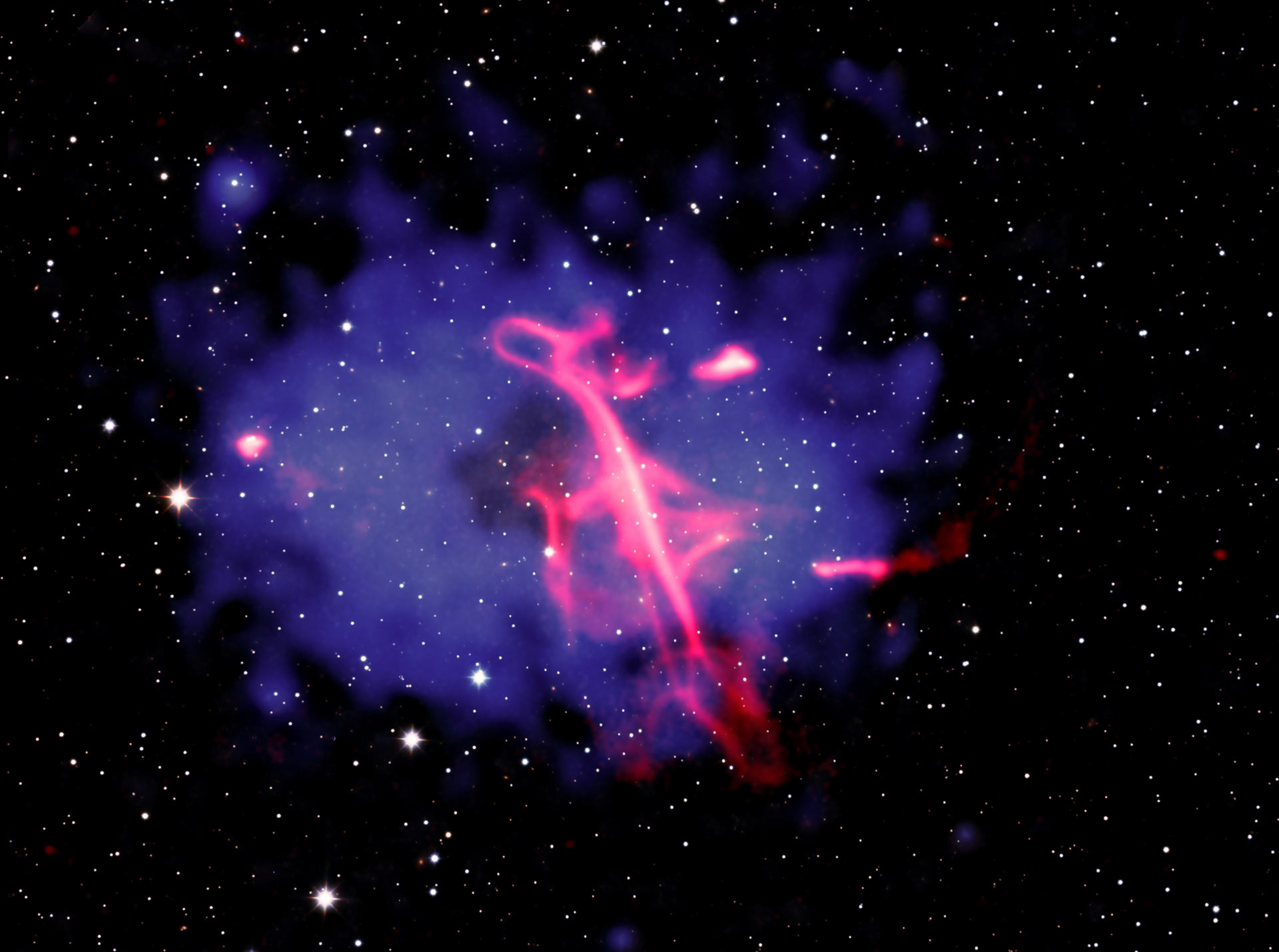
- Composite image combines X-rays from Chandra and eROSITA, radio from LOFAR, and infrared from UKIRT.
- Nicknamed Treble Clef, discovered by Dr. Andrea Botteon via the LOFAR survey; earlier surveys misidentified it as a pulsar.
- New observations with the Titan Metrewave Radio Telescope, LOFAR, Chandra, and SRG/eROSITA confirm a massive galaxy cluster.
- The radio structure spans about 2.5 million light-years, comprises thin filaments, and exhibits an exceptionally steep radio spectrum.
- Classified as a radio phoenix: ~190–200 million-year-old plasma reenergized by a cluster merger, shock waves, and prior supermassive black hole activity.
VLSS J 0318 9 + 5755, an unusual, musical-note-shaped radio source hiding behind the Milky Way’s messy disk, has ended up being the radiant remains of an old black hole outburst inside a large, colliding galaxy collection.
This composite image of the Treble Clef and its galaxy cluster consists of X-rays from Chandra and eROSITA, radio data from LOFAR, and infrared information from UKIRT. Photo credit: NASA/ CXC/ INAF-IRA/ Botteon et al / UKIDSS-GPS/ ASTRON/ LOFAR/ SAO/ N. Wolk.
Nicknamed the Treble Clef for its looping, filamentary form, VLSS J 0318 9 + 5755 was found by Dr. Andrea Botteon of Italy’s INAF and coworkers while they were combing via data from the LOFAR Two-meter Skies Survey.
The item had actually been found in the past, in the 1960 s and later surveys, and was once presumed to be a pulsar since it exists so close to the Galactic aircraft.
A 2004 study tentatively linked it to a galaxy collection, however it had not been investigated additionally previously.
Using new observations from the Titan Metrewave Radio Telescope, LOFAR’s low-frequency survey information, and X-ray information from NASA’s Chandra X-ray Observatory and the SRG/eROSITA telescope, Dr. Botteon’s team verified that an enormous galaxy cluster does rest behind the source.
The collection exists about 1 5 billion light-years away; the Treble Clef itself stretches about 2 5 million light-years and is comprised of thin filaments. Its radio range is exceptionally steep, dropping off greatly at greater regularities.
The astronomers identify it as a radio phoenix az : old, discolored plasma from an earlier burst of great void jet activity that was revived, most likely by gas activities stimulated in the cluster crash.
They estimate the plasma is around 190 to 200 million years old.
“The Treble Clef most likely created in a two-stage process,” the researchers claimed.
“First, an earlier outburst from a supermassive great void in the galaxy collection’s center drove clouds of billed bits and electromagnetic fields away at near to the speed of light.”
“This led to a sort of planetary apex and originally produced intense radio waves that later discolored as the bits shed power.”
“Next off, the crash between both clusters pressed or recharged the cloud, which came to be brighter once again in radio waves.”
“Shock waves– similar to the sonic booms from supersonic jets– from the accident might have contributed in this reenergizing procedure.”
The team’s paper will certainly be published in the journal Astronomy & & Astrophysics
_____
A. Botteon et alia 2026 The Treble Clef radio phoenix az and its old nonthermal filaments. A&A , in press; arXiv: 2607 06659
Review the full short article from the initial source