




Glow & Grow: Black Beauty, Haircare, and Skincare Tips
- Esthetician approved most of my routine; she liked Dermalogica, COSRX, and my morning vitamin C from Murad.
- She recommended switching to 10% azelaic acid (chose The Ordinary) to target hyperpigmentation.
- Easing into 10% azelaic acid: every other night, mild tingling but not painful, monitoring results over time.
- Retinol may be added later; esthetician prefers introducing one active at a time and reassessing in September.
- Facial was relaxing, included extractions, and gave a professional opinion confirming my routine mostly works for my skin.
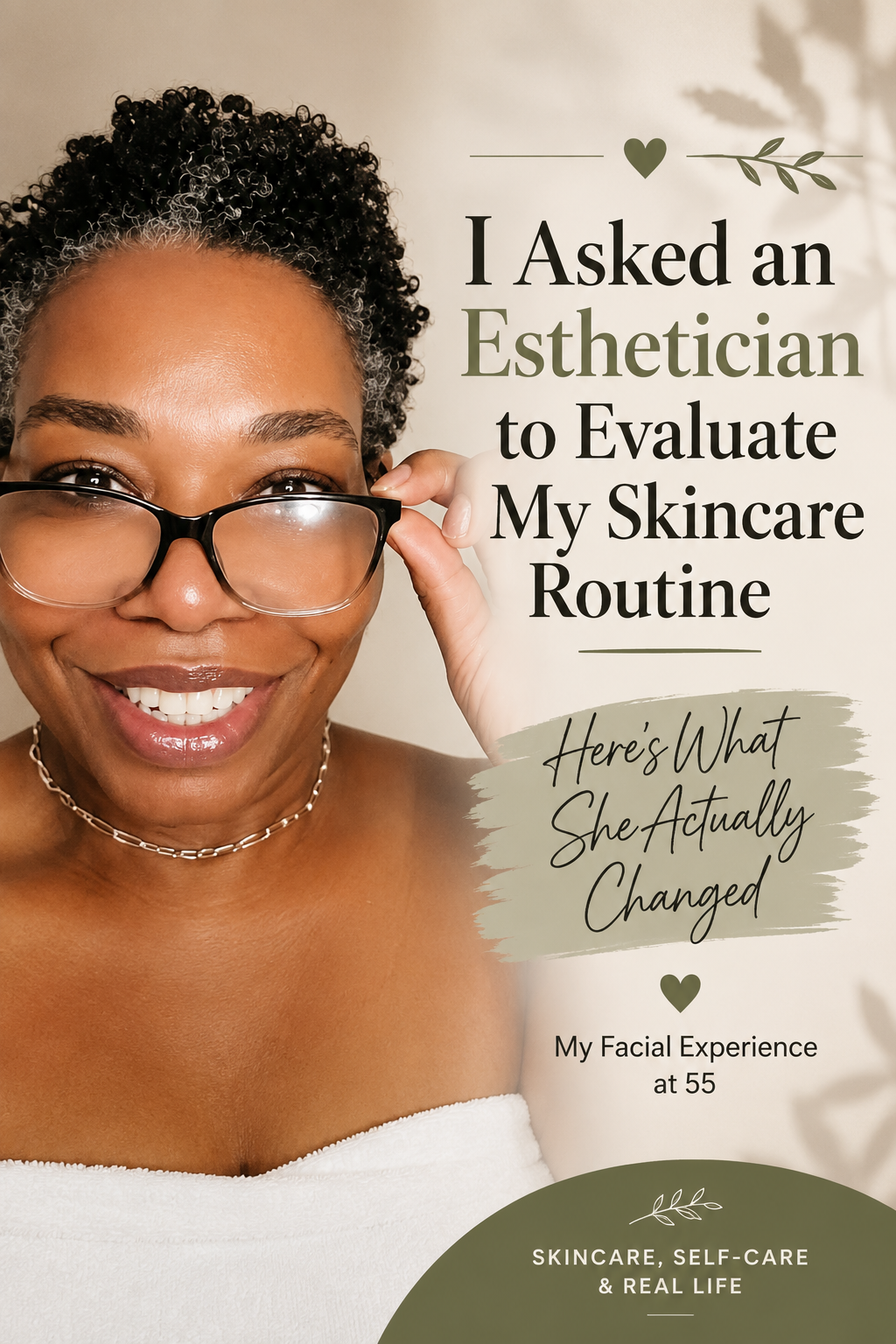
I hadn’t had a professional facial in years, so I wasn’t quite sure what my esthetician was going to say about my skin—or the skincare routine I’ve built over time. Would she tell me I was using the wrong products? Would a esthetician skincare routine recommendation leave me with a long list of things I needed to buy? Would I need to completely rethink my routine?
As it turns out, no.
She actually liked most of what I was already doing. She thought my skin looked good, my routine was solid, and aside from some extractions—which she wasn’t surprised by considering how long it had been since my last facial—there wasn’t some dramatic skincare intervention waiting for me. The biggest change she recommended was actually pretty simple: my azelaic acid. And because hyperpigmentation is one of the skincare concerns I’ve been working on, that was one recommendation I definitely wanted to explore.
Why I Finally Booked a Facial
I wish I had some deep reason for why it had been so long since my last facial, but honestly, life happens and a esthetician skincare routine just kept slipping down the list of needs. I’ve continued to take care of my skin at home. I’ve built a skincare routine that works for me, and I’ve tried different products over the years, but I wanted to make sure I was using what was actually going to aid in my efforts. I’ve become much more consistent about things like moisturizing and wearing sunscreen…
But a professional facial?
It had been years. So I finally decided it was time.
I also chose to visit a Black-owned business, and that was important to me. As a Black woman dealing with hyperpigmentation, I wanted to work with someone I felt comfortable talking to about my skin and who understood the concerns that can come with caring for melanated skin. Hyperpigmentation has been one of my biggest concerns, particularly on my chin and lower face, so I definitely wanted to hear what she had to say.
Come With Me to My Facial
I filmed a little bit of the experience because the entire atmosphere was so relaxing. The treatment room was dark and peaceful, and honestly, it just felt good to lie down and let someone else take care of my skin for a change. I filmed myself before going in, showed a little of the treatment room, and also talked about the experience afterward. And yes, there were extractions. Apparently, I had a little catching up to do. I felt like she was doing quite a few, but she didn’t seem particularly concerned. She basically explained that she could tell I hadn’t had a professional facial in years.
Natural Hair Wash Dos & Don’ts
Fair enough. 😂 Overall, though, she told me my skin looked good and that was certainly nice to hear, but what I really wanted to know was what she thought about everything I was already putting on my face.
What Did My Esthetician Think of My Skincare Routine?
This was probably the biggest surprise of the entire appointment.
She liked it.
I didn’t walk out with instructions to throw everything away and start over.
She liked the Dermalogica Special Cleansing Gel and toner I was using. She liked that I use COSRX Advanced Snail 96 Mucin Power Essence. She was happy with the products I was using in my morning routine. Basically, I wasn’t doing anything terribly wrong and I have to admit, that felt pretty good. Of course I let her know I was using vitamin C in my routine with Murad ENVIRONMENTAL SHIELD Vita-C Glycolic Serum and their Superactive Moisturizer in the morning and she was pleasantly OK with those as well.
I’ve spent a lot of time figuring out what my skin likes, especially as I’ve gotten older. My skin isn’t the same as it was in my 20s, 30s, or even 40s. I’ve had to pay more attention to hydration, hyperpigmentation and sun protection, while also figuring out which products are actually worth keeping in my routine. Having a professional look at my skin and tell me that most of what I was already doing was working for me felt like confirmation that I was on the right track. But there was one area where she thought I could make a change.

The One Major Change She Recommended: My Azelaic Acid
I was already using azelaic acid before my appointment, but the problem was that I had been using a lower-strength product for quite a while, and honestly…I wasn’t seeing much of a difference. Since one of my main concerns is hyperpigmentation, my esthetician recommended that I try a 10% azelaic acid product instead. She gave me a couple of options, including products from Good Molecules and The Ordinary. I decided to go with The Ordinary Azelaic Acid Suspension 10% and this one definitely feels different on my skin.
How I’m Using The Ordinary Azelaic Acid 10%
Right now, I’m easing into it.
I’m using it at night, about every other night, and following the order my esthetician recommended for my routine. One thing I’ve noticed is that I can definitely feel this product on my skin. I wouldn’t describe it as burning, and I wouldn’t necessarily call what I’m experiencing irritation. It doesn’t hurt. It’s more of a tingling sensation—or an awareness that there’s something on my face and I’m not going to lie: I’m not crazy about that feeling.
Minimal Skincare Routine for Black Women: Fewer Products, Better Skin
I’m used to skincare products that I put on and basically forget about. This is different enough that I notice it. Because of that, I’m taking my time and using it every other night rather than immediately jumping into using it every day. I also want to be clear about something: feeling a product on your skin doesn’t necessarily mean it’s working better. I’m simply noticing a difference between this formula and the lower-strength azelaic acid product I was previously using.
The real test for me will be what my skin—and specifically my hyperpigmentation—looks like over time. That’s something I’ll continue to pay attention to.

What About the Rest of My Skincare Routine?
For the most part, I’m continuing with what I was already doing.
There is one little wrinkle in that, though. I’m currently testing several products from Medicube for upcoming content, including a different toner. So although my esthetician liked the Dermalogica toner I had been using, I’ve temporarily switched things around while I try these products. That’s the reality of being a content creator who talks about skincare. Sometimes I’m testing something new even when I already have a product I like.
The important thing for me is paying attention to how my skin responds and not introducing so many new things at once that I have no idea what’s actually helping—or causing a problem. For now, the biggest intentional change to my regular routine is still the 10% azelaic acid.
Retinol May Be Next—but Not Yet
I’m going back to see my esthetician at the end of September.
That’s when we’ll talk about potentially adding retinol to my routine and I actually appreciate that she didn’t tell me to start everything at once. For now, she wants me to focus on incorporating the azelaic acid into my routine. Then, when I go back, we can see how my skin is doing and talk about the next step, and honestly, I’m good with that.
When it comes to skincare, especially products that my skin isn’t accustomed to, I’d rather take my time than introduce multiple new products at once and then have no idea which one my skin likes—or doesn’t like. So retinol is a conversation for September and yes, I’ll definitely be sharing that experience when the time comes.
Was Getting a Professional Facial Worth It?
For me, absolutely and not because I walked out looking like an entirely different person. I didn’t. There wasn’t some dramatic before-and-after transformation, and I don’t think there needed to be. My skin was already in pretty good shape and what I got from the experience was something different.
I got a relaxing facial.
I got the extractions I apparently needed after neglecting professional facials for years and most most importantly, I got a professional opinion about the skincare routine I’ve been building and adjusting on my own.
The fact that she didn’t recommend completely overhauling my routine was actually one of the best things I could have heard. Sometimes we’re so busy looking for the next product that’s going to “fix” our skin that we don’t stop to consider that maybe we don’t need to change everything. Maybe we just need to fine-tune a few things. For me, that meant making one significant change: moving to a 10% azelaic acid product and giving it time to see if it makes a difference with my hyperpigmentation.
My Biggest Takeaway
I walked into this appointment expecting that I might leave with a completely different skincare routine, but instead, I left feeling pretty good about the routine I already had. My esthetician liked most of my products. She thought my skin looked good. She gave me one primary recommendation based on one of my biggest concerns and now I’m giving that recommendation a chance to work. I’ll continue using the 10% azelaic acid slowly and paying attention to how my skin responds. Then I’ll head back in September, when we’ll see where things stand and possibly start the next chapter of this skincare journey: retinol.
At 55, I’m not looking for perfect skin. I’m looking for healthy skin and I’m also looking for a routine that works for me, products that make sense for my concerns, and professional guidance when I need it. Let me not forget to mention that I should also stop waiting years between facials. Message received.
Have you ever had a professional evaluate your skincare routine? Did they tell you to change everything—or were you surprised to find out you were already doing most things right? I’d love to hear about your experience.
Note: This post is about my personal skincare experience and the recommendations I received based on my individual skin. What works for me may not be appropriate for everyone. If you’re considering adding active ingredients such as azelaic acid or retinol to your routine, consider talking with a dermatologist or qualified skincare professional about what’s appropriate for your skin.
Sabrina
Read the full article from the original source
