


Close Menu
Savannah HeraldSavannah Herald
    • Home
    • News
      • Local
      • State
      • National
      • World
      • HBCUs
    • Events
    • Directories
    • Weather
    • Traffic
    • Jobs
    • Sports
    • Politics
    • Lifestyle
      • Faith
      • Senior Living
      • Health
      • Travel
      • Beauty
      • Fashion
      • Food
      • Art & Literature
    • Business
      • Real Estate
      • Entertainment
      • Investing
      • Education
    • Guides
      • SSU Homecoming Guide
      • Back to School Savannah
      • Summer Camp Guide
      • Juneteenth Guide
      • Black History Savannah
      • MLK Guide Savannah
    We're Social
    • Twitter
    • Facebook
    • YouTube

    Subscribe to Updates

    Get the latest creative news from FooBar about art, design and business.

    Trending
    • Cheapest Gas Stations in Savannah | Savannah Herald
    • Missing Children in Ga | Jelaya Holmes (GA) | Savannah Herald
    • Breast Cancer Screening for Black Women Doesn’t End in October
    • Savannah State University and City of Savannah Announce Broadcast Partnership: Student-Produced “Tiger’s Roar” Newscast to Air Weekly on Channel 8 | Savannah Herald
    • What are Storm players up to this offseason?
    • CIARA SHOWS OFF BABY BUMP IN SHEER BLACK DRESS AT 2026 BABY2BABY GALA
    • Air Traffic Control Systems Are Outdated. What’s Being Done to Prevent Another Outage?
    • Creamy Peppermint Martini (Candy Cane Rim)
    Facebook X (Twitter) Instagram YouTube
    Login
    Savannah HeraldSavannah Herald
    Savannah HeraldSavannah Herald
    Home » When Black Women Are in the Room, the Conversation Changes
    Health

    When Black Women Are in the Room, the Conversation Changes

    Savannah HeraldBy Savannah HeraldSeptember 28, 20267 Mins Read
    Facebook Twitter Pinterest LinkedIn WhatsApp Reddit Tumblr Email
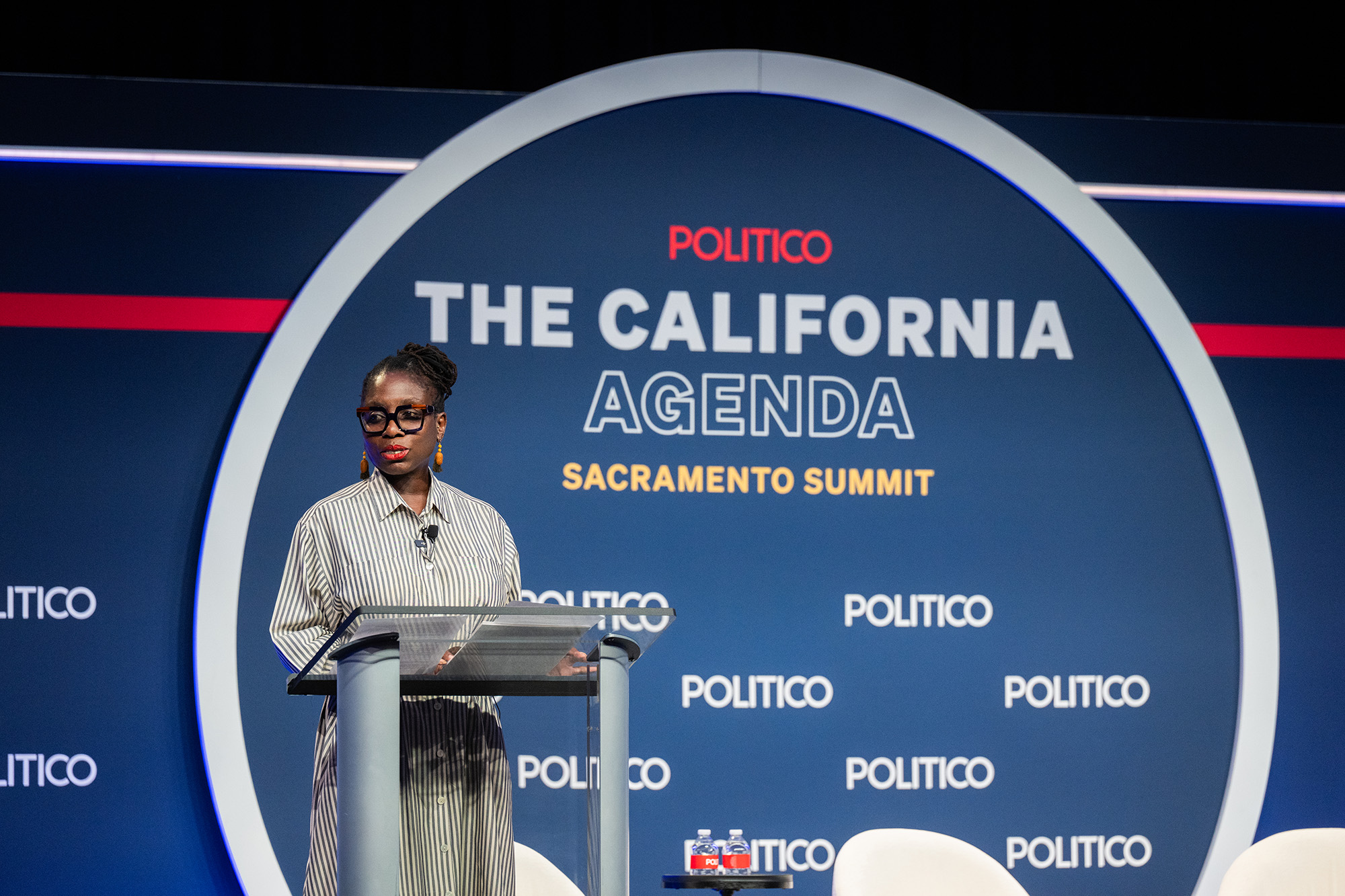
    Ife Udoh, Ph.D at The California Agenda
    Share
    Facebook Twitter LinkedIn Pinterest Email

    Wellness That Matters: Black Health News & Community Care

    Key takeaways
    • Scientific breakthroughs that don't reach communities leave Black women without benefits; close the gap between innovation and delivery.
    • Health care must listen to Black women's lived experiences to shape research, policy, and meaningful care.
    • BWHI research finds many Black women lack menopause information and report discrimination when seeking care.
    • BWHI's culturally tailored lifestyle program reduces risk, but access, cost, and provider training determine whether it helps communities.
    • Representation changes conversations; visibility must turn into policy, relationships, and sustained advocacy to achieve health equity for Black women.

    Reflections from POLITICO’s California Agenda: Sacramento Summit

    By Ifeoma C. Udoh, Ph.D, EVP, Policy and Research, Black Women’s Health Imperative

    This week I stood on a stage in Sacramento, looking out at a room full of the people who shape California’s future, and I kept thinking about the women who weren’t in the room.

    POLITICO’s California Agenda Summit brought together an impressive lineup: Speaker Emerita Nancy Pelosi, Attorney General Rob Bonta, Senator Adam Schiff, Xavier Becerra, state legislators, business leaders, technology executives. California has always been a place where what gets decided inside its borders ripples far beyond them. So as I prepared to represent the Black Women’s Health Imperative on that stage, one question kept following me around: who actually benefits from all of this innovation? Watch the Remarks.

    The Gap Between Discovery and Delivery

    Innovation was the word of the day, and understandably so. We’re living through remarkable advances in science and medicine and AI technologies impact on healthcare systems. But a breakthrough that never makes it to the people carrying the heaviest burden of disease is a breakthrough on paper. For Black women, that gap between what science can do and what our communities actually receive has real consequences, and I’ve been watching it my whole life. 

    I grew up in Southern California, the daughter of immigrants. My mother spent over 25 years as a labor and delivery nurse in public hospitals in Los Angeles, and watching her care for women and families taught me something no degree ever could: health is science, yes, but it’s also listening. It’s taking what women tell us about their bodies and their lives seriously enough to let it shape research, policy and care.

    Because here’s the truth. Black women are not biologically destined to have worse health outcomes. Our systems have failed us. We have providers who don’t always listen, gaps in the data and research, information that never reaches our communities, and policies that reflect neither the science nor what women keep telling us about their own experiences.

    What Black Women Are Actually Saying

    At BWHI, our Power in the Pause and research on Black women’s experiences of menopause makes this painfully concrete. More than half of the Black women we surveyed said they didn’t know which medical recommendations to follow during menopause. Nearly half said they didn’t have adequate information to manage their symptoms, and more than four in ten reported discrimination or unfair treatment when seeking care. Sit with that for a moment. How do we expect women to make informed decisions about their health when they don’t have the information, don’t trust the system providing it, or don’t believe their providers are hearing them? READ THE PRELIMINARY RESULTS

    The same story plays out with obesity and metabolic health. For decades, society treated weight as a simple matter of willpower. What did you eat? Did you exercise? Were you disciplined enough? We know better now. Obesity is a complex, chronic condition shaped by biology, genetics, environment, stress, mental health and the circumstances of people’s daily lives.

    Lifestyle still matters, of course. BWHI has spent more than a decade guiding nearly 4,000 Black women through a culturally tailored lifestyle-change program that reduces their risk of diabetes, heart disease, high blood pressure and high cholesterol. But lifestyle can’t be the whole answer. When science hands us new tools that can help people live healthier lives, our responsibility doesn’t end at the discovery. We have to ask who can access those tools, who can afford them, whether providers know how to use them appropriately, and whether the communities who need them most are actually getting them. That’s the moment health policy stops being abstract and becomes deeply personal.
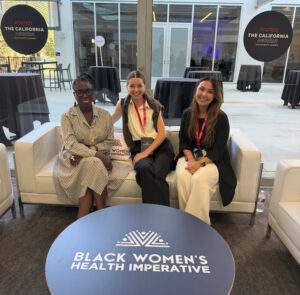
    Ifeoma-Udoh-Perry-Communications

    “She Said She Felt Seen”

    After I left the stage, several women came up to thank me for centering Black women in a conversation of that magnitude. One moment has stayed with me. A nurse approached and told me how much it meant that I was there. She said she felt seen.

    I haven’t stopped thinking about her, because that’s what representation is really for. Not representation as a photo op, but representation that changes what gets discussed, what data comes into the room, and which questions get asked at all. When a Black woman in the audience hears her health experience reflected from a major policy stage and thinks, someone sees me, that matters. But being seen has to be the beginning of the story, not the end. Our job is to turn that visibility into action.

    Some of the most meaningful moments happened offstage, too. I met Speaker Emerita Pelosi, whose decades of service have placed her at the center of so many of this country’s defining health policy fights. I also had a chance to talk with Xavier Becerra and remind him that I’d once sat in on his reproductive justice roundtable when he led HHS. It was a full-circle moment, and a reminder of something I believe deeply about this work: showing up matters. The roundtable, the community conversation, the policy drafting session, the big stage where the future of health care gets debated. Black women need advocates in every one of those rooms, because relationships and conversations are where policy actually moves.
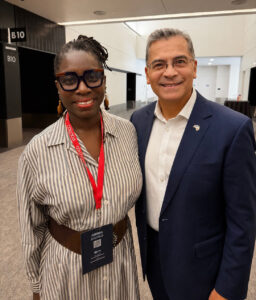
    Ife Udoh and Xavier BecerraThe Question Has to Change

    I think about this constantly in the course of my career bridging research to policy. I have been trained and guided by tremendous and diverse HIV experts- from epidemiologists to sociologists to community health workers – on how to implement and improve and advance HIV prevention, care and access. We have behavioral and community and biomedical interventions that work, and we’ve had them for years. Yet Black women continue to experience HIV impact disproportionately. At some point the question can no longer be, do we have an intervention that works? It has to become, why isn’t it reaching the women who need it?

    That is a health equity question, and it applies just as urgently to maternal health, menopause, obesity, chronic disease and women’s health as a whole. Scientific discovery is not the finish line. An effective treatment people can’t access, information that never reaches our communities, policy written without our lived experience in it: none of that gets us where we need to go.

    California has a real opportunity here to show the country what happens when science, innovation, policy and community come together. We can build health systems that listen to Black women, invest in research that reflects our actual lives, and make sure that when evidence-based care exists, the people who need it can get it. We can create the model- right here at home.

    To me, that’s what health equity looks like. It isn’t asking Black women to work harder at being healthy. It’s asking whether the systems around us are doing their job.

    Standing on that stage, I knew exactly why BWHI needed to be there. And when that nurse told me she felt seen, I remembered who we were there for. Black women deserve to be seen and heard, and what we say must help shape what happens next. Our health is our power. When Black women have the information, care and opportunity to thrive, ALL our families and communities thrive right along with us.

    Read the full article on the original site


    Related Posts

    • Why It’s Silly to Charge Black Americans of Social Appropriation
    • Fall Workout Favorites from Amazon: 9 Must-Haves for the Season
    • top online casino sites fineonlinecasinos.comLike An Expert. Follow These 5 Steps To Get There
    • Vin Diesel Shocks Fans with Unrecognizable Appearance Amid Noticeable Weight Gain
    • CARICOM And The EU Face The Same Global Paradigm Shift
    • How to Sell My House for Cash in Addison
    • 4 ‘Skillcations’ Where Travel Meets Personal Growth
    • Tariffs anticipation behind surge at Georgia ports
    Black Health News Black Healthcare Access Black Mental Health Black Wellness Chronic Illness in Black Communities Community Health Updates Fitness and Nutrition News Georgia Health News Health and Healing Health and Wellness for Black Men Health Disparities Health Equity Healthcare Policy Local Health Headlines Mental Health in Black Communities Mental Wellness Public Health in the South Savannah Health Resources Therapy for Black Women Wellness for Women of Color
    Share. Facebook Twitter Pinterest LinkedIn WhatsApp Reddit Tumblr Email
    Savannah Herald
    • Website

    Related Posts

    Health November 15, 2026

    Breast Cancer Screening for Black Women Doesn’t End in October

    Health November 11, 2026

    When a Gun Owner Shows Early Signs of Dementia

    Health November 7, 2026

    Georgia helped inspire Medicaid work rules. Its own rules could soon end.

    Health November 3, 2026

    U.S. Women Have Little Access To Cheaper Cancer Treatment

    Health November 3, 2026

    Genetic Risk Isn’t Destiny for Black Americans. It’s a Target.

    Health November 2, 2026

    Black Men and Prostate Cancer: Start Screening Earlier

    Comments are closed.

    Don't Miss
    Senior Living June 29, 2026By Savannah Herald022 Mins Read

    GBONEWS: Saying sixteenth Journalists in Growing old Fellowships; USC Well being Reporting Fellowships; Pulitzer Finalists; 17 Conflicts in Home’s Large Finances Invoice; Medicaid Cuts Would Hit Medicare; Alzheimer Plan’s False Hopes; Older Immigrants Battle; Medicaid Work Necessities and Seniors; & MORE.

    June 29, 2026

    Growing old Effectively: Information & Insights for Seniors and Caregivers Challenge: 32.9   Posted: Might…

    The way, the Trump and the lies: prayer breakfast displays US right’s devil’s pact | Savannah Herald

    June 6, 2026

    5 everyday nutrition tips to fuel your daily energy levels | Health & Wellness

    June 13, 2026

    Boosterthon celebrates 25 years of fundraising for schools

    April 10, 2026

    Soul Vegetarian, Atlanta’s Oldest Vegan Restaurant, Closes

    July 16, 2026
    Archives
    • November 2026
    • October 2026
    • September 2026
    • August 2026
    • July 2026
    • June 2026
    • May 2026
    • April 2026
    • March 2026
    • February 2026
    • January 2026
    • December 2025
    • November 2025
    • October 2025
    • September 2025
    • August 2025
    • July 2025
    • June 2025
    • May 2025
    • April 2025
    • March 2025
    • February 2025
    Categories
    • Art & Literature
    • Beauty
    • Black History
    • Business
    • Climate
    • Culture
    • Education
    • Employment
    • Entertainment
    • Faith
    • Fashion
    • Food
    • Gaming
    • Georgia Politics
    • Guides
    • HBCUs
    • Health
    • Health Inspections
    • Investing
    • Lifestyle
    • Local
    • Lowcountry News
    • National
    • National Opinion
    • News
    • Politics
    • Real Estate
    • Senior Living
    • Sports
    • State
    • Tech
    • Traffic
    • Transportation
    • Travel
    • Weather
    • World
    Savannah Herald Newsletter

    Subscribe to Updates

    A round up interesting pic’s, post and articles in the C-Port and around the world.

    About Us
    About Us

    The Savannah Herald is your trusted source for the pulse of Coastal Georgia and the Low County of South Carolina. We're committed to delivering timely news that resonates with the African American community.

    From local politics to business developments, we're here to keep you informed and engaged. Our mission is to amplify the voices and stories that matter, shining a light on our collective experiences and achievements.
    We cover:
    🏛️ Politics
    💼 Business
    🎭 Entertainment
    🏀 Sports
    🩺 Health
    💻 Technology
    Savannah Herald: Savannah's Black Voice 💪🏾

    Our Picks

    How Upgrade to Windows 11 Empowers Organizations?

    June 30, 2026

    Caitlin Clark is 9th-ranked guard in WNBA players’ All-Star voting

    May 15, 2026

    Winter HBCU baseball tournament will honor a Black MLB legend

    January 27, 2026

    Savannah Bananas star Ashton Lansdell eager to make WPBL history

    August 8, 2026

    Thinking About DA-Link? – Anh Co Tran

    August 11, 2026
    Categories
    • Art & Literature
    • Beauty
    • Black History
    • Business
    • Climate
    • Culture
    • Education
    • Employment
    • Entertainment
    • Faith
    • Fashion
    • Food
    • Gaming
    • Georgia Politics
    • Guides
    • HBCUs
    • Health
    • Health Inspections
    • Investing
    • Lifestyle
    • Local
    • Lowcountry News
    • National
    • National Opinion
    • News
    • Politics
    • Real Estate
    • Senior Living
    • Sports
    • State
    • Tech
    • Traffic
    • Transportation
    • Travel
    • Weather
    • World
    Copyright © 2002-2026 Savannahherald.com All Rights Reserved. A Veteran-Owned Business

    Type above and press Enter to search. Press Esc to cancel.

    Manage Consent
    To provide the best experiences, we use technologies like cookies to store and/or access device information. Consenting to these technologies will allow us to process data such as browsing behavior or unique IDs on this site. Not consenting or withdrawing consent, may adversely affect certain features and functions.
    Functional Always active
    The technical storage or access is strictly necessary for the legitimate purpose of enabling the use of a specific service explicitly requested by the subscriber or user, or for the sole purpose of carrying out the transmission of a communication over an electronic communications network.
    Preferences
    The technical storage or access is necessary for the legitimate purpose of storing preferences that are not requested by the subscriber or user.
    Statistics
    The technical storage or access that is used exclusively for statistical purposes. The technical storage or access that is used exclusively for anonymous statistical purposes. Without a subpoena, voluntary compliance on the part of your Internet Service Provider, or additional records from a third party, information stored or retrieved for this purpose alone cannot usually be used to identify you.
    Marketing
    The technical storage or access is required to create user profiles to send advertising, or to track the user on a website or across several websites for similar marketing purposes.
    • Manage options
    • Manage services
    • Manage {vendor_count} vendors
    • Read more about these purposes
    View preferences
    • {title}
    • {title}
    • {title}
    Ad Blocker Enabled!
    Ad Blocker Enabled!
    Our website is made possible by displaying online advertisements to our visitors. Please support us by disabling your Ad Blocker.

    Sign In or Register

    Welcome Back!

    Login to your account below.

    Lost password?