




Faith & Reflection: Voices from the Black Church and Beyond
- Ornithology is a seminal contrafact of How High the Moon, defining bebop’s quicksilver lines and harmonic invention.
- Parker’s Mood strips to a raw 12-bar blues, a soul-bearing solo conveying grief, longing, and intimate emotional truth.
- Now’s the Time blends blues roots with bebop phrasing, bridging jazz and early R&B, its riff inspiring Paul Williams' The Hucklebuck.
- Ko-Ko channels frenzy over challenging Cherokee changes, featuring one of Parker’s most ferocious, adrenaline-fueled solos.
- Embraceable You reveals Parker’s tender balladry and lyrical improvisation, using space and silence to create intimate, human expression.
1
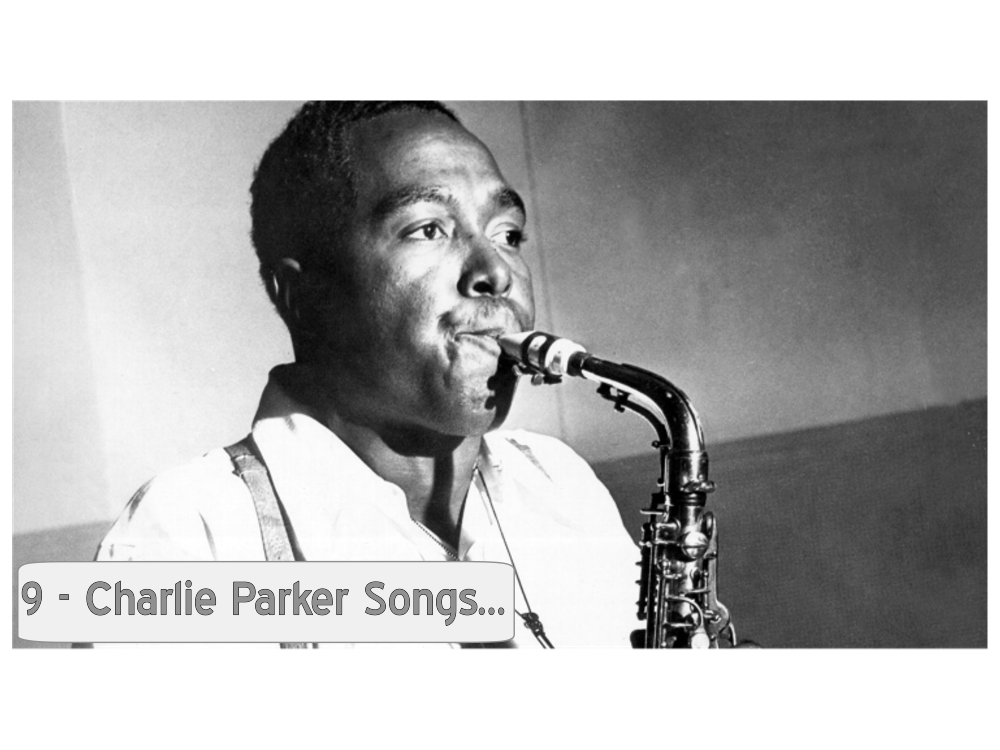
(ThyBlackMan.com) Charlie Parker didn’t just play jazz—he flipped it inside out and painted it with fire. Known as “Bird,” he soared through the bebop revolution with lightning-fast lines, harmonic daring, and soul-stirring emotion. His alto sax wasn’t just an instrument—it was a voice that cried, laughed, and preached the blues like scripture.
Bird’s recordings are more than historical artifacts; they’re living, breathing statements of genius. From breakneck burners to tender ballads, his work covers the full spectrum of feeling and form. Whether you’re discovering Parker for the first time or revisiting the sound of bebop’s finest hour, these nine jazzy tracks reveal the full range of his brilliance. Lean in—every note has something to say.
1. “Ornithology”
“Ornithology” isn’t just a cornerstone of bebop—it’s one of jazz’s most enduring blueprints for innovation. As a contrafact, it borrows the chord progression of “How High the Moon” but completely reimagines it with a new melody that defies the listener’s expectations. The tune is like a sonic mosaic of bebop principles: quicksilver lines, unexpected harmonic turns, and rhythmic elasticity that stretches and contracts like musical rubber.
Parker’s performance here is a study in balance—between freedom and form, between chaos and control. His improvisation dances on the edge of dissonance without ever losing melodic clarity. He jumps octaves with ease, intersperses bluesy phrasing with chromatic runs, and seems to anticipate every twist the changes might throw at him. It’s not just fast for the sake of speed—it’s purposeful motion, the sound of ideas being formed in real-time.
“Ornithology” has also become a rite of passage for modern jazz players. It’s not uncommon to hear it in college ensembles, jam sessions, or club gigs, where musicians test their mettle by navigating its tricky terrain. It continues to be taught in jazz programs around the world because it challenges players to be both creative and precise.
For the contemporary ear, the track still sparkles. Even with today’s digital production and layered soundscapes, there’s something electrifying about hearing raw musicianship executed at this level. “Ornithology” is not just a relic—it’s a living, breathing masterclass that continues to inspire and push boundaries.
2. “Parker’s Mood”
“Parker’s Mood” is among the most nakedly emotional works in jazz history. While Parker was often associated with technical brilliance, here he sheds all bravado and bares his soul in the language of blues. The tempo is slow, the feel is loose, and the mood is steeped in reflection—making it a spiritual cousin to Billie Holiday’s torch songs or Mahalia Jackson’s gospel cries.
The structure of the piece is simple—a 12-bar blues—but what Parker does with that form is anything but. His solo isn’t so much a demonstration of prowess as it is a personal confession. His alto saxophone cries, sighs, and speaks as if trying to articulate something deeper than words: the burden of genius, the weight of addiction, the ache of being misunderstood. Every phrase feels deliberate, as though he’s choosing his notes the way someone picks their words in the middle of grief.
Behind him, the rhythm section offers hushed support, never intruding, always listening. The piano comps delicately, like a friend offering comfort without platitudes. The bass and drums form a soft but steady heartbeat, grounding the emotion in something human and relatable.
“Parker’s Mood” endures because it speaks to something beyond the technical. It reminds us that jazz, for all its complexity, is fundamentally about expression. You don’t have to be a jazz theorist to feel the weight of this track—you just have to be someone who has ever longed, loved, or lost. In that way, the piece remains heartbreakingly universal.
3. “Now’s the Time”
With “Now’s the Time,” Charlie Parker created one of the most approachable yet groundbreaking entries in the bebop canon. The groove is unshakable, rooted in the blues, but the phrasing and rhythmic play feel fresh even today. It’s a piece that speaks both to the casual listener and the serious student of jazz.
Structurally, it adheres to a standard 12-bar blues form, yet every bar feels alive with intention. Parker’s phrasing is masterfully syncopated, dropping in and out of time in a way that teases the listener. He stretches out his lines across the bar lines, adding unexpected emphasis to off-beats, making the entire performance feel like a sly, musical conversation. It’s as if he’s saying, “I know the rules, but watch how I can bend them.”
Beyond its compositional merits, “Now’s the Time” holds historical weight. It’s often cited as a bridge between bebop and the emerging rhythm-and-blues sound of the late 1940s. The track’s main riff was reworked into Paul Williams’ “The Hucklebuck,” a chart-topping R&B hit that drew direct inspiration from Parker’s original. This crossover appeal speaks volumes about how Bird’s music permeated the broader cultural landscape.
In today’s musical environment, “Now’s the Time” feels like a necessary reminder of jazz’s roots in the blues. It also underscores Parker’s gift for clarity—how he could communicate complex ideas without losing soulfulness. It’s an anthem for all those moments when urgency, creativity, and emotion collide.
4. “Ko-Ko”
“Ko-Ko” is chaos distilled into genius. It’s often cited as one of Parker’s most ambitious and daring performances, and with good reason. The track wastes no time. After a brief introduction, Parker explodes into one of the most ferocious solos in jazz history. There are no easy entrances, no easing into the groove—just full throttle artistry from the downbeat.
The composition itself is built on the challenging chord progression of “Cherokee,” a favorite among beboppers for its quick harmonic changes and unusual key modulations. But Parker doesn’t just navigate these waters—he sets them on fire. His lines twist and turn unpredictably, leaping over intervals, diving into chromatic spirals, and then landing with uncanny precision.
One fascinating aspect of “Ko-Ko” is the surrounding lore. The session almost didn’t happen due to absent personnel, and Parker himself was reportedly struggling with heroin withdrawal at the time. Yet what we hear is pure adrenaline and control, a contradiction that defines much of Parker’s life and work. Dizzy Gillespie fills in on trumpet—and possibly on piano—and Max Roach delivers thunderous support on drums. The result is a sonic rush that feels barely contained.
Even by today’s standards, “Ko-Ko” is intimidating. It’s a track that musicians approach with awe, and listeners absorb like a thrill ride. It doesn’t just demand your attention—it grabs you by the collar and doesn’t let go. In just over two minutes, Charlie Parker condensed a lifetime of risk, rebellion, and refinement into a single statement. It remains one of the boldest declarations in jazz history.
5. “Scrapple from the Apple”
“Scrapple from the Apple” isn’t just one of Parker’s most popular tunes—it’s one of his most clever. By blending the harmonic progressions of “I Got Rhythm” (for the A sections) and “Honeysuckle Rose” (for the bridge), Parker created a tune that’s deceptively familiar yet unmistakably fresh. It’s a quintessential example of how bebop retooled the American songbook to reflect modern sensibilities and virtuosity.
The head is snappy and joyous, filled with classic bebop syncopation and Parker’s signature melodic angularity. It swings hard but stays light on its feet, inviting musicians into a playground of improvisation. Bird’s solo is dazzling without being excessive. He doesn’t merely display technique—he composes in the moment, stringing together phrases with architectural intent.
What makes the piece endure is its adaptability. “Scrapple from the Apple” can be taken at a brisk clip or with a medium bounce. It thrives in jam sessions and college ensembles because it offers endless space for interpretation while staying grounded in a bebop vocabulary.
For the modern ear, the song feels like a joyous burst of creative freedom. It walks the line between technical showcase and melodic pleasure, making it a fantastic entry point for listeners new to Parker’s work. It’s the kind of tune that feels just as exciting on the hundredth listen as it does on the first.
6. “Donna Lee”
If bebop had an obstacle course, “Donna Lee” would be its main event. The melody is a dizzying labyrinth of 16th-note runs, syncopated leaps, and rhythmic traps. Its complexity makes it a favorite (and a nightmare) among jazz musicians—especially horn players—looking to test their chops. Though officially credited to Miles Davis, most scholars and musicians agree that the composition reflects Parker’s voice more than anyone else’s.
From the outset, the tune demands full attention. The head practically spills out in a blur, but Parker never sounds rushed. His articulation is pristine, and every note lands with purpose. There’s no resting point—every bar introduces a new challenge, whether it’s a sequence, a chromatic twist, or a breakneck shift in phrasing.
What elevates “Donna Lee” beyond a technical marvel is its sheer energy. There’s joy embedded in its complexity. Parker’s improvisation builds on the head’s serpentine logic, using rhythmic displacement, motivic development, and melodic invention to create a solo that’s simultaneously cerebral and soulful.
Listening today, “Donna Lee” feels like a rite of passage. It might not be the track you play for casual jazz fans first, but for those ready to dive into the mechanics of bebop, it’s an indispensable example of how music can challenge the brain and dazzle the spirit at the same time.
7. “Confirmation”
“Confirmation” is the crown jewel of Parker’s harmonic sophistication. Built on a brilliant, winding melody that seamlessly navigates complex chord changes, it’s often considered one of the most elegant compositions in the bebop repertoire. There’s an architectural brilliance in how Parker constructs the tune—each phrase flows logically into the next, even as the harmony underneath continually shifts and surprises.
The tune opens with a lyrical head that feels like a gentle glide across a bed of thorns. It’s not aggressive, but it’s not easy either. The melody weaves in and out of the changes with grace, making the technical mastery sound effortless. Parker’s ensuing solo feels more like a classical sonata than a jazz improvisation: thematic, controlled, and emotionally layered.
What makes “Confirmation” special is its balance. It’s intellectually rewarding for music theorists but emotionally satisfying for casual listeners. Bird explores the piece with fluidity, never letting complexity get in the way of expressiveness. He balances rapid runs with lyrical phrases, subtle dissonances with soothing resolutions.
In today’s jazz landscape, “Confirmation” remains a beacon for players and listeners alike. It’s a tune that deepens with age, revealing new nuances and insights every time you return to it. Parker wasn’t just improvising—he was constructing cathedrals in sound.
8. “Moose the Mooche”
Named after Emry “Moose” Moore, Parker’s Los Angeles drug connection, “Moose the Mooche” is a tune that encapsulates the intensity and grit of Bird’s bebop years. It’s fast, relentless, and built on rhythm changes—a familiar harmonic playground for Parker that he transforms into something feral and thrilling.
The head is punchy, built on a sequence of bounding, syncopated phrases that feel like they’re leaping off the staff. Parker attacks the melody with bite and swagger, his alto sax buzzing with urgency. Once the solos begin, there’s no let-up. Bird storms through his chorus with lines that twist and flip at breakneck pace, each phrase filled with double-time flourishes, chromatic runs, and bluesy interjections.
The rhythm section, especially Max Roach on drums, provides crackling support. Roach doesn’t just keep time—he punctuates, responds, and eggs Parker on, creating a dynamic interplay that makes the track feel alive. The recording becomes less of a performance and more of a tightly choreographed duel between equals.
“Moose the Mooche” is not easy listening, but that’s what makes it exhilarating. For the modern ear, it’s jazz with the gloves off—a reminder that the music’s origins were as much about rebellion and expression as they were about beauty and formality. Bird wasn’t just pushing music forward—he was doing it at full sprint.
9. “Embraceable You”
Parker’s rendition of “Embraceable You” is a masterclass in lyrical improvisation and emotional vulnerability. Rather than play the tune’s well-known melody, Bird enters straight into a solo interpretation, crafting a new head on the spot that flows with the harmonic structure of the Gershwin classic. It’s one of the most intimate recordings in jazz history.
There’s an immediate sense of stillness in the opening bars. Unlike the high-velocity bebop Parker is known for, here he chooses to breathe through the notes, shaping each line with subtle vibrato, tender phrasing, and melodic grace. He doesn’t fill every space—he lets the air hang, allowing silence to play its part in the conversation.
The accompaniment is equally delicate, with the rhythm section providing a soft cushion for Parker’s floating lines. Every note he plays feels intentional, as if he’s gently revealing a memory. It’s one of those rare performances where the technical and emotional are so intertwined you forget to separate them.
“Embraceable You” remains a revelation in today’s jazz environment. It’s a testament to Parker’s ability to tap into the romantic core of a tune and reshape it through his voice. More than any uptempo bebop showcase, this track proves that Bird could caress a ballad with the same brilliance he brought to a blistering run. In doing so, he showed the world that the heart can be just as revolutionary as the head.
Charlie Parker made music that still dances in the air, long after the last note fades. These nine songs aren’t just classic—they’re essential listening for anyone who wants to understand how jazz found its wings. From the street-smart swagger of “Scrapple from the Apple” to the hush of “Embraceable You,” Bird’s spirit soars in every bar.
His legacy isn’t locked in the past. It’s in every solo that reaches for something higher, every jam session that dares to push further. Parker taught us that jazz isn’t about perfection—it’s about truth, tension, and fearless beauty. So dig into these tracks, let them groove through your bloodstream, and remember: the music may change, but Bird still flies.
Staff Writer; Jamar Jackson
Read the full article on the original source
