




From Campus to Classroom: Stories That Shape Education
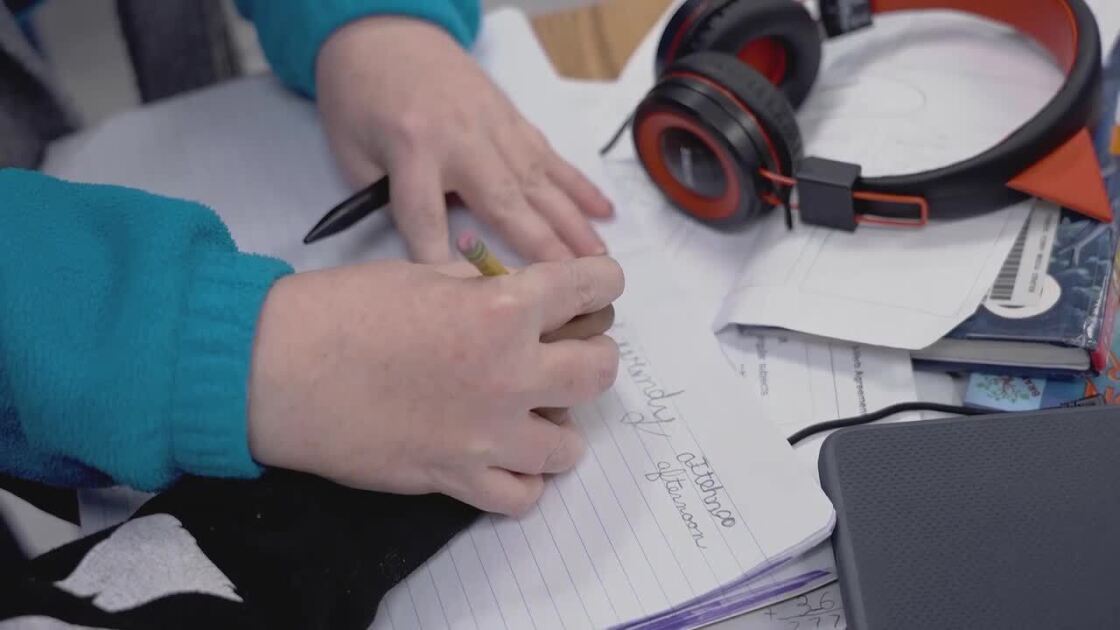
- Powers Ferry Elementary earned the John Hancock Banner and Ribbon of Distinction for 90% of students writing their name and the Preamble in cursive.
- Georgia now requires grades three to five to learn cursive; state superintendent Richard Woods links it to history, critical thinking, and expression.
- Elayna Wilson credits teachers' explicit modeling, demonstrating letter formation and hand-arm movements before student practice.
- Teachers use fun multisensory activities like special pencils, markers, Cool Whip, and shaving cream to engage students in cursive practice.
For well over a century, elementary school students were taught the loopy, fluid handwriting style called cursive. Then came the rise of digital devices, and schools began to prioritize teaching keyboarding skills over cursive.
When states in 2010 introduced the Common Core State Standards, which didn’t include cursive writing, most schools abandoned the flowy form of writing altogether. But cursive has begun making a comeback recently, and students at one elementary school in Georgia are embracing it.
Powers Ferry Elementary, in Georgia’s Cobb County school district, has taken up cursive with gusto. It was the only school in its district to receive the Georgia education department’s 2024-25 John Hancock Banner and Ribbon of Distinction, an award recognizing schools in which at least 90% of students can write both their name and the Preamble to the U.S. Constitution in cursive. Powers Ferry Elementary joined 93 other schools statewide that earned the award in 2024-25.
Powers Ferry and other award honorees got a jump-start on Georgia legislation requiring students in grades 3-5 to learn to write in cursive beginning this school year. Georgia joins at least 24 other states nationwide returning lessons in cursive handwriting to elementary classrooms, a decision that state school Superintendent Richard Woods supports. “As Georgia’s state school superintendent and a former classroom teacher, I firmly believe learning cursive is more than just a writing skill—it’s a connection to history, critical thinking, and personal expression,” he told district educators.
Powers Ferry Principal Elayna Wilson credits teachers’ “explicit modeling” with students’ quick success in learning cursive writing. “Our teachers model actually how to form the letters, showing students the hand-arm movements for the letters and then allowing the students to practice what the teacher has modeled,” said Wilson.
Wilson also encourages teachers to make handwriting practice fun for students—letting them use special pencils and markers, Cool Whip, and even shaving cream to form letters in cursive.
Read the full article on the original site
