


Close Menu
Savannah HeraldSavannah Herald
    • Home
    • News
      • Local
      • State
      • National
      • World
      • HBCUs
    • Events
    • Directories
    • Weather
    • Traffic
    • Sports
    • Politics
    • Lifestyle
      • Faith
      • Senior Living
      • Health
      • Travel
      • Beauty
      • Fashion
      • Food
      • Art & Literature
    • Business
      • Real Estate
      • Entertainment
      • Investing
      • Education
    • Guides
      • Summer Camp Guide
      • Juneteenth Guide
      • Black History Savannah
      • MLK Guide Savannah
    We're Social
    • Twitter
    • Facebook
    • YouTube

    Subscribe to Updates

    Get the latest creative news from FooBar about art, design and business.

    Trending
    • Hot Pilates Founder Shannon Nadj Wants You to Train Like an Athlete in Her FIFA World Cup-Inspired Workouts
    • Sports betting scammers see HBCU players as easy targets
    • What Women Need to Know Now About Prediabetes
    • Notion restores access to Anthropic after service disruption
    • Screens are Leaving Schools Fast, Though Some Students with Disabilities Rely on Them
    • Kaiser Permanente hosts Men of Color Health Summit
    • Inside ‘The Boroughs’ Filming Locations Across New Mexico
    • Kandi Burruss Reveals Only Dispute In Todd Tucker Divorce – Essence
    Facebook X (Twitter) Instagram YouTube
    Login
    Savannah HeraldSavannah Herald
    Savannah HeraldSavannah Herald
    Home » Screens are Leaving Schools Fast, Though Some Students with Disabilities Rely on Them
    Education

    Screens are Leaving Schools Fast, Though Some Students with Disabilities Rely on Them

    Savannah HeraldBy Savannah HeraldJune 7, 20266 Mins Read
    Facebook Twitter Pinterest LinkedIn WhatsApp Reddit Tumblr Email
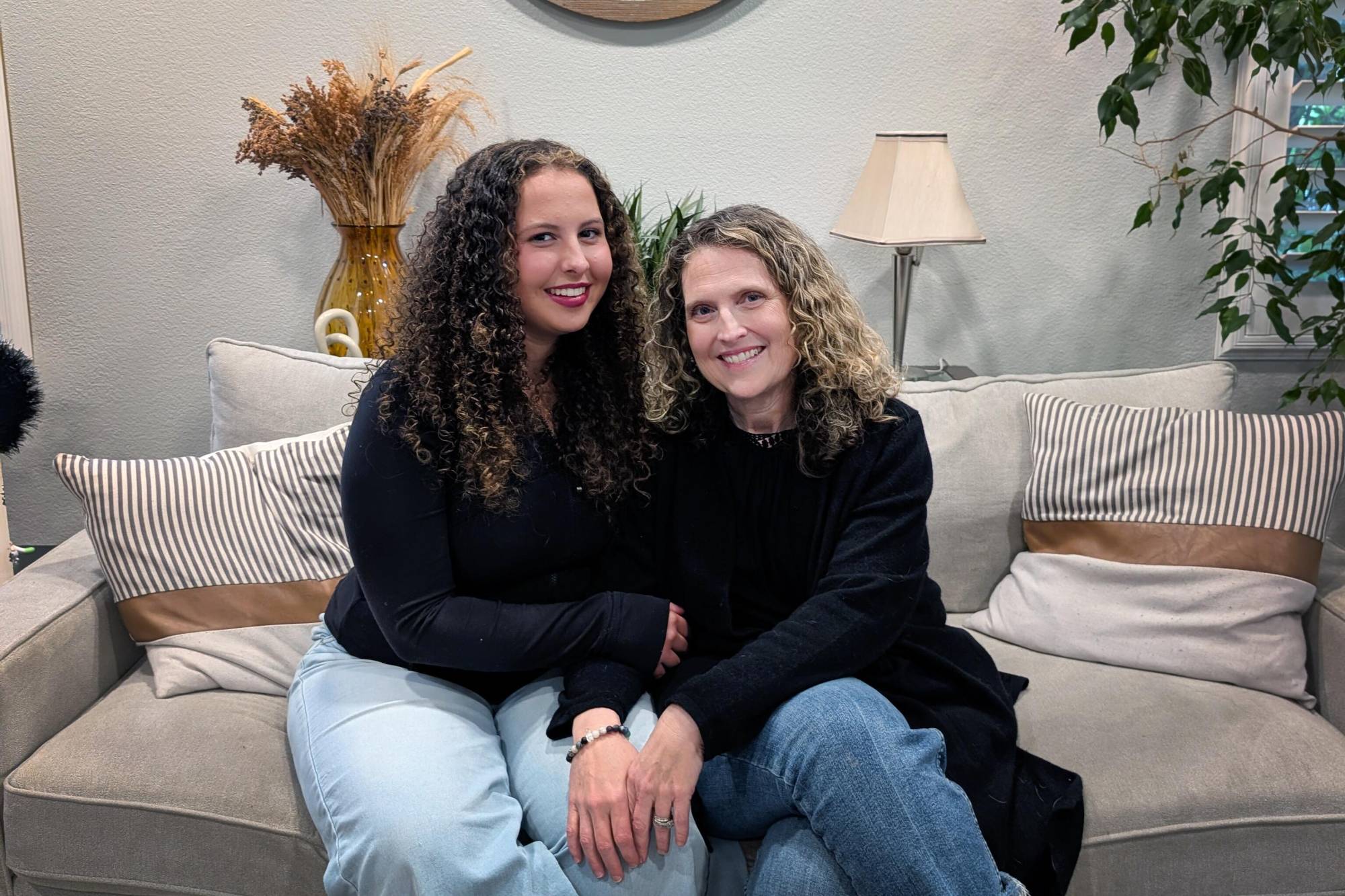
    A teenager with curly, brown hair sits next to her mother.
    Share
    Facebook Twitter LinkedIn Pinterest Email

    From Campus to Classroom: Stories That Shape Education

    Key takeaways
    • Rapid state and school screen bans, including in Alabama, Tennessee and Utah, risk sweeping away necessary assistive access.
    • For many students with disabilities, phones and tablets are essential assistive tools for note-taking, reading, communication, and safety; IEPs sometimes ignored.
    • Advocates urge inclusive policymaking, asking educators, disabled people, and assistive-technology providers to shape rules; emphasize Universal Design for Learning.

    “I started getting really good grades,” she says. “It made me feel like … I’m not stupid, I have so much to say and it just made me like ‘I can do this, I can do school and I can be good at it.”

    This, her mom, Heather Martin, says, is the kind of promise screens hold for students like her daughter — students she worries are being forgotten in the nationwide backlash against screens in schools. Screens are increasingly being blamed for getting in the way of student learning: More than 30 states have banned cellphones in school. Some states have gone further with proposals or policies to entirely remove screens like laptops and tablets from classrooms. In late May, the U.S. Department of Health and Human Services issued a surgeon general’s advisory warning of the “harms of screen use,” citing its effects on children’s health and educational outcomes.

    Much of the pivot away from screens in schools has come from parents who are concerned screen use is getting in the way of their children’s learning — an argument Heather Martin hears in her own community in Concord, 30 miles northeast of San Francisco. She shares some of those concerns, but says, “Never once in the conversation has there been a discussion, except for me bringing it up with the other parents, about kids with disabilities.”

    Advocates worry those students are also being left out of the national conversation.

    Screen-time policy proposals are often “a blunt instrument”

    Students with disabilities make up a quickly growing share of students in this country — there are more than 8 million of them. Many rely on assistive technology to get through the school day, including for note-taking, reading and writing. For example, blind and low-vision students may use screen reading or magnifying software to read. Others, like Soraya, use speech-to-text and audiobooks.

    States including Alabama, Tennessee and Utah already have laws limiting screens that take effect as early as July.

    “My concern is that that’s a really fast period of time for this to happen,” says Lindsay Jones, CEO of the Center for Applied Special Technology (CAST), an education research nonprofit that focuses on making learning environments accessible.

    Jones points out that some of these laws do make exceptions to restrictions on screens for students with disabilities — often a line in the text mentions assistive technology. But she says that should be the bare minimum and worries many policy proposals are “a very blunt instrument.”

    “They’ve moved so fast that we’ve really left our educators and our communities of people with disabilities this summer to figure it out,” she says. Perhaps with more time and input from disabled people, policies would better protect their rights, Jones adds.

    Beyond concerns about state- and school-level bans on cellphones and screens, disability advocates point out that the shrunken U.S. Department of Education is far less equipped to enforce civil rights. Those rights include access to assistive technology for students with disabilities. The Trump administration also recently delayed a long-expected digital accessibility rule for public institutions, including schools.

    “For some kids, the screen is their accessibility tool”

    At Soraya’s high school in northern California, this past school year was the first that students’ phones were locked up in pouches for the entirety of the school day — as they are in many schools across the country. Heather Martin worries the phone ban could open the door to a broader ban on screens at her daughter’s school.

    “A completely screen-free environment feels like it’s throwing the baby out with the bathwater,” she says. “It’s not looking at ‘screen free’ versus ‘accessibility free.’ And for some kids, the screen is their accessibility tool.”

    As she talks about the change at her school, Soraya tenses up. “I hate them,” she says of the locked pouches. She says her phone isn’t just a distraction, it’s a safety net to call her parents if she has a panic attack, for example. And she feels singled out when she has to ask to get her phone out of its locked pouch for note-taking.

    Soraya’s individualized education program (IEP), a legal document that outlines the accommodations and modifications she is supposed to receive at school, says she can use her phone for note-taking, along with other assistive technology. But because the cellphone ban is new, her teachers are still adjusting. Because she has several different classes and teachers throughout the day, she says it’s easy for some teachers to be unfamiliar with her accommodations.

    This is the kind of “unintended consequence” Jones worries about as she considers a near future in which more schools move away from technology that she says has been game-changing for people with disabilities. When technology is used intentionally, she says, it can “actually allow us to create much more flexible environments, and those are really needed for people with disabilities.”

    Jones’ organization, CAST, invented an educational framework called Universal Design for Learning that encourages educators to design their classrooms to account for the different ways students learn. For instance, a teacher might give a math lesson using blocks, a diagram and a video to help impress the same lesson upon diverse learners. Or perhaps class reading is provided as an e-book so students with low-vision can magnify the text, while those with dyslexia can listen.

    As screen limits ripple through the nation’s schools, Jones hopes people with disabilities aren’t forgotten. “We need educators, we need people with disabilities, we need assistive technology providers,” to weigh in on how such policies are implemented in the classroom, says Jones. “That is going to be the best way forward for everyone to achieve their goals without trampling on people’s rights.”

    For Soraya, using these kinds of tools has led her to embrace her learning differences. In fact, she just finished researching and writing a series of essays exploring how people with dyslexia learn. She has straight As for the first time in her life, but more importantly, she says she can express herself in a deeper, more meaningful way.

    “I have so much more to say … It made me feel more confident in myself.”

    Read the full article on the original site


    Academic Achievement Black Colleges Black Educators Black Excellence in Education College Readiness Education Equity Education Headlines Education in the South Education Policy Georgia Education Georgia Public Schools Georgia School News HBCU Education HBCU graduates HBCU News Higher Education News Historically Black Colleges K-12 Education News Local School News Student Success Stories
    Share. Facebook Twitter Pinterest LinkedIn WhatsApp Reddit Tumblr Email
    Savannah Herald
    • Website

    Related Posts

    HBCUs June 7, 2026

    LU Cooperative Extension and Outreach hosts virtual reality STEM education labs

    Education June 7, 2026

    SCADask Research Finds AI Is Shifting from Production to Direction — Savannah Herald

    Entertainment June 6, 2026

    Gone Too Soon: 30 Celebrities Lost to Drug Related Deaths

    Education June 6, 2026

    Lessons Learned About Effective Professional Development for Principals

    Education June 5, 2026

    Roboticist, AI trailblazer named next Spelman president

    Local June 5, 2026

    National HIV Testing Day Events Scheduled for June 27 in Chatham and Glynn Counties

    Comments are closed.

    Don't Miss
    Black History November 1, 2025By Savannah Herald06 Mins Read

    Is Melania Trump in the Epstein Data?

    November 1, 2025

    Black Background & Cultural Point Of Views: According to the Washington Blog Post, the Principal…

    Research Rooted in Our Reality

    March 22, 2026

    Black Women for Wellness’ Environmental Justice Fellowship

    June 7, 2026

    4 ‘Skillcations’ Where Travel Meets Personal Growth

    December 31, 2025

    College of Arizona researchers introduce development petahertz-speed transistor

    November 1, 2025
    Archives
    • June 2026
    • May 2026
    • April 2026
    • March 2026
    • February 2026
    • January 2026
    • December 2025
    • November 2025
    • October 2025
    • September 2025
    • August 2025
    • July 2025
    • June 2025
    • May 2025
    • April 2025
    • March 2025
    • February 2025
    Categories
    • Art & Literature
    • Beauty
    • Black History
    • Business
    • Climate
    • Culture
    • Education
    • Employment
    • Entertainment
    • Faith
    • Fashion
    • Food
    • Gaming
    • Georgia Politics
    • HBCUs
    • Health
    • Health Inspections
    • Investing
    • Lifestyle
    • Local
    • Lowcountry News
    • National
    • National Opinion
    • News
    • Politics
    • Real Estate
    • Senior Living
    • Sports
    • State
    • Tech
    • Transportation
    • Travel
    • World
    Savannah Herald Newsletter

    Subscribe to Updates

    A round up interesting pic’s, post and articles in the C-Port and around the world.

    About Us
    About Us

    The Savannah Herald is your trusted source for the pulse of Coastal Georgia and the Low County of South Carolina. We're committed to delivering timely news that resonates with the African American community.

    From local politics to business developments, we're here to keep you informed and engaged. Our mission is to amplify the voices and stories that matter, shining a light on our collective experiences and achievements.
    We cover:
    🏛️ Politics
    💼 Business
    🎭 Entertainment
    🏀 Sports
    🩺 Health
    💻 Technology
    Savannah Herald: Savannah's Black Voice 💪🏾

    Our Picks

    Inside Of Home Shown As Neighbor Reacts (Vids)

    October 21, 2025

    Astros’ Lance McCullers Jr discloses fatality dangers after beginning vs Reds

    August 29, 2025

    From Village Partitions to Museum Halls: How Esther Mahlangu and BMW Redefined African Artwork on a World Stage – MoMAA

    August 29, 2025

    How to Reduce Holiday Stress for a Loved One Living with Dementia

    February 28, 2026

    PepsiCo presses back net-zero target

    February 28, 2026
    Categories
    • Art & Literature
    • Beauty
    • Black History
    • Business
    • Climate
    • Culture
    • Education
    • Employment
    • Entertainment
    • Faith
    • Fashion
    • Food
    • Gaming
    • Georgia Politics
    • HBCUs
    • Health
    • Health Inspections
    • Investing
    • Lifestyle
    • Local
    • Lowcountry News
    • National
    • National Opinion
    • News
    • Politics
    • Real Estate
    • Senior Living
    • Sports
    • State
    • Tech
    • Transportation
    • Travel
    • World
    Copyright © 2002-2026 Savannahherald.com All Rights Reserved. A Veteran-Owned Business

    Type above and press Enter to search. Press Esc to cancel.

    Manage Consent
    To provide the best experiences, we use technologies like cookies to store and/or access device information. Consenting to these technologies will allow us to process data such as browsing behavior or unique IDs on this site. Not consenting or withdrawing consent, may adversely affect certain features and functions.
    Functional Always active
    The technical storage or access is strictly necessary for the legitimate purpose of enabling the use of a specific service explicitly requested by the subscriber or user, or for the sole purpose of carrying out the transmission of a communication over an electronic communications network.
    Preferences
    The technical storage or access is necessary for the legitimate purpose of storing preferences that are not requested by the subscriber or user.
    Statistics
    The technical storage or access that is used exclusively for statistical purposes. The technical storage or access that is used exclusively for anonymous statistical purposes. Without a subpoena, voluntary compliance on the part of your Internet Service Provider, or additional records from a third party, information stored or retrieved for this purpose alone cannot usually be used to identify you.
    Marketing
    The technical storage or access is required to create user profiles to send advertising, or to track the user on a website or across several websites for similar marketing purposes.
    • Manage options
    • Manage services
    • Manage {vendor_count} vendors
    • Read more about these purposes
    View preferences
    • {title}
    • {title}
    • {title}
    Ad Blocker Enabled!
    Ad Blocker Enabled!
    Our website is made possible by displaying online advertisements to our visitors. Please support us by disabling your Ad Blocker.

    Sign In or Register

    Welcome Back!

    Login below or Register Now.

    Lost password?

    Register Now!

    Already registered? Login.

    A password will be e-mailed to you.