




Stay Informed: Latest News from Across Georgia
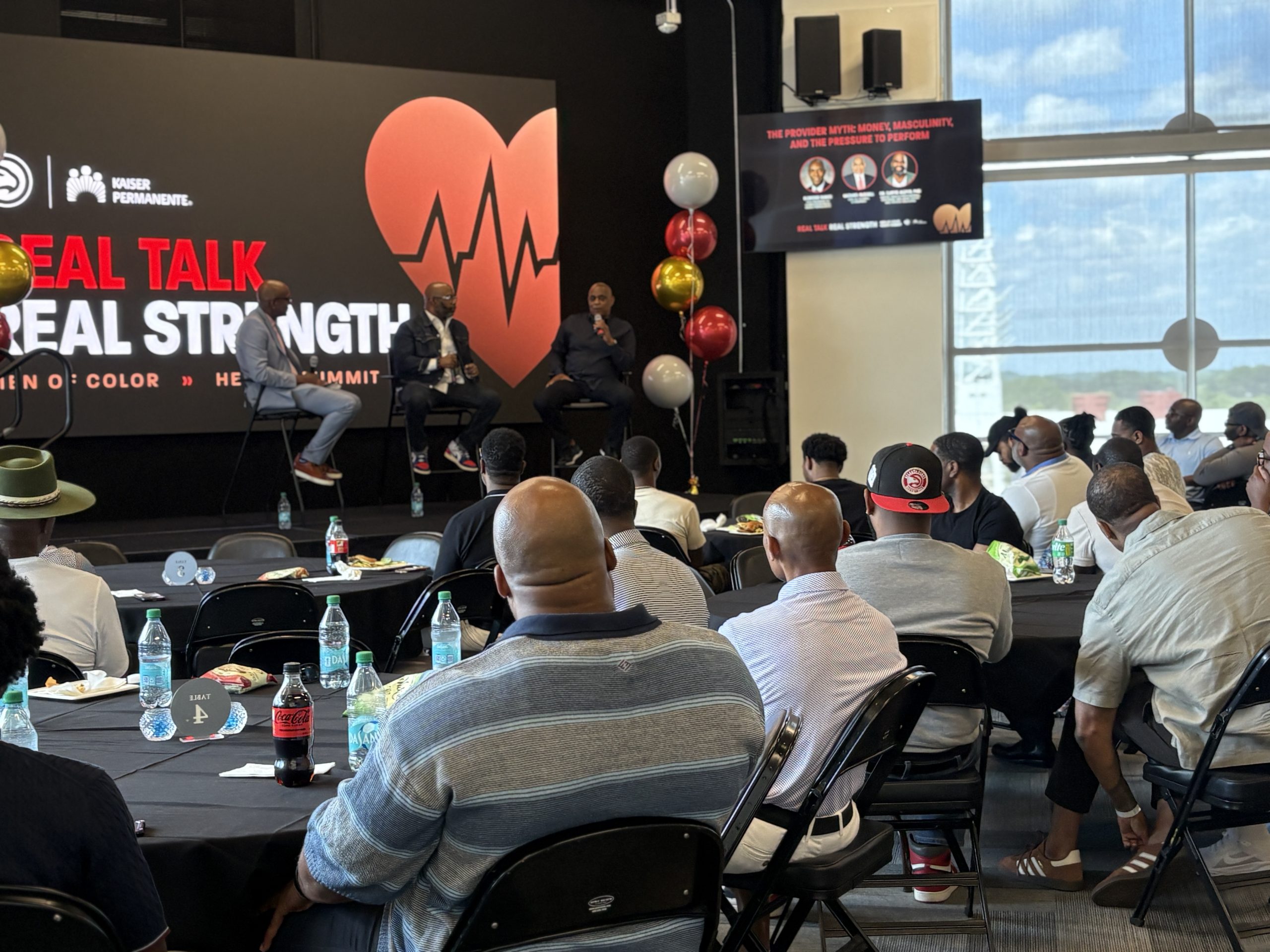
- The Atlanta Hawks and Kaiser Permanente hosted the Real Talk, Real Strength summit addressing Black men's whole-person health and mental wellness.
- Kaiser Permanente emphasized creating a safe space during Black Men's Mental Health Awareness Month for Black men to address emotional, spiritual, and physical health.
- Dr. Curtis D. Jasper urged embracing recovery over avoiding failure, sharing personal loss and coping strategies like exercise and improved diet.
- Speakers highlighted physical health risks, including high blood pressure, with former NBA champion Josh Powell and Dr. Aaron Cooper discussing long-term tolls.
For Onaje Henderson, co-owner of Zucot Gallery and Saturday’s keynote speaker, being a Black man comes down to one thing: showing up.
“It is doing things like this, showing up for one another, in community,” Henderson said, “but it’s also providing and looking out and taking care of people.”
June is Black Men’s Mental Health Awareness Month, and the Atlanta Hawks and Kaiser Permanente brought that observance to life Saturday, gathering more than 90 men of color at State Farm Arena for the second annual “Real Talk, Real Strength: Men of Color Health Summit presented by Kaiser Permanente,” a partnership event featuring three panel discussions, a keynote address and additional programming throughout the day. The event is part of a broader three-part wellness series launched this year by the organizations, targeting different demographics across the Atlanta community.
Brandon Gardner, community relations manager for Kaiser Permanente, said the event reflects the organization’s commitment to whole-person health.
“If your mental health, your emotional health, your spiritual health is not intact, that kind of puts all that together with the physical health,” Gardner said. “Creating this space, providing a space where black men can be their authentic selves, means the world to me.”

The day’s programming centered on themes the organizers described as long-overlooked among men of color, including what Henderson called “the invisible weight that men carry.”
“My business became my identity, but that’s not who I am as a person,” Henderson said. “With the rate of suicides that are happening right now, the rate of brothers who are just unhappy in life, I also matter. I think that’s what we’re talking about today.”
Psychologist Dr. Curtis D. Jasper, a panelist, delivered one of the summit’s most candid moments, recounting a period between 2009 and 2013 during which he lost his mother to lung cancer, went through a divorce, and watched his financial life collapse.
“I literally had to surrender,” Jasper said. “I couldn’t achieve my way out. I couldn’t borrow any more money my way out. I couldn’t thug my way out. I couldn’t speak my way out, teach my way out, accumulate my way out.”
Jasper said two things kept him grounded during that period: going to the gym and changing his diet. Conrad Hall, a data analyst and University of West Georgia alumnus who attended to support a friend, said Jasper’s account put language to something he hadn’t fully considered before.
“A season can actually be years,” Hall said. “People don’t realize that. The most important thing to take away is how to maneuver through a season when it can be that long.”
Jasper told attendees that recovery, not the avoidance of failure, is the skill worth developing.
“Don’t avoid falling and taking L’s,” he said. “Just get good at recovery.”
According to the American Heart Association in a 2026 study, high blood pressure affects more than 62 percent of non-Hispanic Black men, one of the highest prevalence rates in the world, and the reality of that statistic was present in the room. Former NBA champion Josh Powell discussed how two decades of professional basketball have left a physical toll he continues to manage, while Dr. Aaron Cooper disclosed that he is currently navigating a high blood pressure diagnosis of his own.
“There are things that I’ve put my body through that are now starting to catch up to me,” Powell said, “so it’s just really being mindful and making sure that I’m doing the proper things.”
The summit is the third event in a series that began in May with “The Whole Women: Women of Color Wellness Experience,” which drew nearly 100 women to the Andrew Young and Family YMCA, followed by “The Wellness Huddle: A Youth Mental Wellness Summit,” which served nearly 70 middle school students. The Hawks and Kaiser Permanente launched their partnership in 2024 and surveyed more than 50 men of color ahead of Saturday’s event to shape the panel topics around what attendees actually wanted to discuss.
Sean Barham, a recruiter originally from Jamaica who was laid off last year, said a panelist’s framing of ego as a barrier to healing directly reflected his own experience.
“Dr. Jones said that ego is the killer, and it can hold you down and not bring you up,” Barham said. “You have to be acceptable to being vulnerable, and you can’t do it alone.”
Related
Read the full article on the original site
