




Food & Beverage News: Insights, Safety, and Dining Trends
- Nelson German discovered storytelling through mixology, using cocktails to connect and share Afro-Latino heritage.
- Caribbean Cocktails, coauthored with Andréa Lawson Gray, celebrates bold Caribbean flavors and history.
- Book includes over 40 drink and 20 food recipes, approachable for home bartenders yet inspiring for seasoned mixologists.
- He frames rum as a social spirit tied to Afro-Latino roots, honoring its history and Caribbean origins.
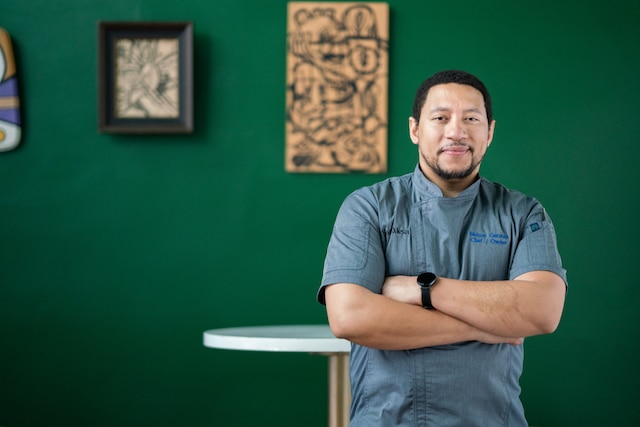
What would entice a top chef to leave his kitchen to tackle the unpredictability of a shift behind the bar? For acclaimed Dominican American chef/restaurateur Nelson German, it came down to being short staffed on a busy Friday night.
“It was a business owner having to do what you got to do,” German recalls about taking on the role of bartender at his restaurant, alaMar, and how he accidentally fell into mixology out of necessity.
That first time behind the bar almost a decade ago ignited a passion for creating cocktails in the Bravo “Top Chef” (season 18) contender that eventually inspired the release of his debut book, “Caribbean Cocktails: Drinks and Bites from the Afro-Latino Diaspora,” co-written with James Beard Award-winning cookbook author Andréa Lawson Gray.
Mixology and Storytelling
“That changed everything for me,” stated the culinary pro about his initial experience mixing drinks for customers. “It was like, ‘Yo, this is not easy.’ You’re creating while you’re having to talk, take orders, be a therapist, the whole nine. It made me respect bartenders a lot more.”
But it was the skill of storytelling—done in tandem with mixing drinks—that really made this native New Yorker fall in love with the craft of bartending and it was a lesson he took to heart.
He realized how chefs, especially those that own their own restaurants, must learn to be more open in order to connect with his guests. “There’s no one that can tell your story better than yourself,” states German, who owns three successful establishments—two Oakland, California dining hotspots (alaMar Dominican Kitchen, Sobre Mesa) and the popular San Francisco restaurant Meski.
Drawing from his Dominican roots, combined with his enjoyment of mixology, German wanted to tell the story of the bold flavors—like coconut, passion fruit, mango, pineapple, all spice and cinnamon—so prevalent in Caribbean cocktails.
“Tiki culture has taken over so vastly that anything tropical, everyone thinks it comes from Hawaii, the Pacific islands. And it’s not. Everything started in the Caribbean, especially with rum,” clarifies German about how Caribbean cocktails and its flavors are popularly perceived.
The Origin of Caribbean Cocktails
He shares that the inspiration behind writing the cookbook is to tell the story of Afro-Latino culture and history through Caribbean cocktail recipes. “We’re trying to tell the deeper story that started with the slave trade, with ingredients brought from West Africa to where the Caribbean has become, and the diversity and the combination influences of so many different people,” relates German who makes his home in Oakland.
“For us, it’s predominantly African, of course, and that’s my deeper roots. But what do we gain from the Spaniards, from the Indigenous people? Everything that makes us who we are and makes us Afro-Latino, that’s the story behind it,” he relates.
“There’s a dark aspect of it, of course, with the slave trade. But the way we [Caribbeans] think now is that we live life to the fullest. So it’s this happy story of cocktails again that makes you feel like you’re at a party at the beach, you’re just happy.”

While Caribbean cocktail recipes are most associated with rum, German emphasizes that he looks at rum from a different perspective. He learned to respect rum from the men in his family. They instilled in him that rum was a social spirit for bonding and storytelling, not just for drinking.
“They tell their story of how they first had rum [and] passed down the history of people working to create this rum for the world, to bring revenue into these countries…cultivating this kind of special sugar came,” he recalls about how the spirit fostered a connection. “It was always about a story of where rum really came from, why it’s made and this united thought process of, ‘We do this to live, we do this to feed our families.’”
RELATED: Alex Perez Elevates Comfort Food with Afro-Latin Fusion at Papi Cuisine
Celebrating Caribbean Cocktail Recipes
In “Caribbean Cocktails: Drinks and Bites from the Afro-Latino Diaspora,” which took the culinary veteran about two years to create with his co-author, German shares over 40 drink recipes and 20 food recipes celebrating Afro-Latino flavors.
“We definitely made it for the home bartenders, home cooks,” shares the chef/mixologist. The drinks showcase a collection of Caribbean cocktail recipes simple enough for home bartenders to try yet creative enough to inspire for seasoned mixologist.
When asked about the basics we should have on hand to mix up Caribbean cocktails, German says to begin with a good rum. “I’m going to go to my own culture, of course, Brugal 1888 is a delicious Dominican rum,” he suggests. “It’s so smooth, aged for 12 years, it has amazing flavors: a little smokey-tobacco flavor, sweet caramel, little vanilla. You get a bit of cinnamon after taste in its last notes. It’s absolutely fantastic.”

Next, a good sweetener is key for great Caribbean cocktail recipes. And while German likes agave syrup or Demerara syrup (made by dissolving Demerara raw cane sugar in water), lately he prefers the taste of honey as a Caribbean cocktail sweetener. “And then you’ll need some great juices, of course. We prefer fresh lime in our cocktails,” he sums up.
While his new book turns the spotlight on Caribbean cocktails, does this culinary pro now prefer to be behind the bar or does the kitchen still draw him in? “It depends on the day. I love both. I’ve been a chef for 29 years but with this book, I just love being behind the bar,” he confesses.
“You’re connecting with people,” he admits about the bar experience. “In the kitchen, you’re in the grind, head down cooking. Behind the bar, you have beautiful people around you, all different cultures. You’re telling your story, people smiling. It’s the most beautiful thing, especially during these crazy times in the world.
He continues, “We need to connect more as people. And for me, being behind the bar, being in front of people and doing good things, delicious things just really brings us together…There’s no just hatred when you’re drinking or eating things that are delicious around each other. It opens your mind to love and I think that’s definitely done at the bar.”
Read the full article from the original source
