




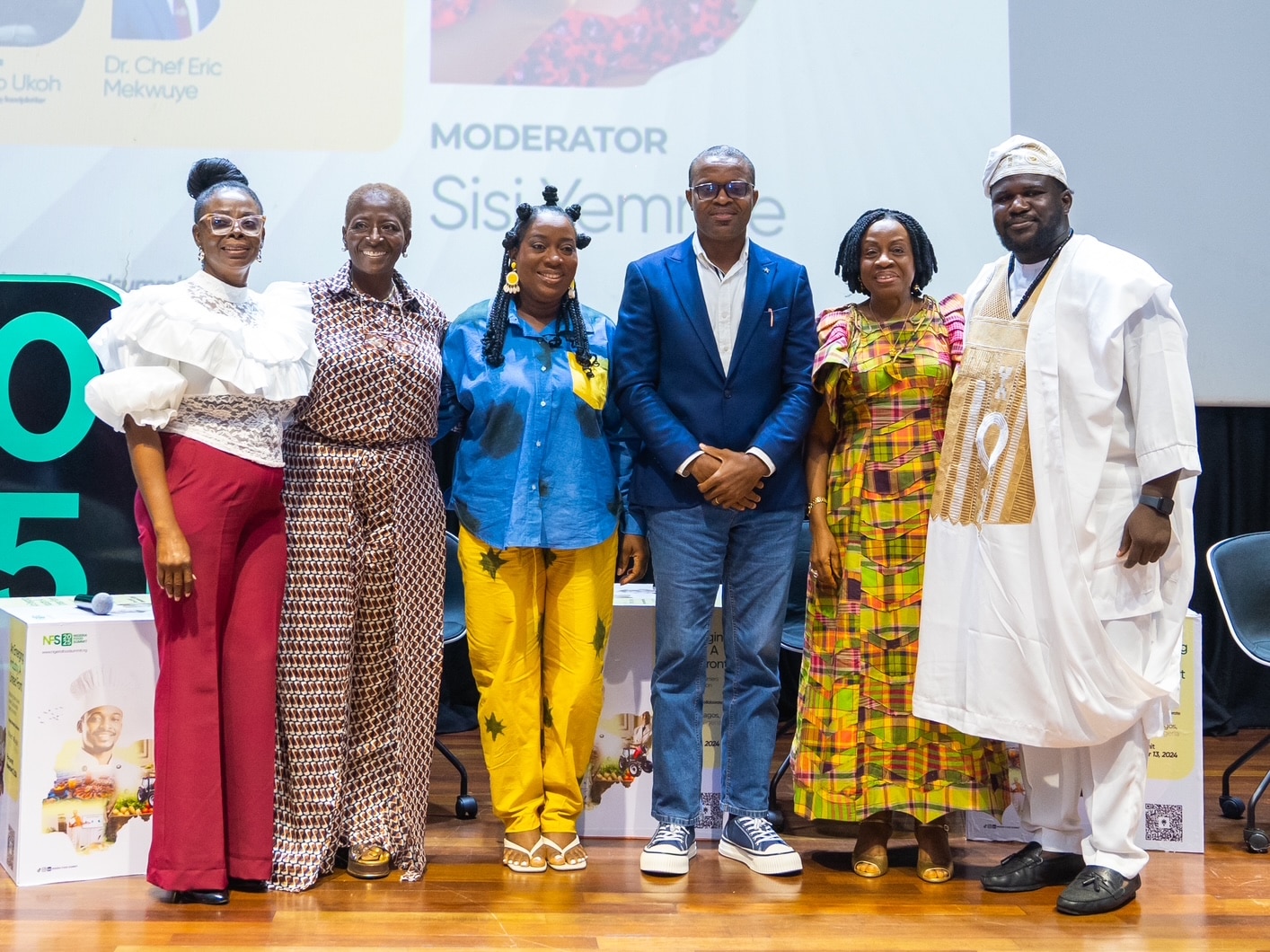
Food & Beverage News: Insights, Safety, and Dining Trends
- Nigeria Food Summit focuses on Gastronomy in Nigeria: Journey to Standardization, documenting techniques and unifying national culinary practices.
- Chef Gbolabo “Chef Gibbs” Adebakin urges greater local processing to add value, build factories, and export finished Nigerian agricultural products.
- Cheflifestyle and others champion pan-African collaboration, arguing Nigeria’s culinary progress should drive a united Africa food identity and global influence.
- The Rooms and educational forums target industry infrastructure, farm-to-table education, recipe preservation, and debates to advance Nigeria’s food sector professionally.
Last year, when I spoke with Nigerian chef and culinary director, Gbolabo “Chef Gibbs” Adebakin, he was preparing to prove that Nigerian cuisine deserved a larger place on the global culinary stage with the Nigeria Food Summit taking place July 21 and July 22 in Lagos.
The Summit brings together chefs, producers, researchers, entrepreneurs, and others working across Nigeria’s food industry. Chef Gibbs hoped the event’s success would be the catalyst for putting Nigeria on the culinary map.
“The biggest misconception is the belief that African food lacks technique, professional structure, or health value,” he says. “People assume there isn’t much depth to our food.”
Nigerian Food Takes Center Stage
His ambitions aren’t just culinary; they extend to the Nigerian economy. CNBC Africa reports that Nigeria’s food and beverage industry reached $233.53 billion in 2025, doubling over a generation. It is expected to expand at an annual rate of 10.76% from 2025 to 2030, outpacing many leading economies and highlighting one of Africa’s top opportunities for agrifood investments.
Yet, despite this growing demand, Nigeria’s domestic production and processing haven’t kept up, something Chef Gibbs wants to change.
“Nigeria grows products like strawberries, grapes, ginger, cocoa, cassava, and coffee, and the country should do more local processing so it can export finished products instead of raw materials. We need more factories in the country processing these foods.”
These challenges reflect the theme of this year’s Nigeria Food Summit, “Gastronomy in Nigeria: Journey to Standardization,” which will examine concepts and definitions to advance Nigeria’s food industry and drive further development. Chef Gibbs’s goal is to build collective industry practices and nationally accepted concepts across the food system.
“The food system is currently too disconnected, and the biggest issue is poor education around how the entire chain functions,” he says. “The general value chain runs from farm to table: farmers, processors, enablers, propagators, restaurant owners, and chefs. While we preach farm-to-table, we don’t encourage actual interaction between the farm and the table. We need to build a bridge so that the consumer table actually knows how their food is grown.”
Building Africa’s Food Future
His work extends beyond the Nigeria Food Summit. He and his team worked with Nigerian chef and restaurateur Hilda Baci, who held the Guinness World Record for marathon cooking with 93 hours and 11 minutes logged in 2023. Chef Gibbs says the collaboration wasn’t just about breaking records.
“It was to make a definitive statement that Nigerian practitioners possess high-level technique, that our food is sustainable, and that our chefs can stand toe-to-toe with any professional globally,” he says. “We have centuries-old mastery over professional techniques like fermentation, smoking, and grilling. When I branched out from being a behind-the-scenes chef to a culinary director, my core goal became standardizing our language and documenting these methods to correct these misconceptions.”

Chef Gibbs also believes that for Nigeria to succeed, Africa must succeed, which has shifted his perspective on what the Nigeria Food Summit should entail.
“Our core objective has always been centered around the conversation of Nigerian food, but as we grow, we realize that the conversation around Nigerian food is inherently the conversation around African food,” Chef Gibbs explains.
“When each individual African country gets its culinary identity and culture in check, we become a formidable collective force globally. We shouldn’t work in isolation; we must push the agenda together as a continent.”
A Continental Culinary Vision
That continental perspective is already attracting voices from beyond Nigeria. Among this year’s attendees is Bibiana Gyasi, also known as Cheflifestyle.
“I am a Ghanaian food and travel creator, as well as a children’s author,” she says. “My debut book, “The Night the Kitchen Came Alive,” introduces young readers in Ghana and the diaspora to Ghanaian food culture through storytelling and ensures that African food traditions are documented, celebrated, and pgassed on to future generations.”
Her mother, who has been cooking for more than 30 years, relies on traditional techniques. Watching those methods and learning the stories behind them inspired Cheflifestyle’s career and her commitment to preserving African food traditions.
“Because of modernization, we are losing many of our local techniques, spices, and heritage,” she says. “My book is part of my broader mission to ensure that African food traditions are documented, celebrated, and passed on to future generations.”

Cheflifestyle follows Nigerian food bloggers and content creators, some of whom previously spoke at last year’s summit. “I love how united Nigerians are when it comes to pushing their culture forward. I am looking forward to the knowledge exchange and finally trying authentic Nigerian food straight from the source,” she says.
“My broader project is called Flavors Beyond Borders, which focuses on finding common ground and integration across the continent. African food is highly underrepresented and poorly rated on the global stage, and my goal is to put it firmly on the map.”
This curiosity eventually led her to travel to different countries, where she recognized a striking pattern that she plans to explore at the summit. “There are a lot of similarities between other countries, like the Asians and Africans,” Cheflifestyle notes. Ghanaians share similarities with Asians in cooking. The goal is to expand this, starting with Africa. Nigeria is next, through the Nigeria Food Summit.”
She says that at the start of this journey, she noticed friction around similar recipes across countries and experienced pushback on ownership. “You get one party saying, ‘Oh, it’s our recipe, why are you doing it?’ But in the last few years, people have realized that our foods are quite similar, so there’s no need to fight over it. We can all appreciate that fact.”
Changing Global Perceptions
Chef Gibbs also sees the Nigeria Food Summit as another way to address stereotypes about African food. “Another massive misconception is that African food is inherently unhealthy or ‘not clean’,” he says. “That is entirely false. If you go to our rural villages, people live incredibly long lives eating straight from the soil. Traditional African food relies heavily on local earth and soil. At this year’s summit, we are emphasizing farm-to-table practices and highlighting our incredibly nutrient-rich, plant-based ethnic dishes, such as efo riro and egusi.”

Cheflifestyle agrees that the stereotypes concerning culinary roles are narrow because they don’t account for other factors. “Another major misconception is the societal tendency to reserve the title of ‘chef’ only for those trained in Western or European institutions,” she notes.
“If someone specializes strictly in local, traditional cuisine, they are often not given the same professional respect. The work being done by contemporary Nigerian and Ghanaian chefs is successfully dismantling that stereotype, showing that traditional culinary artistry requires immense expertise.”
LISTEN: Championing Nigerian Cuisine with Chefs Gbolabo Gibbs Adebakin and Nkesi Enyioha
Nigeria Food Summit
In keeping with this year’s theme, the Nigeria Food Summit is working directly with corporate legal firms, financial institutions, and tech entities to create infrastructure tailored specifically to the unique needs of food professionals.
“We want these support spaces to come into the food industry and create niche solutions,” Chef Gibbs explains, stressing that generic templates fail the hospitality sector. “People now understand that the food industry is an industry,not a sub-industry. For a long time, it was always listed under hospitality and tourism, but it also has its own identity because, beyond business, food is life, sustenance, art, culture, and also family.”
New to this year’s Nigeria Food Summit are what Chef Gibbs calls “The Rooms,” which are targeted breakout spaces designed to dismantle and rebuild the industry’s infrastructure. For example, one of The Rooms is dedicated entirely to an educational fair born out of a need for structural preservation.

“To grow any industry, really, structure is important,” Chef Gibbs explains. “If you want to talk about recipes that have been passed down from generation, whether by mothers or by great women, you would ask yourself the question of how those recipes were documented. A lot of African recipes are passed down orally, but we all know how fragile that is because we can lose information easily that way.”
He stresses that the Summit’s educational focus is designed to redefine what it means to work in food. “We’re trying to educate the space here to help them understand that the food industry is not just for people who cook. We need archivists, travelers, writers, documenters—people whose focus is enabling the space to be sustainable.”
There will also be a Debate Room, which Chef Gibbs says was inspired by Dr. Martin Luther King, Jr., and the Civil Rights Era, aimed at using debate to advance the food agenda.
“After researching and watching videos on Black movements, I realized that debates often focus on rights and how to achieve them,” he says. “To galvanize people, one must speak boldly and share ideas openly, encouraging others to contribute and push the agenda. We want the same with our food; not just listening to successful individuals but sharing bold ideas, challenging them, and coming together to advance them.”
The Nigeria Food Summit is anticipated to host approximately 4,000 attendees, all of whom have received personal invitations to participate in this significant event. “It’s important that we emphasize this: it’s not an event that is open to just the mundane public,” Chef Gibbs clarifies.

“This is a carefully crafted attendance list from farm to table. We’re calling it the largest gathering of food professionals. Initially, it was food professionals in Nigeria, but this year we have professionals from outside of Nigeria. So that’s a milestone for us.”
To solidify this milestone, the summit is now inaugurating a high-stakes, verifiable culinary competition. “The competition is around Nigerian cuisine and how we can use our indigenous ingredients to tell the story of Nigeria, our cuisine, our techniques, and how we can start to document our food,” says Chef Gibbs. “We have amazing professional judges who are going to be choosing the next Nigerian culinary champion, and we’re going to be pushing them.”
After the Lagos event ends, the summit will quickly shift focus to its next goal: bringing the discussion to the United Kingdom. “After July in Nigeria, we’re going to do the UK in August,” Chef Gibbs reveals. “We’re doing something called the Gastronomy Festival with the Association of Nigerians in the UK. For us, this is like our first stop in a global agenda to educate—and re-educate—the world about Nigerian food. We’re no longer leaving it to people to tell our stories for us.”
For Cheflifestyle, this collective reclamation of the narrative is everything. “I am praying for a day when all these borders will be dismantled, and as an African, you can move freely across Africa to do whatever you want to do,” she says.
“I’m actually very excited about how the Nigerian Food Summit has welcomed me with open arms. I feel like I’m gonna have such a great time. I cannot wait to go explore, collaborate, and learn. I know by the time I come back, I won’t be the same person.”
Read the full article from the original source
