




Food & Beverage News: Insights, Safety, and Dining Trends
- Crescendo Foods' Plate2Plate fellowship hosted a 14-day immersive residency across three Ghana regions, culminating at the Abusua Capstone Event.
- At Albert’s Havens Farms, fellows learned traditional crops, irrigation and post-harvest methods, market logistics, working hands-on alongside local farmers.
- Plate2Plate fostered culinary exchange, bridging ancestral wisdom with modern innovation; fellows cooked with local caterers and showcased dishes from Ghanaian ingredients.
When two professional food experts flew in from the United States to spend time in Ghana this June, they did not come to teach. They came to learn. That is the story of Plate2Plate, and it is a uniquely Ghanaian story of cultural reverence.
The fellowship is run by Crescendo Foods, the Accra-based kitchen incubator is widely recognized as the first female-owned kitchen incubator on the African continent. Plate2Plate brings Black food professionals from the diaspora to Ghana each year for a residency built on a simple but powerful idea; that the knowledge sitting in Ghana’s farms, coastal communities, and food traditions is worth flying across the world to find.
The 2026 edition, which concluded with the Abusua Capstone Event in Westlands, Accra on July 5, brought two fellows to Ghana for 14 days of immersive learning across three regions of the country.
Spending Time in Ghana For Connection and Immersion
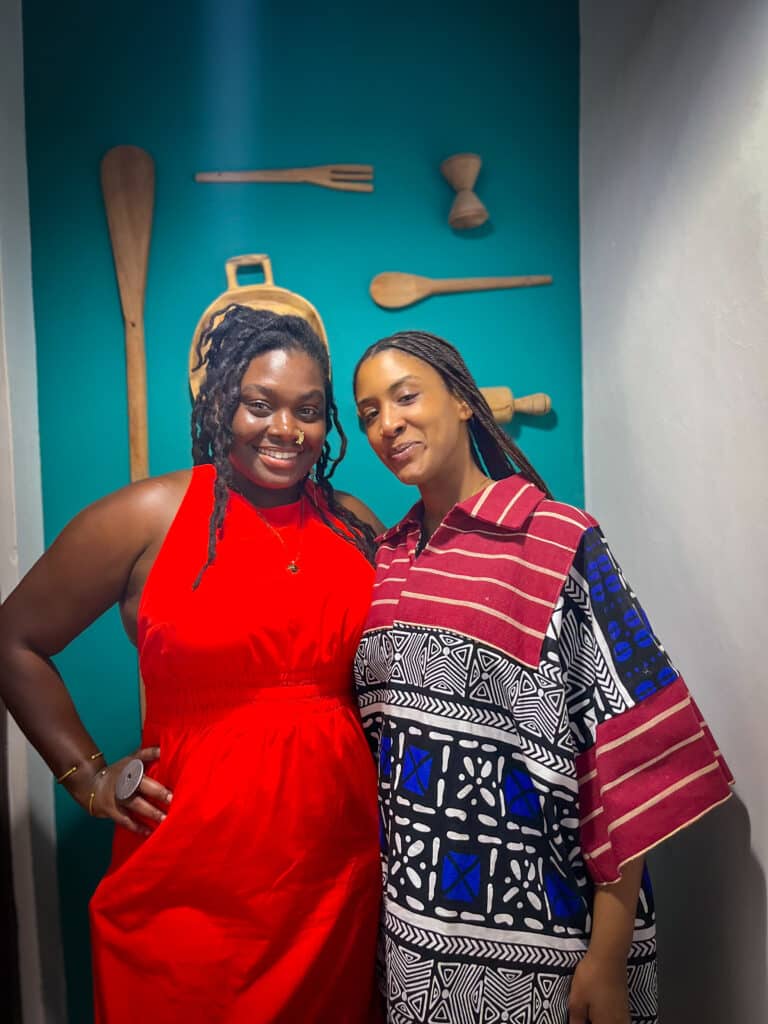
The visiting fellows included Sawdayah Brownlee, a plant steward, educator, and artist from Detroit, Michigan, who has spent over a decade teaching agriculture and food systems across the United States, and Martise Dubose, a professional chef from Chicago who currently serves as sous chef at a leading hotel restaurant and runs her own Creole food pop-up. Together, they spent two weeks moving through some of Ghana’s most significant food and cultural landscapes.
Their journey began in Accra, visiting the Kwame Nkrumah Memorial Park, the WEB Du Bois Centre, and Black Star Square, grounding the culinary exploration in Ghana’s history and its place at the center of Pan-African identity. From Accra, they traveled to Cape Coast, where a visit to Cape Coast Castle and Assin Manso reminded both fellows of the deep historical roots connecting the African diaspora to this land and its food.
However, the centerpiece of the 2026 residency was three days spent working directly on the soil at Albert’s Havens Farms in Aseseeso, Eastern Region. There, the American fellows underwent a full farm immersion, learning about local crops, traditional irrigation methods, post-harvest processes, and the logistical realities of getting produce from a farm in the Eastern Region to kitchens and markets in Accra. They worked with their hands alongside local farmers, asked questions, and listened.
Frank Hagan Brown, owner of Albert’s Havens Farms, shares, “It was a pleasure hosting Sawdayah and Martise at Albert’s Havens Farms. They were so eager to hit the ground running and get their hands in the mud. From joining farm staff to cut bamboo poles for trellising cucumber, to bargaining with market women at Asenema and Somanya markets, Sawdayah and Martise moved with vigor and an appetite to learn from the nature and people around them. I commend them for their open-mindedness and dedication to absorb everything around them.”
RELATED: How the Next Generation of Food Businesses are Leading Transformation and Innovation in Ghana
More Than a Culinary Exchange Program
Before leaving Aseseeso, the fellows cooked alongside a local caterer in a session that brought professional diaspora culinary knowledge into direct exchange with Ghanaian cooking practice.
The residency closed at the Abusua Capstone Event in Accra, where both Fellows presented their reflections on the journey alongside a signature dish created entirely from ingredients they had encountered during their 14 days in the country.
“The aim for this year’s cohort was to continue to build bridges between ancestral wisdom and modern innovation—lessons that our fellows will take back to their communities. The impact of climate change globally is forcing us to think not only about preserving our food culture but how to celebrate it. With Plate2Plate, we are doing that here in Ghana. Our program is more than a culinary exchange; it’s about discovering solutions that have sustained our communities for generations,” says Crescendo Foods founder and convener of the Plate2Plate program, Dr. Wanida Lewis.

As the program wraps up another successful year of bridging borders through agriculture and food heritage, Crescendo Foods looks forward to expanding this network, continuing to position Ghana as a global hub for indigenous food systems knowledge and culinary education.
Reflecting on her time in Ghana, Plate2Plate participant Sawdayah shares, “I arrived in Ghana excited to explore the cultural continuity between Ghanaian and African American foodways. Crescendo Foods provided opportunities for me to connect with Ghanaian cooks and chefs, farmers, entrepreneurs, and cultural workers who shared their experiences with cooking and growing food. The experience has allowed me to build new relationships and for that I’m very grateful to the Crescendo Foods team.”
Read the full article from the original source
