




Wellness That Matters: Black Health News & Community Care
- Trump repeatedly suggested vaccines may cause autism, despite decades of research and scientific consensus finding no link.
- Separate measles, mumps, and rubella (MMR) vaccines for children are currently not available in the U.S..
- The order reclassifies vaccine guidance into three categories: All children, High-risk groups, and Shared decision-making.
- Medical groups, including the AAP and ACP, called the recommendations dangerous and warned of increased costs, hesitancy, and public-health risks.
- The order tasks Robert F. Kennedy Jr. and the HHS Task Force to study vaccine timing, sequencing, and aluminum adjuvant alternatives.
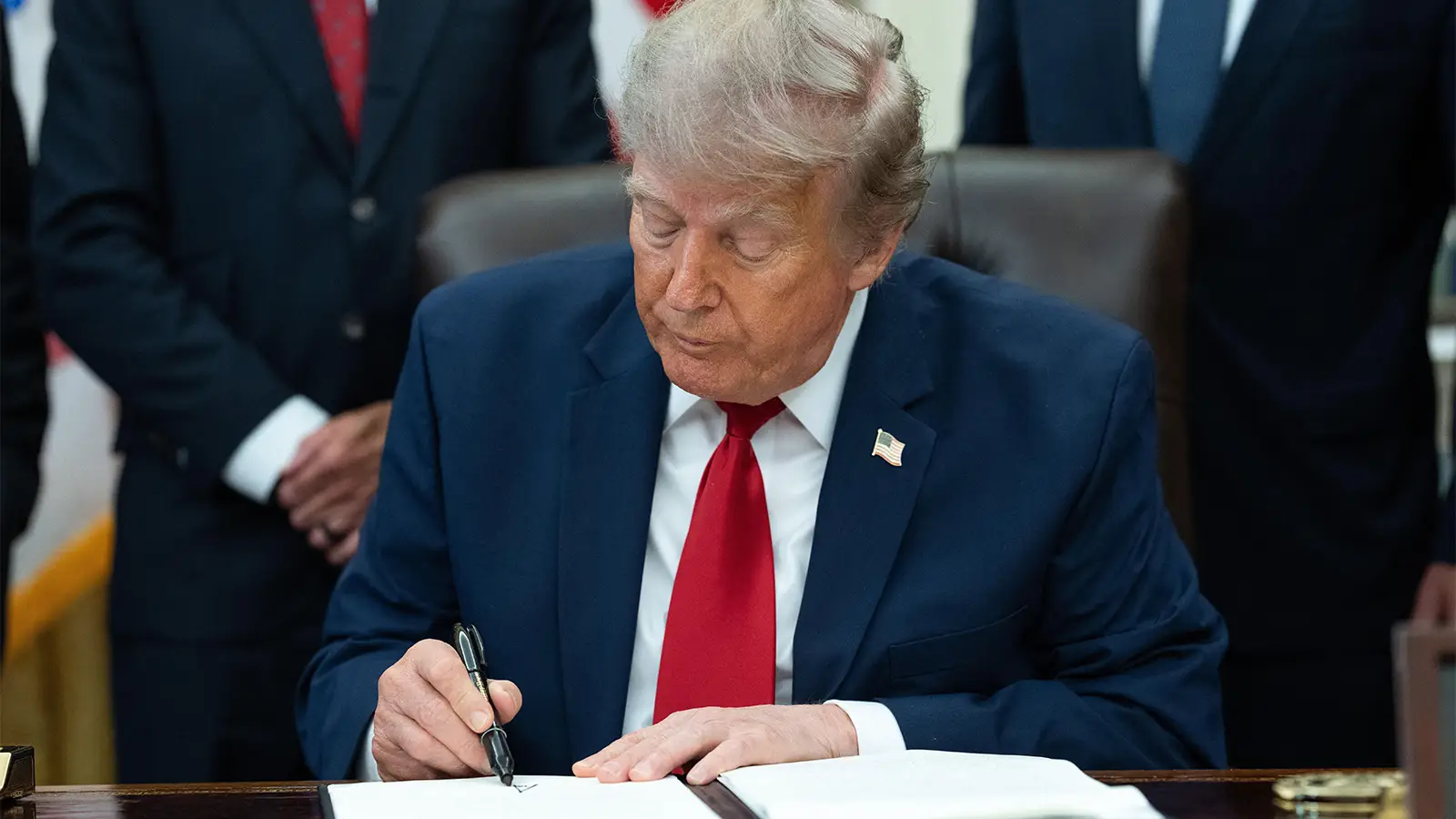
President Trump signed an executive order that shrinks the number of universally recommended vaccines for children, calls for splitting up the measles, mumps, and rubella (MMR) shot, and says each vaccination should occur at a separate medical visit.
Speaking about the order at the Oval Office on Monday, Trump repeatedly suggested the number or timing of vaccines could play a role in rising rates of autism spectrum disorder, even as scientific consensus and decades of studies have firmly concluded there is no link.
Of note, separate measles, mumps, and rubella vaccines for children are currently not available in the U.S.
In moves the order calls “Gold Standard Childhood Vaccine Recommendations,” the Trump administration would end the universal recommendation for multiple childhood immunizations, splitting up recommendations into three categories:
- All children: measles, mumps, rubella, diphtheria, tetanus, pertussis, polio, Haemophilus influenzae type B, pneumococcal disease, human papillomavirus, and varicella
- High-risk groups: respiratory syncytial virus (RSV) monoclonal antibodies, hepatitis A and B vaccines, meningococcal B and ACWY vaccines, and dengue
- Shared decision-making: hepatitis A and B, rotavirus, meningococcal disease, influenza, and COVID-19
The call to downgrade the flu vaccine recommendation comes after the U.S. in 2025 experienced the highest number of pediatric flu deaths in 15 years.
“Vaccines DO NOT cause autism,” Sen. Bill Cassidy, MD (R-La.), said in a social media post following the news of the order.
“Breaking up vaccines will mean children have to get more shots to get the same protection, not fewer shots. It will increase hesitancy and make children less safe,” said Cassidy, who last year provided a key vote to confirm the anti-vaccine activist Robert F. Kennedy Jr. as health secretary. Cassidy called the order “wrong” and “inaccurate.”
Trump’s repeated claims linking vaccines and autism are simply wrong, Alycia Halladay, PhD, chief science officer at the Autism Science Foundation, said in a statement.
“No environmental factor has been better studied as a potential cause of autism than vaccines,” Halladay noted. “That includes vaccine ingredients as well as the body’s response to the vaccines. All this research has determined that there is no link between autism and vaccines.”
Public health experts have raised concerns that spacing out shots can lead to an increased risk that children become infected with a vaccine-preventable disease before returning for another visit.
The order also called for Kennedy and the HHS Task Force on Safer Childhood Vaccines to study the timing and sequencing of all core childhood vaccines, as well as developing alternatives to aluminum adjuvants, which members of Kennedy’s handpicked Advisory Committee on Immunization Practices (ACIP) called into question at a meeting last December.
The move comes as earlier attempts to revamp the childhood vaccine schedule under Kennedy were halted by a federal court. In January, the CDC cut the number of universally recommended childhood vaccines from 17 to 11, contrary to the advice of public health experts. A federal judge blocked that move in March, arguing that Kennedy likely violated federal procedures in revamping ACIP.
Even as the executive order calls for revised vaccine recommendations, states, not the federal government, have the authority to require vaccinations for schoolchildren. The order advises states with school vaccine mandates to consider updating their laws to reflect the administration’s preferred schedule, a fact sheet accompanying the order said.
Monday’s order emphasizes that “federal programs and funding should support maximal parental choice over childhood vaccines.” Under the directive, the U.S. attorney general will target state laws that conflict with “parental authority” and “religious freedom,” with particular focus on religious and medical exemptions from immunization requirements.
Medical Groups Slam ‘Dangerous’ Recommendations
The executive order provoked immediate criticism from a chorus of medical groups, with the American Academy of Pediatrics (AAP) calling the recommendations “dangerous.”
“Dozens of studies involving millions of people show there is no link between vaccines and autism, and yet federal leaders continue to promote this outdated, disproven idea to scare families,” said AAP President Andrew Racine, MD, PhD, in a statement.
“The only purpose of this announcement is to sow confusion so that more people doubt the importance of vaccines,” added Racine. “Delaying or skipping shots is risky, especially as measles continues to spread and children go back to school.”
Groups including the AAP and the American College of Physicians (ACP) pointed out that no new evidence supported the administration’s claims or recommendations.
“If implemented, the changes could increase costs to patients and families, including additional copays while also placing a greater burden on families needing to schedule multiple appointments for a multiple-dose MMR vaccine,” cautioned ACP President Jan Carney, MD, in a statement.
The Associated Press contributed to this story.
Read the full article on the original site
