



From Hollywood to Home: Black Voices in Entertainment
- Wu-Tang Clan reshaped hip-hop over 35 years and earned induction into the Rock & Roll Hall of Fame.
- The Clan's group-record-deal model launched solo stars and inspired collectives like Odd Future and Griselda.
- RZA's world-building fused kung-fu, blaxploitation, chess, and Five Percenter teachings; members remain creatively active in music and film.
Loud Records founder Steve Rifkind remembers the first time he experienced the sheer force of the mighty Wu-Tang Clan. “Protect Ya Neck” was already bubbling on underground radio when the song’s eight MCs crammed into a closet-sized Manhattan office in 1993 to perform for the label executive. The room was tight, but the group’s energy was undeniable. Then the building’s janitor came barging in, punching his fist into his palm. “He literally said, ‘That’s that shit!’” recalls Rifkind, who signed the group within days. “Even though they were hip-hop, I thought they were the next Rolling Stones.”
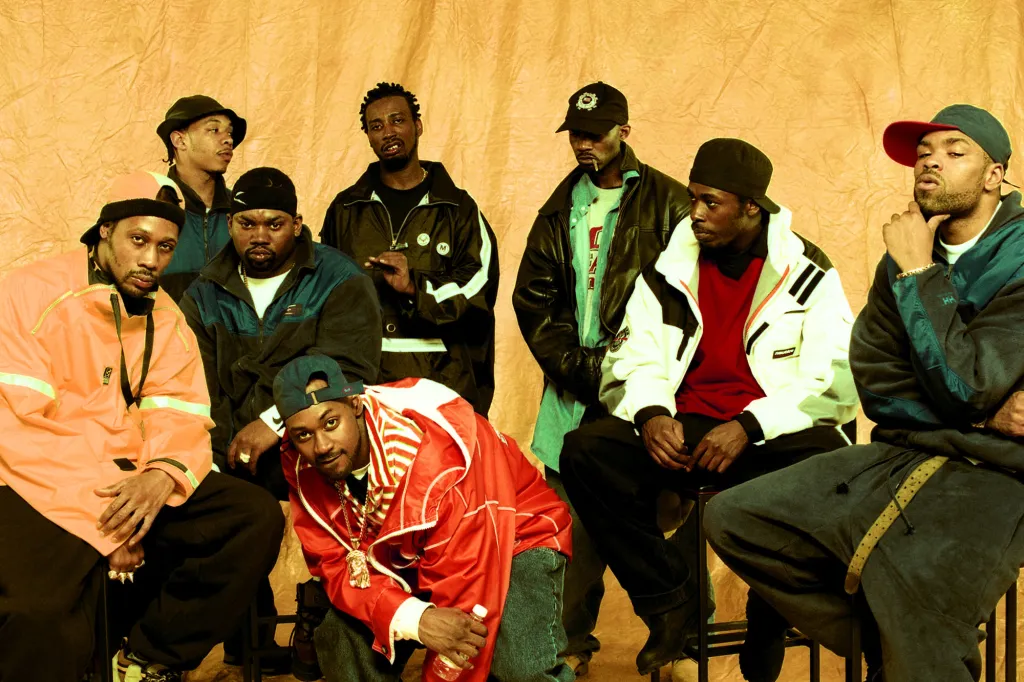
Of course, Wu-Tang Clan have forged their own colorful, storied legacy, leaving Wallabee shoe prints across hip-hop over the past 35 years. And now, like Mick Jagger’s legendary band, the Wu take their place in the Rock & Roll Hall of Fame this November. It’s just another reminder of how the group’s 10 members — Cappadonna, Ghostface Killah, GZA, Inspectah Deck, Masta Killa, Method Man, Ol’ Dirty Bastard, Raekwon, RZA, and U-God — helped reshape hip-hop, expanding the possibilities for rap collectives and the artists who emerge from them.
Back when the Clan first formed, rap crews rarely exceeded three or four MCs. But Wu-Tang’s strength lies in their numbers and wildly different styles, from Inspectah Deck’s intricate rhyme schemes to the late ODB’s off-kilter delivery to the smoky voice and effortless charisma that made Method Man a breakout star. De facto leader RZA fused dusty soul samples with the sounds and imagery of blaxploitation and kung-fu films, creating a common artistic universe without sanding down their differences. (You can hear his production DNA in master beatsmiths like Ye, Hit-Boy, and the Alchemist.) That alchemy produced the iconic 1993 debut, Enter the Wu-Tang (36 Chambers), and carried into solo classics like GZA’s Liquid Swords in 1995 and Ghostface Killah’s Ironman the following year.
“We all had special powers that added to the greatness of what we built,” says Raekwon. “Growing with the Clan, they taught me so much … You feed off the energies that are around you.” You can hear the synergy in Rae’s 1995 solo debut, Only Built 4 Cuban Linx …, a coke-rap landmark release whose cinematic Mob-inspired storytelling (“Wu-Gambinos,” “Incarcerated Scarfaces”) helped define hip-hop’s mafioso subgenre. RZA recalls N.O.R.E. adopting his Noreaga moniker — a nod to drug kingpin Manuel Noriega — after hearing the album. “The Wu, I think we spark a lot of wicks,” the producer says.
That flame lives on in future collectives that served as motherships for launching solo stars into orbit. Wu-Tang helped establish a model mirrored by Odd Future, which built an irreverent aesthetic around distinct voices like Earl Sweatshirt and Tyler, the Creator. Griselda has carried forward the Clan’s gritty production and underworld storytelling, a lineage made explicit on Westside Gunn’s Supreme Blientele, which nods to Ghostface’s 2000 album, Supreme Clientele. Groups like Ruff Ryders, G-Unit, D12, and St. Lunatics also reflect the enduring appeal of a collective identity that can support individual stars. Wu-Tang took the model further behind the scenes, with a group record deal that allowed members to sign solo contracts with different labels — an unusual arrangement in the early Nineties, later emulated by crews like the Diplomats and D-Block.
Wu-Tang expanded hip-hop’s boundaries by creating a world rooted in New York City street life yet drew from diverse cultural touchstones. Recasting its native Staten Island stomping grounds as Shaolin, the Clan folded martial arts, chess, comics, and Five Percenter teachings into a mythology all their own. “We definitely helped hip-hop become more accessible,” says RZA. “We were able to open up more chambers.”
That world-building also endeared the Wu to fans outside of hip-hop. As Rifkind recognized during that first office meeting, Wu-Tang brought da ruckus with a live show that could rival that of punk and hard-rock acts. In 1997, fresh off the Number One double album Wu-Tang Forever, the group toured with Rage Against the Machine, a cross-genre pairing that reflected the Clan’s broad appeal. “I have fans who still talk about it,” Rae says of the short-lived tour.
The Clan’s reach has extended beyond music, too. RZA went from composing film scores to directing his own features, including One Spoon of Chocolate last year. Method Man, meanwhile, has built a second act onscreen, with significant roles in Power Book II: Ghost, this year’s rom-com Relationship Goals, with Kelly Rowland, and most recently, Netflix’s A Different World reboot. (Don’t get it twisted, though: His lyrical Ginsu is still sharp. Just check out his Red Bull Spiral freestyle last year for proof.)
Wu-Tang’s Rock & Roll Hall of Fame induction arrives as the Clan’s members remain creatively active. Last year, Raekwon and Ghostface released The Emperor’s New Clothes and Supreme Clientele 2, respectively. Cappadonna dropped A Work in Progress in July, while Masta Killa linked with Rakim and Kurupt for The Godbody LP in September. Rae can’t fathom ever hanging up his mic for good, but being celebrated makes him reminisce about the group’s pre-stardom days, specifically the corridors of the Park Hill housing projects in Shaolin. “All it does is take me back to being in the staircase, having a 40-ounce and a puff of weed and just laughing, like, ‘Yo, we love this shit,’” says Raekwon. “This is for us.”
Read the full article on the original site
