


Close Menu
Savannah HeraldSavannah Herald
    • Home
    • News
      • Local
      • State
      • National
      • World
      • HBCUs
    • Events
    • Directories
    • Weather
    • Traffic
    • Jobs
    • Sports
    • Politics
    • Lifestyle
      • Faith
      • Senior Living
      • Health
      • Travel
      • Beauty
      • Fashion
      • Food
      • Art & Literature
    • Business
      • Real Estate
      • Entertainment
      • Investing
      • Education
    • Guides
      • SSU Homecoming Guide
      • Back to School Savannah
      • Summer Camp Guide
      • Juneteenth Guide
      • Black History Savannah
      • MLK Guide Savannah
    We're Social
    • Twitter
    • Facebook
    • YouTube

    Subscribe to Updates

    Get the latest creative news from FooBar about art, design and business.

    Trending
    • Cheapest Gas Stations in Savannah | Savannah Herald
    • Missing Children in Ga | Jelaya Holmes (GA) | Savannah Herald
    • Breast Cancer Screening for Black Women Doesn’t End in October
    • Savannah State University and City of Savannah Announce Broadcast Partnership: Student-Produced “Tiger’s Roar” Newscast to Air Weekly on Channel 8 | Savannah Herald
    • What are Storm players up to this offseason?
    • CIARA SHOWS OFF BABY BUMP IN SHEER BLACK DRESS AT 2026 BABY2BABY GALA
    • Air Traffic Control Systems Are Outdated. What’s Being Done to Prevent Another Outage?
    • Creamy Peppermint Martini (Candy Cane Rim)
    Facebook X (Twitter) Instagram YouTube
    Login
    Savannah HeraldSavannah Herald
    Savannah HeraldSavannah Herald
    Home » When a Gun Owner Shows Early Signs of Dementia
    Health

    When a Gun Owner Shows Early Signs of Dementia

    Savannah HeraldBy Savannah HeraldNovember 11, 20267 Mins Read
    Facebook Twitter Pinterest LinkedIn WhatsApp Reddit Tumblr Email
    When a Gun Owner Shows Early Signs of Dementia
    Share
    Facebook Twitter LinkedIn Pinterest Email

    Health Watch: Wellness, Research & Healthy Living Tips

    Key takeaways
    • Older adults with cognitive decline often have unsecured firearms, raising risk of suicide, accidental discharge, or mistaken shootings.
    • A harm-reduction strategy, counsel on risks, promote unloaded locked storage, provide free trigger locks and lockboxes.
    • Clinicians should initiate early, respectful firearm conversations during mild impairment, using tools like Safety in Dementia and the Firearm Life Plan.
    • Families and caregivers fear conflict, but addressing firearms early preserves autonomy and can prevent tragedies, as clinicians and programs recommend.

    If you or someone you know may be experiencing a mental health crisis, contact the 988 Suicide & Crisis Lifeline by dialing or texting “988.”

    He was 72, a retired health administrator who lived alone near Seattle. Laura Prater, a firearms researcher at Ohio State, was interviewing him via Zoom.

    She’d administered a questionnaire that indicated he had mild cognitive impairment, which is often, but not always, a precursor to dementia. His doctor had also diagnosed him with depression. As part of a study of firearm safety for older adults, Prater asked if he kept a gun in his home.

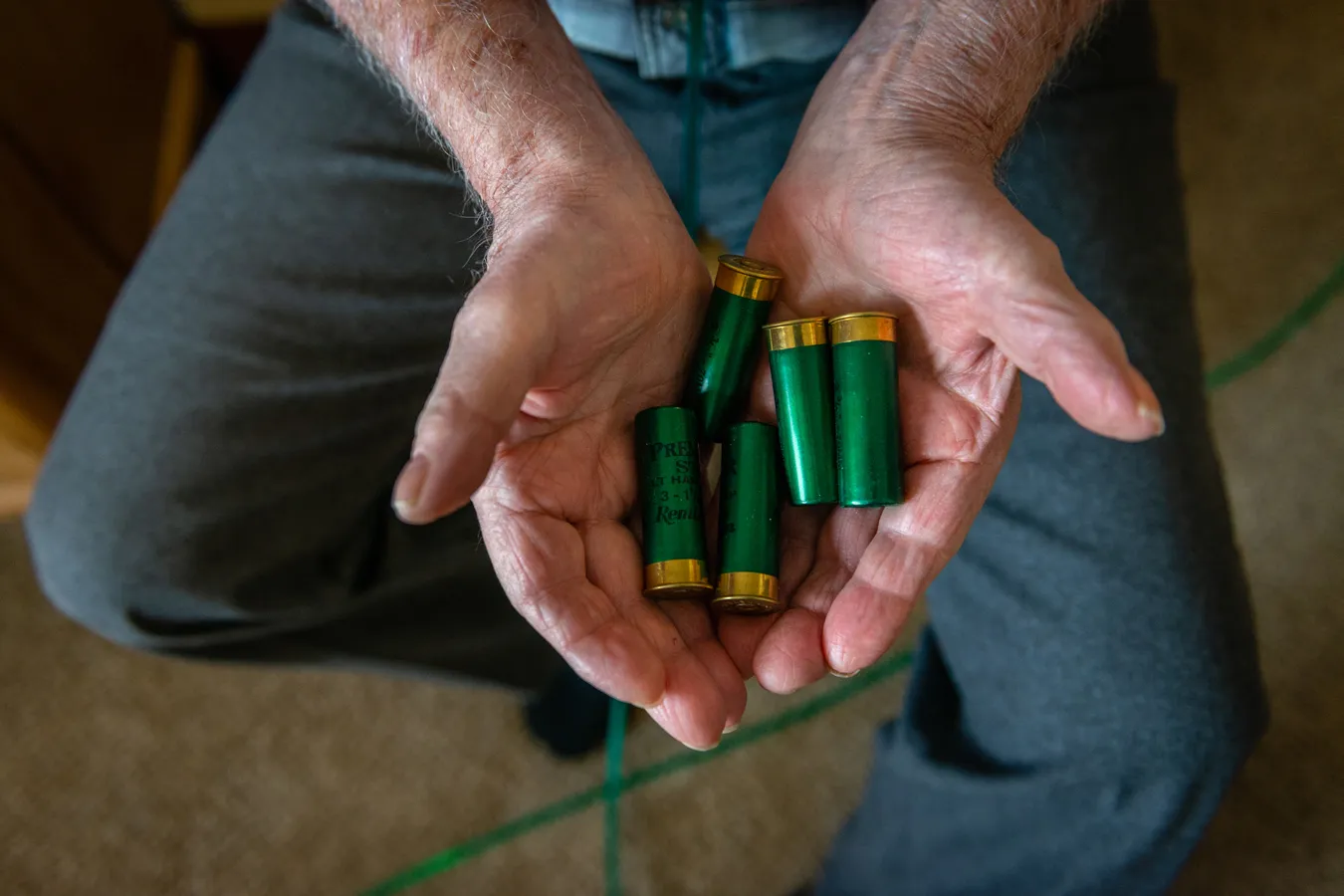
    He did. He still owned the shotgun he had used for bird hunting, though he hadn’t hunted in years, and he had recently acquired a .45-caliber pistol.

    “He kept it loaded in his nightstand drawer,” she learned from their discussion. “The shotgun, he propped up by his bed,” unloaded, but with the shells atop the nightstand.

    “He saw them as a practical tool for protecting himself, because he lived alone,” Prater said. She viewed the situation differently: An older person whose diagnoses put him at risk of confusion and suicide kept two unsecured guns within arm’s reach every night. “It was alarming,” she said, “but not uncommon.”

    Facing a growing population of older adults with dementia and with firearms in their homes, public health experts have worked for years to address the threat guns pose to their owners and others. At least a third of people with dementia have access to firearms, researchers estimate.

    Persuading them to relinquish their weapons can be a losing battle. Owners cite protection as a key reason for having firearms, so “you’re taking away their identity as a protector, removing a part of who they are,” said Kelsey Conrick, a researcher at the Center for Firearm Injury Prevention at the University of Washington.

    The most effective strategy, studies show, follows a “harm-reduction” approach: discussing the risks, focusing on safe storage, with guns unloaded and locked, and providing devices like trigger locks and lockboxes free of charge.

    Email Sign-Up

    Subscribe to KFF Health News’ free weekly newsletter, “The Week in Brief.”

    “Older adults experience a great amount of harm from firearms,” said Lena Makaroun, a geriatrician and researcher at the University of Pittsburgh School of Medicine. According to data from the Centers for Disease Control and Prevention, 8,226 Americans 65 and older died from firearms in 2024 — almost 23 people each day.

    That death rate isn’t much higher than the overall rate, but homicides are higher among the young. More than 90% of gun deaths among older people are suicides.

    Researchers hoping to reduce those numbers are now looking at older people who, like the retired administrator, haven’t received a dementia diagnosis but are experiencing worsening confusion or memory loss.

    A survey in seven states found that a third of those 65 and older with such “subjective cognitive decline” reported having a gun in their households, and a quarter of them hadn’t securely stored them. That was a higher proportion of nonsecure storage than among those with normal cognition, though the difference was not statistically significant.

    “We worry about these people getting confused and having quick, unfettered access to a firearm,” said Conrick, the lead author of the paper. Like those diagnosed with dementia, they could be at higher risk for suicide, unintentional discharge of a firearm, or mistaken shootings of family members, visitors, or home care workers.

    Because these patients’ current impairment is less severe, healthcare professionals can initiate earlier conversations about access and storage, while the patients can still make decisions. “Allowing people to make their own choices is a win in my book” and more likely to reduce risky practices, Conrick said.

    It can be difficult for those who don’t use or own firearms to grasp the fierce attachment many gun owners feel, a bond that can intensify over time.

    “With aging comes a sense of vulnerability,” said Marian Betz, an emergency physician and director of the Firearm Injury Prevention Initiative at the University of Colorado Anschutz. Older gun owners “fear being victimized, which can be a valid fear,” she said.

    Guns make them feel safer, even if they’re not: An often cited meta-analysis from 2011 reported that a firearm in the home raised the risk of suicides and accidents, with “no credible evidence” of deterring crime or reducing injuries from intrusions or altercations.

    Still, “numbers don’t always motivate people’s decisions when they’re related to fear or risk,” Betz said.

    She led a study published in 2020 that found that among caregivers for people with dementia, only about 5% said a healthcare professional had ever discussed firearm safety with them.

    In fact, patients may not tell their doctors they own guns, partly because of a misconception that disclosing depression or dementia could lead to having their weapons confiscated. (Those conditions by themselves don’t require medical personnel to take such action. Even if they wanted to report a hazard, only 22 states and Washington, D.C., have extreme risk protection order laws that can temporarily restrict firearm access.)

    Families, moreover, can be reluctant to confront their older members about household firearms. When researchers interviewed 50 people who were caring for someone with dementia, many of the caregivers had seen reckless behavior or near misses that frightened them.

    But they also feared the discord that was likely to arise if they urged resistant older gun owners to get rid of their weapons or store them securely.

    “Caregivers worry about that conflict alienating them from the person with whom they will have to navigate many changes” in the years ahead, said Chris Knoepke, the study’s lead author and a health services researcher at the University of Colorado Anschutz.

    Firearms researchers are working on several fronts to help doctors and families tackle this potentially volatile issue.

    Prater and her team, for instance, are preparing videos to guide clinicians through safe storage discussions. Conrick’s Pathways 2 Safety program, which works with community agencies to integrate firearm discussions into routine healthcare, has distributed more than a thousand locking devices since March.

    At the University of Colorado, Betz has developed Safety in Dementia, an online tool that helps caregivers prepare for decision-making about firearms and other hazards. Another tool kit, the Firearm Life Plan, allows owners to document what should happen once they can no longer use firearms responsibly. Almost 16,000 people have used it since 2022, according to the university.

    Firearm safety discussions should become part of an annual Medicare wellness visit, Makaroun and her co-authors proposed in a recent New England Journal of Medicine editorial. Those visits reach about 60% of beneficiaries and emphasize safety and prevention.

    “That’s something we can all get behind,” she said. “It’s nonpolitical. Firearm owners by and large are very invested in safety.”

    Makaroun has seen what can happen when firearm safety is unacknowledged and unaddressed in older adults with declining cognition. In 2019, a patient in his 80s with memory loss was referred to her clinic for assessment.

    Cognitive testing determined that “he had impairment consistent with dementia,” she said. “I shared this with him and his son.”

    They talked through how to manage symptoms and what treatments might slow the decline. She ordered bloodwork to rule out other causes, like thyroid problems.

    “It’s a scary diagnosis to get, so I explained that we would be with them every step of the way,” she said. The man “didn’t really exhibit any signs of distress, he just took it in.” Testing had not found that he suffered from depression.

    The next day, when Makaroun called with the blood test results, his son answered the phone. “He had found his father in the basement the night before,” she said. He had died of a gunshot wound to the head.

    The New Old Age is produced through a partnership with The New York Times.

    Read the full article on the original source


    Related Posts

    • COMMENTARY: 50 Years Later, is ‘Roots’ on the Wrong Side of History?
    • Trump, 79, Claims He’s Going to Russia to Meet Putin (He’s Not)
    • The Job Market Has Changed… Again.
    • Wu-Tang Clan Knows They’re Forever
    • City Event | Pooler Spring Recycling Roundup
    • His & Hers Black History Month Looks: Coordinate in Style
    • Mayor Johnson to Lead Second Annual ‘Juneteenth
    • Musk’s SpaceX Reveals Its Finances for the First Time as It Readies for IPO
    dementia Disease Prevention Fitness and Nutrition Fitness Trends Guns Health News Health Policy Healthcare Innovation Healthy Habits Healthy Living Immune Health Lifestyle Medicine Medical Breakthroughs medical research Men's health Mental Health Awareness Nutrition News Public health Self-Care Strategies Stress Management Wellness Tips Women's health
    Share. Facebook Twitter Pinterest LinkedIn WhatsApp Reddit Tumblr Email
    Savannah Herald
    • Website

    Related Posts

    Health November 15, 2026

    Breast Cancer Screening for Black Women Doesn’t End in October

    November 15, 2026

    Air Traffic Control Systems Are Outdated. What’s Being Done to Prevent Another Outage?

    November 14, 2026

    James Webb telescope finds ice older than the star it orbits

    November 13, 2026

    Indigenous leaders at COP31 say it’s past time to turn promises into action

    November 12, 2026

    Neanderthals Walked with Flatter, More Flexible Feet, Researchers Say

    November 12, 2026

    What Is Brass Made Of?

    Comments are closed.

    Don't Miss
    Senior Living August 28, 2025By Savannah Herald05 Mins Read

    Leading 5 Medicare Yearly Registration Errors to Prevent

    August 28, 2025

    Aging Well: Information & Insights for Senior Citizen People and Caregivers The Medicare Annual Registration…

    IUPAT Event Celebrates Black Labour Legacy

    June 30, 2026

    Loop It Up – Cake Party – Savannah Herald

    April 29, 2026

    Revolutionary Black Feminist Photographers | DailyArt Magazine

    November 16, 2025

    Which new Division I HBCU coach is poised for an instant turnaround?

    August 18, 2026
    Archives
    • November 2026
    • October 2026
    • September 2026
    • August 2026
    • July 2026
    • June 2026
    • May 2026
    • April 2026
    • March 2026
    • February 2026
    • January 2026
    • December 2025
    • November 2025
    • October 2025
    • September 2025
    • August 2025
    • July 2025
    • June 2025
    • May 2025
    • April 2025
    • March 2025
    • February 2025
    Categories
    • Art & Literature
    • Beauty
    • Black History
    • Business
    • Climate
    • Culture
    • Education
    • Employment
    • Entertainment
    • Faith
    • Fashion
    • Food
    • Gaming
    • Georgia Politics
    • Guides
    • HBCUs
    • Health
    • Health Inspections
    • Investing
    • Lifestyle
    • Local
    • Lowcountry News
    • National
    • National Opinion
    • News
    • Politics
    • Real Estate
    • Senior Living
    • Sports
    • State
    • Tech
    • Traffic
    • Transportation
    • Travel
    • Weather
    • World
    Savannah Herald Newsletter

    Subscribe to Updates

    A round up interesting pic’s, post and articles in the C-Port and around the world.

    About Us
    About Us

    The Savannah Herald is your trusted source for the pulse of Coastal Georgia and the Low County of South Carolina. We're committed to delivering timely news that resonates with the African American community.

    From local politics to business developments, we're here to keep you informed and engaged. Our mission is to amplify the voices and stories that matter, shining a light on our collective experiences and achievements.
    We cover:
    🏛️ Politics
    💼 Business
    🎭 Entertainment
    🏀 Sports
    🩺 Health
    💻 Technology
    Savannah Herald: Savannah's Black Voice 💪🏾

    Our Picks

    Mini Strawberry Rhubarb Galettes with Flaky Crust

    July 3, 2026

    4C Hairstyles Summer Edit: Stunning Twist Outs + More

    July 4, 2026

    LeBron makes good on promise to Cavaliers NABJ Black News & Views

    November 3, 2025

    MacKenzie Scott Donations Credited To Bond With Toni Morrison

    November 25, 2025

    Spatially resolved profiling of extracellular vesicles in tissues with Spatial-EV-seq

    June 26, 2026
    Categories
    • Art & Literature
    • Beauty
    • Black History
    • Business
    • Climate
    • Culture
    • Education
    • Employment
    • Entertainment
    • Faith
    • Fashion
    • Food
    • Gaming
    • Georgia Politics
    • Guides
    • HBCUs
    • Health
    • Health Inspections
    • Investing
    • Lifestyle
    • Local
    • Lowcountry News
    • National
    • National Opinion
    • News
    • Politics
    • Real Estate
    • Senior Living
    • Sports
    • State
    • Tech
    • Traffic
    • Transportation
    • Travel
    • Weather
    • World
    Copyright © 2002-2026 Savannahherald.com All Rights Reserved. A Veteran-Owned Business

    Type above and press Enter to search. Press Esc to cancel.

    Manage Consent
    To provide the best experiences, we use technologies like cookies to store and/or access device information. Consenting to these technologies will allow us to process data such as browsing behavior or unique IDs on this site. Not consenting or withdrawing consent, may adversely affect certain features and functions.
    Functional Always active
    The technical storage or access is strictly necessary for the legitimate purpose of enabling the use of a specific service explicitly requested by the subscriber or user, or for the sole purpose of carrying out the transmission of a communication over an electronic communications network.
    Preferences
    The technical storage or access is necessary for the legitimate purpose of storing preferences that are not requested by the subscriber or user.
    Statistics
    The technical storage or access that is used exclusively for statistical purposes. The technical storage or access that is used exclusively for anonymous statistical purposes. Without a subpoena, voluntary compliance on the part of your Internet Service Provider, or additional records from a third party, information stored or retrieved for this purpose alone cannot usually be used to identify you.
    Marketing
    The technical storage or access is required to create user profiles to send advertising, or to track the user on a website or across several websites for similar marketing purposes.
    • Manage options
    • Manage services
    • Manage {vendor_count} vendors
    • Read more about these purposes
    View preferences
    • {title}
    • {title}
    • {title}
    Ad Blocker Enabled!
    Ad Blocker Enabled!
    Our website is made possible by displaying online advertisements to our visitors. Please support us by disabling your Ad Blocker.

    Sign In or Register

    Welcome Back!

    Login to your account below.

    Lost password?