


Close Menu
Savannah HeraldSavannah Herald
    • Home
    • News
      • Local
      • State
      • National
      • World
      • HBCUs
    • Events
    • Directories
    • Weather
    • Traffic
    • Jobs
    • Sports
    • Politics
    • Lifestyle
      • Faith
      • Senior Living
      • Health
      • Travel
      • Beauty
      • Fashion
      • Food
      • Art & Literature
    • Business
      • Real Estate
      • Entertainment
      • Investing
      • Education
    • Guides
      • SSU Homecoming Guide
      • Back to School Savannah
      • Summer Camp Guide
      • Juneteenth Guide
      • Black History Savannah
      • MLK Guide Savannah
    We're Social
    • Twitter
    • Facebook
    • YouTube

    Subscribe to Updates

    Get the latest creative news from FooBar about art, design and business.

    Trending
    • Where are all the Milky Way’s black holes?
    • Santa Clause Is Coming to Town | December 2026 | Savannah Herald
    • Missing Children in GA | Anya Tindel (GA) | Savannah Herald
    • Cheapest Gas Stations in Georgia | Savannah Herald
    • Sol Legare School, Scanlonville Cemetery get national honor
    • Sizzle and Grill | 10 Must-Try Recipes for Your Next BBQ | Savannah Herald
    • Kyma Atlanta: Our Supper Club Dinner at Kyma Buckhead
    • Lead bombs, Thanksgiving and prescient quotes from 323 years ago
    Facebook X (Twitter) Instagram YouTube
    Login
    Savannah HeraldSavannah Herald
    Savannah HeraldSavannah Herald
    Home » Where are all the Milky Way’s black holes?

    Where are all the Milky Way’s black holes?

    Savannah HeraldBy Savannah HeraldNovember 27, 20267 Mins Read
    Facebook Twitter Pinterest LinkedIn WhatsApp Reddit Tumblr Email
    Google Logo
    Share
    Facebook Twitter LinkedIn Pinterest Email

    Science & Exploration: Check Out the World Via Research Study and Innovation

    Key takeaways
    • Estimates suggest the Milky Way contains at least 100 million stellar-mass black holes, yet astronomers have identified fewer than 100 candidates.
    • Most black holes are difficult to detect because isolated, inactive ones emit no light and are nearly invisible.
    • Many known black holes reveal themselves in binary systems, where material pulled from a companion star glows brightly in X-rays and gamma rays.
    • Precise measurements from Gaia have revealed three quiet black hole systems by tracking the motion of their companion stars.
    • Several quiet binary systems challenge existing ideas about how black holes form, showing astronomers still have much to learn.

    Astronomers can’t appear to discover thousands of countless great voids in our galaxy. Given these objects’ online reputation, you might find that a little uncomfortable.

    Yet don’t stress! These black holes aren’t dangerous to us, though the scenario is somewhat annoying to astronomers.

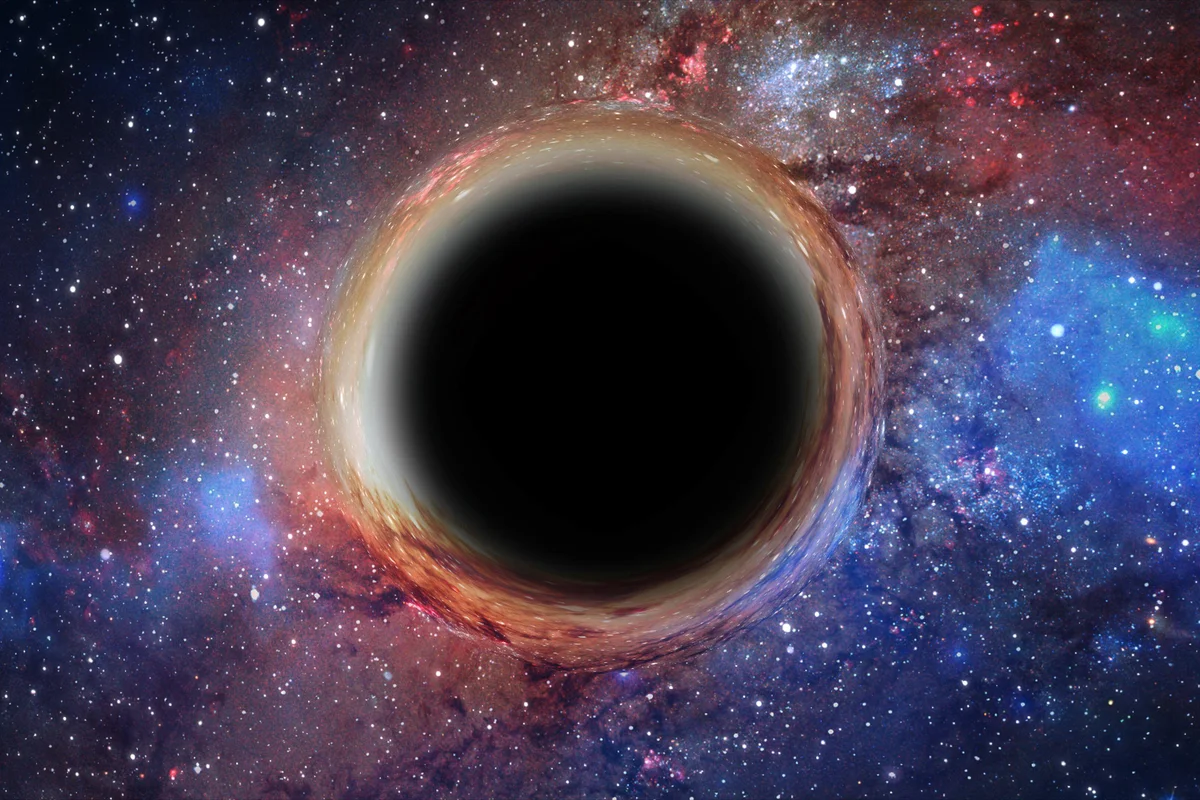
    Stellar-mass great voids– ones that vary from regarding 3 to 100 times the mass of the Sun– litter the Galaxy. They create when a large star runs out of fuel ; the core collapses and releases really colossal quantities of power. This causes the external layers to blow up away as a very energetic supernova. And if the core is enormous sufficient, it will certainly create a great void when it collapses.


    On supporting science journalism

    If you’re appreciating this post, think about supporting our award-winning journalism by subscribing By buying a subscription you are assisting to guarantee the future of impactful stories regarding the discoveries and concepts shaping our world today.


    We can approximate the amount of stellar-mass black holes there must be in the galaxy. One method is to compute how many celebrities our galaxy has actually generated in its lifetime that have actually been more than eight solar masses, the crucial limitation required to form a great void. Research released in Astronomy and Astrophysics in 2020 estimated there are concerning 130 million such great voids in the Galaxy. A different study, published as a preprint in 2026, obtained regarding 170 million , which is pretty comparable.

    One more means is to look at the gravitational waves given off as black holes combine with each other and use that to extrapolate their general population in our galaxy. Research published in the January 2018 issue of Month-to-month Notifications of the Royal Astronomical Culture utilized this method and additionally found there should be some thousands of millions in our galaxy. Close enough: we can securely end there are at least 100 numerous these beasts in the Milky Way and perhaps sometimes that number.

    How many have we in fact discovered? Well, this is the part that’s a bit annoying: less than 100 That’s not 100 million, just “one hundred.” And most of them aren’t confirmed yet.

    This isn’t awkward– far from it; black holes make themselves rather hard to discover. For one point the issue is right in their name: they’re black They do not emit light. As a matter of fact, they’re rather renowned for precisely the reverse: taking in whatever, including light, that falls on them.

    Solitary great voids that are just minding their own organization in space are almost undetectable. If they aren’t swallowing down issue– that is, if they’re quiescent– they are exceptionally challenging to find. It’s feasible, though, for a little few to disclose themselves in numerous ways. For example, if one occurs to pass straight between a celebrity and Planet, our telescopes will certainly identify the celebrity lightening up as the gravity of the black hole imitates a lens, distorting area and magnifying the light from the background star. There have actually been lots of surveys seeking such lensing events, yet to date, just a single separated Galaxy great void has actually been found by doing this

    Occasionally, however, they make it a bit easier on astronomers. If a black hole remains in a binary system, orbiting a typical star, its extreme gravity can siphon material off the various other star and attract it in. That matter piles up in a disk simply over the occasion perspective. Friction and other pressures inside the disk can warm it to amazingly heats, countless degrees, so the disk comes to be extremely luminescent. Such a black hole can pour out high-energy X- and gamma rays which can be seen by our room telescopes, making it nearly a cinch to situate in the sky. A lot of great voids we’ve spotted in the Galaxy remain in these types of systems, yet they are greatly exceeded by quiescent ones, which still makes a demographics of stellar black holes elusive.

    Recently, however, a new technique has actually been offered to search for these concealed lurkers. Gaia was an ESA objective that gauged the positions, velocities, brightness and shades of well over a billion stars in our galaxy. The dimensions were so exact that it’s possible to really see the adjustment ready a star undertakes as it and a black hole friend orbit each various other. It takes exacting measurements and analysis to tease these great voids out of the data, yet until now 3 such systems have been found, named (rather prosaically) Gaia BH 1, 2 and 3 As a matter of fact, Gaia BH 1 is the closest black hole known to the Sunlight, regarding 1, 560 light-years away. The three Gaia great voids have masses of 9 6, 8 9 and 33 times that of the Sunlight, respectively.

    These stand for the suggestion of the iceberg; there are possibly a couple of tens of millions of black holes orbiting an additional things (such as a star or another black hole) in the galaxy. Still, it’s an encouraging technique. Also much better, a new data release from Gaia (its final one, alas) will certainly have monitorings covering a longer time standard, which will certainly make the telltale stellar activities much easier to identify.

    That isn’t to claim that we understand the ones we have seen. Two of the Gaia great voids– BH 1 and BH 2– orbit typical celebrities at moderate ranges, and this offers an issue. The stars that created these two black holes were quite huge, and as they passed away, they would have expanded right into red supergiants. In both cases, the friend stars need to have been engulfed by the extra substantial celebrity, which would either cause a complete merging of the two or, as soon as the enormous celebrity exploded, the second star being on a really limited orbit around the newly formed black hole.

    Yet in both systems, the stars appear intact, orbiting farther away than versions anticipate. A paper released in July 10, 2026 in the Astrophysical Journal may have found an option to this dilemma. Usually the supergiant star sheds mass quickly, and this blows it out right into room. In a double star, nevertheless, this procedure is assisted by centrifugal pressure, which assists fling material away, and the physical dynamics of the system dictate that it occurs closer to the buddy celebrity. Thie procedure eliminates orbital energy, creating the orbits to reduce and, possibly, the two stars to combine.

    In the new research study, the astronomers discovered that if the mass is rather lost close to the more enormous celebrity, the material does not take as much power away, leaving both celebrities different. It’s unclear exactly how this could happen, though they posited a couple of concepts. Perhaps fierce internal eruptions in the substantial star can blast issue away directly from the surface area into room. It’s also feasible that the substantial mass difference between the celebrities stops the much more gently blown product from moving to the smaller sized buddy star, so, once again, it basically leaves directly from the larger star.

    Astronomers located a prospect fourth quiescent black hole system in 2024 with a really low mass and unusually circular orbit around its buddy celebrity. This system, also, is difficult to discuss, and might entail a third star that was swallowed up when the black hole progenitor became a red supergiant, combining with the other celebrity to develop the binary we see today.

    Clearly, some great voids are unusual, also for great voids. It’s interesting that, of the four quiescent binary great voids we have actually seen, three of them thumb their noses at our first hypotheses of exactly how they create. This is a respectable indicator that there is still a whole lot to find out regarding these systems. With, oh, 100 million even more still delegated find, we’ll have a lot of opportunities to find out.

    Read the complete short article from the original source

    Related Posts

    • Creamy Herb Roasted Salmon Dip
    • Marinated Artichoke Bean Salad with Crispy Shallots – Plant Based RD
    • 5 Skin Care Trends That Will Define 2026, According to Dermatologists
    • CAT to Suspend Services and Close Offices for the Christmas Holiday – Chatham Area Transit (CAT)
    • Resilient Faith in Christian Life. – ThyBlackMan.com
    • Grief, fury, conspiracy: inside Turning Point USA after Charlie Kirk’s killing | Charlie Kirk shooting
    • Canadian head of state claims united state profession talks return to: NPR
    • Georgia Trend Daily – March 11, 2026
    Breakthrough Discoveries climate change Earth and Planetary Science Environmental Policy Environmental Updates Global Warming Health & Science medical research NASA Updates Nature & Wildlife Renewable Energy Science and Innovation Science in the News Science news Scientific Community Scientific Research Space Exploration STEM Education Sustainable Future Technology and Science
    Share. Facebook Twitter Pinterest LinkedIn WhatsApp Reddit Tumblr Email
    Savannah Herald
    • Website

    Related Posts

    November 26, 2026

    The Six Biggest Takeaways From COP31, Which Ended Without an Agreement After Talks Broke Down

    November 25, 2026

    ForSight Robotics says JASPER robot used in 26 cataract surgeries

    November 24, 2026

    Medieval chain mail discovered during underwater excavation of 15th-century ‘floating castle’ that sank off Sweden

    November 24, 2026

    Silent voicemails without a ring could be ringless voicemail spam

    November 23, 2026

    Programmable functional RNA design with a virtual scientist

    November 22, 2026

    ‘Vibe coding’ is risky: Here’s why and what to do about it

    Comments are closed.

    Don't Miss
    Senior Living December 1, 2025By Savannah Herald04 Mins Read

    Click, Save, Celebrate – Happy Digital Holiday Shopping

    December 1, 2025

    Aging Well: News & Insights for Seniors and Caregivers Modern tech tools make it easier…

    SPOTLIGHT ON THE FRANKIE SHOP

    May 13, 2026

    Missing Children in Georgia | Donae Crowell (GA) | Savannah Herald

    November 11, 2026

    How to balance structured activities and unstructured time this summer  – First Tee – Savannah

    June 25, 2026

    Sports betting company DraftKings launching PAC

    August 28, 2025
    Archives
    • November 2026
    • October 2026
    • September 2026
    • August 2026
    • July 2026
    • June 2026
    • May 2026
    • April 2026
    • March 2026
    • February 2026
    • January 2026
    • December 2025
    • November 2025
    • October 2025
    • September 2025
    • August 2025
    • July 2025
    • June 2025
    • May 2025
    • April 2025
    • March 2025
    • February 2025
    Categories
    • Art & Literature
    • Beauty
    • Black History
    • Business
    • Climate
    • Culture
    • Education
    • Employment
    • Entertainment
    • Faith
    • Fashion
    • Food
    • Gaming
    • Georgia Politics
    • Guides
    • HBCUs
    • Health
    • Health Inspections
    • Investing
    • Lifestyle
    • Local
    • Lowcountry News
    • National
    • National Opinion
    • News
    • Politics
    • Real Estate
    • Senior Living
    • Sports
    • State
    • Tech
    • Traffic
    • Transportation
    • Travel
    • Weather
    • World
    Savannah Herald Newsletter

    Subscribe to Updates

    A round up interesting pic’s, post and articles in the C-Port and around the world.

    About Us
    About Us

    The Savannah Herald is your trusted source for the pulse of Coastal Georgia and the Low County of South Carolina. We're committed to delivering timely news that resonates with the African American community.

    From local politics to business developments, we're here to keep you informed and engaged. Our mission is to amplify the voices and stories that matter, shining a light on our collective experiences and achievements.
    We cover:
    🏛️ Politics
    💼 Business
    🎭 Entertainment
    🏀 Sports
    🩺 Health
    💻 Technology
    Savannah Herald: Savannah's Black Voice 💪🏾

    Our Picks

    CAT Board to Hold Second Public Budget Hearing and Regular Meeting in June – Chatham Area Transit (CAT)

    July 2, 2026

    Whitewater High School Band Hosts VIBE Marching Competition, Welcoming 1,200 Student Performers

    October 16, 2026

    Curry Hummus – Make It Milk Free

    August 28, 2025

    From Chatbots to Coworkers: The Evolution of AI Assistants

    November 1, 2025

    Required to Maintain Your Youngsters Captivated? These 8 Netflix Reveals Are Perfect

    August 28, 2025
    Categories
    • Art & Literature
    • Beauty
    • Black History
    • Business
    • Climate
    • Culture
    • Education
    • Employment
    • Entertainment
    • Faith
    • Fashion
    • Food
    • Gaming
    • Georgia Politics
    • Guides
    • HBCUs
    • Health
    • Health Inspections
    • Investing
    • Lifestyle
    • Local
    • Lowcountry News
    • National
    • National Opinion
    • News
    • Politics
    • Real Estate
    • Senior Living
    • Sports
    • State
    • Tech
    • Traffic
    • Transportation
    • Travel
    • Weather
    • World
    Copyright © 2002-2026 Savannahherald.com All Rights Reserved. A Veteran-Owned Business

    Type above and press Enter to search. Press Esc to cancel.

    Manage Consent
    To provide the best experiences, we use technologies like cookies to store and/or access device information. Consenting to these technologies will allow us to process data such as browsing behavior or unique IDs on this site. Not consenting or withdrawing consent, may adversely affect certain features and functions.
    Functional Always active
    The technical storage or access is strictly necessary for the legitimate purpose of enabling the use of a specific service explicitly requested by the subscriber or user, or for the sole purpose of carrying out the transmission of a communication over an electronic communications network.
    Preferences
    The technical storage or access is necessary for the legitimate purpose of storing preferences that are not requested by the subscriber or user.
    Statistics
    The technical storage or access that is used exclusively for statistical purposes. The technical storage or access that is used exclusively for anonymous statistical purposes. Without a subpoena, voluntary compliance on the part of your Internet Service Provider, or additional records from a third party, information stored or retrieved for this purpose alone cannot usually be used to identify you.
    Marketing
    The technical storage or access is required to create user profiles to send advertising, or to track the user on a website or across several websites for similar marketing purposes.
    • Manage options
    • Manage services
    • Manage {vendor_count} vendors
    • Read more about these purposes
    View preferences
    • {title}
    • {title}
    • {title}
    Ad Blocker Enabled!
    Ad Blocker Enabled!
    Our website is made possible by displaying online advertisements to our visitors. Please support us by disabling your Ad Blocker.

    Sign In or Register

    Welcome Back!

    Login to your account below.

    Lost password?