




Black Voices: News, Culture & Community from Across the Nation
- Louisiana’s proposed SB 154 would criminalize natural kratom, equating it with heroin and LSD despite differences.
- Most harms stem from lab-made, hyper-concentrated synthetic knockoffs sold at gas stations and smoke shops.
- Regulation, not prohibition, has protected consumers in 17 states through testing, labeling, and age limits.
- Banning kratom would divert scarce funds from urgent priorities like mental health and gun violence prevention.
- Effective policy: adopt a Kratom Consumer Protection Act to distinguish safe botanical products from dangerous synthetics.

Walk into a gas station in almost any state, and you might find something far more dangerous than cigarettes or lottery tickets: synthetic drugs sold in candy-colored packaging, labeled as herbal supplements or mood enhancers.
This is no longer a fringe problem. It’s a full-blown national crisis.
The bill, which now heads to Gov. Jeff Landry’s desk, wouldn’t just criminalize synthetic knockoffs; it would lump the centuries-old botanical in with heroin and LSD, treating anyone who uses it — responsibly — as a criminal.
This is exactly the kind of reactionary policymaking that fuels the problem rather than solving it.
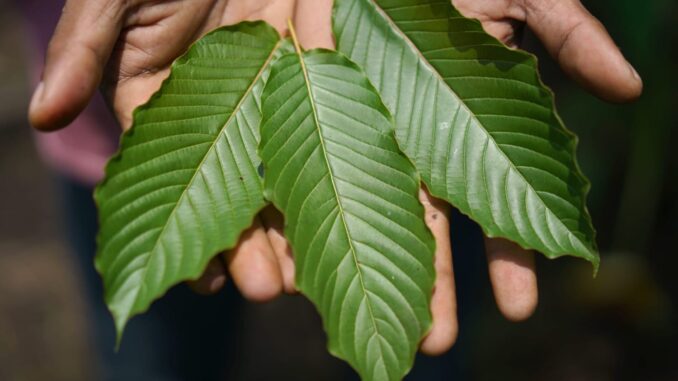
Natural kratom is brewed like tea or consumed as a dietary supplement, and it’s used by more than 23 million Americans today as a general wellness tool.
But what’s showing up behind the counter at smoke shops isn’t always natural kratom. Increasingly, you will find a hyper-concentrated, lab-made product that isolates one compound from the plant and supercharges it, stripping away the other natural alkaloids that moderate its effects.
The products sold at smoke shops and roadside stops are lab-made concoctions that isolate one compound found in a leaf and use harsh chemicals to turn it into a synthetic opioid, stripping away the rest.
The result? Lab-made drugs cooked by underground chemists that are not only powerful and unpredictable but have little in common with the real plant.
Now, Louisiana’s governor is considering signing a bill that, if made law, would impose felony charges, fines, and prison time on anyone who uses or sells natural kratom, including those who use it responsibly.
That kind of policy doesn’t just miss the mark — it ignores the facts.
Even the federal government has rejected calls to schedule kratom twice, in 2016 and 2018, and again by the World Health Organization in 2021.
And for what gain? A full ban requires serious public investment — from training law enforcement to enforcing new penalties to launching public education campaigns.
The reality is this: without adequate enforcement, bans don’t stop the spread of dangerous drugs. They just push people into the shadows and drive out law-abiding businesses. The very people who’ve used natural kratom responsibly for years may be forced into the underground market — or worse, driven to synthetic substitutes that carry far higher risks.
Meanwhile, the real threat continues to thrive. Gas station heroin — products like “Dozo Percs,” “Oxin,” and “7” — are flooding the market. Despite warnings about their ties to addiction and overdose, these synthetic knockoffs remain largely unregulated, powering an $8 billion industry with little oversight.
If states truly want to curb that threat, they need to follow the science — and the data shows that regulation works better than prohibition.
Let Louisiana be the cautionary tale — not the model. Because SB 154 doesn’t represent progress; it represents panic.
If we’re serious about ending the gas station heroin crisis, we have to stop pretending that banning tea leaves will do the trick. The real solution is smarter oversight, not broader criminalization.
Recommended For You.

We will continue to fight! We are pushing back—hard—against the unconstitutional, illegal, and dangerous actions of Donald Trump and his
(function(d, s, id){
var js, fjs = d.getElementsByTagName(s)[0];
if (d.getElementById(id)) return;
js = d.createElement(s); js.id = id;
js.src = “//connect.facebook.net/en/sdk.js#xfbml=1&version=v2.9”;
fjs.parentNode.insertBefore(js, fjs);
}(document, ‘script’, ‘facebook-jssdk’));
Read the full article on the original publication
