


Close Menu
Savannah HeraldSavannah Herald
  • Home
  • News
    • Local
    • State
    • National
    • World
    • HBCUs
  • Events
  • Directories
  • Weather
  • Traffic
  • Sports
  • Politics
  • Lifestyle
    • Faith
    • Senior Living
    • Health
    • Travel
    • Beauty
    • Fashion
    • Food
    • Art & Literature
  • Business
    • Real Estate
    • Entertainment
    • Investing
    • Education
  • Guides
    • Juneteenth Guide
    • Black History Savannah
    • MLK Guide Savannah
We're Social
  • Twitter
  • Facebook
  • YouTube

Subscribe to Updates

Get the latest creative news from FooBar about art, design and business.

Trending
  • Crusader Kings 3 Expansion Will Let You Play as a Pope
  • Blueberry Oatmeal Breakfast Cookies
  • A Playbook for Future Proofing Your (Food) Tech Workforce
  • ‘Abbott Elementary’ Star Janelle James Brought All-Black Glam To Golden Globes
  • Embraced by Grace by Margot Van Sluytman – Feminism and Religion
  • Get Angela Bassett Award Season Makeup Using Danessa Myricks Beauty
  • Celebrating the 500th Anniversary of the First Successful Slave Revolt in America
  • FAQ: Adding a Dental Benefit to Medicare Part B
Facebook X (Twitter) Instagram YouTube
Login
Savannah HeraldSavannah Herald
  • Home
  • News
    • Local
    • State
    • National
    • World
    • HBCUs
  • Events
  • Directories
  • Weather
  • Traffic
  • Sports
  • Politics
  • Lifestyle
    • Faith
    • Senior Living
    • Health
    • Travel
    • Beauty
    • Fashion
    • Food
    • Art & Literature
  • Business
    • Real Estate
    • Entertainment
    • Investing
    • Education
  • Guides
    • Juneteenth Guide
    • Black History Savannah
    • MLK Guide Savannah
Savannah HeraldSavannah Herald
Home » The dark history of forced starvation as a weapon of war against Indigenous peoples
Faith

The dark history of forced starvation as a weapon of war against Indigenous peoples

Savannah HeraldBy Savannah HeraldNovember 3, 20256 Mins Read
Facebook Twitter Pinterest LinkedIn WhatsApp Reddit Tumblr Email
The dark history of forced starvation as a weapon of war against Indigenous peoples
Share
Facebook Twitter LinkedIn Pinterest Email

Faith & Reflection: Voices from the Black Church and Beyond

Key takeaways
  • The U.N. claims Israel uses starvation as a weapon of war, violating international law in Gaza.
  • The destruction of Indigenous food systems has historically facilitated colonization in the U.S. and Canada.
  • Current starvation crises in Gaza reflect past patterns of using hunger as a tactical weapon in conflicts.

(The Conversation) — There is increasing evidence that “widespread starvation, malnutrition and disease” are driving a rise in hunger-related deaths“ in Gaza, a group of United Nations and aid organizations have repeatedly warned.

A July 29, 2025, alert by the Integrated Food Security Phase Classification, a global initiative for improving food security and nutrition, reported that the “worst-case scenario of famine is currently playing out in the Gaza Strip,” as access to food and other essential items is dropping to an “unprecedented level.”

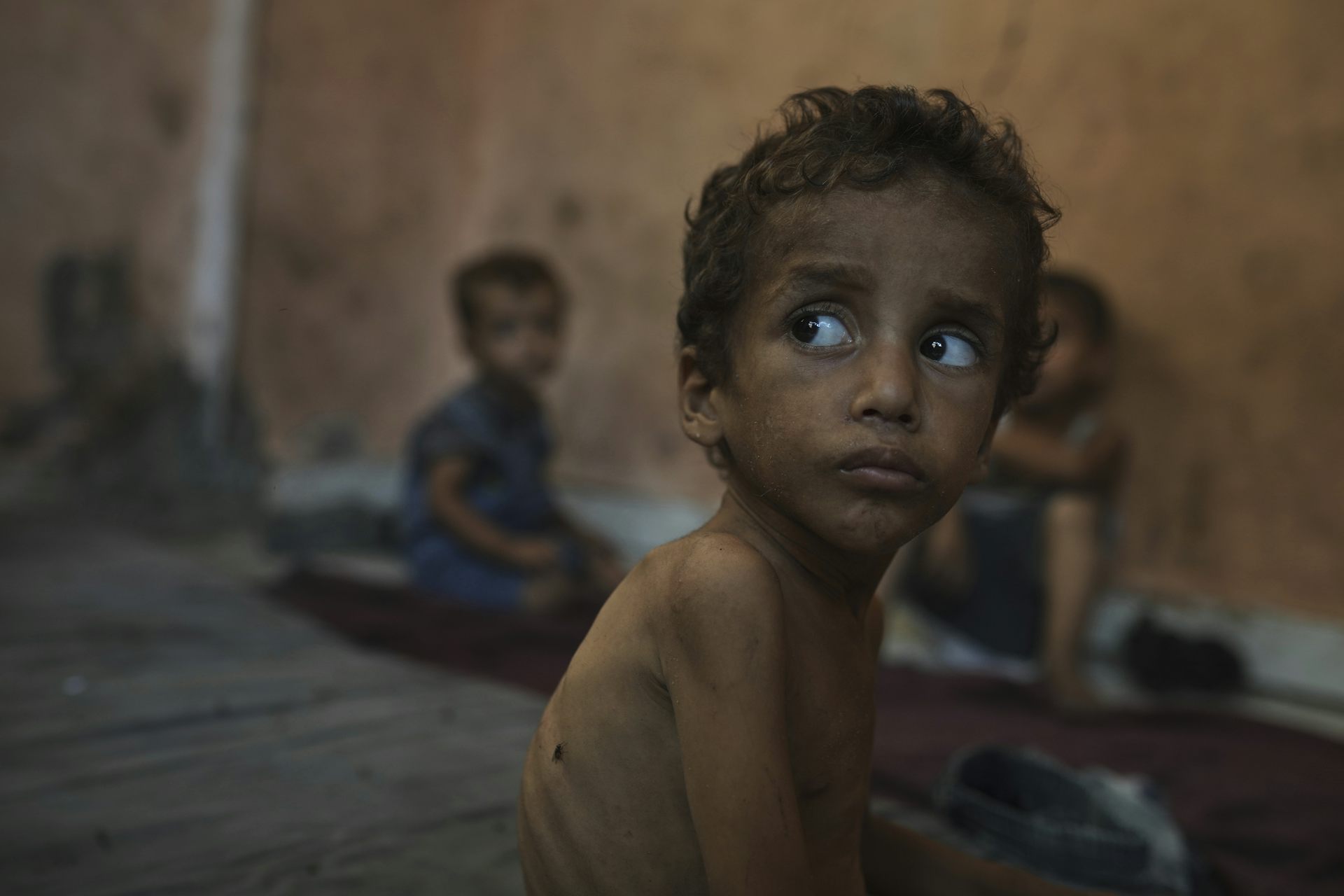
More than 500,000 Palestinians, one-fourth of Gaza’s population, are experiencing famine, the U.N. stated. And all 320,000 children under age 5 are “at risk of acute malnutrition, with serious lifelong physical and mental health consequences.”

U.N. experts have accused Israel of using starvation “as a savage weapon of war and constitutes crime under international law.”

They are calling on Israel to urgently “restore the UN humanitarian system in Gaza.”

Israel is not the only government in history to cut off access to food and water as a tool of war. As an Indigenous scholar who studies Indigenous history, I know that countries – including the United States and Canada – have used starvation to conquer Indigenous peoples and acquire their land. As a descendant of ancestors who endured forced starvation by the U.S. government, I also know of its enduring consequences.

Dismantling Indigenous food systems

From the founding of the U.S. and Canada through the 20th century, settler colonizers often tried to destroy Indigenous communities’ access to food, whether it was their farms and livestock or their ability to access land with wild animals – with the ultimate aim of forcing them off the land.

In 1791, President George Washington ordered Secretary of War Henry Knox to destroy farms and livestock of the Wea Tribe that lived along the Ohio River valley – a fertile area with a long history of growing corn, beans, squash and other fruits and vegetables.

Knox burned down their “corn fields, uprooted vegetable gardens, chopped down apple orchards, reduced every house to ash, [and] killed the Indians who attempted to escape,” historian Susan Sleeper-Smith noted in her 2018 book, “Indigenous Prosperity and American Conquest.” Women and children were taken hostage. The goal was to destroy villages and farms so that Indigenous people would leave and not return.

Seventy-two years later, General Kit Carson conducted a scorched-earth campaign to remove the Navajo from what is now Arizona and New Mexico. Similar to Knox, he destroyed their villages, crops and water supply, killed their livestock and chopped down over 4,000 peach trees. The U.S. military forced over 10,000 Navajo to leave their homeland.

Indigenous famine

By the late 19th century, numerous famines struck Indigenous communities in both the U.S. and Canada due to the “targeted, swift, wholesale destruction” of bison by settlers, according to historian Dan Flores; this, too, was done in an effort to acquire more Indigenous land. One U.S. military colonel stated at the time: “Kill every buffalo you can! Every buffalo dead is an Indian gone.”

There were an estimated 60 million bison before U.S. and Canadian settlement; by the 1890s, there were fewer than 1,000. Indigenous communities on the northern Great Plains in both the U.S. and Canada, who believed bison were a sacred animal and who relied on them for food, clothing and other daily needs, now had nothing to eat.

Historian James Daschuk revealed in his 2013 book, “Clearing the Plains: Disease, Politics of Starvation, and the Loss of Aboriginal Life,” that between 1878 to 1880, Canadian Prime Minister Sir John A. Macdonald did little to stop a multiyear famine on the Canadian Plains, in what is now Manitoba, Saskatchewan and Alberta. Macdonald did not hide his intentions. He and his government, he said, were “doing all we can, by refusing food until the Indians are on the verge of starvation.”

Indigenous peoples on the Canadian Plains were forced to eat their dogs, horses, the carcasses of poisoned wolves and even their own moccasins. All the Indigenous peoples in the region – an estimated 26,500 people – suffered from the famine. Hundreds died from starvation and disease.

Malcolm C. Cameron, a House of Commons member at the time, accused his government of using “a policy of submission shaped by a policy of starvation” against Indigenous peoples. His denunciation did little to change their policy.

What my great-grandparents experienced

Many Indigenous peoples’ families in the U.S. and Canada have stories of surviving forced starvation by the government. Mine does, too.

In the winter of 1883-1884, my grandmother and grandfather’s parents experienced what is remembered as the “starvation winter” on the Blackfeet reservation in what is now Montana.

Similar to what happened in Canada, the near extinction of bison by American settlers led to a famine on the Blackfeet reservation. In an effort to slow the famine, Blackfeet leaders purchased food with their own money, but the U.S. government supply system delayed its arrival, creating a dire situation. Blackfeet leaders documented 600 deaths by starvation that one winter, while the U.S. government documented half that amount.

As historian John Ewers noted, the nearby “well-fed settlers” did nothing and did not offer “any effective aid to the Blackfeet.”

My family survived because a few men and women within our family were able to travel far off the reservation by horseback to hunt and harvest Native foods. I was told the story of the “starvation winter” my entire life, as were most Blackfeet. And I now share these stories with my own children.

Weapon of war

Thousands of children in Gaza are malnourished and dying of hunger-related causes.

Due to mounting international pressure, Israel is pausing its attacks in some parts of Gaza for a few hours each day to allow for some aid, but experts have noted it is not enough.

“We’re talking about 2 million people. It’s not 100 trucks or a pausing or a few hours of calm that is going to meet the needs of a population that has been starved for months,” Oxfam official Bushra Khalidi told The New York Times.

“This is no longer a looming hunger crisis – this is starvation, pure and simple,” Ramesh Rajasingham, director of the U.N.’s Office for the Coordination of Humanitarian Affairs, said on Aug. 10, 2025.

Many might assume that the use of starvation as a weapon of war happened only in the past. Yet, in places like Gaza, it is happening now.

(Rosalyn R. LaPier, Professor of History, University of Illinois at Urbana-Champaign. The views expressed in this commentary do not necessarily reflect those of Religion News Service.)

Read the full article on the original source


African American Religion AME Church Biblical Wisdom Black Faith Christian Living Christian Women of Color Church Leadership COGIC Community Churches Cultural Christianity Devotional Messages Faith and Culture Faith and Justice Faith-Based News famine Gaza Gospel and Grace Indigenous Inspirational Writing Integrated Food Security Phase Classification Religion and Identity Religious Commentary Spiritual Reflection The Black Church United Nations
Share. Facebook Twitter Pinterest LinkedIn WhatsApp Reddit Tumblr Email
Savannah Herald
  • Website

Related Posts

Faith April 20, 2026

Embraced by Grace by Margot Van Sluytman – Feminism and Religion

Faith April 19, 2026

Legacy of Carol P. Christ: IS EVIL PART OF THE NATURE OF REALITY AND DIVINITY? – Feminism and Religion

Faith April 18, 2026

Aquarius and the Woman at the Well by Judith Shaw – Feminism and Religion

Faith April 16, 2026

Can Iran Be Trusted After Ceasefire? History Suggests Otherwise. – ThyBlackMan.com

Faith April 15, 2026

Zacchaeus: A Lesson on Urgent Salvation from Jesus

Faith April 14, 2026

Full Moon Reflection by Sara Wright – Feminism and Religion

Comments are closed.

Don't Miss
Obituaries December 24, 2025By Savannah Herald01 Min Read

Obituary | Ashantek Danielle Milledge of Beaufort, South Carolina

December 24, 2025

December 15, 2002 – October 12, 2025 Ashantek “Booda” Danielle Milledge 22, of Burton and…

Will Trump’s Commerce Struggle Flip Canada’s Auto-Components Capital Right into a Ghost City?

August 28, 2025

From way of thinking to microbiome, workout and diet regimen, right here’s just how to update your body immune system

December 22, 2025

The startling similarities the Oklahoma City Thunder share with the NBA’s last dynasty

November 20, 2025

Gingerbread Loaf Dish with Molasses Lotion Cheese Icing

December 18, 2025
Archives
  • April 2026
  • March 2026
  • February 2026
  • January 2026
  • December 2025
  • November 2025
  • October 2025
  • September 2025
  • August 2025
  • July 2025
  • June 2025
  • May 2025
  • April 2025
  • March 2025
  • February 2025
  • January 2025
  • December 2024
Categories
  • Art & Literature
  • Beauty
  • Black History
  • Business
  • Climate
  • Education
  • Employment
  • Entertainment
  • Faith
  • Fashion
  • Food
  • Gaming
  • Georgia Politics
  • HBCUs
  • Health
  • Health Inspections
  • Home & Garden
  • Investing
  • Local
  • Lowcountry News
  • National
  • National Opinion
  • News
  • Obituaries
  • Politics
  • Real Estate
  • Science
  • Senior Living
  • Sports
  • SSU Homecoming 2024
  • State
  • Tech
  • Transportation
  • Travel
  • World
Savannah Herald Newsletter

Subscribe to Updates

A round up interesting pic’s, post and articles in the C-Port and around the world.

About Us
About Us

The Savannah Herald is your trusted source for the pulse of Coastal Georgia and the Low County of South Carolina. We're committed to delivering timely news that resonates with the African American community.

From local politics to business developments, we're here to keep you informed and engaged. Our mission is to amplify the voices and stories that matter, shining a light on our collective experiences and achievements.
We cover:
🏛️ Politics
💼 Business
🎭 Entertainment
🏀 Sports
🩺 Health
💻 Technology
Savannah Herald: Savannah's Black Voice 💪🏾

Our Picks

Eva Mae Elmore's Obituary

December 24, 2025

A review of The Hole in Your Life by Bob Rich – Compulsive Reader

December 7, 2025

Alabama State Makes MLB Draft History with Juan Cruz and Kameron Douglas Selections

November 25, 2025

The labor market continues to be retaining mortgage charges elevated

February 28, 2026

Newark Airport terminal’s Concerns: What to Know

November 1, 2025
Categories
  • Art & Literature
  • Beauty
  • Black History
  • Business
  • Climate
  • Education
  • Employment
  • Entertainment
  • Faith
  • Fashion
  • Food
  • Gaming
  • Georgia Politics
  • HBCUs
  • Health
  • Health Inspections
  • Home & Garden
  • Investing
  • Local
  • Lowcountry News
  • National
  • National Opinion
  • News
  • Obituaries
  • Politics
  • Real Estate
  • Science
  • Senior Living
  • Sports
  • SSU Homecoming 2024
  • State
  • Tech
  • Transportation
  • Travel
  • World
  • Privacy Policies
  • Disclaimers
  • Terms and Conditions
  • About Us
  • Contact Us
  • Opt-Out Preferences
  • Accessibility Statement
Copyright © 2002-2026 Savannahherald.com All Rights Reserved. A Veteran-Owned Business

Type above and press Enter to search. Press Esc to cancel.

Manage Consent
To provide the best experiences, we use technologies like cookies to store and/or access device information. Consenting to these technologies will allow us to process data such as browsing behavior or unique IDs on this site. Not consenting or withdrawing consent, may adversely affect certain features and functions.
Functional Always active
The technical storage or access is strictly necessary for the legitimate purpose of enabling the use of a specific service explicitly requested by the subscriber or user, or for the sole purpose of carrying out the transmission of a communication over an electronic communications network.
Preferences
The technical storage or access is necessary for the legitimate purpose of storing preferences that are not requested by the subscriber or user.
Statistics
The technical storage or access that is used exclusively for statistical purposes. The technical storage or access that is used exclusively for anonymous statistical purposes. Without a subpoena, voluntary compliance on the part of your Internet Service Provider, or additional records from a third party, information stored or retrieved for this purpose alone cannot usually be used to identify you.
Marketing
The technical storage or access is required to create user profiles to send advertising, or to track the user on a website or across several websites for similar marketing purposes.
  • Manage options
  • Manage services
  • Manage {vendor_count} vendors
  • Read more about these purposes
View preferences
  • {title}
  • {title}
  • {title}
Ad Blocker Enabled!
Ad Blocker Enabled!
Our website is made possible by displaying online advertisements to our visitors. Please support us by disabling your Ad Blocker.

Sign In or Register

Welcome Back!

Login below or Register Now.

Lost password?

Register Now!

Already registered? Login.

A password will be e-mailed to you.