




Black Voices: Money and Employment News from Across the Nation
- Good Friday meatless observance leads to widespread fish dishes, like escoveitch fish and frying traditions in Jamaica.
- Community celebrations vary: Caribbean kite flying competitions and Jamaican bun and cheese showcase creative, social Easter customs.
- Across Africa and the US, families observe picnics on Nigeria's Galilee Day, Liberia's public 'Judas' ritual, and New Orleans' Second Lines.

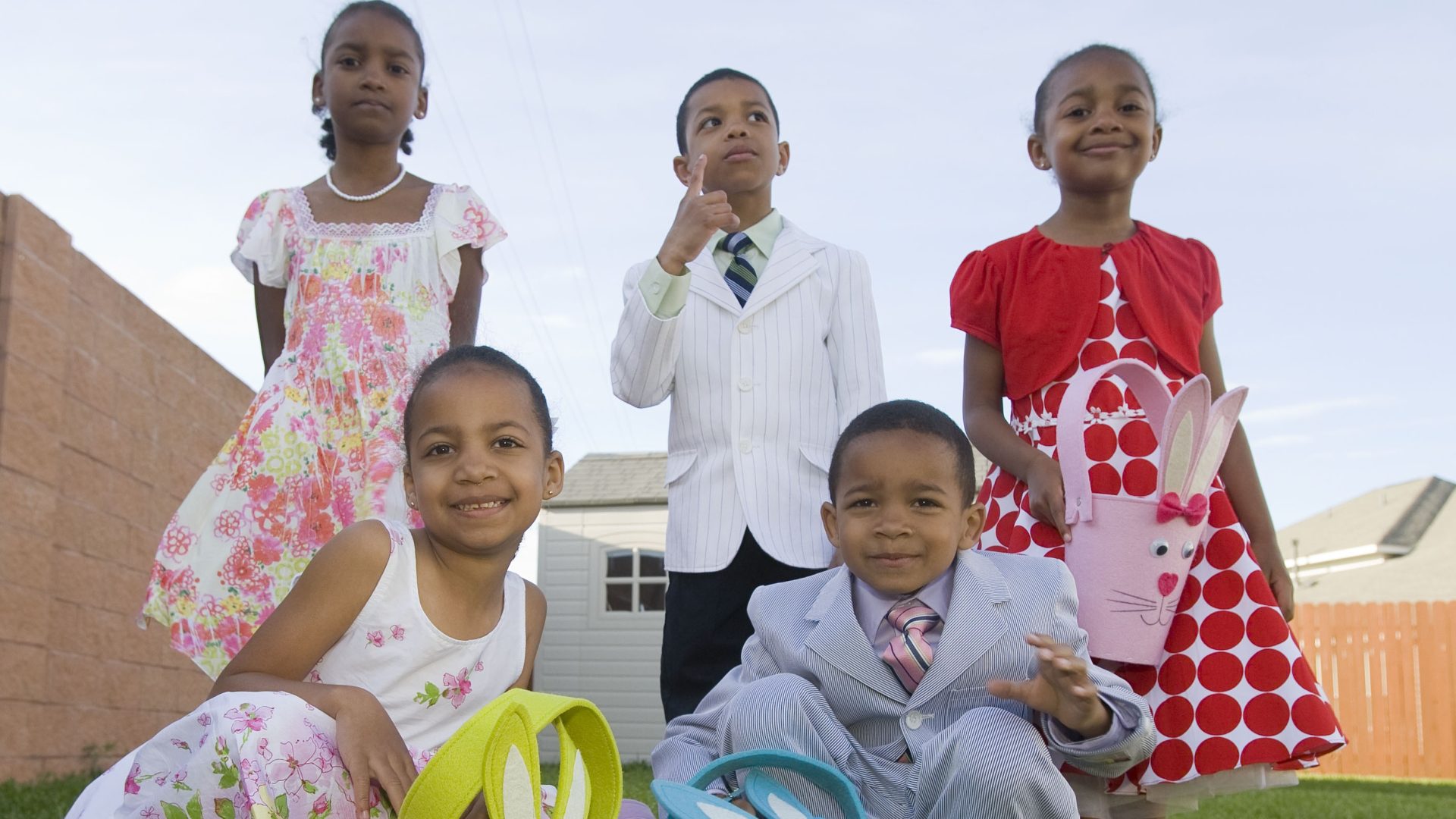
For those who celebrate Easter, or were raised around loved ones who do, the religious springtime holiday is typically filled with a few predictable traditions. These include dressing up in fancy pastel ‘fits, getting a fresh Easter hairstyle, maybe even an Easter-inspired manicure and little ones coloring eggs before searching for said eggs in a massive outdoor hunt. Some of us still have nightmares about the trauma endured with a hot pressing comb on a kitchen stove the Saturday before Easter.
Jokes aside, as most things involving Black people, Our fashion, food and fellowship all have deeper meanings and Easter is no exception. We checked in with a few insider sources to research Black Easter traditions and how the holiday is celebrated in a few key areas of our Diaspora: on the continent of Africa, in various parts of the Caribbean and in the United States. There were several variations of the same tradition carried throughout these places such as eating some sort of fish or seafood for dinner on Good Friday. Other traditions seem specific to the geographic location like gardening rituals and kite flying.
Happy Easter to all of those who celebrate Resurrection Sunday!
THE CARIBBEAN
Velda Cummings of Grenada has fond Easter childhood memories. She recalls, ““We were excited for the kite-flying competitions on Easter Sunday. Who had the prettiest kite? Who had the biggest kite? Whose kite would fly the highest? Kites were homemade, not like today. We made them from bamboo, paper, cocoa leaves, and used strips of old fabric for the tails.”
On the nearby island of Jamaica, Easter is celebrated in a big way especially in relation to food and fellowship. Eating bun and cheese is a huge element of the celebration. This tradition is believed to have started during slavery when British colonizers introduced hot cross buns to be eaten on Good Friday (see Guyanese version, also popular in Trinidad, in video below). That evolved into Jamaican bun which incorporates more local ingredients such as molasses, fruits and spices, and is paired with sharp cheddar cheese.
As part of Christian tradition, many Jamaicans give up eating meat for Lent so eating escoveitch fish, fried fish or fish cake/fritters is big for Good Friday (although Lent technically ends on Holy Thursday), when old-school practices also meant avoiding turning on the stove to cook until after 3 pm.
Good Friday is a solemn day and a public holiday, with most believers going to church. It’s not uncommon for churches to hold services from 12 to 3 pm to commemorate the hours Jesus is thought to have suffered on the cross.
Easter Monday is also a public holiday and the kickoff for Jamaica Carnival activities (carnival runs through the week).
Essence Copy Chief Grace White shares, “Growing up in Jamaica, it wasn’t Easter without bun and cheese—and lots of fish. I remember that on Good Friday, the stove couldn’t be turned on before 3 pm (after the 3-hour church service), so all that fish would have to be fried the night before.”
UNITED STATES
Our senior entertainment editor and New Orleans native Okla Jones reflects, “Going on the Lakefront is a social thing that Black people would do on Easter Sunday after church [in NOLA]. We would eat crawfish out there sometimes.” He adds that Second Lines are popular on Easter too as they occur on Sundays throughout the year. (But on Easter, folks seem to put a lil’ extra on it.)
“My grandmother always started her garden on Good Friday. She planted okra, green beans, cucumbers, squash and corn,” Marie Hatcher reminisces about growing up in rural North Carolina. She continues, “We had church service on Good Friday (sometimes around noon and then again at night). The sermon usually included the seven last words — of Jesus. Dinner on Good Friday was a celebration. We would eat fried fish but usually chicken too. In the south, we ate fish for dinner on Fridays all year.”
Other Black southern food traditions on Easter weekend include ham for dinner on Sunday, complete with a sweet glaze, pineapples and cherries and deviled eggs (always garnished with a sprinkle of paprika) and other treasured soul food side dishes.
“Another Southern Easter tradition was parents buying their kids live chicks that were often called biddies. They were short lived, if you were lucky, they lived a couple of days!” Hatcher recalls.
Hatcher adds that little girls typically wore hats (or bonnets) and gloves. Children had to memorize some type of speech that was recited in front of the church congregation on Easter Sunday morning.
Says Hatcher, “On Easter Monday there was more egg hunting, games and most people didn’t work. It was a fun time. When I moved to NYC, I was shocked that people went to work on Easter Monday!”
AFRICA
On a huge continent with more than 50 countries where dozens of languages and dialects are spoken, the traditions of any holiday are guaranteed to be tremendous in number. Here are a couple interesting and rarely discussed ones we uncovered:
In Nigeria on Easter Monday, some families and church groups reportedly have picnics or outings at beaches to fellowship and in a tradition known as “going to Galilee” or Galilee Day.
In a tradition both symbolic and spirited, some people in Liberia engage in a public beating of “Judas”, the infamous betrayer of Jesus. Many children eagerly embrace the ritual of creating said Judas with old rags, straw and other clothing items. Then, Judas is paraded through the streets while chanting: “Judas oh Judas, who killed Jesus? Da Judas!”
“[On Good Friday] We would sit in church for three hours and different preachers preached on the seven words of the cross,” recalls Essence Chief Financial Officer Ciatta Kaul of her early days in Liberia.
Read the full article on the original publication
