




Wellness That Matters: Black Health News & Community Care
- Federal spending cuts risk reducing Medicaid support, threatening home-based waiver services that keep people with disabilities out of institutions.
- Providers and clinics may drop Medicaid patients or face higher co-pays, reducing referrals and early intervention for developmental conditions.
- Durable medical equipment access could tighten as vendors refuse low reimbursement rates, delaying essential mobility and assistive devices.
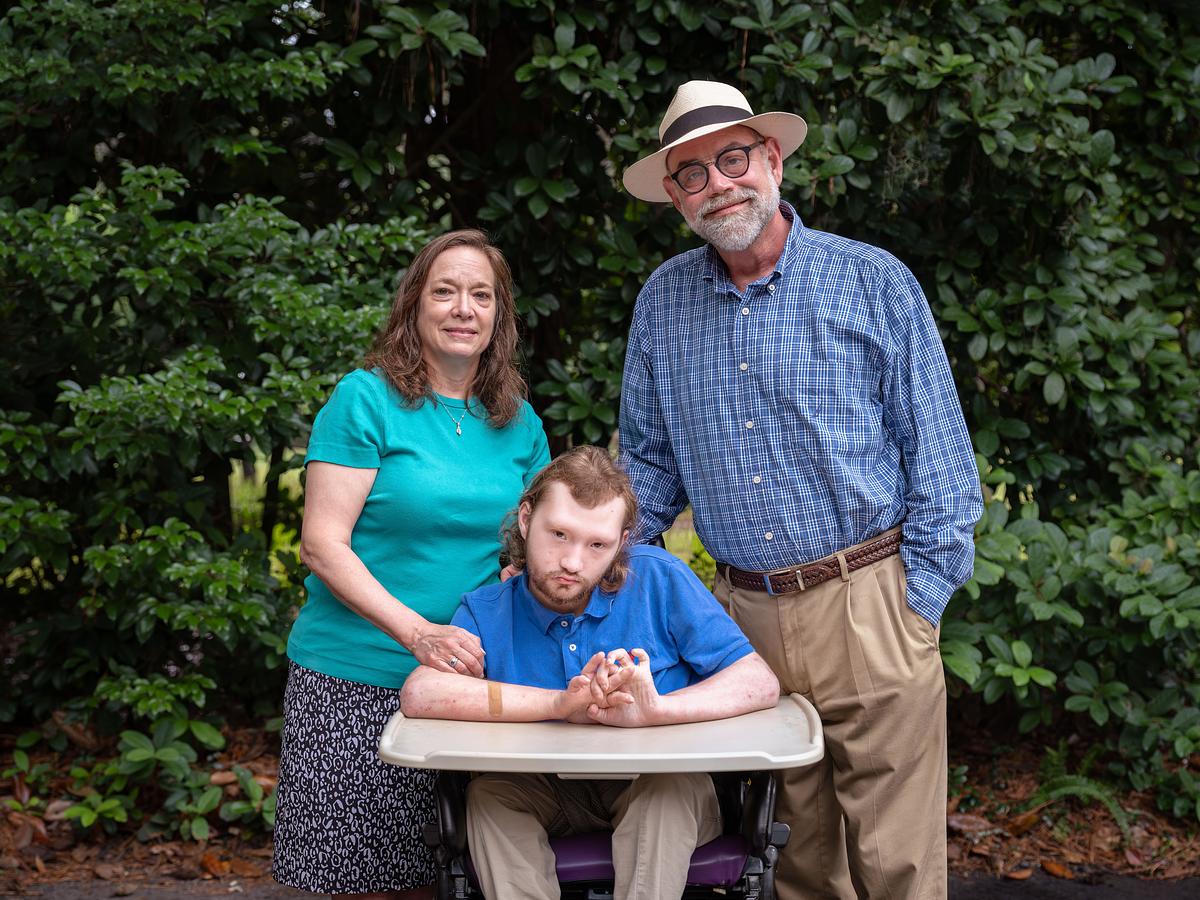
In the 17 years since giving birth to son Eli, Michelle Heyman has become a master at the complex bureaucratic hurdles of Medicaid, the federal health insurance available to low-income children, the elderly and disabled in Georgia.
The federal funding pays for expensive and intensive daily care that the Heymans need to keep Eli living at home with his family. Despite the scrupulous attention she pays to compile the documents necessary to keep these benefits, Heyman discovered in February that Eli had been cut off from those programs without warning, sending the family into chaos.
“You have to send in like a thousand pages of documentation in order to renew. And you have to fax it all. You have to fax every page,” Michelle Heyman said. “I gotta make calls, I gotta fill out records requests for every single person that he sees: therapists, doctors, school stuff, on a very tight timeline.”
Spending cuts passed last summer by Congressional Republicans, including the steepest cuts in Medicaid in a generation, have the Heymans worried that more disruption is coming their way. More than 200,000 Georgians with disabilities rely on Medicaid for healthcare and services, and many of these families, as well as medical providers and health care advocates are uncertain about what the spending changes will mean.
Georgia’s Republican congressional caucus says families like the Heymans have nothing to worry about, as the new spending law doesn’t affect Medicaid funding for disabled children.
However, D’Arcy Robb, executive director of the Georgia Council on Developmental Disabilities, sees a more pessimistic future. She says it’s possible that waiver programs like the one Eli and other disabled Medicaid recipients rely on to stay out of assisted living facilities could be cut as state agencies struggle to pay for other services directly cut in the federal budget.
Federal and state governments are required to pay for care for disabled Medicaid recipients in nursing homes. But nursing homes are not obligated to have all the services available via waiver programs like the one Eli relies on for his quality of life.
Eli’s mother, who managed to renew benefits for her after last spring’s snafu, says the ongoing uncertainty about whether this funding will continue from the state is terrible to live with.
“Generally when we’ve had travails in the past, we have been able to figure out how to work around them and move on,” said Heyman, a former health communication specialist. “Uncertainty is awful to live with on a day-to-day basis.”
The state’s Medicaid agency, the Department of Community Health, did not reply to requests for comment.
Family takes on challenges
When Michelle gave birth to her younger son, she remembers her terror as nurses urgently pulled her newborn son out of her arms and took him into the neonatal intensive care unit.
Although no one had flagged potential problems during her pregnancy, she and her husband were told that Eli had had a rare chromosomal deletion.
As he’s grown older, the Katie Beckett waiver, which is offered in 43 states, helps cover the costs of Eli’s medication, and the frequent hospital visits necessary due to breathing issues. It also covers physical therapy, occupational therapy, and aquatic therapy, all of which help Eli improve his daily functioning and independent physical movement.
These benefits, which amount to approximately $200,000 per year for Eli, allows him to live at home, instead of an institution.
“One of the things that we’ve been working on at therapy is brushing teeth, taking things off over his head, using utensils to put things in his mouth,” Michelle said. “He loves Cheeto Puffs, and if you happen to have any, he will reach out and try to take it and put it in his mouth. He couldn’t do that before. That’s a therapy thing.”
Currently, disabled Georgians have a variety of health care options. Home and community based services ensure that individuals with disabilities can avoid having to live in long-term care facilities by bringing services to them at home and in the community. These community-based care plans typically include assistance with daily functioning, but may also cover funding for vehicle modifications, job coaching services, and support for activities like garden clubs and swim teams.
But these are the high-cost services that, in the past, state governments have pulled back on when other Medicaid funding cuts have occurred, said Robb. That’s what happened in 2020, when Georgia’s Department of Behavioral Health and Developmental Disabilities, which administers the kind of community care services that Eli relies on, suffered budget and staff cutbacks.
Waivers weren’t cut, but the number of people waiting to access the promised services ballooned into the thousands, said Robb. In the future, funding cuts would likely mean less services, as well as less access to services, she said.
If the state cuts back funding for these services, his mother said, then Eli could end up in a hospital away from his loving family.
“If we didn’t take him to therapy and to all these different activities that have events and all, then his world would be very small,” she said.
Providers feel the pinch
One local health care provider who already feels Medicaid’s funding strains is Shauna Joye, owner of Joye Psychology & Wellness in Savannah, provides assessments and therapies for children with intellectual development disorders, ADHD, autism and learning disabilities.
Her facility is one of the only independent clinics within a two-hour drive that accepts Medicaid for psychological assessments for children.
She says increased red tape that could be required to stay enrolled in federal safety net benefits like Medicaid could cause mental health clinics to drop Medicaid patients altogether.
Joye is also worried a drastic cut in Medicaid will create higher co-pays with primary care providers, which may discourage families living paycheck to paycheck from going to the doctor. That means it’s less likely that providers will be able to refer children for treatment for ADHD, autism, and other developmental disabilities.
“That’s where we get a lot of our referrals, preventative care or the pediatricians and well-check,” she said. “They’re gonna be the ones that are referring them for evaluation, so they’re kind of our first line of defense when it comes to screening. So I do worry that even if there’s not too much of a change with mental health, what about if there’s a change with primary care and the downstream effects of that? I guess I’m just kind of waiting for the shoe to drop and find out what’s gonna happen as far as the coverage for our clients.”
Another one of her fears is that states may attempt to cut Medicaid costs by placing caps on coverage for treatments like Applied Behavior Analysis (ABA) therapy, which some children with autism receive multiple times a week. States like Nebraska and New York have already proposed cuts that could limit access to ABA therapy in anticipation of federal funding cuts.
Early intervention for autism through treatments like ABA therapy can change the trajectory of some children’s developmental outcomes, Joye said. Without consistent treatment, some can regress into more severe levels of autism and require more costly support at school and in the healthcare system.
“If we’re talking about impact on society and saving money for the government, then you think they would invest a little bit more on the front end so that they don’t have to support these individuals on the back end, because early intervention is so helpful with that,” she said.
Equipment access tightens
Another area where federal Medicaid funding could affect Georgians with disabilities is access to medical equipment. Currently, companies often decline to deal with people with Medicaid or Medicare coverage, even though tens of thousands of individuals with disabilities have this insurance, because of low reimbursement levels, said Chris Brand, executive director of Friends of Disabled Adults and Children (FODAC).
“Half the state of Georgia can’t really access a lot of basic [durable medical equipment] because vendors are not willing to do the work for the rate the government has set,” he said.

Brand’s nonprofit, which is based in Tucker, Georgia, and now has a distribution center in Savannah, refurbishes medical equipment and donates it for little to no cost and offers vehicle lift modifications and loans for assistive technology.
He says that individuals and families in need of affordable equipment have long waits to be approved for subsidies for wheelchairs or mobility equipment, or to replace broken equipment.
“It’s terribly stressful for the individual trying to get everything done in their day. Some folks live, work, and play in their chairs and they’re by themselves and they’re their only caretaker. That is very detrimental to their health, to not be able to get groceries or go out and take care of things they need to take care of,” he said. “And it’s an extreme hardship to have a chair go down that needs repair, has parts missing, or they need a new one, whatever it is.
Family becomes outspoken
At the Hayman’s home, the family tries to keep their anxiety over Eli’s future from spilling into their everyday lives.
The cost of Eli’s therapy services and care bills has prompted them to be more outspoken about decisions by the Trump administration, and Republican lawmakers regarding federal subsidies for Medicaid.
Michelle said it’s been difficult to debate members of her own family who support the president and don’t see the knock-on effects that the federal budget cuts could have on Eli.
Kevin, Eli’s father and a special education reading specialist at Isle of Hope Elementary, said he and many parents of his students are ready to sacrifice almost everything for their children. But the cost of disabled services means that few if any could afford care without Medicaid-funded programs.
Kevin said he hopes more people can understand that caring for people like his son is beyond a political issue.
“There’s no question children like Eli across the spectrum do not add economically to a country. But I don’t think economics is all that. I absolutely think Eli adds to everyone’s world. And that has a true benefit, it does. And a basic belief I have is that the greatness of a country is only calculated by how it treats its weakness.”
Read the full article on the original site
