




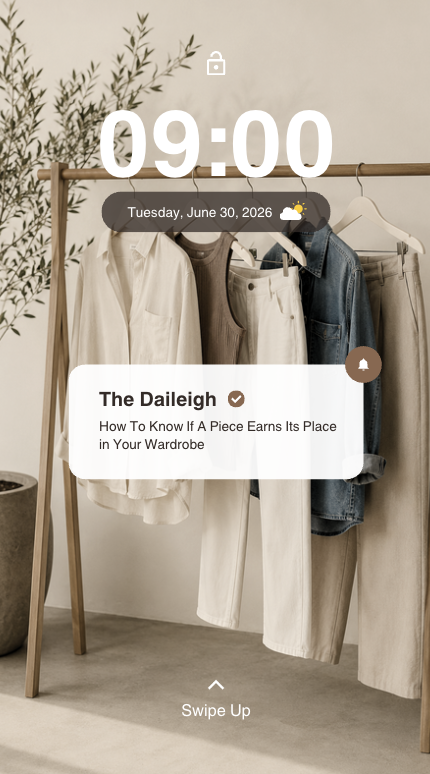
Style Spotlight: Looks, Trends & Fashion Inspiration
- Every piece should have a job in your wardrobe; purpose guides keeping or discarding.
- Separate pieces that help you get dressed from those that simply take up space.
- Foundation pieces are versatile basics you reach for repeatedly because they work with almost everything.
- Personality, seasonal, and special occasion pieces add variety when they coordinate with what you own.
- If an item no longer serves a purpose in outfits you actually wear, it is time to remove it.
Most advice will tell you to ask questions like:
“Does it spark joy?”
Or,
“Have you worn it in the last year?”
Those questions can be helpful.
But I don’t think they’re enough.
Because a piece can be beautiful…
…and still not deserve a place in your wardrobe.
Likewise, a simple white tee might become one of the hardest-working pieces you own.
The difference isn’t how much you paid for it.
Or whether it’s trendy.
Or whether someone else would keep it.
The difference is the job that piece is doing in your wardrobe.
That’s the question I want you to start asking instead.
Not,
“Should I keep this?”
But,
“Has this piece earned its place?”
Every Piece Should Have a Job
One of the biggest reasons wardrobes become overwhelming is because we treat every piece the same.
We don’t separate the pieces that help us get dressed from the pieces that simply take up space.
The truth is…
Every piece in your wardrobe should have a purpose.
Some pieces become foundation pieces.
They’re the ones you reach for over and over again because they work with almost everything.
Other pieces add personality.
They might not be worn every week, but they bring variety to your wardrobe and work with the clothes you already own.
Some pieces are seasonal.
Others are reserved for special occasions.
Every one of them can deserve a place.
As long as they’re actually serving a purpose.
The problem isn’t owning different kinds of clothes.
The problem is owning clothes that don’t do anything for your wardrobe anymore.
See the full look or story from the original source
