




Voices, Votes & Vision: The Latest in Politics & Public Policy
- Petition asks the Judicial Committee of the Privy Council to opine on three questions about Britain’s slavery role and reparations.
- Referral is uncertain; the British government advises the king, and a favorable opinion could strengthen negotiations though not compel payments.
- CARICOM backs Jamaica’s effort and advances a 10-point reparations plan including apology, debt relief, health, education, and cultural restoration.
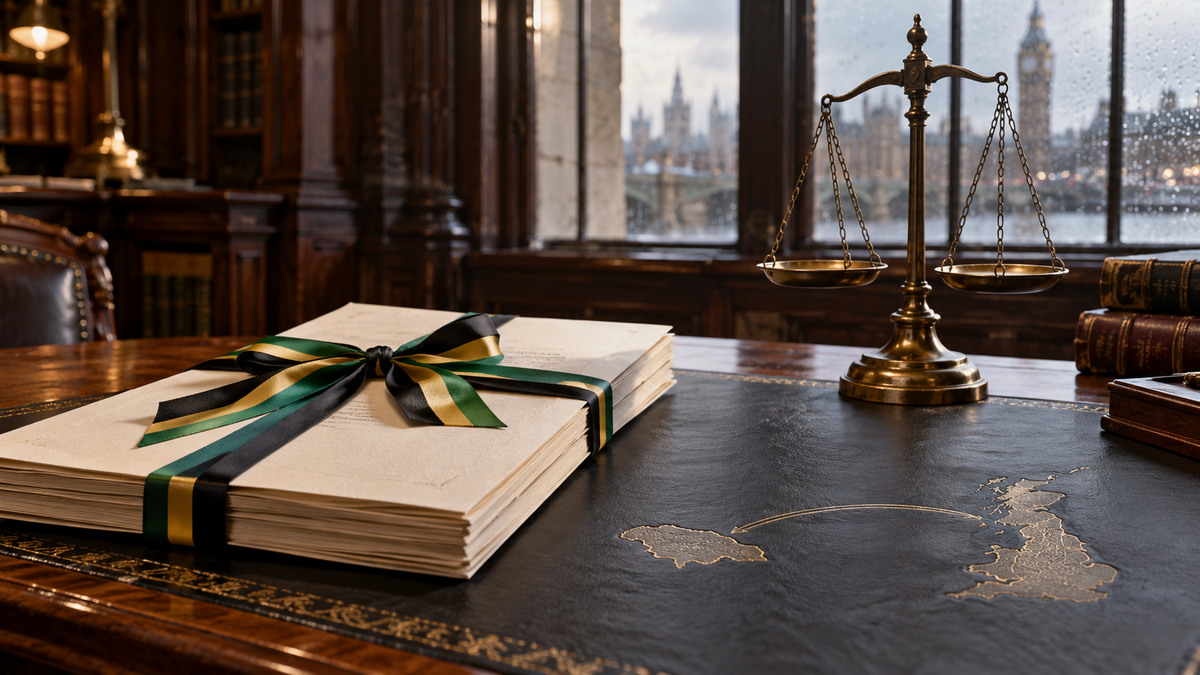
LONDON — Jamaica has taken a major new step in the Caribbean campaign for reparatory justice, formally asking King Charles III to refer legal questions about Britain’s role in slavery to the Judicial Committee of the Privy Council.
A Jamaican delegation delivered the petition in London on Monday, Sept. 7. The move asks the king to use a rarely invoked constitutional process to obtain the council’s legal opinion on Britain’s responsibility for the enslavement of Africans in Jamaica and whether redress is owed.
The petition raises three central questions: whether the forced transport, sale and enslavement of Africans in Jamaica was lawful under English common law; whether the system violated international law and amounted to a crime against humanity; and whether Britain has a continuing duty to provide reparations.
Jamaica’s minister of culture, gender, entertainment and sport, Olivia Grange, led the delegation. The Associated Press reported that the filing was timed to the anniversary of the 1781 Zong massacre, in which the crew of a British slave ship threw more than 130 enslaved Africans overboard and later sought insurance payments for the loss.
The request does not guarantee that the Privy Council will hear the questions. King Charles acts on the advice of the British government, which has resisted calls to pay reparations. The king has spoken of his personal sorrow over slavery and supported research into the monarchy’s historical connections to the slave trade, but he has not issued the formal apology sought by many campaigners.
Jamaica’s action is part of a broader effort by the Caribbean Community, or CARICOM. At its July 2026 meeting, CARICOM leaders publicly backed Jamaica’s plan to present the petition on Sept. 7 and listed it among several regional initiatives to advance reparations.
CARICOM’s reparatory justice framework reaches beyond direct cash payments. Its 10-point plan calls for a formal apology, debt cancellation, health and education programs, cultural restoration, technology transfer and support for communities still confronting the social and economic legacy of colonialism.
The case has relevance across the African diaspora, including Black Americans, because it could add legal force to a debate that has often been treated primarily as a political or moral question. A favorable opinion would not automatically require Britain to pay compensation, but it could strengthen future negotiations and similar claims by other nations.
The petition also arrives as Jamaica continues debating whether to remove the British monarch as head of state and become a republic. Jamaica gained independence in 1962 but still retains the king as its ceremonial head of state, while the London-based Privy Council remains its highest appellate court.
Sources: The Associated Press, Sept. 7, 2026; CARICOM, July 10, 2026; CARICOM Reparations Manifesto.
Read the full article on the original site
