




Real Estate News & Market Insights:
- New-construction homes can flood just as easily as older houses when site design or drainage fail.
- Fresh grading often settles, sending water toward foundations; overlooked flashing, sealing, and drainage cause water damage.
- FEMA flood maps can be outdated; being outside a designated zone does not guarantee a property will not flood.
- States like Florida, Texas, and North Carolina keep expanding construction despite significant flood exposure.
- Before buying, inspect lot grading and downspouts, request phased third-party inspections, and consider flood insurance for protection.
A new-construction home isn’t immune to flood damage.
Just ask Gloria Odunsi, a first-time homeowner from Abilene, TX.
Only seven weeks after moving into her new build, it has already flooded twice.
“I’m so traumatized. I don’t know. I’m devastated. It’s a brand-new house. What is going on? All my properties are damaged,” Odunsi tells KTXS-TV.
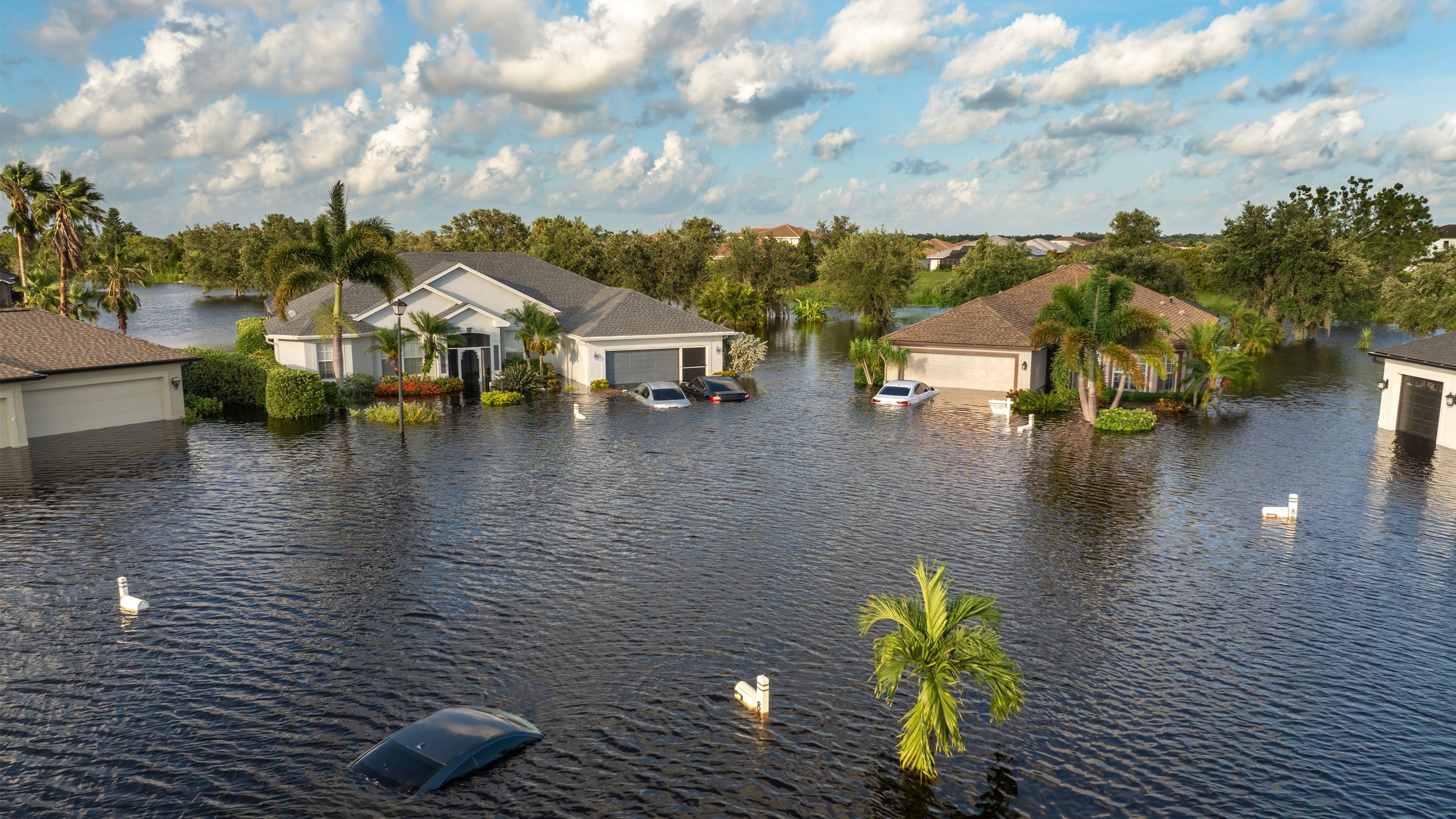
With much of the Deep South dealing with flash flooding this summer and heavy rain expected to be a mainstay through the season, owners of new-construction homes are learning the hard reality that their residences might be new, but they still have to deal with age-old problems of owning property.
“Unfortunately, a newly built home does not automatically mean a lower flood risk. In many cases, the opposite can occur if the surrounding drainage infrastructure, grading, retention systems, or stormwater planning were not designed properly,” says Jon Brooks, founder of Momentum Realty in Jacksonville, FL.
Whether you live in a new-construction home or hope to move into one down the road, recognize that flooding is still a possibility and take proactive steps to reduce its risk as much as possible.
Why new builds may flood
New-construction homes can flood just as easily as older ones.
“People tend to assume a new home is automatically protected and built to handle most maintenance or weather issues, but that is not always the case,” says Franky Burciaga, managing partner of Restoration 1 in Austin, TX.
For starters, fresh grading settles within the first year or two, and, depending on how the lot sits, it can start sending water back toward the foundation instead of away from it.
Landscaping and drainage are usually new as well, and sometimes they’re not created to accommodate fast-growing communities.
On top of that, small details on new builds like flashing, sealing, and grading are easy to overlook and can later turn into water damage.
“An older home has usually had time to show its weak spots, which tend to surface during inspections. In many cases, a new build hasn’t had that chance yet,” Burciaga explains.
Where new construction is rising despite flood risk
According to FEMA’s 2026 flood maps, states such as Florida, Texas, Louisiana, New Jersey, North Carolina, South Carolina, New York, and California are prone to some of the highest flood risk.
Ironically, the Realtor.com® Homebuilding and Affordability report shows that many of these states are sustaining or expanding new builds, despite their exposure to flooding.
In particular, the data reveals Texas, North Carolina, and South Carolina continue to drive new construction due to affordable building costs.
If you’re interested in building a property in one of these states, flood risk is essential to consider but don’t solely rely on FEMA flood maps as they’re historically reactive rather than predictive.
Many maps are based on older rainfall models and development patterns that may not fully reflect current conditions, especially in fast-growing areas.
“Being ‘outside a FEMA flood zone’ does not mean a property cannot flood. I was not in a flood zone and my street flooded. A large percentage of flood claims historically occur outside designated high-risk flood zones,” says Brooks.
Precautions to take when buying a new home
Before you buy land and commit to a new-construction property, review FEMA flood maps to get an idea of potential flooding risk.
Then, perform a thorough inspection and don’t be afraid to ask your builder questions.
Walk around the lot and look at the grading. The ground should slope away from the foundation on every side.
Next, check where the downspouts actually drain and whether they carry water away from the house or just drop it right next to it.
“Ask your builder what happens on the lot in a heavy rain, and if you can, go look at the property after a storm,” Burciaga explains.
Beyond your own walk-through, invest in a third-party inspection to assess the foundation and the grading.
“If you’re involved in the build itself, you can request a phased inspection, where an inspector comes in for a pre-pour check on the foundation and grading, a pre-drywall review, and a final inspection before you close,” says Burciaga.
Finally, check the FEMA flood designation for the lot. Even if you are not in a high-risk area, it can be worth pricing out flood insurance for peace of mind, since it’s separate from a standard homeowners policy.
“Flood insurance might seem like an added upfront expense, but it can actually save you thousands over time,” Burciaga adds.
Read the full article on the original source
