




Empowering Black Entrepreneurship: Stories of Success, Strategy & Growth
- No Kings protest in Manhattan challenged entrenched systems of privilege and executive power, staging a symbolic stand against inequality.
- Organizers framed the march as a mass effort to “track and challenge white privilege,” drawing diverse participants and significant white male turnout.
- The event remained largely peaceful with visible police presence and concluded with calls for sustained civic engagement and systemic reform.
- The MAGA response aimed to delegitimize protesters while using provocative imagery and rhetoric to control the narrative.
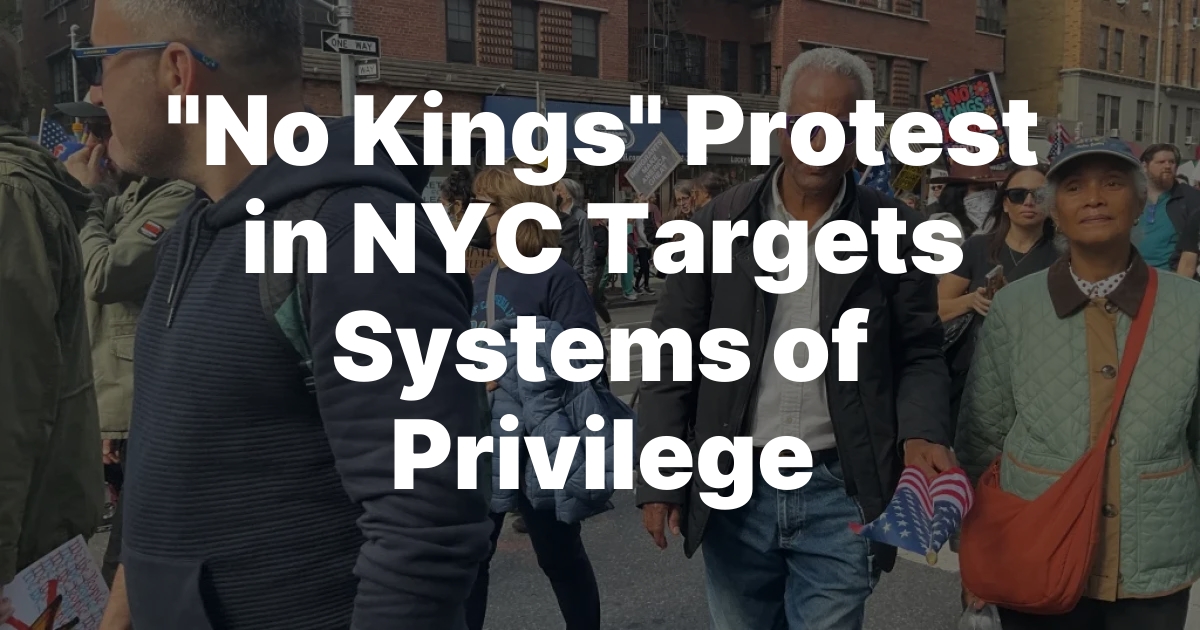
Demonstrators filled the streets of Manhattan on Saturday for the “No Kings” protest, a coordinated march challenging systemic privilege and entrenched power structures in the United States. The event, held in former President Donald Trump’s home city, drew activists, students, and community leaders from across the region.
Organizers described the rally as an effort to “track and challenge white privilege” in public life and institutions. Protesters carried a variety of banners and placards expressing opposition to inequality and government policy. Some signs featured strong criticism of incarceration practices and political leadership, including messages such as “Incarceration without due process is a concentration camp” and “Adolf Hitler would be proud of President Trump.”
While the demonstration featured participants from a range of backgrounds, observers noted a significant turnout of white male protesters — a demographic whose involvement some viewed as a reflection of broader awareness about racial and social inequities.
Authorities maintained a visible but controlled police presence as the event remained largely peaceful. The march concluded with brief speeches emphasizing the need for sustained civic engagement and systemic reform.
“No Kings is not about rejecting leadership,” one speaker said. “It’s about rejecting systems that place anyone above accountability.”
Investigation: Scale, Context and Strategy
The “No Kings” protests took place in more than 2,600 U.S. locations on October 18, 2025. Organizers estimate between 5 million and 7 million participants nationwide. In NYC alone, police estimated over 100,000 participants, while organizers and media reports suggested much higher numbers. Ahead of the protest, some state officials prepared for potential unrest: for example, Greg Abbott, Governor of Texas, activated the National Guard in Austin, citing possible threats linked to “antifa-style” demonstrations.
MAGA Side: Reaction and Strategy
Speaker of the House Mike Johnson publicly criticised the protests. He described them as “hate-America rallies” and labelled participants as Marxists, antifa or connected to terrorism. He called the event “political cover” for Democrats amid the government shutdown. President Trump himself responded in a mix of dismissive remarks and provocative social-media posts. According to one account, he posted an AI-generated video depicting himself wearing a crown and flying a “King Trump” jet that appeared to dump fecal-like liquid on protesters — a post that drew criticism for its tone and symbolism. Trump told reporters the protests were “very small” and “very ineffective,” and questioned the genuineness of the signs, suggesting they were paid for by left-wing funders. Some analysts view the MAGA response as two-fold: first, to delegitimise the protests by framing them as extremist or anti-American; second, to embrace the “king” imagery themselves, signalling strong‐man appeal while claiming they oppose monarchy.
Why It Matters & What Comes Next
The size and visibility of the “No Kings” protests pose a significant challenge to both the image and narrative of the Trump administration. A large peaceful mass action – especially in NYC – draws attention to concerns over executive power, privilege and democratic norms. The MAGA response suggests the administration recognises the threat of such mobilisations and is shifting tactics: rather than engage with the criticisms, it is using social media provocation, rhetorical deflection and organisational framing to control the narrative.

The MAGA response suggests the administration recognises the threat of such mobilisations and is shifting tactics: rather than engage with the criticisms, it is using social media provocation, rhetorical deflection and organisational framing to control the narrative.
The follow-up will matter: organisers have scheduled “What’s Next After No Kings?” calls and are aiming to build on the momentum with continued protests, local organising, and issue campaigns. Whether these can translate to institutional or electoral impact remains uncertain.
The protest came just days after several controversial executive actions from the Trump administration — including new emergency powers invoked under the Presidential Security and Integrity Act, which critics argued consolidated authority in the executive branch. Protest organizers said the demonstration was timed to “push back against creeping authoritarianism.” The demonstration also coincided with the third week of a partial government shutdown, triggered by disputes between the White House and Congress over immigration and law enforcement funding. Activists framed the protest as a statement against what they viewed as “governance by chaos” and elite impunity.

By rallying in New York City, organizers intentionally staged the event in the symbolic “home turf” of former President Trump — juxtaposing their message of accountability against the city that launched his fame and fortune. Manhattan became a visual metaphor for power, privilege, and inequality. The “No Kings” rallies were part of a broader national wave of protests showing coordination and momentum similar to the 2017 Women’s March or the 2020 Black Lives Matter protests. Organizers said October 18 was chosen to capitalize on growing frustration with political polarization and fears about democratic backsliding.
During shutdowns, misinformation spreads fast — especially when leaders try to assign blame. Check nonpartisan outlets such as the Associated Press, Reuters, or congressional fact-checkers to understand who’s responsible for what and how policy decisions are made. Voters can still call, write, or email House and Senate offices (even during a shutdown) to express how the closure is affecting them — whether it’s missed paychecks, delayed benefits, or lost public services. Constituent pressure is one of the few forces that can break partisan impasses. Voters can still call, write, or email House and Senate offices (even during a shutdown) to express how the closure is affecting them — whether it’s missed paychecks, delayed benefits, or lost public services. Constituent pressure is one of the few forces that can break partisan impasses. Peaceful protests, petition drives, and advocacy campaigns (like those that inspired the “No Kings” demonstrations) can spotlight public frustration and pressure leaders to compromise.
“For many MAGA-aligned voters frustrated by the government shutdown’s fallout, analysts note that civic participation — not political loyalty — may be the only way to break the deadlock and restore normal operations.”


Read the full article on the original site

