




Wellness That Matters: Black Health News & Community Care
- Cardiovascular disease is a leading cause of pregnancy-related death; many are preventable when evidence-based interventions are applied consistently.
- Pregnancy acts as a powerful test: hypertension and preeclampsia signal increased long-term heart disease risk.
- Healthcare focuses on short-term outcomes and often disengages postpartum, causing missed diagnoses and inconsistent follow-up.
- Black women experience deeper gaps from structural barriers, access and trust issues; prevention must reflect lived realities.
- Scale up community-based care: doulas, community health workers, start prevention before pregnancy and ensure continuous long-term follow-up.
“Pregnancy would no longer be treated as a discrete episode, but as the beginning of prevention.”
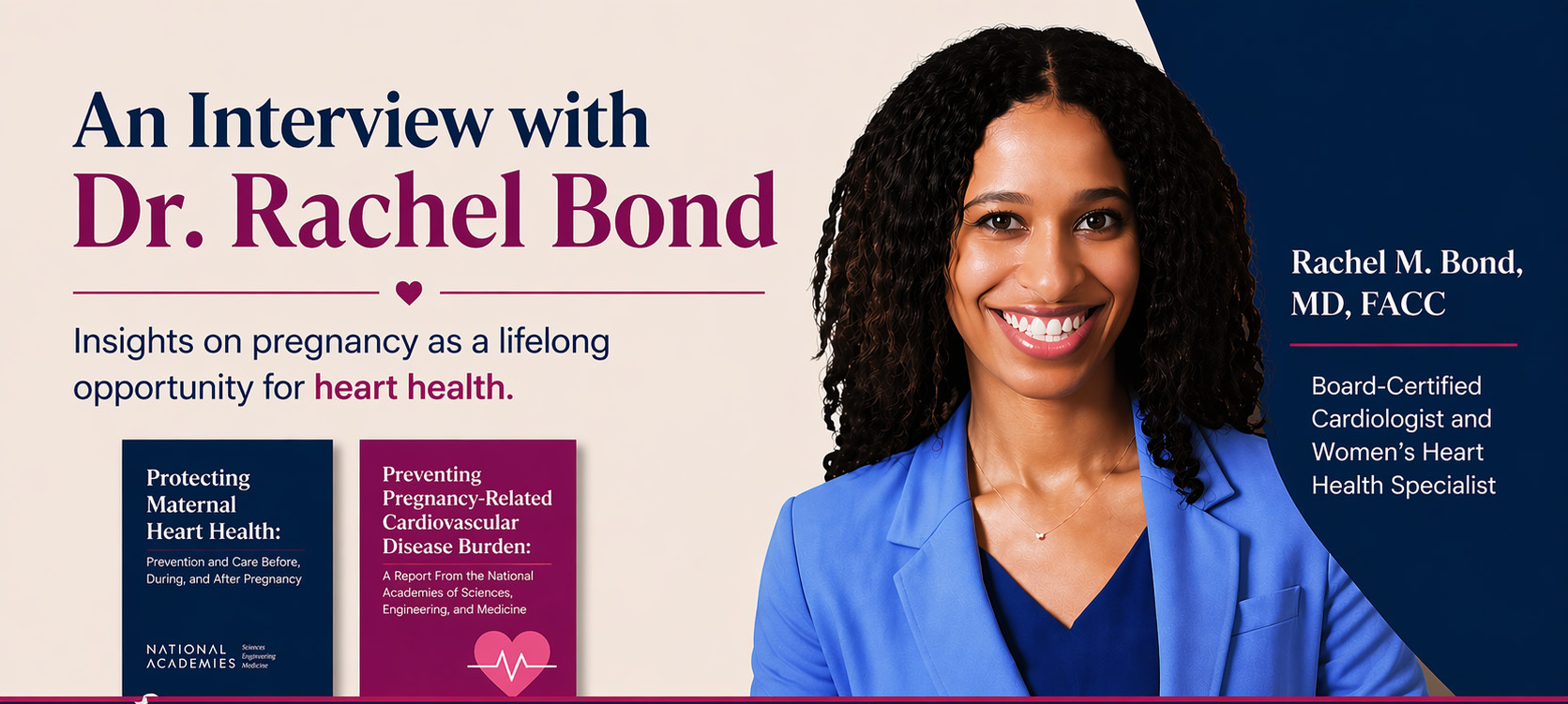
That’s how Dr. Rachel Bond framed it when we caught up with her to talk about a major new national report on maternal heart health. And in that one line, she captured what the healthcare system has been getting wrong for far too long.
Dr. Bond is one of the contributors to Preventing Pregnancy-Related Cardiovascular Disease Burden: A Report From the National Academies of Sciences, Engineering, and Medicine, published in JAMA Network. Read it here: https://jamanetwork.com/journals/jama/fullarticle/2848128
Her work builds on the broader findings from the National Academies’ report, Protecting Maternal Heart Health: Prevention and Care Before, During, and After Pregnancy, which takes a deep look at how gaps in care are contributing to preventable maternal deaths. Explore the full report here: https://www.nationalacademies.org/read/29425
Together, these reports tell a clear story. Cardiovascular disease remains a leading cause of pregnancy-related death in the United States, and many of these deaths are preventable. The issue is not that we lack solutions. It is that we are not using them consistently.
“Pregnancy is one of the most powerful cardiovascular stress tests a woman will experience,” Dr. Bond told us. Conditions like hypertension and preeclampsia are not just complications in the moment. They are early warning signs of future heart disease.
But the system is not designed to treat them that way.
Right now, care is built around short-term outcomes. Once a healthy delivery happens, the system begins to disengage. And yet, a significant number of maternal deaths occur in the postpartum period, when women are no longer receiving consistent care. “The system is not failing because we lack knowledge,” Dr. Bond said. “It is failing because we are not consistently applying what we already know works.” That failure shows up in missed diagnoses, inconsistent follow-up, and a lack of coordination across providers. It shows up when women raise concerns and are not taken seriously. “Access alone is not enough,” she said. “Care must listen, respond, and follow through.”
For Black women, these gaps are even more pronounced. The data reflects it, but so do lived experiences. Prevention cannot be generic. It has to reflect the realities women are navigating every day. “This is not solely about clinical risk,” Dr. Bond explained. “It is about structural barriers, access, trust, and whether systems are built to meet women where they are.”
That means investing in community-based care, including doulas and community health workers. It means starting prevention before pregnancy and continuing it long after. And it means making sure women leave pregnancy with a clear understanding of their long-term health, not just a discharge summary.
As Dr. Zsanai Epps, Interim EVP of Programs and Advocacy at BWHI, puts it, “Now more than ever, the maternal health crisis is pointing to interventions, public support, and awareness that ensure every individual has the knowledge, support, and equitable access to care needed for a healthy pregnancy and a healthy heart.”
This is where awareness has to turn into action.
Women should feel empowered to ask what their pregnancy means for their long-term health, what the plan is after delivery, and who is responsible for making sure that care continues. Advocates and community leaders should continue pushing for stronger postpartum care, better follow-up, and systems that prioritize continuity.
Because pregnancy should not be the end of care. It should be the beginning of it.
And if we start treating it that way, we have a real chance to change outcomes.
Read the full article on the original site
