


Science & Discovery: Check Out the World Through Research Study and Advancement
- Haloferax volcanii grew under low-pressure CO2 anoxic conditions (24 mbar), modeling shallow Martian subsurface brines.
- Growth occurred in hypersaline medium using nitrate or perchlorate as alternative electron acceptors to oxygen.
- Measured decreases in nitrate and perchlorate indicate microbial consumption rather than abiotic depletion.
- Electron microscopy revealed dense biofilm-like structures; Raman spectroscopy detected carotenoid pigment signatures as potential biosignatures.
- Limitations: experiment skipped radiation, freeze-thaw cycles, full Martian chemistry, and used nutrient-rich medium not representative of Mars organics.
Haloferax volcanii , a design halophilic (salt-loving) archaeon, revealed development during a 160 -day experiment mimicing Martian subsurface salt water, according to a paper published in the journal Applied and Environmental Microbiology The writers worry the outcome does not indicate life feeds on Mars.
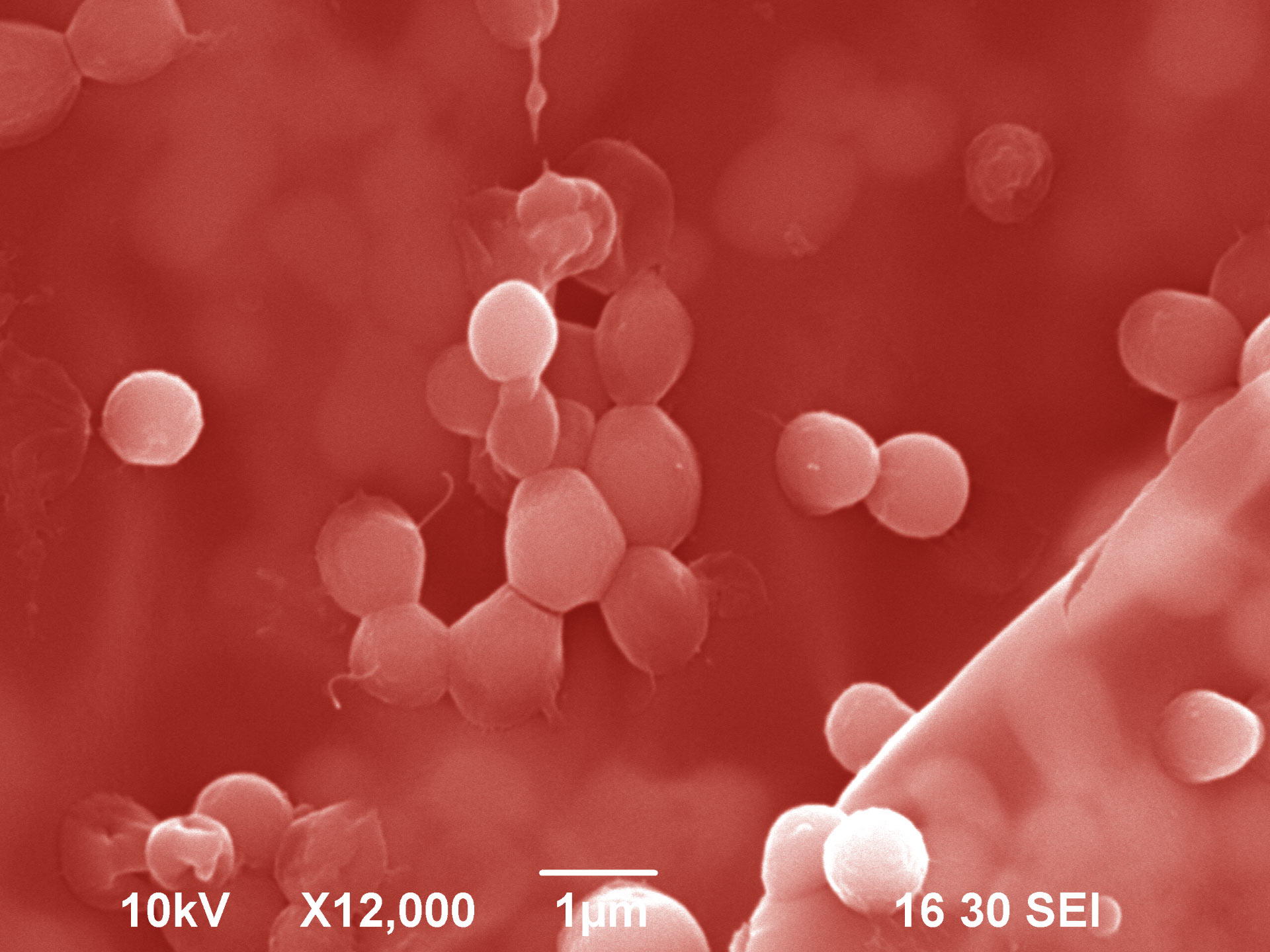
This SEM micrograph (12, 000 x zoom) shows Haloferax volcanii after 160 days of anaerobic incubation with 100 mM nitrate under low-pressure Martian problems (24 mbar); high-magnification imaging reveals mostly round cells located outside, promptly under, and embedded within a substantial biofilm matrix; thin appendage-like structures and associations amongst nearby cells are likewise noticeable. Range bar– 1 µm. Photo credit score: Robinson et alia , doi: 10 1128/ aem. 01749 – 26
“The contemporary Martian surface is normally considered unwelcoming to life because of low air pressure, intense surface radiation, global desiccation, and oxidizing chemistry, which has actually been boosting because the Late Noachian,” claimed Dr. Adam Robinson from the University of Florida and his coworkers.
“Nonetheless, shallow Martian subsurface regions where mineralogy has actually revealed groundwater motion may include localized hypersaline environments efficient in preserving liquid water and supporting microbial metabolic rate.”
The study writers concentrated on Haloferax volcanii , an archaeon known as an extremophile for its capacity to endure severe problems below in the world.
They kept cultures in a vacuum cleaner chamber at 24 millibars, approximately 2 % of Planet’s sea-level pressure, filled with co2 and rubbed of oxygen. The temperature was held at 21 degrees Celsius (concerning 70 degrees Fahrenheit).
The germs sat in extremely salty fluid tool having either nitrate or perchlorate, both chemicals found on Mars, which the organisms can use in place of oxygen to ‘breathe.’
This stress might occur inside sealed fluid pockets in salt minerals at depths of regarding 20 centimeters (8 inches) listed below the Martian surface.
“The environment that we’re resembling in this experiment has actually not been observed on Mars, yet is supposed to exist,” Dr. Robinson noted.
Development appeared in every low-pressure therapy which contained nitrate or perchlorate, based on increases in optical density, a step of exactly how over cast a society comes to be.
The scientists likewise measured drops in nitrate and perchlorate levels, which did not take place in cell-free controls, suggesting the microbes were metabolizing the chemicals.
Nitrate fell by around 15 % to 29 % and perchlorate by concerning 16 % to 29 % in the Mars-pressure societies.
Fluid loss remained listed below 4 % across all therapies over the 160 days. This issues due to the fact that water typically vaporizes quickly at such reduced pressures, which has made lasting experiments hard.
Electron microscopic lense images showed dense biofilm-like frameworks in the proactively growing low-pressure cultures, which were not seen in Earth-pressure controls or in low-pressure societies that did not grow.
Chemical trademarks of carotenoid pigments, which Raman spectroscopy can identify and which have actually been suggested as feasible biosignatures, likewise continued to be observable, though weak than in oxygen-fed controls.
Development was considerably lower at 24 millibars than in the same societies at Planet pressure, according to the team.
The experiment additionally did not duplicate Mars’s freeze-thaw cycles, radiation, or its complete chemistry, and the nutrient-rich growth tool is not representative of the organics thought to be readily available on Mars.
Cultures were gauged just at the start and end of the run, given that opening the chamber would have allow oxygen in.
“We are adding to the expanding body of proof recommending that we ought to consider the opportunity of life on Mars today,” Dr. Robinson concluded.
_____
Adam Robinson et alia Cultivation of halophilic archaea in shallow subsurface Martian problems has ramifications for extant life on Mars. Applied and Environmental Microbiology , released online November 5, 2026; doi: 10 1128/ aem. 01749 – 26
Review the full article from the original resource