

Black Background & Cultural Viewpoints:
- Pearl Harbor: Doris Miller manned anti-aircraft guns, aided the wounded, and was credited with downing enemy planes.
- Doris Miller received the Navy Cross not the Medal of Honor; systemic racism delayed full recognition.
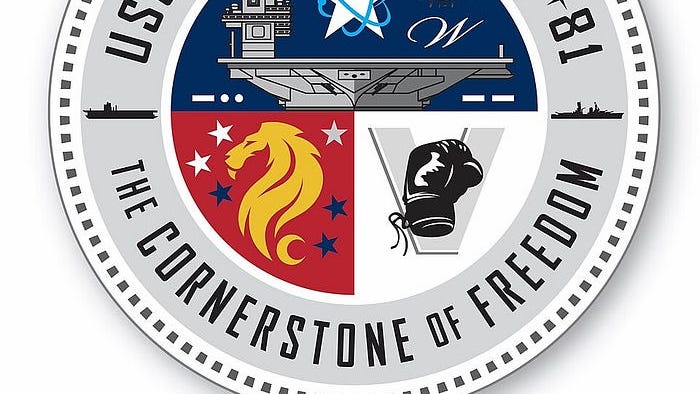
- CVN 81 being named USS Doris Miller in 2020 was hailed as overdue recognition by Black leaders, family, and sailors.
- Trump-era plans to rename the carrier USS Donald J. Trump sparked controversy; the Navy later said "no intent" to change the name.
On the last day of Donald Trump’s first term, Acting Secretary of the Navy Thomas Modly, designated by Donald Trump, introduced that a united state Navy warship would certainly be named after Doris “Dorie” Miller. It had not been the first time Miller had actually been considered for a significant honor. A congressman from Michigan and a Senator from New york city chose him for the Medal of Honor in 1942 The Black press enthusiastically advocated Miller to get this decor. Secretary of the Navy Frank Knox , who opposed Black sailors serving the USA in any type of fight duty, recommended against Miller obtaining the Medal of Honor. No Black sailor, soldier, or Marine was granted the Medal of Honor in between 1941 and 1945
Let’s back up and tell you that Dorie Miller was. When I was turning up, Johnny Cash money had a pop music called” A Kid Called Sue ” The young boy in the song captured hell; it couldn’t have been less complicated for Doris Miller, birthed in Waco, TX, on October 12, 1919 The good news is for Doris, he grew to 6 feet 3 inches and weighed over 200 lbs. Doris played fullback on his senior high school football group. I picture there came a point where no one teased his name. The midwife who provided Doris was confident the infant would certainly be a lady, and the fixed name stuck.
Doris worked with his father’s farm and excelled at firing squirrels with a. 22 rifle, an ability that would show helpful later on in life. At home, he also assisted his mommy cook and tidy. Dorie had not been an extraordinary trainee; he requested the Private Conservation Corps yet was not accepted. Having few task possibilities offered, Doris chose to sign up with the Navy.
The USA Navy had an off-and-on connection with Black seafarers. The Navy was among the first of the Armed Services available to Black guys. During the War Of Independence (1775– 1783, over 10 % of the Continental Navy was African American. Lots of Black men joined the British Navy, depending on a guarantee they would certainly be totally free if Britain won the battle.
Most Black men left the service when the War of independence ended, though some continued to be. In 1878, Secretary of the Navy Benjamin Stoddert prohibited ” and mulattos from naval solution. The Secretary of War had actually made comparable announcements pertaining to the Marine Corps and the Army. In spite of this official prohibition, Blacks maintained a regular presence in the united state Navy throughout the Early Republic and the Battle of 1812
During the War of 1812, Blacks were welcomed back. Sometimes, the staff of the USS Constitution (Old Ironsides) was up to 25 % Black, with crew members serving as woodworkers, powder apes , and cooks. The term powder monkey isn’t as racist as you may think, having long been put on young white young boys carrying out the same task. The ban versus Black seafarers was formally turned around in 1813
In 1839, the Navy started racial quotas with a maximum of 5 % Black sailors in the solution. Those quotas were in some cases neglected. In 1842, Secretary of the Navy Abel Upshur assured Southern Congressmen that “no more than one-twentieth part of the staff of any type of vessel” would be African American.
With the signing of the Webster-Ashburton Treaty, the USA and Great Britain officially consented to finish the slave trade on the high seas. The treaty’s anti-slavery provision called for each nation to “prepare, outfit, and keep in service, on the shore of Africa, an adequate and appropriate armada, or marine force of vessels … for the suppression of the slave labor.”
In a letter dated 25 September 1861, Assistant of the Navy Gideon Welles accredited the recruitment of left or freed slaves in the Atlantic Blockading Armada. These previously enslaved people comprised a considerable number of Black U.S. Navy seafarers in the armada and, by expansion, the entire employed U.S. Navy. Twenty percent of the U.S. Navy was African American. Blacks offered on 700 ships in the united state Navy, and 8 got the Legislative Medal of Honor. After the Civil Battle, the Navy proceeded the process of temporary agreements for Black employed Seafarers and excluded Blacks from the policeman ranks until 1942 At 20, Doris Miller joined the Navy on September 16, 1939
The Navy was still segregated in 1939; it would certainly continue to be so for another nine years, though Doris Miller would not live to see assimilation. Doris participated in a six-year agreement as a mess assistant, one of the few tasks open up to Black seafarers. Doris did standard training in Norfolk , briefly serving on the ammo ship Pyro , and then transferred on January 2, 1940, to the Colorado-class battlewagon West Virginia On West Virginia, Doris began competing in boxing and ended up being the ship’s heavyweight champ. Doris progressed in score to mess attendant second course on February 16, 1941
I can not take credit for the summary of what occurred throughout the assault on Pearl Harbor on December 7, 1941 This record was compiled from numerous activity records composed by seafarers and police officers.
“Miller got up aboard West Virginia at 6 a.m. on December 7, 1941 He offered breakfast mess and was gathering laundry at 7: 57 a.m. when planes from the Japanese carrier Akagi discharged the very first of 7 torpedoes that hit West Virginia. The” battle terminals alarm system went off; Miller headed for his battle station, an anti-aircraft battery publication amidships, only to uncover that a torpedo had destroyed it.
He then mosted likely to “Times Square” on deck, a central area aboard the ship where the fore-to-aft and port-to-starboard passageways crossed, reporting himself available for other task and was assigned to help bring injured sailors to areas of higher safety and security. Lieutenant Leader Doir C. Johnson, the ship’s communications officer, detected Miller and saw his physical prowess, so he bought him to accompany him to the tricking tower on the flag bridge to assist in relocating the ship’s captain , Mervyn Bennion , who had an open injury in his abdominal area where he had actually evidently been struck by shrapnel after the first Japanese assault. Miller and one more seafarer raised the captain but were incapable to remove him from the bridge, so they lugged him on a cot from his subjected placement on the harmed bridge to a sheltered place on the deck behind the cheating tower where he continued to be throughout the 2nd Japanese assault. Captain Bennion declined to leave his post, examined his officers and guys concerning the problem of the ship, and gave orders and guidelines to staff participants to protect the ship and battle. [13] Incapable to visit the deck listed below as a result of smoke and flames, he was brought up a ladder to the navigation bridge , where he died from blood loss regardless of the help from a pharmacist friend He was posthumously granted the Medal of Honor
Lieutenant Frederic H. White had purchased Miller to assist him, and Ensign Victor Delano tons the unmanned number 1 and number 2 Browning. 50 quality anti-aircraft gatling gun aft of the cheating tower. Miller was not acquainted with the weapon, yet White and Delano instructed him on just how to operate it. Delano expected Miller to feed ammo to one gun, but his interest was drawn away and, when he looked once again, Miller was shooting one of the guns. White then loaded ammo into both guns and assigned Miller the starboard gun.
Miller discharged the gun until he lacked ammo, whereupon Lieutenant Claude V. Ricketts ordered him to aid carry the captain approximately the navigating bridge out of the thick oily smoke produced by the several fires on and around the ship; Miller was officially credited with downing a minimum of two aggressive planes. “I think I got one of those Jap planes. They were diving quite close to us,” he stated later on. Japanese aircraft at some point dropped 2 armor-piercing bombs with the deck of the battlewagon and introduced five 18 -inch (460 mm) torpedoes right into her port side. When the assault ultimately minimized, Miller aided relocate hurt sailors with oil and water to the quarterdeck, therefore “certainly saving the lives of a number of people that might or else have actually been shed.”
The ship was greatly harmed by bombs, torpedoes, and resulting surges and fires, but the staff avoided her from tipping over by counter-flooding compartments. Rather, West Virginia sank to the harbor bottom in superficial water as her enduring team abandoned ship, including Miller; the ship was later increased and recovered for ongoing service in the war. In West Virginia, 132 males were killed, and 52 were wounded from the Japanese attack. On December 13, Miller reported to the heavy cruiser Indianapolis “– Wikipedia
When the Navy provided recommendations after the Pearl Harbor strike, only one was provided to a Black male, unnamed at the time. The National Organization for the Development of Colored People ( NAACP had actually asked President Franklin D. Roosevelt to honor the Distinguished Service Cross to the unknown black sailor. The Navy Board of Honors got a recommendation that the seafarer be thought about for recognition. On March 12, an Associated Press story called Miller as the seafarer, pointing out the African-American paper Pittsburgh Carrier
In the following days, Senator James M. Mead introduced a Senate bill [S.Res. 2392] to award Miller the Medal of Honor, and Rep John Dingell Sr. introduced a matching Home costs. Miller was acknowledged as one of World War II’s” first united state heroes.”Assistant of the Navy Frank Knox commended him in a letter on April 1, and the next day, CBS Radio broadcast an episode of the collection They Live Forever that dramatized Miller’s activities. Black organizations started a project to honor Miller with additional recognition. On April 4, the Pittsburgh Courier urged visitors to write to members of the legislative Naval Affairs Board to support granting Miller the Medal of Honor. The All-Southern Negro Young People Meeting launched a trademark campaign on April 17– 19 On May 10, the National Congress knocked Knox’s suggestion against awarding Miller the Medal of Honor. On May 11, Head of state Roosevelt authorized the Navy Cross for Miller. No Black seafarer, soldier, or Marine was granted the Medal of Honor between 1941 and 1945 Dorie never obtained the Medal of Honor.
On May 27, Admiral Chester W. Nimitz, Commander in Chief of the Pacific Fleet, personally recognized Miller aboard the attack aircraft carrier Venture (CV- 6, which went to support in Pearl Harbor. Nimitz presented Miller with the Navy Cross, then the third-highest Navy honor for gallantry in battle, after the Medal of Honor and the Navy Distinguished Solution Medal, on August 7, 1942
“This notes the first time in this dispute that such high homage has actually been made in the Pacific Fleet to a participant of his race, and I make certain that the future will see others similarly recognized for endure acts.”– Admiral Chester Nimitz
Miller actually came to be the poster young boy for hiring Black men into the Navy, exploring and speaking in behalf of the war effort. He was promoted to Prepare Third Course and eventually reassigned to a ship, the Liscome Bay.
The Liscome Bay was cruising near Butaritari when a torpedo from the Japanese submarine I- 175 struck its stern just before dawn (I- 175 fired four torpedoes at Task Team5312 The service provider’s own torpedoes and airplane bombs exploded, creating the ship to sink in 23 mins. There were 272 survivors from the staff of over 900, but Miller was amongst the two-thirds of the staff listed as “assumed dead.” His moms and dads were educated that he was missing in action on December 7, 1943
A funeral was held for Miller on April 30, 1944, at the Second Baptist Church in Waco, Texas, funded by the Victory Club. On May 28, Moore Secondary School in Waco dedicated a granite marker to honor him. Miller was formally proclaimed dead by the Navy on November 25, 1944
Miller’s label “Dorie” might have originated from a mistake. He was chosen for acknowledgment for his actions on December 7, 1941, and the Pittsburgh Courier ran a tale on March 14, 1942, that gave him the name “Dorie.” Some authors have actually suggested it was a “label to shipmates and buddies.”
The reception to the Navy’s 2020 statement that CVN 81 would be called USS Doris Miller was overwhelmingly positive, especially among Black experts, civil‑rights leaders, Miller’s household, and Texas participants of Congress. It was framed as a long‑overdue act of recognition. The resources you have open show this plainly. The name met general approval amongst gotten males and females of all shades, who rarely got acknowledgment for having an attack aircraft carrier named after them. The Navy’s largest ships are generally called for head of states, not those who dealt with the battles.
Member of the family reacted psychologically and enthusiastically throughout the MLK Day ceremony unveiling the name. Their response emphasized exactly how deeply Miller’s heritage reverberates throughout generations.
Acting Assistant Thomas Modly mounted the naming as a tribute to employed seafarers of all backgrounds. He called it a recognition of African American contributions to the “Greatest Generation.” His statements highlighted both historic injustice and the relevance of fixing the record. This was extensively described as a turning point in Navy history. A turning point Donald Trump, Pete Hegseth, and the Navy currently intend to take back.
By very early 2026, multiple reports suggested that the Navy, under President Donald Trump, was taking into consideration removing Doris Miller’s name from CVN 81 and renaming the service provider USS Donald J. Trump. The Navy really did not reveal it publicly; the idea arised via interior conversations and White Residence rate of interest in position Trump’s name on significant nationwide infrastructure.
Navy officials progressively described the ship just as CVN 81, not USS Doris Miller. A White House exec order referenced the ship exclusively by hull number, preventing Miller’s name. Coverage defined the relabeling as being “under consideration” at senior levels.
No resting head of state has ever before had an aircraft carrier named after them. One more practice would certainly be damaged. Never ever prior to has a carrier been named for someone that averted armed forces service throughout the Vietnam Battle by obtaining a family pal physician to case he had “bone stimulates ” Never ever before has actually the armed forces recognized someone that described fallen soldiers or sailors like Miller as” fools and losers ”
To soften the effect of getting rid of Miller’s name, the Navy thought about naming another warship after Miller rather. Something smaller sized. They’re also thinking about ultimately providing Miller the Medal of Honor they rejected to give him in 1942
Renaming CVN 81 would certainly have affronted every employed man and woman that has ever stood a watch, carried a rifle, or fought a fire at night. The Navy’s 2020 choice to name the provider for Doris Miller was an uncommon moment when the institution looked straight at its very own background and chose to honor an enlisted seafarer whose heroism was obvious even to those that attempted to eliminate it. Miller was a cook who ran towards inbound fire, manned a weapon he had never been educated to use, and defended his ship until the strike finished. He was a hero in the earliest and clearest feeling of words.
Removing his name from the service provider and changing it with Donald Trump’s would certainly have sent the contrary message: that valiance matters less than vanity, which the sacrifices of employed sailors can be overwritten at the whim of a president who has actually consistently dismissed the very individuals he looks for to eclipse. Trump famously neglected the sailors of the USS Abraham Lincoln, that endured hazardous problems throughout an extended implementation, and the team of the USS Benfold, that went 4 days without power. This situation left them hot, exhausted, and prone. These are individuals who keep the fleet running: those that oversleep berthing areas piled 3 high, stand watch at 0200, repair what breaks, and battle when gotten. They are the Navy’s backbone.
Miller embodied that foundation. Trump avoided solution totally.
Renaming CVN 81 would have told every employed sailor that their nerve is flexible, their recognition relatively easy to fix, and their legacy disposable. And it would inform the nation that a male that called America’s battle dead “suckers” and “losers” should have the honor refuted to the Black employed hero whose bravery helped specify the opening hours of World War II. For the sake of every sailor who has ever before stood a watch, and for the reality, the name USS Doris Miller need to stay exactly where it is.
On Friday, November 20, 2026, the Navy announced it was no longer thinking about relabeling an aircraft carrier after Trump. In a declaration to CNN on Friday, a representative for Performing Navy Assistant Hung Cao claimed,
“There is no intent to transform the name of the USS Doris Miller.”
I’ll provide the last word to Miller’s great-nephew, Thomas Bledsoe,
“Doris Miller’s story is not just our family’s history; it is American history. His nerve should have to be born in mind, recognized, and identified for generations to come,”
Completion
Review the full write-up on the original resource
