


Close Menu
Savannah HeraldSavannah Herald
    • Home
    • News
      • Local
      • State
      • National
      • World
      • HBCUs
    • Events
    • Directories
    • Weather
    • Traffic
    • Jobs
    • Sports
    • Politics
    • Lifestyle
      • Faith
      • Senior Living
      • Health
      • Travel
      • Beauty
      • Fashion
      • Food
      • Art & Literature
    • Business
      • Real Estate
      • Entertainment
      • Investing
      • Education
    • Guides
      • Summer Camp Guide
      • Juneteenth Guide
      • Black History Savannah
      • MLK Guide Savannah
    We're Social
    • Twitter
    • Facebook
    • YouTube

    Subscribe to Updates

    Get the latest creative news from FooBar about art, design and business.

    Trending
    • Nutrition, Exercise, and Wellness: The Everyday Advantages of Assisted Living 
    • Newly Built Homes Can Flood Just as Easily as Old Ones, If You’re Not Careful 
    • Kohen Wiley death sparks protests in Mississippi
    • Developing scholars into leaders | Strategic Communications & Marketing
    • Athens brewery supporting Sapelo Island’s Gullah-Geechee people with special spirit
    • How Dressing Up Shapes My Dating Life
    • A review of Mother Mary Comes to Me by Arundhati Roy – Compulsive Reader
    • City Announces Partnership, Presenter Opportunity with Live Oak Public Library for Savannah GenFest • Savannah Herald
    Facebook X (Twitter) Instagram YouTube
    Login
    Savannah HeraldSavannah Herald
    Savannah HeraldSavannah Herald
    Home » The Carroll County Courthouse Massacre
    Black History

    The Carroll County Courthouse Massacre

    Savannah HeraldBy Savannah HeraldMarch 19, 20267 Mins Read
    Facebook Twitter Pinterest LinkedIn WhatsApp Reddit Tumblr Email
    The Carroll County Courthouse Massacre
    Share
    Facebook Twitter LinkedIn Pinterest Email

    Black Background & Cultural Perspectives:

    Key takeaways
    • A minor molasses spill escalated after lawyer-editor James Monroe Liddell publicly attacked and wounded the half-Black brothers Ed and Charley Brown.
    • Carroll County Courthouse Massacre on March 17, 1886: armed white mob killed 23 Black attendees; no white casualties, no legal response.
    • Mississippi officials framed the attack as a 'riot'; Governor Robert Lowry condemned victims, ensuring no coroner's inquest, grand jury, or indictments.
    • Because lynching statistics required official records, the massacre was excluded, revealing how state silence erases racial violence and protects perpetrators.

    I stumbled across the Carroll Court Bloodbath while investigating another story about lynchings in America, having to fulfill a details standards to be classified therefore. According to the NAACP and Tuskegee Institute, which assembled the records. There were 4, 743 official lynchings, including both Black and white sufferers, in between 1882 and 1968

    The Official Definition of Lynching and Why it Excludes Potentially Hundreds Of Murders|by William Spivey|Mar, 2026|Tool

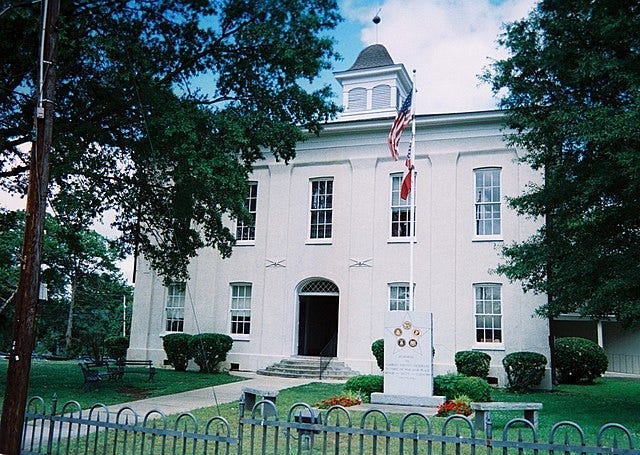
    Not included were the 23 people killed at the Carroll County Courthouse on March 17, 1886, in Carrollton, Mississippi. You can be forgiven if you have actually never come across the carnage. It isn’t even instructed in Mississippi public institutions. There is no reference of the carnage in:

    • Mississippi’s K– 12 History Standards

    • State‑approved united state History frameworks

    • Mississippi Researches (the 8 th‑grade state‑history course)

    • African American Studies optional standards

    There is no reference of the Carroll County Courthouse killings in any kind of basic background of the state. I confirmed with one of my learned good friends, who grew up in Mississippi, and whose knowledge in some locations of background far exceeds mine. He confirmed that he ‘d never heard of the Carroll County Massacre and had to look it up. My good friend presumed that his ancestors really did not have to go searching for atrocities; they were attempting to endure them.

    The problem started in January 1886 when Ed and Charley Brown, two siblings that were half‑Black and half‑Native American, accidentally spilled molasses on the apparel of a white man named Robert Moore while providing goods to a drinkery. The disagreement that followed was quick and solved right away, yet Moore later on complained to his close friend James Monroe Liddell, a white Carrollton lawyer and paper editor. Liddell swore to “handle” the Browns on Moore’s part, transforming a minor accident right into an issue of racial complaint.

    On February 12, 1886, Liddell challenged the Browns in public, accusing them of purposefully insulting Moore. A heated argument complied with, and when Liddell attempted to assault Ed Brown, onlookers intervened. Liddell left unharmed, however after listening to that the Browns were speaking severely about him, he went back to confront them again. This 2nd encounter erupted right into gunfire, leaving both Browns and Liddell wounded. No person might identify who terminated first. What infuriated white residents was not the battle itself, yet the fact that the Browns, both Black men, filed attempted‑murder charges against Liddell. Their legal right to do so was intolerable to lots of white citizens, that saw it as a strike on racial pecking order.

    The Browns’ situation against Liddell was set up for March 17, 1886, and Black citizens collected at the courthouse to witness the process. Prior to the hearing might start, a mob of 50 to 100 armed white men rode right into Carrollton, stormed the courthouse through multiple entryways, and opened up fire on the unarmed Black attendees. Ten individuals were eliminated immediately, and thirteen more passed away later from their injuries. No white person was wounded. No coroner’s inquest adhered to the massacre, no grand jury, no indictments, and no state activity– a silence that ensured the occasion would be hidden for generations.

    Mississippi’s refusal to explore the Carroll Court Carnage was not an administrative oversight; it was a political choice rooted in the racial order the state was proactively structure. The carnage implicated effective white males, including lawyer and paper editor James Monroe Liddell, whose social standing made liability unthinkable. Acknowledging the murders as murders would certainly have required the state to prosecute loads of white people, numerous from noticeable households, for butchering unarmed Black males inside a courthouse. Rather, authorities picked silence. No coroner’s inquest was held, no grand court convened, and no charges released. The governor condemned the victims, and the legislature carried on as if nothing had actually happened. The state’s passivity was a message: white violence would certainly not only go unpunished, but it would also be shielded.

    “The riot was prompted and carried out by the outrage and conduct of the Negroes.”– Governor Robert Lowry

    This rejection also offered a larger political purpose. In the 1880 s, Mississippi’s white leadership was laying the groundwork for the 1890 Constitution, the record that would formalize Black disenfranchisement for almost a century. Investigating the carnage would certainly have undermined the misconception that white rule brought “order” and “security” to the state. It would have revealed the fact: that the lawful system itself relied on racial terror to maintain control. By labeling the bloodbath a “riot” and burying it in silence, Mississippi maintained the illusion of lawful governance while permitting mob physical violence to function as an informal arm of the state. The erasure was not unexpected– it was the final act of the bloodbath, making certain that the targets disappeared not just from the court house flooring yet from the historical document itself.

    By every significant standard, the Carroll County Courthouse Massacre was a mass lynching: a white crowd, showing immunity, murdering unarmed Black individuals to impose racial power structure. Yet it was never counted as one. The factor has absolutely nothing to do with the realities of the occasion and everything to do with that managed the interpretation. In the late 19 th and early 20 th centuries, lynching statistics depended on official recommendation– coroner’s inquests, indictments, paper classifications, or state investigations. Mississippi gave none of these. There was no inquest, no grand court, on the house, no state activity, and regional officials immediately framed the murders as a “trouble,” not a lynching. Without state acknowledgment, the carnage went away from the classifications used by the NAACP and Tuskegee Institute, which rely upon recorded instances as opposed to events that the state actively hidden.

    The deeper truth is that calling the bloodbath a lynching would certainly have called for Mississippi to admit that its own residents– lots of from famous family members– committed mass murder inside a courthouse. It would have forced the state to challenge the reality that racial fear was not a failure of law and order however an extension of it. By declining to identify the murders as lynchings, Mississippi safeguarded the wrongdoers, protected the misconception of white public respectability, and made sure the victims would certainly not appear in the historic record. The massacre met every criterion for a lynching except the one that mattered most: the willingness of the state to call it. Which silence was not unintentional– it was the last act of the physical violence itself.

    It’s time for the NAACP, Tuskegee University, and the Equal Justice Institute to broaden the definition of lynchings and the timeframe they are thought about to have occurred. The present timeframe gets rid of the first 17 years of the Ku Klux Klan. It excludes white supremacists dragging James Byrd to his death behind a pick-up vehicle. A synthetically low number of lynchings permits states like Mississippi, Texas, and others to disregard lynchings since they have actually been provided a nicer name.

    Envision the resistance from states that are informed the variety of lynchings in their state has substantially raised? What justification can they consider that history must not be told? In the next couple of months, I’ll be telling the story of lynchings ruled out therefore. I’ve likewise composed the NAACP and the Equal Justice Campaign to recommend they evaluate the instances not considered lynchings. The worst that might happen is nothing, which is taking place on its own currently. Remain tuned for updates.

    Read the complete article on the initial source

    African American Heritage African American Research African Diaspora Ancestral Knowledge Black Historians Black History Black Voices Civil Rights History Cultural Identity Folklife and Culture Global Black History Historical Storytelling Legacy and Memory Modern Black Thought Oral History Personal Narratives Public History Reconstruction Era Slavery and Resistance Substack Voices
    Share. Facebook Twitter Pinterest LinkedIn WhatsApp Reddit Tumblr Email
    Savannah Herald
    • Website

    Related Posts

    HBCUs June 18, 2026

    Developing scholars into leaders | Strategic Communications & Marketing

    Black History June 18, 2026

    Will You Join Me in Unsubscribing From Paramount+?

    Faith June 17, 2026

    HOW POPE FRANCIS REQUESTS AEPPEAO PRAYERS FOR FAMILIES, JUBILEE FILM REVIEW, VIEW THE WORLD WITH A GENTLE GAZE

    Black History June 17, 2026

    What Should Happen in the Aftermath of the UFC Event at the White House

    Travel June 17, 2026

    10 Fun International Destinations To Add To Your 2026 Travel List

    HBCUs June 17, 2026

    UAPB Forestry Expert Shares Advice for Landowners Seeking Healthier Forests 

    Comments are closed.

    Don't Miss
    Entertainment June 5, 2026By Savannah Herald08 Mins Read

    DJ Screw’s Sound Shaped Hip-Hop. Now, His Music Is Heading To DSPs

    June 5, 2026

    From Hollywood to Home: Black Voices in Entertainment DJ Screw‘s impact on Hip-Hop is larger…

    Another Day Ending in Y, Another TRO Against Trump—This Time on Firing Fed Governor Lisa Cook – RedState

    September 18, 2025

    What’s subsequent for Trump’s plan for film tariffs : NPR

    August 29, 2025

    Wu-Tang Clan Perform ‘Bring Da Ruckus,’ ‘C.R.E.A.M.’ on ‘Fallon’

    June 17, 2026

    HBCU conference adds multiple women’s sports championships

    June 16, 2026
    Archives
    • June 2026
    • May 2026
    • April 2026
    • March 2026
    • February 2026
    • January 2026
    • December 2025
    • November 2025
    • October 2025
    • September 2025
    • August 2025
    • July 2025
    • June 2025
    • May 2025
    • April 2025
    • March 2025
    • February 2025
    Categories
    • Art & Literature
    • Beauty
    • Black History
    • Business
    • Climate
    • Culture
    • Education
    • Employment
    • Entertainment
    • Faith
    • Fashion
    • Food
    • Gaming
    • Georgia Politics
    • HBCUs
    • Health
    • Health Inspections
    • Investing
    • Lifestyle
    • Local
    • Lowcountry News
    • National
    • National Opinion
    • News
    • Politics
    • Real Estate
    • Senior Living
    • Sports
    • State
    • Tech
    • Traffic
    • Transportation
    • Travel
    • World
    Savannah Herald Newsletter

    Subscribe to Updates

    A round up interesting pic’s, post and articles in the C-Port and around the world.

    About Us
    About Us

    The Savannah Herald is your trusted source for the pulse of Coastal Georgia and the Low County of South Carolina. We're committed to delivering timely news that resonates with the African American community.

    From local politics to business developments, we're here to keep you informed and engaged. Our mission is to amplify the voices and stories that matter, shining a light on our collective experiences and achievements.
    We cover:
    🏛️ Politics
    💼 Business
    🎭 Entertainment
    🏀 Sports
    🩺 Health
    💻 Technology
    Savannah Herald: Savannah's Black Voice 💪🏾

    Our Picks

    Why Trump desires to deliver Columbus Day “again from the ashes” : NPR

    April 30, 2026

    5 Auntie-Approved Tips for Staying Cool, Fresh & Fly This Summer

    July 11, 2025

    Your Weekly Horoscope: April 19-25, 2026

    April 19, 2026

    Knitting & Needlework Workshops at the 50 Plus Program with Ursula McGrath

    August 28, 2025

    Blue Royal Prince Evaluation – GameSpot

    August 28, 2025
    Categories
    • Art & Literature
    • Beauty
    • Black History
    • Business
    • Climate
    • Culture
    • Education
    • Employment
    • Entertainment
    • Faith
    • Fashion
    • Food
    • Gaming
    • Georgia Politics
    • HBCUs
    • Health
    • Health Inspections
    • Investing
    • Lifestyle
    • Local
    • Lowcountry News
    • National
    • National Opinion
    • News
    • Politics
    • Real Estate
    • Senior Living
    • Sports
    • State
    • Tech
    • Traffic
    • Transportation
    • Travel
    • World
    Copyright © 2002-2026 Savannahherald.com All Rights Reserved. A Veteran-Owned Business

    Type above and press Enter to search. Press Esc to cancel.

    Manage Consent
    To provide the best experiences, we use technologies like cookies to store and/or access device information. Consenting to these technologies will allow us to process data such as browsing behavior or unique IDs on this site. Not consenting or withdrawing consent, may adversely affect certain features and functions.
    Functional Always active
    The technical storage or access is strictly necessary for the legitimate purpose of enabling the use of a specific service explicitly requested by the subscriber or user, or for the sole purpose of carrying out the transmission of a communication over an electronic communications network.
    Preferences
    The technical storage or access is necessary for the legitimate purpose of storing preferences that are not requested by the subscriber or user.
    Statistics
    The technical storage or access that is used exclusively for statistical purposes. The technical storage or access that is used exclusively for anonymous statistical purposes. Without a subpoena, voluntary compliance on the part of your Internet Service Provider, or additional records from a third party, information stored or retrieved for this purpose alone cannot usually be used to identify you.
    Marketing
    The technical storage or access is required to create user profiles to send advertising, or to track the user on a website or across several websites for similar marketing purposes.
    • Manage options
    • Manage services
    • Manage {vendor_count} vendors
    • Read more about these purposes
    View preferences
    • {title}
    • {title}
    • {title}
    Ad Blocker Enabled!
    Ad Blocker Enabled!
    Our website is made possible by displaying online advertisements to our visitors. Please support us by disabling your Ad Blocker.

    Sign In or Register

    Welcome Back!

    Login below or Register Now.

    Lost password?

    Register Now!

    Already registered? Login.

    A password will be e-mailed to you.