




Black Arts & Culture Feature:
- Wangechi Mutu occupies expansive Biennale sites with a monumental bronze at the Arsenale and an immersive work in the Central Pavilion.
- SimbiSiren merges mermaid, Kongo simbi spirits and the Mugumo fig, invoking water's life giving power and hybrid forest and river identity.
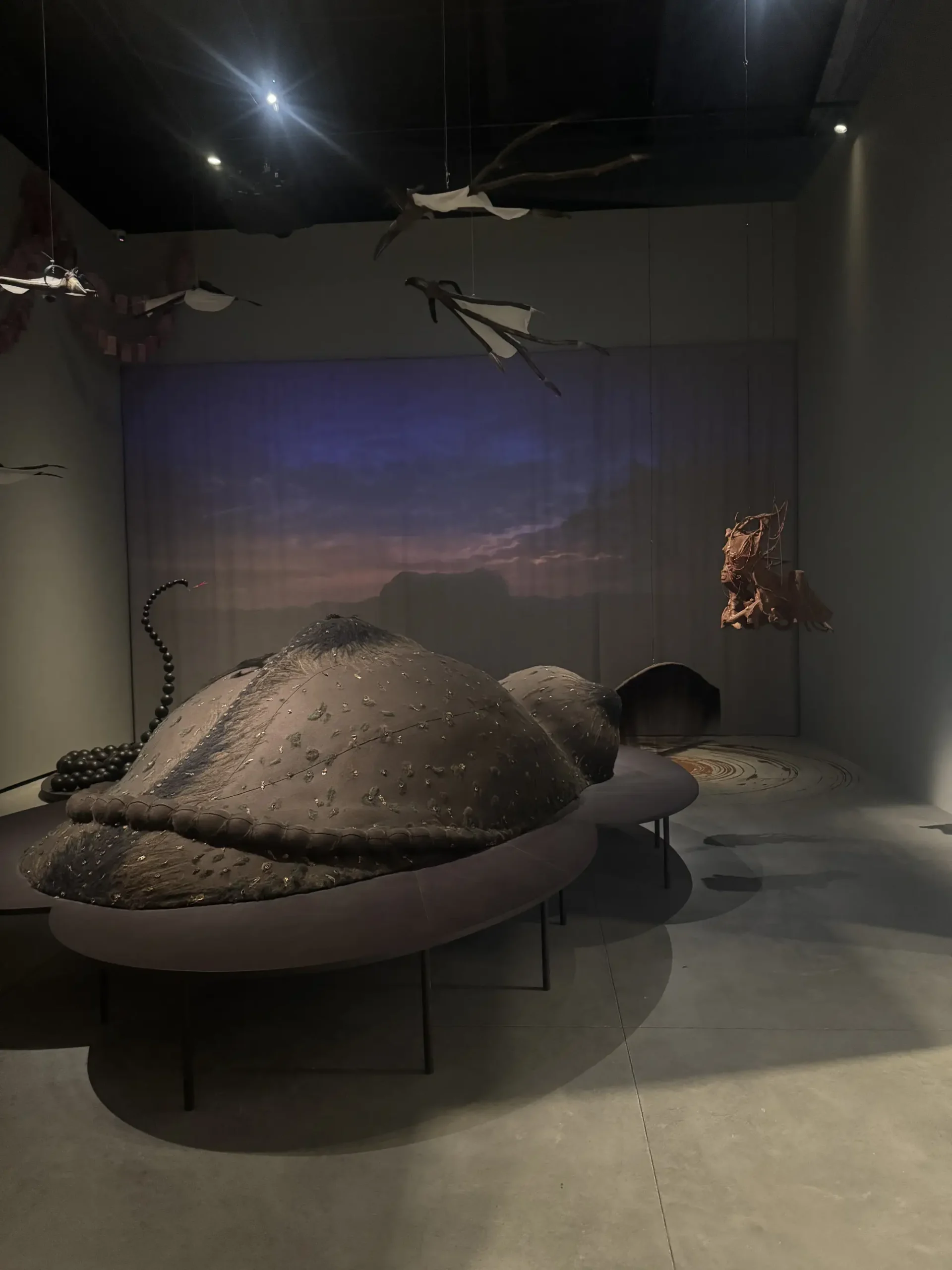
- The Central Pavilion installation, In the End, Where All Began, EdEN, houses MothersMound, the kinetic Sweeper, Mumbi video and tactile sculptures.
- Wangechi Mutu's eco feminist cosmology of hybridity, motherhood and ecology aligns with Koyo Kouoh's curatorial return to sensory, shrine and garden motifs.
There is a moment in the Arsenale, out where the halls open onto the water, when you come upon a bronze creature five metres long draped over a perforated metal base, and the sensible response is to stop walking. SimbiSiren (2026) is part mermaid, part sphinx, part Kongo water spirit and part the aerial root of a Mugumo fig, and it holds those four things without appearing to negotiate between them.
Wangechi Mutu has been given more room at the 61st Venice Biennale than almost anyone, and she has used it to build two things at opposite ends of the exhibition: a monumental bronze at the water, and an entire cosmology inside the Central Pavilion.
SimbiSiren: A Water Spirit in Bronze
The name comes from the simbi, the freshwater guardian spirits of Kongo cosmology — presences that inhabit rivers, springs and pools, and that govern the boundary between the living world and whatever sits beneath it. The sculpture celebrates the life-giving power of water, which sounds anodyne until you register that it is installed at the edge of a lagoon in a city that is slowly losing its argument with the sea.
Formally it belongs to a lineage Mutu has been developing for years: aquatic creatures fusing woman, animal and the supernatural. What distinguishes this one is scale and material. At 160 by 152 by 516 centimetres it is monumental, and cast bronze gives it a permanence her collage and mixed-media work deliberately refuses. The flippered limbs drape rather than pose. It reads less like a figure on a plinth than like something that hauled itself out of the water and settled.
The Mugumo fig is worth pausing on. In Kikuyu tradition it is a sacred tree, a site of prayer and sacrifice, and its aerial roots descend from the branches to re-enter the earth — a plant that grows downward as well as up. Folding that into a water spirit produces a creature belonging to river and forest simultaneously, which is precisely the sort of refusal to sit in one category that Mutu’s whole practice runs on.
In the End, Where All Began, EdEN
The Central Pavilion holds the larger work, and it is not a sculpture but an environment: a multimedia installation evoking a layered and fractured Garden of Eden, rebuilt on eco-feminist and African terms. It occupies one of the very few rooms in the pavilion given over to a single artist.
Inside the installation
MothersMound · Sculpture
A life-sized hummock in the form of a pregnant belly and breasts, inspired by Makonde plate masks. Visitors sit on its bench-like fringes.
Sweeper · Kinetic work
A vast broom of tree branches and human hair drawing red earth and coffee grounds into concentric circles — a cosmic garden being tended.
Mumbi · Video
Named for the Kikuyu mother of the nine clans. Projected within the chamber.
Tactile sculptures · Mixed
Kenyan earth, sticks, cow horns, paper books and quartz crystals.
Central Pavilion, Giardini. SimbiSiren (bronze, 160.2 × 152.4 × 515.6 cm) is separately installed at the Arsenale harbour.
MothersMound is the anchor. A large hummock shaped as a pregnant belly with breasts, drawing on Makonde plate masks — the carved helmet masks of the Makonde peoples of Tanzania and Mozambique, worn over the whole head and frequently depicting a pregnant female form. Mutu reads them as a metaphor for the endurance and beauty of motherhood, and beyond that for feminine power generally.
What makes it work is that it is not behind a rope. The fringes function as benches, and visitors sit on them. One critic described nursing her toddler while seated on it during the pre-opening, and a passing visitor announcing to the room that this was the best artwork in the exhibition. Whether or not you find that too neat, it is the kind of response very little contemporary sculpture invites, and it is plainly what the piece was built for.
Sweeper is the component most visitors underestimate. A huge broom made of tree branches and human hair moves red earth and coffee grounds into concentric circles — the mechanical action of tending, running continuously, producing a garden that is always being made and never finished. Human hair as a material has recurred through Mutu’s work for two decades and it has never been decorative.
Why Kouoh Gave Her the Room
The Art Newspaper, reviewing the exhibition at three and a half stars, found the Central Pavilion poorly paced — too many multi-artist rooms with jarring juxtapositions, too few spaces where a single practice could establish itself. Mutu’s room is one of the exceptions, and the criticism rather makes the case for it.
Mutu was born in Nairobi in 1972 and works between New York and Nairobi. Her practice has run for two decades on sexuality, femininity, ecology and the symbiotic connections that determine a shared fate — hybrid creatures, invented ecologies, a female-centred creation mythology offered as African feminist resistance and restoration rather than as fantasy.
That is a remarkably precise fit with what Kouoh proposed for this Biennale: a return to the sensory and the subjective, organised through motifs of shrine, procession, rest and garden rather than through argument. A rebuilt Eden with a pregnant hummock at its centre and a broom endlessly tending it is not a thesis about anything. It is a place, and you are asked to sit in it.
Where to Find Both Works
SimbiSiren is at the Arsenale, out by the harbour, near Nick Cave’s figure. In the End, Where All Began, EdEN and MothersMound are in the Central Pavilion in the Giardini.
They are on different days of any sensible itinerary, which is a pity but unavoidable. If you are following our three-day route, the bronze comes on day one and the installation on day two. Give the Central Pavilion room more time than you think it needs; it is a work that rewards sitting down, and it has provided the seating.
Frequently Asked Questions
What is Wangechi Mutu showing at the Venice Biennale 2026?
Two major works: the bronze SimbiSiren (2026) at the Arsenale harbour, and the installation In the End, Where All Began, EdEN in the Central Pavilion, which includes MothersMound, the kinetic Sweeper and the video Mumbi.
What does SimbiSiren mean?
It refers to the simbi, freshwater guardian spirits in Kongo cosmology. The sculpture fuses mermaid, sphinx, Kongo spirit and the aerial root of the Mugumo fig, and celebrates the life-giving power of water.
What is MothersMound inspired by?
Makonde plate masks. It takes the form of a pregnant belly and breasts as a metaphor for the endurance of motherhood and for feminine power, and visitors are able to sit on its edges.
Where can I see Wangechi Mutu’s work at the Biennale?
The bronze is at the Arsenale near the harbour; the installation is in the Central Pavilion in the Giardini. Both are covered by a single Biennale ticket.
Who is Wangechi Mutu?
A Kenyan artist born in Nairobi in 1972, working between New York and Nairobi, known for hybrid figures and invented ecologies exploring femininity, ecology and power. She was invited to the 2026 Biennale by Koyo Kouoh.
Further reading: the full guide to In Minor Keys, Godfried Donkor in the main exhibition, and tickets and opening hours.
Read more from the original source
