




Food & Beverage News: Insights, Safety, and Dining Trends
- Expired products cause direct financial loss: lost sales plus sunk costs in raw materials, labor, packaging, quality checks, utilities.
- Expired inventory generates ongoing hidden costs: cold storage, disposal logistics, incineration fees, and lengthy documentation and root cause analysis.
- Expired stock locks up cash, limiting purchases, supplier payments, wages, and new production for small manufacturers on tight margins.
- Inventory expiry harms customer trust and brand reputation, triggering lost retail relationships and fewer repeat consumers and distributor sales.
- Prevent with documented processes, FEFO warehouse layouts, barcode/QR tracking, real-time cloud ERP, moving beyond tribal knowledge and spreadsheets, per Steve Maurer of MRPeasy.
By Shane Dubbelman, Marketing Specialist at MRPeasy
If you’re a small food manufacturer, you might see expired inventory simply as lost sales and wasted materials.
However, the real cost often goes much further.
This was the focus of MRPeasy’s recent webinar with Steve Maurer, a content strategist with more than 35 years of experience in the food processing industry. Drawing on his firsthand experience, Steve shared his perspective on:
- How expiring goods cost food manufacturers more than they expect
- Why small food manufacturers struggle to manage expiring inventory
- How can better systems reduce the risk of expiring stock
This article highlights the main takeaways from the webinar and explores what expiring inventory can really cost you.
The direct financial impact of expired stock
The most obvious cost of expired inventory is that the product can no longer be sold and you lose out on revenue. However, if you’re a food manufacturer, you will also lose what you’ve already invested in making that product, such as:
- Raw materials and ingredients
- Labor
- Packaging
- Quality checks
In addition, you’ve wasted utilities, maintenance, and machine hours on a product that cannot be sold. While these overhead costs can be harder to allocate to a single product, they’re costs nonetheless.
During the webinar, Steve pointed out that these costs can be particularly painful for small food manufacturers, who often operate on tight margins and have little room to absorb avoidable losses.
“It’s money down the drain,” says Steve. “You’ve spent all that time and money producing a product that you can no longer sell.”
The hidden costs of expired inventory
Storage
One of the main points Steve stressed was that expired inventory doesn’t stop costing you once it becomes unsellable. You still need to store expired stock, handle it, and eventually dispose of it. Storage alone can become expensive, especially for perishable goods.
“You still need to keep it in storage, especially if it’s a perishable product that needs cold storage,” Steve explains. “That’s an additional expense because refrigeration isn’t free.”
Disposal
Disposal is another cost. Expired goods may need to be transported, sent to a landfill, handled by a disposal company, or even incinerated. And this labor involved does not create a product you can sell. It’s actually labor spent removing value from the business.
“When you have to take it to a landfill, you have trucking expenses,” Steve explains. “You need to hire a disposal company to dispose of it in the landfill. A lot of times, you’ll have to have expired goods incinerated. And then there’s the labor involved in all this.”
Documentation
Another cost that often goes unnoticed is the documentation and admin work needed to handle expired inventory. For example, after dealing with expired stock, your team will also have to put in the time and effort to document what happened and why. And it might also be necessary to do root cause analysis to keep it from happening again.
Cash flow
Next, expired inventory ties up cash in stock that can no longer generate revenue. This can quickly become a big problem for small businesses. The money tied up in expired stock could have been used to buy new materials, pay suppliers, cover wages, or fund new production. Instead, it sits in inventory that has already lost its value.
“Cash gets locked up in expired stock,” says Steve. “You’ve paid for the ingredients, the overhead, labor, and maintenance on the equipment. All that cash was spent on something that’s just going to sit there and can’t be sold.”
Customer trust and brand reputation
Last but not least, expiring inventory can end up costing your business in terms of customer trust and brand reputation. For example, if you’re a food manufacturer selling your products to a grocery store, and you can’t fulfill an order because your goods have expired, that grocery store is going to start looking for another supplier.
The same goes for end consumers. If consumers buy an expired product, trust in your brand decreases, and they may hesitate to buy from you again. This also has a ripple effect with distributors. If end consumers don’t trust your product, then the distributor will also look to buy from another company.
How raw material shelf life affects finished goods
During the webinar, Steve also pointed out that managing expiring inventory isn’t just about keeping track of finished goods. It also involves knowing the expiration date of every ingredient that goes into a finished product.
Since a finished product’s shelf life is often limited by the ingredient with the shortest remaining shelf life, it’s important to keep the expiration dates of raw materials as close as possible.
“If you’re making a prepared salad bowl, you don’t want lettuce that was picked yesterday and use tomatoes that were pulled a month ago,” Steve says.
Problems upstream can also quickly compound downstream, so it’s important to pay attention to where materials are coming from and have alternate routes of getting materials if there’s a problem with a supplier.
Why small manufacturers struggle with expiring inventory
Reliance on tribal knowledge
Many small manufacturers rely on tribal knowledge to run their operations. Important information is stored in people’s heads instead of in clear systems, procedures, or records. If your operations are small, this can work. But as your business grows, you need more formal processes to keep track of inventory.
“When your business grows, you’ve got a lot more SKUs and expanded product lines,” Steve explains. “Production volume grows, and hiring doesn’t match up with your growth, and you’ve also got multiple storage locations. When this happens, ‘that’s the way we’ve always done it’ won’t work anymore.”
Processes need to be documented, visible, and repeatable, so that all workers have a clear understanding of how to manage inventory. Businesses also need to sit down and figure out how they are going to manage expiring materials and finished goods as the company grows.
Warehouse layout
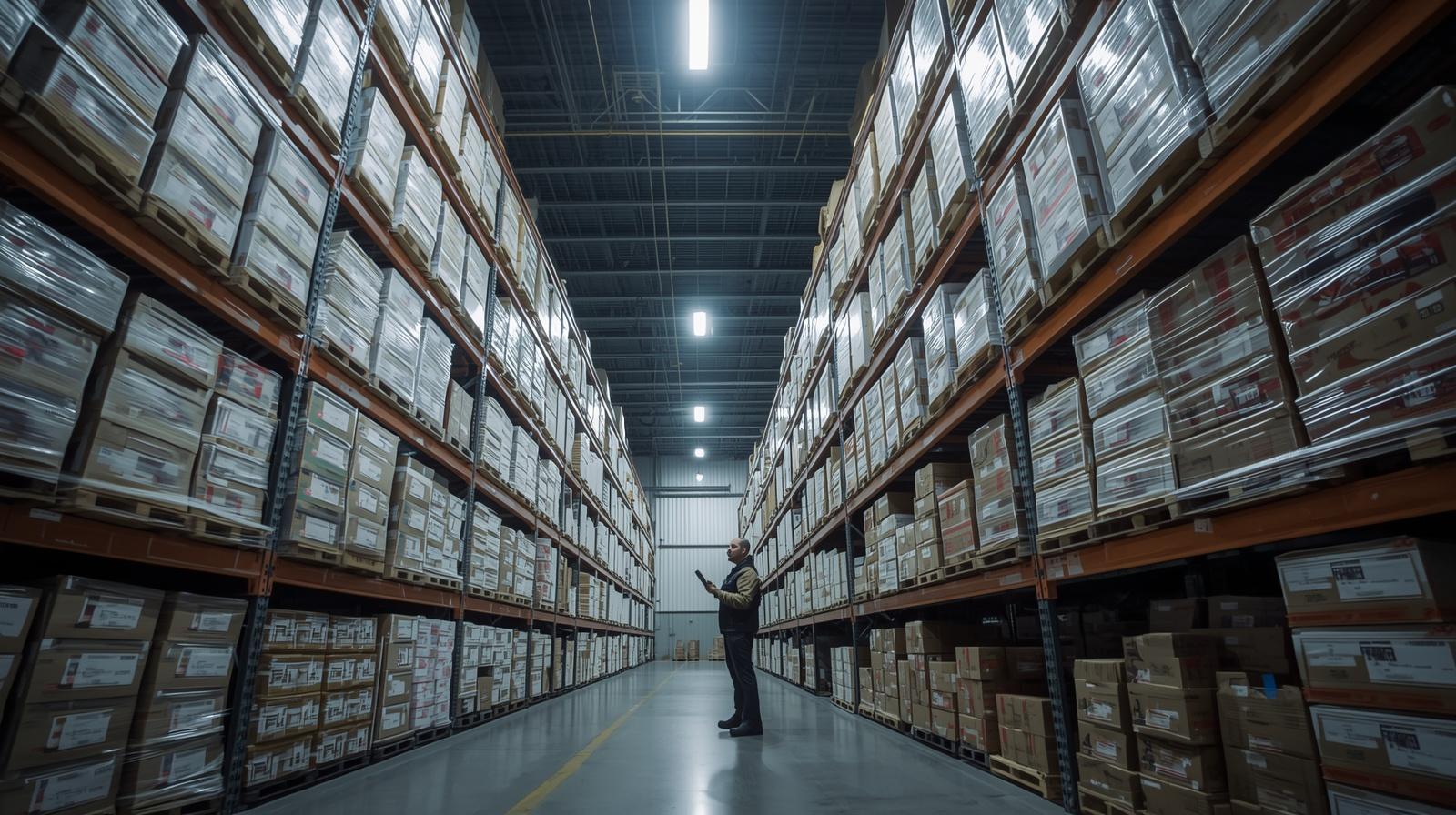
Oftentimes, warehouse layout doesn’t support the kind of stock rotation needed to avoid issues with expiring inventory. Using FEFO (First Expired, First Out) is one of the best ways to make sure stock closest to expiry is used or shipped first.
However, for FEFO to work, products closest to expiry need to be accessible. If pallets are stacked or stored in a way that hides older stock, the risk of having goods expire increases.
Spreadsheet-based processes
Spreadsheets can work for some businesses, but someone needs to be checking and updating them regularly. Conditional formatting can highlight a problem, but it cannot physically move stock, alert multiple teams, or enforce FEFO picking.
“Expiring inventory will just sneak by you if you don’t have a good inventory management system in place,” Steve stresses.
To properly manage expiring inventory, most businesses need manufacturing software that tracks inventory in real-time.
How to better manage expiring inventory
To close out the webinar, Steve shared his view on how small manufacturers can improve inventory management and reduce the risk of expiring inventory.
“You’ve got to get honest with yourself,” Steve says. “Is what we are doing right now going to be adequate for us six months from now?”
If the answer is no, it’s crucial to find a more structured way to manage inventory before growth makes the problem worse.
Steve also pointed out that every small manufacturer should be using some kind of barcode or QR system to manage inventory, as well as a system that can provide real-time alerts when inventory is about to expire.
“Modern systems can actually alert you on handheld devices, computers, and kiosks,” he explains. “You can set expiration visibility and use FEFO workflows, so the things that are going to expire first have to go out the door first.”
According to Steve, the biggest obstacle for many small manufacturers is a hesitance to adopt new technology. For example, some see ERP software as something only for large companies with big budgets and dedicated IT teams. In reality, modern cloud-based manufacturing software has made capabilities like real-time inventory visibility accessible to smaller businesses.
“While some people are afraid of technology, they really need to get comfortable with it if they’re going to keep up with production and global growth,” Steve emphasizes.
As a marketing specialist at MRPeasy, Shane immerses himself in the world of manufacturing, with a particular focus on understanding the day-to-day challenges faced by small manufacturers. He creates practical, insightful content that helps manufacturers improve their processes, adopt modern tools, and expand their operations.
Read the full article from the original source
