




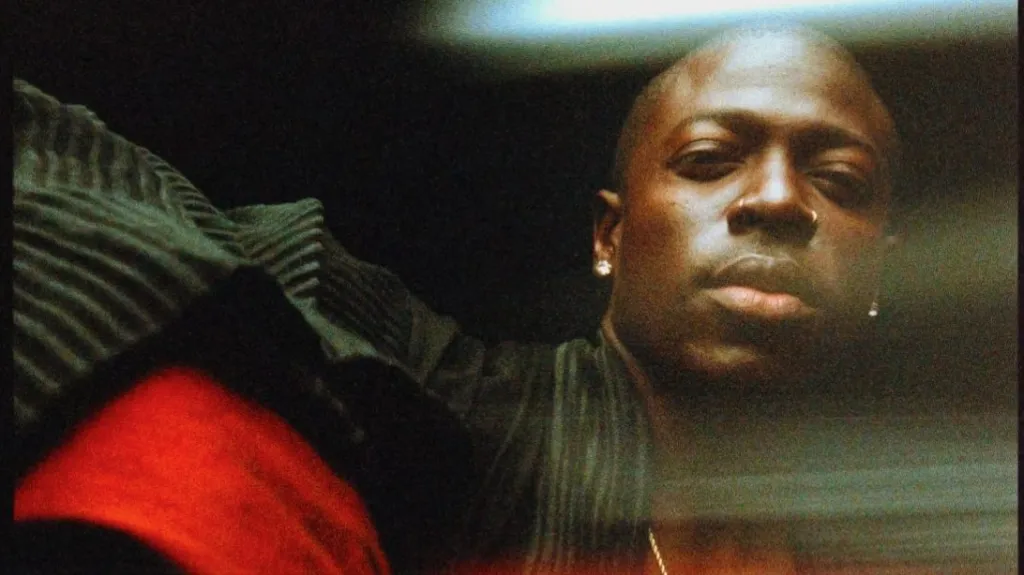
From Hollywood to Home: Black Voices in Entertainment
- Moses Sumney collaborated with Aleshea Harris and Joseph Shirley to score Is God Is, shaping the film's soundtrack.
- Moses Sumney built a unique sonic palette, using his voice for synths, percussion, and the twins' telepathy cues.
- Found scoring both challenging and rewarding: adapted to collaborative film workflows, worked over a year, and felt proud hearing music in theaters.
Moses Sumney had never been “terribly interested” in being a film composer.
But when he read the script for Aleshea Harris’ directorial debut, Is God Is, it blew him away. So much so that he had to say yes to Amazon-MGM Studios’ offer to score t. “I thought the script was really wonderful and it was cool to read such an original voice jump off the page […] In the end, it actually felt like a lot of friends and mutual friends sort of coming together to do something great,” he explained to VIBE.
The actor-singer— in collaboration with Harris’ vision and co-composer and producer Joseph Shirley’s expertise— created the score and soundtrack for the riveting film. Is God Is is a story about twin sisters Racine (Kara Young) and Anaia (Mallori Johnson), tasked with killing their abusive, absentee father at the request of their mother. It highlights revenge and the lengths one may go to while confronting deeply rooted, emotional ties.
Sumney spoke with us about his musical approach, favorite film scores, the Is God Is scene that initially resonated with him most, the challenges and rewards of being a novice composer, and whether he’d do it all again.
Warning: This feature contains spoilers from the film Is God Is.
VIBE: Was there any particular part of the script that you read and you were like, “Oh, I already have the vision for how I should score this scene?”
Moses Sumney: Definitely the flashback scenes, which are pretty graphic, but the main one is the story of how they got their burns. That was pretty visceral. Aleshea had even more specific ideas about a whistle she wanted the man to do. It got down to details that were that specific. Also, one of the things my co-composer, Joseph Shirley, and I were tasked with doing was coming up with a sound for when the twins are engaging in telepathy, speaking to each other with their minds. It was fun to brainstorm what that could be like. More than anything, I think we wanted the film to have a unique palette, and we decided that the most unique palette would be to build much of the sounds off my voice.
It’s been noted that you use your “elastic voice.” What does it mean to use it when figuring out what music would soundtrack that twin telepathy?
Hmm, I’m not really sure. If anything, in the score, what we’re trying to do is make a lot of sounds that you don’t even realize are built off of the voice. A lot of the synths and the keys. Even when it’s a blues song like “Man’s Blues,” a lot of the padding work and percussion are done with the voice. I think it’s really just about stretching the human voice to its absolute limit in the same ways that the girls are sort of stretched to their limits in the film.
When creating this score and the original songs for the movie, what were the most rewarding and challenging parts of that process?
Oh my gosh. I mean, the most challenging part for me is that I’m just so used to being self-employed, in charge, and working alone. The beautiful thing about film is that it is such a collaborative industry and art form. You’re adjusting to the workflow of supporting another person’s vision and sometimes getting into the cacophony of many voices. Decisions on what should happen, I think, required this sort of adjustment. I’m also not necessarily the fastest person, but in film, you’ve got to come up with ideas, redo them, and then change those ideas pretty quickly [all] without a sense of attachment. All of those things were challenging, but what was really great was that we were at least working for someone with a really strong voice and vision. The most rewarding thing is getting to see the movie in theaters, which is cool. I’ve never had that experience before of seeing music I made in a film. That was incredibly rewarding, and I’m very proud of the work that we did.
You should be because it’s phenomenal.
Oh, thank you.
Just the play on Black women being able to act out their rage in a very unhinged manner, but also a very appropriate manner for their psyche. It’s so powerful in so many ways, speaking to the juxtaposition of how you can internalize your rage and express it outwardly. There are just so many layers to it, and I think the film is beautifully done.
Thank you. I’ll let Aleshea know you said that.
Kara Young stars as Racine and Mallori Johnson as Anaia in ‘Is God Is.’
Patti Perret
A lot of what you mentioned was for their twin telepathy, but then, when Racine’s character dies, how did you end up scoring that part of the film where it’s finally Anaia by herself with her child, and she has to explore life on her own for the first time?
Oh, that’s a great question. That was one of the harder moments to score, because it’s so sad and for me, so unexpected. I was just like, “Oh dang, I thought they were going to ride or die to get it to the end.”
We all did.
Racine was trying it throughout the movie, so you kinda expect something to happen between them. That definitely took a lot of stabs. No pun intended. It was really about not making it too sad. That was the main thing. There’s a Valerie June song that we were really inspired by while making that. And for me, I wanted it to be a song that captured the melancholy of the film and also connected to a lot of the melancholy that’s in my work, especially the more kind of soulful-folk stuff. I wanted to capture that melancholy, but also really capture a sense of hope, because [Anaia’s] obviously pregnant and she still has a whole life to look forward to. She is going to experience freedom, and she kinda gets to be independent for the first time without actually having to sacrifice her twin. I wanted to have a song that was— “Don’t Leave Me Be” is the song that comes right after that moment. I wanted it to just feel like, “Oh yes, it’s bittersweet. It’s not just devastating.” Ultimately, she’s looking up to the sky with her child in her hands, so that was the goal.
That was really beautiful because throughout the film, Anaia had her moments of like, “I need to step away from you, twin. We’re not on the same page right now.” I feel it was a big moment for her character to be like, “I’m finally free from everything, from the rage, from the sadness, from the heartache, from me trying to find a redemptive arc for my father, all these things. It’s like, it’s just me, and I can just now raise my child in this new environment, all this newness around me.” That was powerful.
Yes.
When you sat down and were like, “Okay, I’m going to be a composer and score a film.” Were there any movie scores or soundtracks that resonated and made you want to pursue this?
I’ve got to say I really love Nicholas Britell and the work that he’s done to support Barry Jenkins’ films, especially the score for If Beale Street Could Talk. I mean, it’s radically different. Around the time we started scoring the movie, Babygirl by Halina Reijn had just come out, and that was scored by this lovely composer named Cristobal [Tapia de Veer]. There’s a lot of effed up sounds in that that were cool. But more than anything, I’ve never really endeavored to be a film composer, to be honest with you. I think film and TV have come to me, I guess thankfully, because my music is so overdramatic. With this score, I wanted to really capture an intimacy that was really bold. I also like Stevie Wonder’s [Journey Through The] Secret Life of Plants a lot, which was a score that became an album and stuff like that. That’s just not doing what you’d expect it to do.
Would you score a film again?
We’ll see. I’m so focused on getting my next album out, which I’m at the tail end of making. I definitely wouldn’t be able to do it again soon. It takes a lot of time, and I want to give it the time and respect that it deserves, but more than anything, I’m excited for this to come out and for people to live with this work. We’ll see if I can do it again.
That’s honest. How long did it take you to score this film?
Off and on for a little over a year.
Aleshea said in a recent interview that she had to find the right musical language to fit the film and [feed] the desire to use music that audiences haven’t heard over and over again. Was that equally important to you?
Absolutely. Aleshea’s music taste is excellent. The playlist and the references that she sent us were great. There’s a really awesome moment in the movie where Racine is headbanging in the car to Death Grips. There are all these surprising choices in this way. I think those moments really helped inspire Joseph and me as we were scoring. For me, I never want to do anything if I don’t feel like I can add something unique to the art form. If it’s already been done, why am I doing it? That was really important. We started sketching out the film’s sonic landscape before they started shooting the movie. I got to go to the set and really take all of that in, too. It was cool to be so immersed in the process.
What was your synergy with Joseph like?
Oh my God, it was great. I’ve known Joseph, actually, for a really long time, because I’m really good friends with Ludwig Göransson. I sort of came up with Ludwig. I worked on the first Creed movie with him, Ryan Coogler, and Tessa Thompson, who is now producing Is God Is. We all met back when I was a wee lad working on the music for Creed. Around that time, Joseph was assisting Ludwig. Now, after all these years, Joseph has spread his own wings and is scoring movies on his own. Tessa’s, of course, still a superstar. I think this might be the first movie she’s produced that she’s not in.
Oh, wow.
It was great to work with people I’ve known for so long. I came into this really just like, “I don’t know how to score movies.” I’ve scored short films on my own, but never a feature. It was really incredible to work with someone who was so patient and would let me come in and be like, “All right, I know I’ve never done this before, but I need you to do this and this and this.” He would be humble in listening to me, incorporating my ideas, and helping me flesh them out, while also showing me what the process is like and the back-and-forth, which can be rich and extensive. I really love him. He’s such a creative guy, and he’s from Louisiana. I just have a soft spot for people from the South. We pulled in a lot of blues, soul, and jazz, along with influences from southern Black music. It was really cool working with him.
As a novice to the scoring world, what is something that you’ve taken away from this experience to hopefully use in future opportunities?
A few things. really. More than anything, I’m struck by the beauty of collaboration and what can happen when many people come together to support a common vision. [It] happens in music, but doesn’t really happen on— not even close to as large a scale as it does in film. I’m really moved by how important it is to listen to people, learn from people who have done it before or know this industry, and stick to your vision and unique voice. Being confident that just because someone’s done it more than you doesn’t mean that they know more than you do about your own art and voice. I think that’s like something filmmakers, composers, and everyone on the creative side of making the film are constantly balancing. The beauty and complexity of collaboration is one that I’m really struck by and sort of interested in. Who knows, I may be making my own films one day.
Read the full article on the original site
