Close Menu
Savannah HeraldSavannah Herald
    • Home
    • News
      • Local
      • State
      • National
      • World
      • HBCUs
    • Events
    • Directories
    • Weather
    • Traffic
    • Jobs
    • Sports
    • Politics
    • Lifestyle
      • Faith
      • Senior Living
      • Health
      • Travel
      • Beauty
      • Fashion
      • Food
      • Art & Literature
    • Business
      • Real Estate
      • Entertainment
      • Investing
      • Education
    • Guides
      • SSU Homecoming Guide
      • Back to School Savannah
      • Summer Camp Guide
      • Juneteenth Guide
      • Black History Savannah
      • MLK Guide Savannah
    We're Social
    • Twitter
    • Facebook
    • YouTube

    Subscribe to Updates

    Get the latest creative news from FooBar about art, design and business.

    Trending
    • Cheapest Gas Stations in Savannah | Savannah Herald
    • Missing Children in Ga | Jelaya Holmes (GA) | Savannah Herald
    • Breast Cancer Screening for Black Women Doesn’t End in October
    • Savannah State University and City of Savannah Announce Broadcast Partnership: Student-Produced “Tiger’s Roar” Newscast to Air Weekly on Channel 8 | Savannah Herald
    • What are Storm players up to this offseason?
    • CIARA SHOWS OFF BABY BUMP IN SHEER BLACK DRESS AT 2026 BABY2BABY GALA
    • Air Traffic Control Systems Are Outdated. What’s Being Done to Prevent Another Outage?
    • Creamy Peppermint Martini (Candy Cane Rim)
    Facebook X (Twitter) Instagram YouTube
    Login
    Savannah HeraldSavannah Herald
    Savannah HeraldSavannah Herald
    Home » ‘A genuine wildlife emergency’: everything you need to know about the arrival of H5 bird flu in Australia | Environment
    Health

    ‘A genuine wildlife emergency’: everything you need to know about the arrival of H5 bird flu in Australia | Environment

    Savannah HeraldBy Savannah HeraldJune 21, 20266 Mins Read
    Facebook Twitter Pinterest LinkedIn WhatsApp Reddit Tumblr Email
    ‘A genuine wildlife emergency’: everything you need to know about the arrival of H5 bird flu in Australia | Environment
    Share
    Facebook Twitter LinkedIn Pinterest Email

    Health Watch: Wellness, Research & Healthy Living Tips

    Key takeaways
    • H5 bird flu is highly pathogenic and panzootic, killing millions of birds and many mammals worldwide, requiring urgent surveillance.
    • Establishment among wildlife could cause massive declines and extinctions; experts call it a "genuine wildlife emergency" threatening species like the Australian sea lion.
    • Severe poultry impacts and rare human cases possible; avoid contact with sick animals and report sightings to the emergency hotline or birdflu.gov.au.

    A deadly strain of bird flu, known as H5 bird flu, has arrived on the Australian mainland.

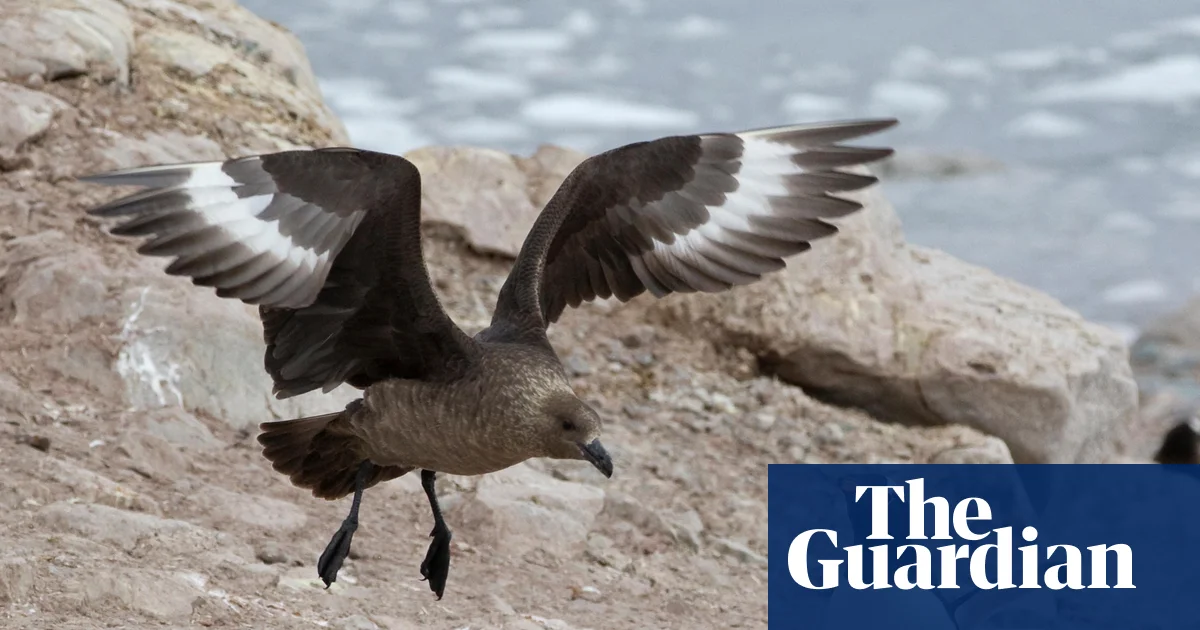
    The federal agriculture minister, Julie Collins, this weekend confirmed that a brown skua – that had been found sick in Western Australia – had died from the H5N1 virus. The skua is a wild migratory bird.

    A second bird, a sick giant petrel found nearby, was also likely infected.

    Australia’s run as the only continent free of the virus has now ended. H5 bird flu has killed millions of birds and thousands of marine mammals since it began spreading across the globe in 2021.


    What is H5 bird flu and why are authorities concerned?

    The H5 bird flu is a “highly pathogenic” virus, which means it is highly contagious and causes serious illness, including animal deaths.

    Dr Ariful Islam, a veterinary epidemiologist at Charles Sturt University who researches avian influenza viruses, says the virus is a “panzootic”, meaning it has spread across multiple continents and affected many species. 

    The disease has already infected millions of wild birds, including threatened species, and has had a devastating impact on agricultural industries, particularly poultry, Islam says.

    According to Wildlife Health Australia, more than 560 wild bird species and more than 100 different types of mammals have been affected by the virus.


    Where did it start?

    The deadly bird flu strain (H5N1 clade 2.3.4.4b) started in Asia, but has been spreading globally across Europe and the Americas since 2021, arriving in Antarctica during the 2023-24 summer.

    Australian researchers estimate the virus arrived on Heard Island, an Australian territory located about 4,000km south-west of Perth, in August 2025. It has spread among penguins, seals and petrels, killing more than 13,000 southern elephant seal pups and hundreds of king penguins.


    How did it arrive on the Australian mainland?

    The brown skua, a subantarctic species, was found sick at Cape Le Grand national park near Espearance on Sunday 14 June and subsequently died. An initial positive test for H5 bird flu in WA was later confirmed by the CSIRO’s Australian Centre for Disease Preparedness. 

    A second bird, a giant petrel found in the same area, has tested positive for the disease at a WA government laboratory.  That result is being confirmed by further testing at the CSIRO lab.

    Islam says further environmental sampling and monitoring are needed to determine the extent of the outbreak. “We need to know the full spectrum of the disease ecology, and the transmission dynamics and pattern in that area of Western Australia,” he says.

    The two birds most likely migrated to Australia from the subantarctic, according to BirdLife Australia.

    WA map

    It is not yet known if the virus has spread further. Collins says there is no evidence to date of mass mortality or of infection in poultry. She says a nationally coordinated response will initially focus on determining whether the disease has spread to other wildlife.

    It will likely be known within days whether the disease has affected local wildlife populations.


    What does it mean for Australian agriculture?

    The virus differs from the H7 bird flu, which caused outbreaks in poultry farms across several Australian states in 2024 and 2025, and led to the euthanising of hundreds of thousands of chickens. 

    Dr Michelle Wille, an expert in avian influenza viruses at the University of Melbourne, says H5 has had significant impacts on the poultry industry in other parts of the world.

    “For example, since the arrival of the virus in the US, more than 200m chickens have been culled, which, of course, is bad for birds, bad for farmers and bad for consumers.”

    Wille says the virus has led to human infections, generally among people who work with infected poultry.


    What are the risks for human health?

    Bird flu infections in people are rare, often mild, but potentially dangerous. 

    The Australian Centre for Disease Control says bird flu in people is rare and often mild but can cause severe disease or death.

    People can be infected by breathing in contaminated dust or air, or by touching an infected animal. Symptoms can include fever, cough, sore throat, conjunctivitis and muscle aches and pains.

    Dr Matt Mason, from the University of the Sunshine Coast’s school of health, says the risk to the general public remains low, and there is limited evidence of human-to-human transmission.

    “Almost all human cases recorded globally have resulted from exposure to infected poultry or, in the US, dairy cattle.”

    Australia’s first reported human case in 2024 was travel-associated, in a child who likely acquired the infection overseas and later recovered. 

    From 2003 to early 2026, there were 997 reported cases of human H5 infection from 25 countries. Of these, 478 were fatal, the World Health Organization reports. In the US, there have been two deaths out of 71 cases, according to the US Centers for Disease Control and Prevention.


    What are the risks to native wildlife?

    Dr Fiona Fraser, Australia’s threatened species commissioner, says if H5 bird flu becomes established in wildlife, there is little that can be done to stop its spread.

    Governments have analysed which of Australia’s birds and mammals could be most at risk, which include, for example, the Tasmanian devil, the critically endangered orange-bellied parrot and the Australian fur seal.

    Authorities have developed more than 100 response plans for at-risk animals and important natural sites such as Ramsar wetlands and islands.

    “We’ve taken into account whether they’re already threatened with extinction, but also other natural traits, such as whether they’re water birds, whether they’re marine species, whether they congregate, to understand which species are most susceptible,” Fraser says. 

    Jack Gough, the chief executive at the Invasive Species Council, says the risk is “no longer theoretical” and if the virus begins circulating among native birds, it could lead to massive declines in some species and push others closer to extinction.

    “There is a very good chance that the impact on Australia’s native wildlife will be even worse than it is in the northern hemisphere,” he says. “This is a genuine wildlife emergency, and it must be treated as such with emergency funding to increase efforts to protect wildlife populations.”

    The council says Australia could help protect native species by boosting wildlife resilience, and wants the federal government to invest $200m over two years to tackle invasive species, restore habitat and reduce predators. 

    The Australian Marine Conservation Society fears the mainland arrival of H5 bird flu could pose a “real extinction risk” for the endangered Australian sea lion, with only 12,000 remaining along the coasts of South Australia and WA. 

    “Bird flu poses a real risk to the future of the Australian sea lion, found nowhere else in the world, potentially pushing it to extinction,” the campaign director Alexia Wellbelove says.

    “The experience worldwide demonstrates the potential for this virus to be catastrophic for Australia’s unique wildlife and threatened species.

    “Investing in boosting the resilience of our threatened species by protecting and restoring their habitat, and reducing pressures on their populations, is now essential to ensure their future.”


    What to do if you see sick birds or marine mammals?

    Members of the public are urged to avoid contact with any dead or sick birds or animals showing signs of bird flu. Report sightings to the emergency animal disease hotline 1800 675 888 or birdflu.gov.au.

    Read the full article on the original source


    Related Posts

    • What Is a Group of Dragons Known as? It is Nearly Too Apparent
    • Tesla Crash That Killed a Texas Woman Will be Investigated by Federal Regulators
    • City Crews Respond to Minor Sewage Spill on GA-25 Connector • Savannah, GA
    • These Activities Can Make Vaccinations Much Safer. Yet RFK, Jr., Isn’t Going After Them
    • The Essential Sly and the Family Stone Collection (LISTEN) – Good Black News
    • Atlanta Braves to open season on Friday, new menu items, card shop, giveaways on deck
    • 16 ’90s-Inspired Spring Arrivals From NET-A-PORTER
    • What Are The Swing States Of The Future?
    Disease Prevention Fitness and Nutrition Fitness Trends Health News Health Policy Healthcare Innovation Healthy Habits Healthy Living Immune Health Lifestyle Medicine Medical Breakthroughs medical research Men's health Mental Health Awareness Nutrition News Public health Self-Care Strategies Stress Management Wellness Tips Women's health
    Share. Facebook Twitter Pinterest LinkedIn WhatsApp Reddit Tumblr Email
    Savannah Herald
    • Website

    Related Posts

    Health November 15, 2026

    Breast Cancer Screening for Black Women Doesn’t End in October

    November 15, 2026

    Air Traffic Control Systems Are Outdated. What’s Being Done to Prevent Another Outage?

    November 14, 2026

    James Webb telescope finds ice older than the star it orbits

    November 13, 2026

    Indigenous leaders at COP31 say it’s past time to turn promises into action

    November 12, 2026

    Neanderthals Walked with Flatter, More Flexible Feet, Researchers Say

    November 12, 2026

    What Is Brass Made Of?

    Comments are closed.

    Don't Miss
    World May 14, 2026By Savannah Herald03 Mins Read

    Trump NATO’s new ‘Daddy’ – Trinidad and Tobago Newsday

    May 14, 2026

    Global Black Voices: News from around the World Editorial Newsday 8 Hrs Ago US President…

    Ex-LSU star Flau’Jae Johnson sets Seattle Storm franchise records

    October 10, 2026

    DOGE May Be Dead, But Its Crimes Live On

    November 25, 2025

    SCOTUS Thrown Into ‘Chaos’ After Conservative Justices Complain

    March 26, 2026

    Tampa Bay Rays’ Wander Franco convicted of sexually abusing a child; girl’s mother gets 10 years in prison

    August 28, 2025
    Archives
    • November 2026
    • October 2026
    • September 2026
    • August 2026
    • July 2026
    • June 2026
    • May 2026
    • April 2026
    • March 2026
    • February 2026
    • January 2026
    • December 2025
    • November 2025
    • October 2025
    • September 2025
    • August 2025
    • July 2025
    • June 2025
    • May 2025
    • April 2025
    • March 2025
    • February 2025
    Categories
    • Art & Literature
    • Beauty
    • Black History
    • Business
    • Climate
    • Culture
    • Education
    • Employment
    • Entertainment
    • Faith
    • Fashion
    • Food
    • Gaming
    • Georgia Politics
    • Guides
    • HBCUs
    • Health
    • Health Inspections
    • Investing
    • Lifestyle
    • Local
    • Lowcountry News
    • National
    • National Opinion
    • News
    • Politics
    • Real Estate
    • Senior Living
    • Sports
    • State
    • Tech
    • Traffic
    • Transportation
    • Travel
    • Weather
    • World
    Savannah Herald Newsletter

    Subscribe to Updates

    A round up interesting pic’s, post and articles in the C-Port and around the world.

    About Us
    About Us

    The Savannah Herald is your trusted source for the pulse of Coastal Georgia and the Low County of South Carolina. We're committed to delivering timely news that resonates with the African American community.

    From local politics to business developments, we're here to keep you informed and engaged. Our mission is to amplify the voices and stories that matter, shining a light on our collective experiences and achievements.
    We cover:
    🏛️ Politics
    💼 Business
    🎭 Entertainment
    🏀 Sports
    🩺 Health
    💻 Technology
    Savannah Herald: Savannah's Black Voice 💪🏾

    Our Picks

    Black Authors Wrote Books About Their Breast Cancer Experience

    October 10, 2026

    The cost of less than a cup of coffee could end world hunger in five years

    November 30, 2025

    SSU to Rename Tiger Court Residence Hall | Opened in 2012, it will be renamed Bostic Hall in Memory of Fallen Tiger

    November 20, 2025

    Mesopotamia test: Evaluate your expertise regarding the old worlds of the Fertile Crescent

    July 3, 2025

    FDA hold-ups execution of policy that would certainly call for brand-new nourishment labeling

    August 29, 2025
    Categories
    • Art & Literature
    • Beauty
    • Black History
    • Business
    • Climate
    • Culture
    • Education
    • Employment
    • Entertainment
    • Faith
    • Fashion
    • Food
    • Gaming
    • Georgia Politics
    • Guides
    • HBCUs
    • Health
    • Health Inspections
    • Investing
    • Lifestyle
    • Local
    • Lowcountry News
    • National
    • National Opinion
    • News
    • Politics
    • Real Estate
    • Senior Living
    • Sports
    • State
    • Tech
    • Traffic
    • Transportation
    • Travel
    • Weather
    • World
    Copyright © 2002-2026 Savannahherald.com All Rights Reserved. A Veteran-Owned Business

    Type above and press Enter to search. Press Esc to cancel.

    Manage Consent
    To provide the best experiences, we use technologies like cookies to store and/or access device information. Consenting to these technologies will allow us to process data such as browsing behavior or unique IDs on this site. Not consenting or withdrawing consent, may adversely affect certain features and functions.
    Functional Always active
    The technical storage or access is strictly necessary for the legitimate purpose of enabling the use of a specific service explicitly requested by the subscriber or user, or for the sole purpose of carrying out the transmission of a communication over an electronic communications network.
    Preferences
    The technical storage or access is necessary for the legitimate purpose of storing preferences that are not requested by the subscriber or user.
    Statistics
    The technical storage or access that is used exclusively for statistical purposes. The technical storage or access that is used exclusively for anonymous statistical purposes. Without a subpoena, voluntary compliance on the part of your Internet Service Provider, or additional records from a third party, information stored or retrieved for this purpose alone cannot usually be used to identify you.
    Marketing
    The technical storage or access is required to create user profiles to send advertising, or to track the user on a website or across several websites for similar marketing purposes.
    • Manage options
    • Manage services
    • Manage {vendor_count} vendors
    • Read more about these purposes
    View preferences
    • {title}
    • {title}
    • {title}
    Ad Blocker Enabled!
    Ad Blocker Enabled!
    Our website is made possible by displaying online advertisements to our visitors. Please support us by disabling your Ad Blocker.

    Sign In or Register

    Welcome Back!

    Login to your account below.

    Lost password?