




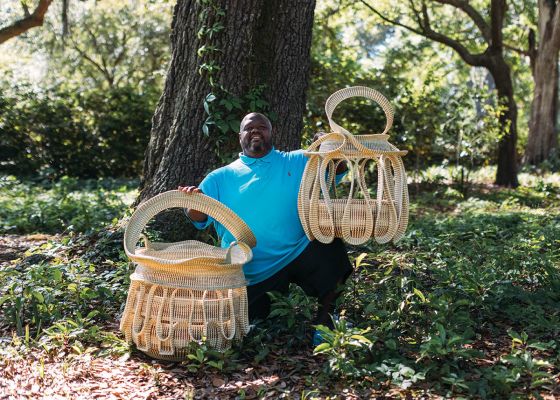
- Corey Alston crafts extra-large, sculptural sweetgrass baskets, transforming traditional Gullah forms into contemporary fine art.
- He offers immersive cultural experiences and prepares Gullah dishes to teach visitors a deeper, lived cultural understanding.
- Build Your Sweetgrass Basket app is a 3-D configurator letting customers design baskets with instant cost and completion-time estimates.
- Commissions include the Smithsonian, the Duke Endowment, and the International African American Museum; Big Percy gains Guinness World Records recognition.
- He stresses labor-intensive techniques, scarce materials, family teaching, and that sweetgrass baskets are functional objects deserving respect for their Gullah heritage.
If you’ve spent time browsing the City Market, you may have paused at a basket stand where the pieces seemed less traditional and more sculptural. That’s likely where you encountered Corey Alston, one of the most celebrated sweetgrass basket weavers working today. A Mount Pleasant native and Gullah Geechee descendant who married into a fifth-generation sewing family, he has spent two decades crafting an identity as a contemporary artist within a tradition more than 300 years old.
In addition to crafting baskets, Alston prepares Gullah dishes for educational talks and offers immersive experiences designed to give visitors a real taste of the culture rather than a postcard version. He also created a Build Your Sweetgrass Basket app, a 3-D configuration tool where customers can design a one-of-a-kind vessel by selecting materials and dimensions, with cost and estimated completion time calculated on the spot.
Alston’s baskets have been commissioned by the Smithsonian Institution, the Duke Endowment, and the International African American Museum. In February, the South Carolina State Museum in Columbia commissioned a major piece called Big Percy that stands five-feet tall and 11.3 feet in circumference. It will be recognized this month by Guinness World Records for being the largest sweetgrass basket created. Also this month, Alston will have six works featured in “Grounded in Grain, Washed in the Water,” an exhibit opening at the Avery Research Center for African American History and Culture curated by Lauren Jackson Harris. Here, Alston talks about his craft, calling, and what he wants people to understand when they purchase one of his baskets.
Realizing His Calling: I’ve always been an entrepreneur, but in 2005, when I started working in the business at the City Market, that’s when it became real.
Finding His Focus: Everybody working to keep the Gullah culture alive has their own skills. I carved out my place making extra-large pieces that are more sculptural than agricultural. That’s where I focused my energy, and that became my lane.
The Process: It’s extremely time-consuming. It’s hard to find the materials. There’s a lot that goes on behind the scenes before you ever see the artwork. It’s hard to take raw materials and abstract them into something that becomes fine art.
Working with the Smithsonian: I was honored and blessed to be chosen. I have two pieces there now; the second piece is called The Sweetest Movement of Grass. When I was making it, I knew the art was being recognized at the highest level. It feels like we’re being seen. I’m extremely humbled to be at this place in my career, and I’m blessed by God to create this artwork.
On His Daughters Weaving: I’m extremely proud. They see the pride we have in it—me, their mother, and my wife’s mother. They understand the significance of keeping it alive.
Valuable Objects: Realize it’s functional. It’s not designed just to sit on a shelf—it should be used. Please respect the heritage and take the understanding with it.
