





Wellness That Matters: Black Health News & Community Care
- Predicting who will die by suicide is unreliable; focus on interventions that do not require identifying individuals at risk.
- Limiting access to lethal means, including guns, bridges, and pills, substantially reduces suicide; method substitution rarely occurs.
- Extreme risk protection orders, or red flag laws, can avert suicides but depend on identifying someone at risk and miss many cases.
- Policies like waiting periods, permits, and safe storage give time to rethink and lower impulsive firearm suicides despite political resistance.
Paul Nestadt is about as steeped in suicide prevention as a person can be.
He treats suicidal patients as a psychiatrist, has co-authored scores of research papers on how and why people kill themselves, and teaches graduate courses on the subject.
But he’ll be the first to admit: “I can’t tell you which of my patients is likely to die by suicide in the next six months.”
Almost nobody can.
Research shows predictions of who will be suicidal are only slightly better than a coin toss. And they haven’t improved over 50 years.
But that doesn’t make Nestadt hopeless. Instead, it pushes him to pursue interventions that don’t require pinpointing people at risk.
Chief among them: making it harder for people to carry out the act of killing themselves.
“Instead of asking every doctor to figure out which patient will die by suicide and locking that patient up, it might be that we need to make sure there aren’t loaded guns available,” Nestadt said.
In an ongoing series, KFF Health News is examining approaches to suicide prevention that expand beyond providing people at risk with medication and therapy. Although those are lifesaving measures, many clinicians, researchers, and people who have lost loved ones to suicide agree that more is needed. The challenge is that when it comes to firearms, broad policy approaches quickly become constitutionally complicated and politically polarizing.
Research shows that limiting access to lethal means is one of the most promising approaches to save lives. It can involve erecting barriers on buildings and bridges to prevent people from jumping, as well as decreasing the number of pills someone can buy or be prescribed at once.
“That’s the one that will save the most lives,” said Nestadt, medical director at the Johns Hopkins Center for Suicide Prevention.
It may also be the most difficult to achieve.
More than 28,000 people killed themselves with a gun last year, representing more than half of all suicide deaths in the U.S., according to preliminary federal data. Even as overall suicide rates have dipped recently, gun suicides have hit record highs for five years in a row.
Many of the deaths are among middle-aged white men and veterans, two groups that have had high suicide rates for years. But more recently, gun suicides have risen among women and among some Black and Latino men. Researchers say a surge in first-time gun buyers during the covid pandemic underscores the need for prevention efforts that can be applied widely.
Some people assume it’s futile to restrict access to bridges, pills, or guns. The thinking goes: Those who want to kill themselves will simply find another way.
But research refutes that. Creating barriers for one method doesn’t typically push people to another.
Suicide risk can surge quickly, with people spending less than an hour or even five minutes between deciding to die and acting on it. Anything that delays such action — for example, having to unlock a safe to access a gun — gives them time to reconsider or for someone to intervene.
However, in the U.S., discussion around guns — even in the context of a traditionally bipartisan topic such as suicide prevention — is a political lightning rod. Mentions of background checks, waiting periods, or red flag laws often send people running to their respective corners. Gun owners and the firearm industry say many of the policies suicide prevention advocates seek threaten their Second Amendment rights, and many policymakers see the topic as a nonstarter.
President Donald Trump has been a strong ally of gun owners. His administration has rolled back dozens of firearms regulations and rescinded a previous surgeon general’s warning that called gun violence a public health crisis. It has also revoked grants focused on addressing community gun violence and cut federal staff working on the issue.
The White House did not respond to specific questions about how these actions may affect the nation’s high rate of gun suicides or what it’s doing to prevent such deaths. But spokesperson Lauren Bis said in a statement that “President Trump is committed to Making America Healthy Again and that includes mental health.” She pointed to the administration’s support for developing psychedelic treatments for mental illness and an announcement of $52.5 million in grants for veteran suicide prevention.
The Limits of Red Flag Laws
One gun policy that has gained some traction, despite pushback, is the extreme risk protection order, more commonly known as a red flag law.
Adopted in some form in 22 states and the District of Columbia, these laws allow judges to temporarily remove a person’s guns when evidence suggests they pose a danger to themself or others.
Although such laws are often passed in the wake of mass shootings, research suggests they’re more effective at preventing suicide.
Still, they require identifying someone at risk.
Someone like Dorothy Paugh’s dad.
In 1965, when Paugh was a young girl, her dad lost his job. He was distressed, not knowing how he’d support his wife and five children, Paugh said. He reviewed his life insurance policy, told his wife where he kept important documents, and bought a handgun.
“If my mom had been able to get an extreme risk protection order or if Dad’s best friend had asked to hold his gun for a while, maybe my dad would not have shot himself. He might have lived,” Paugh said.
Decades later, Paugh advocated for a red flag law in Maryland and sat in the legislative gallery when the measure was passed.
She believes the law is saving lives.
Studies across other states show that for every 10 to 20 guns removed under red flag laws, one suicide is averted, saving a life.
But Paugh also recognizes the law’s limitations.
“It wouldn’t have saved my son,” she said.
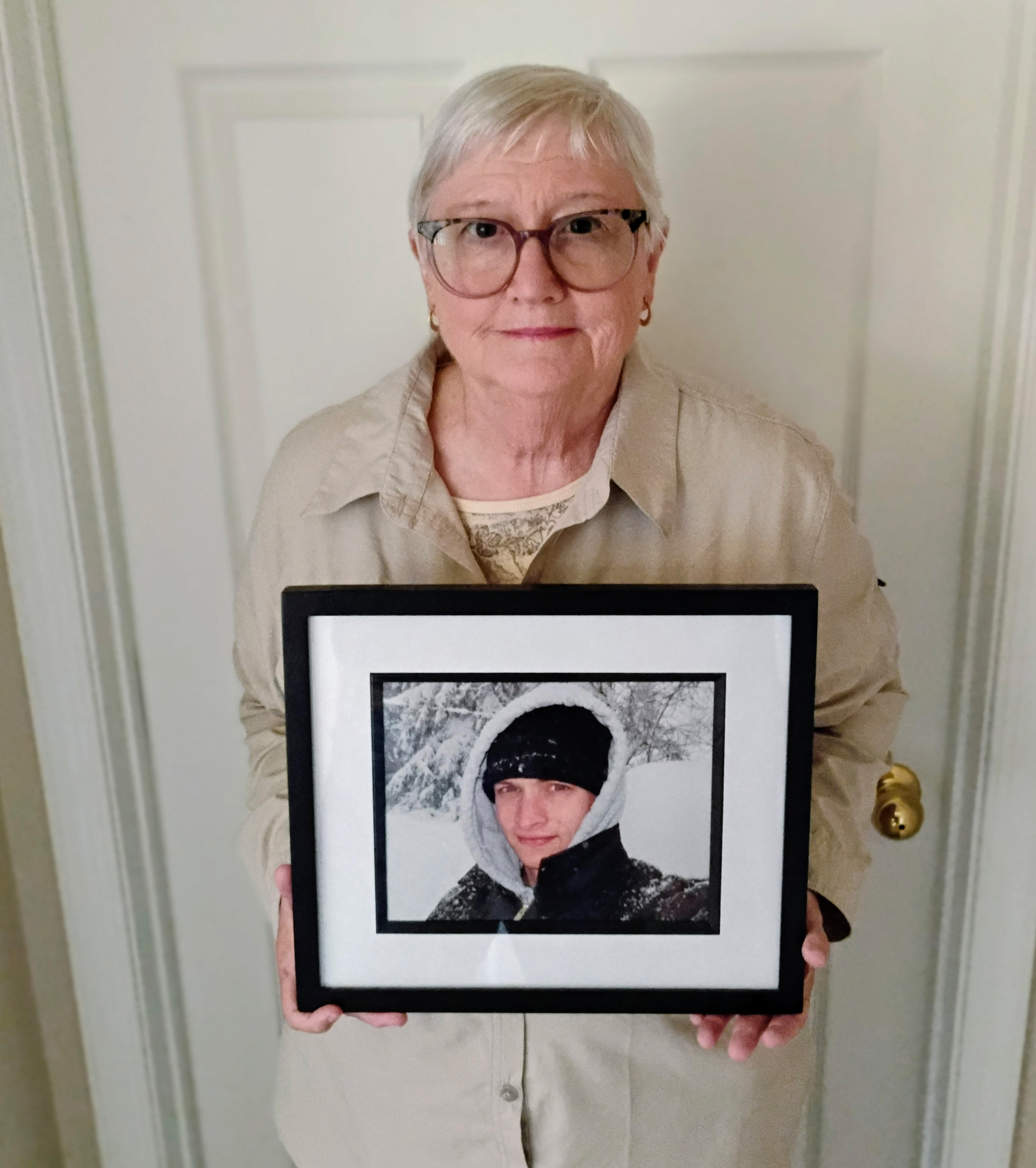
Her 25-year-old son, Peter, fatally shot himself in 2012. He’d recently bought a house with his girlfriend and hosted a birthday celebration for his brother. He’d purchased a gift ahead of Mother’s Day — five novels by Charles Dickens, Paugh’s favorite author — that Paugh received after his death.
Unlike in her father’s case, Paugh said, no one saw warning signs for Peter. “I did not know that my son was suicidal. I didn’t have a clue,” she said. Even if a red flag law existed then, she wouldn’t have thought to use it.
The people most vulnerable to firearm suicide usually aren’t identified as such by family members or clinicians, said Michael Anestis, a clinical psychologist and the executive director of the New Jersey Gun Violence Research Center.
Studies have shown that among people who die by suicide, those who used guns were less likely to have sought mental health care in the past. And most veterans and service members who die by gun suicide never tell anyone about their suicidal thoughts in the months leading to their death.
That’s why red flag laws are just a first step in suicide prevention, Anestis said. They target specific individuals at high risk — the aspect that makes such laws more politically palatable — but they do not apply to the many other people who are quietly suicidal.

Lessons From Road Safety
Nestadt, the Johns Hopkins psychiatrist, said the nation needs to approach suicide prevention the way it approaches car accidents.
“You’re not trying to figure out who’s at risk of an accident” by testing people’s reaction time or cataloging who gets into fender benders, Nestadt said.
Instead, governments implemented speed limits, passed seat belt laws, and required auto manufacturers to install air bags and shatter-resistant windshields. The crash death rate declined significantly.
Applying a similar strategy to suicide might involve requiring permits and background checks to buy a gun, as well as instituting waiting periods before completing the purchase.
One study found that enacting a permit-to-purchase law in Connecticut was associated with a roughly 15% decrease in gun suicide rates, while repealing such a law in Missouri was linked to a 16% increase in firearm suicide rates.
About three dozen states have enacted laws requiring owners to lock up their guns in homes where children live, a practice shown to reduce youth suicides. That’s an issue of particular importance, with gun suicide rates increasing 245% among Black youths and 98% among Latino youths since 2014.
Anestis said laws requiring permits and safe storage can also reduce homicides and other gun injuries.
Those types of violence not only hurt people directly but also increase their risk of suicide. Research suggests people who are exposed to gun violence in their community experience trauma and become habituated to the idea of injury or death. That “double whammy” makes them more likely to kill themselves, Anestis said.
Responsibility, Rights, and Saving Lives
Gun owners and firearm trade associations generally oppose universal measures, such as requiring permits and waiting periods. They prefer education campaigns that teach people how to recognize warning signs, talk about mental health, and safely store guns — initiatives that place responsibility on individuals.
The National Shooting Sports Foundation, which represents the firearms industry, has partnered with the American Foundation for Suicide Prevention to create flyers and brochures to be posted in gun shops.
“Our purpose is to provide educational materials to the firearm-owning community on how to help prevent suicide and save lives,” Bill Brassard, the NSSF’s senior director of suicide prevention initiatives, said in a statement.
The National Rifle Association said policies focused on guns miss deeper concerns that make someone suicidal, such as mental illness.
“Suicide is a serious issue that deserves serious solutions focused on the underlying causes, not on political efforts to restrict the rights of law-abiding Americans,” NRA spokesperson Justin Davis said in a statement. “A truly dangerous individual needs to be incapacitated, not just deprived of one particular means of harm.”
Some initiatives have managed to bring together unlikely bedfellows — gun store owners, public health experts, and even libraries — to provide free locks to secure firearms at home, identify locations that will temporarily store someone’s guns while they’re in crisis, and educate people on how to avoid selling guns to someone who is suicidal.
Those efforts give Paugh hope and fuel her passion to continue advocating for better mental health care, open conversations about suicide, and policies that decrease access to guns.
“It’s not a cure-all,” Paugh said of those policies. But “it does save lives.”
Having lost a parent and a child, she knows how valuable that can be.
“If you’re that one person or that person’s family, it’s all the difference in the world,” she said.
Read the full article on the original site
