




Wellness That Matters: Black Health News & Community Care
- Scientific breakthroughs that don't reach communities leave Black women without benefits; close the gap between innovation and delivery.
- Health care must listen to Black women's lived experiences to shape research, policy, and meaningful care.
- BWHI research finds many Black women lack menopause information and report discrimination when seeking care.
- BWHI's culturally tailored lifestyle program reduces risk, but access, cost, and provider training determine whether it helps communities.
- Representation changes conversations; visibility must turn into policy, relationships, and sustained advocacy to achieve health equity for Black women.
Reflections from POLITICO’s California Agenda: Sacramento Summit
By Ifeoma C. Udoh, Ph.D, EVP, Policy and Research, Black Women’s Health Imperative
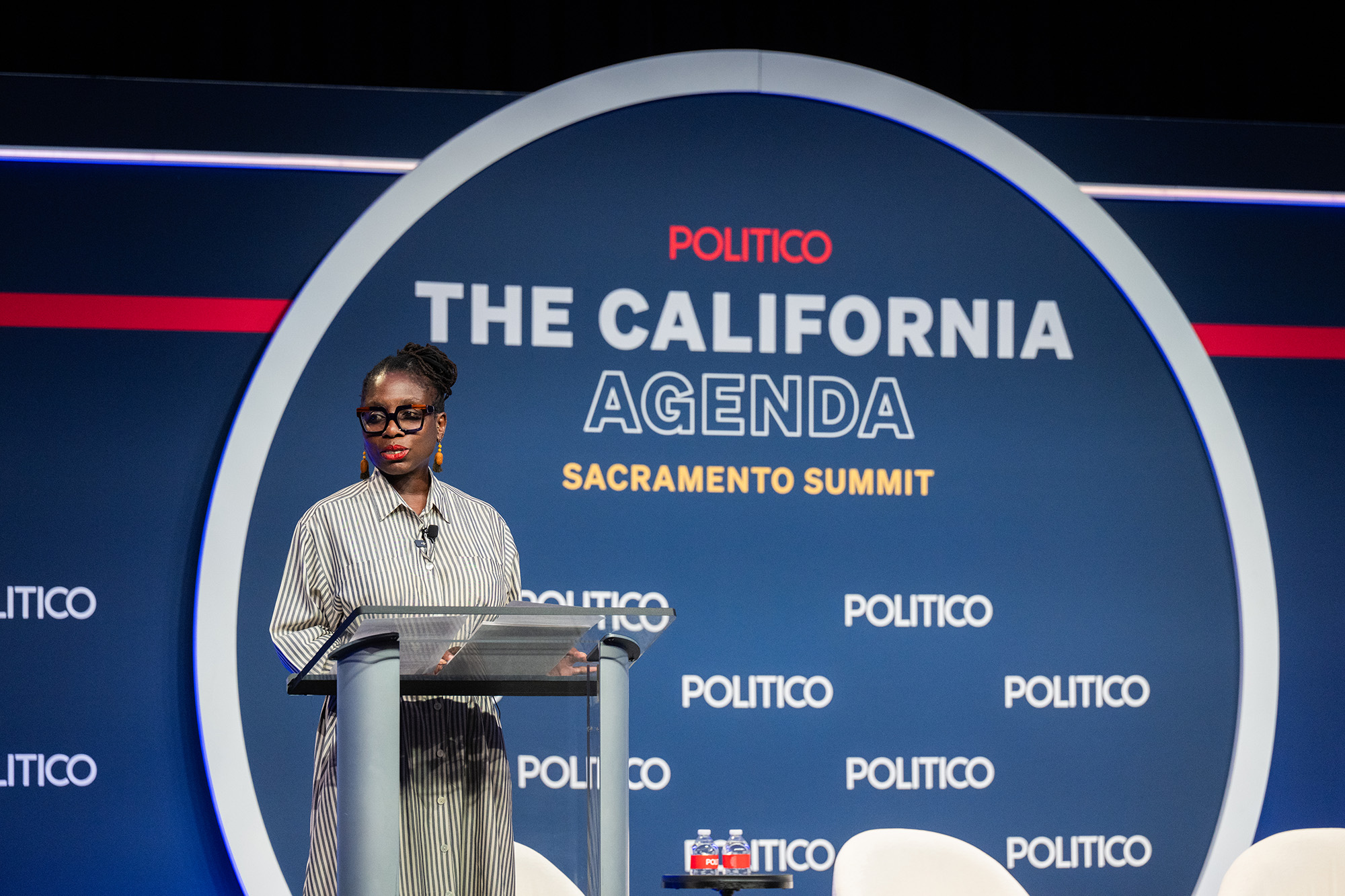
This week I stood on a stage in Sacramento, looking out at a room full of the people who shape California’s future, and I kept thinking about the women who weren’t in the room.
POLITICO’s California Agenda Summit brought together an impressive lineup: Speaker Emerita Nancy Pelosi, Attorney General Rob Bonta, Senator Adam Schiff, Xavier Becerra, state legislators, business leaders, technology executives. California has always been a place where what gets decided inside its borders ripples far beyond them. So as I prepared to represent the Black Women’s Health Imperative on that stage, one question kept following me around: who actually benefits from all of this innovation? Watch the Remarks.
The Gap Between Discovery and Delivery
Innovation was the word of the day, and understandably so. We’re living through remarkable advances in science and medicine and AI technologies impact on healthcare systems. But a breakthrough that never makes it to the people carrying the heaviest burden of disease is a breakthrough on paper. For Black women, that gap between what science can do and what our communities actually receive has real consequences, and I’ve been watching it my whole life.
I grew up in Southern California, the daughter of immigrants. My mother spent over 25 years as a labor and delivery nurse in public hospitals in Los Angeles, and watching her care for women and families taught me something no degree ever could: health is science, yes, but it’s also listening. It’s taking what women tell us about their bodies and their lives seriously enough to let it shape research, policy and care.
Because here’s the truth. Black women are not biologically destined to have worse health outcomes. Our systems have failed us. We have providers who don’t always listen, gaps in the data and research, information that never reaches our communities, and policies that reflect neither the science nor what women keep telling us about their own experiences.
What Black Women Are Actually Saying
At BWHI, our Power in the Pause and research on Black women’s experiences of menopause makes this painfully concrete. More than half of the Black women we surveyed said they didn’t know which medical recommendations to follow during menopause. Nearly half said they didn’t have adequate information to manage their symptoms, and more than four in ten reported discrimination or unfair treatment when seeking care. Sit with that for a moment. How do we expect women to make informed decisions about their health when they don’t have the information, don’t trust the system providing it, or don’t believe their providers are hearing them? READ THE PRELIMINARY RESULTS
The same story plays out with obesity and metabolic health. For decades, society treated weight as a simple matter of willpower. What did you eat? Did you exercise? Were you disciplined enough? We know better now. Obesity is a complex, chronic condition shaped by biology, genetics, environment, stress, mental health and the circumstances of people’s daily lives.
Lifestyle still matters, of course. BWHI has spent more than a decade guiding nearly 4,000 Black women through a culturally tailored lifestyle-change program that reduces their risk of diabetes, heart disease, high blood pressure and high cholesterol. But lifestyle can’t be the whole answer. When science hands us new tools that can help people live healthier lives, our responsibility doesn’t end at the discovery. We have to ask who can access those tools, who can afford them, whether providers know how to use them appropriately, and whether the communities who need them most are actually getting them. That’s the moment health policy stops being abstract and becomes deeply personal.
“She Said She Felt Seen”
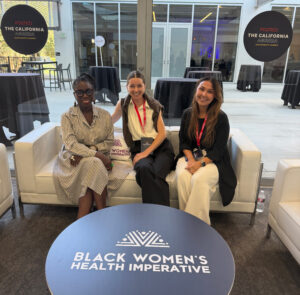
After I left the stage, several women came up to thank me for centering Black women in a conversation of that magnitude. One moment has stayed with me. A nurse approached and told me how much it meant that I was there. She said she felt seen.
I haven’t stopped thinking about her, because that’s what representation is really for. Not representation as a photo op, but representation that changes what gets discussed, what data comes into the room, and which questions get asked at all. When a Black woman in the audience hears her health experience reflected from a major policy stage and thinks, someone sees me, that matters. But being seen has to be the beginning of the story, not the end. Our job is to turn that visibility into action.
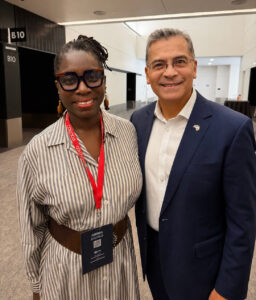
Some of the most meaningful moments happened offstage, too. I met Speaker Emerita Pelosi, whose decades of service have placed her at the center of so many of this country’s defining health policy fights. I also had a chance to talk with Xavier Becerra and remind him that I’d once sat in on his reproductive justice roundtable when he led HHS. It was a full-circle moment, and a reminder of something I believe deeply about this work: showing up matters. The roundtable, the community conversation, the policy drafting session, the big stage where the future of health care gets debated. Black women need advocates in every one of those rooms, because relationships and conversations are where policy actually moves.
 The Question Has to Change
I think about this constantly in the course of my career bridging research to policy. I have been trained and guided by tremendous and diverse HIV experts- from epidemiologists to sociologists to community health workers – on how to implement and improve and advance HIV prevention, care and access. We have behavioral and community and biomedical interventions that work, and we’ve had them for years. Yet Black women continue to experience HIV impact disproportionately. At some point the question can no longer be, do we have an intervention that works? It has to become, why isn’t it reaching the women who need it?
That is a health equity question, and it applies just as urgently to maternal health, menopause, obesity, chronic disease and women’s health as a whole. Scientific discovery is not the finish line. An effective treatment people can’t access, information that never reaches our communities, policy written without our lived experience in it: none of that gets us where we need to go.
California has a real opportunity here to show the country what happens when science, innovation, policy and community come together. We can build health systems that listen to Black women, invest in research that reflects our actual lives, and make sure that when evidence-based care exists, the people who need it can get it. We can create the model- right here at home.
To me, that’s what health equity looks like. It isn’t asking Black women to work harder at being healthy. It’s asking whether the systems around us are doing their job.
Standing on that stage, I knew exactly why BWHI needed to be there. And when that nurse told me she felt seen, I remembered who we were there for. Black women deserve to be seen and heard, and what we say must help shape what happens next. Our health is our power. When Black women have the information, care and opportunity to thrive, ALL our families and communities thrive right along with us.
Read the full article on the original site
