




Faith & Reflection: Voices from the Black Church and Beyond
- Vengeance is tempting after Oct. 7, but Fauda asks whether revenge equals justice or smart political and military strategy.
- To understand Israel, make room for Fauda's Arab characters like Yusuf and Salem, showing rescue, sacrifice, and moral complexity.
- The French character Anne embodies how ideology dehumanizes, yet can reverse into empathy, refusing a suicide strike and confronting horror.
Get RNS’ thoughtful, essential religion reporting every morning. Sign up for free!
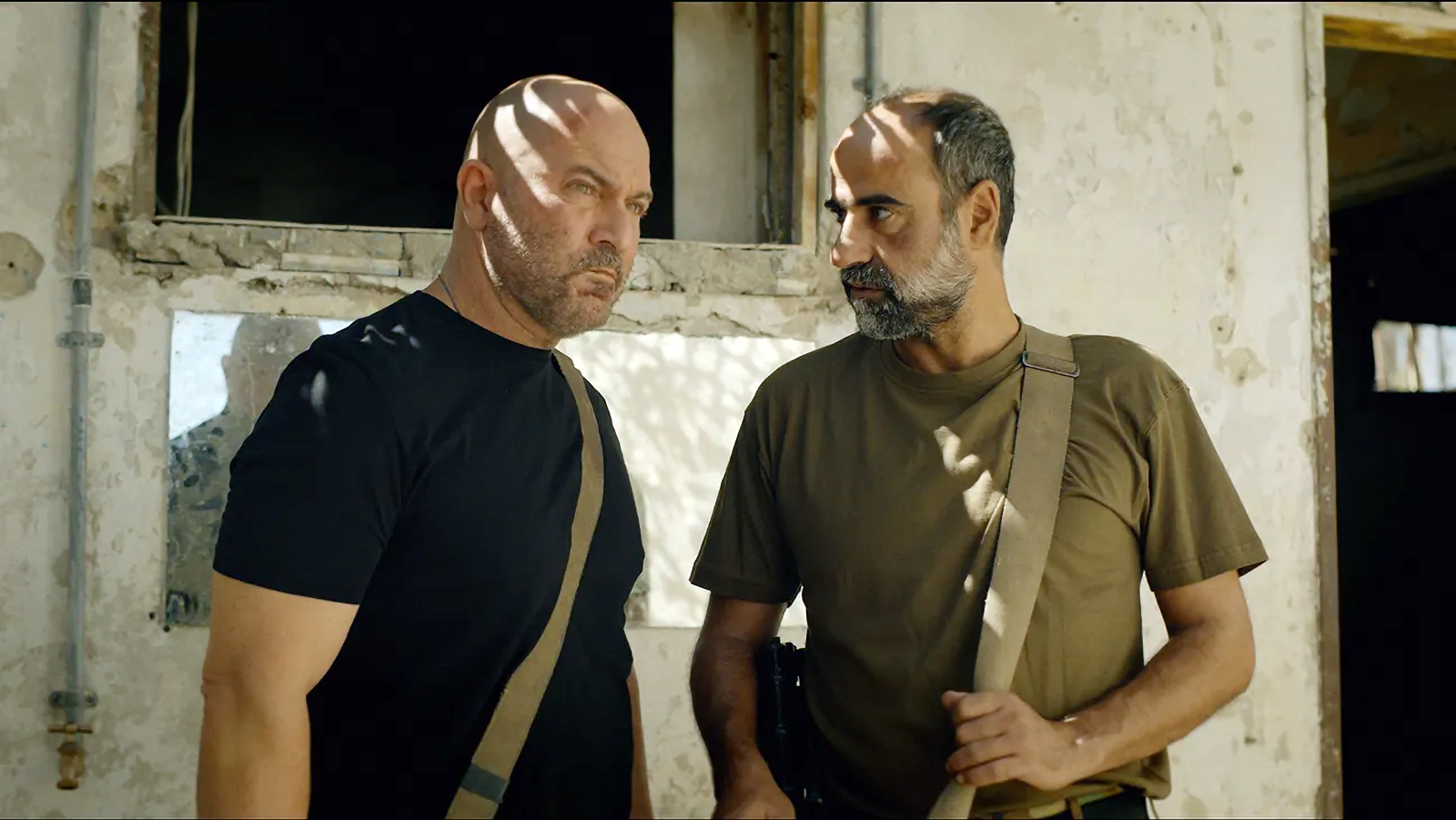
(RNS) — This year, the autumn “Jewish” event that I awaited with the most excitement had little to do with the Days of Awe. It had everything to do with the fifth season of “Fauda,” the Israeli television series that arrived on Netflix in September.
You can spiritually prepare for Rosh Hashanah and Yom Kippur. I found no way to spiritually prepare for “Fauda,” except to treat it as preparation for the third anniversary of the terrorist attacks of Oct. 7, 2023.
The show’s creators, Lior Raz and Avi Issacharoff, have said they threw out their scripts after the massacre and rewrote the latest season.
Watching it taught me several lessons. (Spoilers are ahead.)
Vengeance is tempting, and it has its limits.
With season five set two years after Oct. 7, the show reveals that Hamas terrorists murdered Israeli operative Eli’s family in the attacks. Consumed by grief, he follows a tip to Marseille, France, in search of a Nukhba fighter and drags his comrades into something far larger and more dangerous than personal revenge.
Every incident from Oct. 7 that the show depicts is based on something that really happened on that horrific day, the creators have said. Episodes 7 and 8 return to that Shabbat and Simchat Torah morning, to the kibbutzim and the Nova festival where the attacks occurred. The producers took the rare step of telling viewers they could skip those two episodes and still follow the plot.
I did not skip them. I wish I could tell you that I emerged a better person, but I emerged wanting blood. I will not apologize for that feeling.
People often call Oct. 7 the worst day in Jewish history since the Holocaust. I would argue that its truest echo is the Kishinev pogrom of 1903. In its wake, poet Hayim Nahman Bialik wrote “Al ha-Shehitah,” “On the Slaughter.” “Vengeance like this, vengeance for the blood of a small child,” he wrote, “Satan has not yet created.”
Yet the line just before it reads: “And cursed be the one who cries, Revenge!” Bialik understood that no human act of revenge can balance the scales for a murdered child, so he refuses to let any human try.
“Fauda” keeps asking Bialik’s question. Is vengeance justice? And however natural the emotion may be, does it make good political or military strategy? I think not.
If you want to better understand Israel, look to the show’s Arab characters.
The season opens at a grave. Salem, a Bedouin from Rahat, stands over the burial place of his son, Yusuf, and prays. Then he makes a promise: “Soon, God willing, I’ll take your revenge … so that you can rest.”
Only later do we learn who Yusuf was. He lived next door to Eli, and on Oct. 7, he sheltered in the safe room with Eli’s wife, Hagit, and their children. When the Hamas fighters come for them, Yusuf tried to talk them out of their atrocity by quoting the Quran, much as a rabbi might quote Torah to a Jew about to do something monstrous.
It does not work. Yusuf dies reciting the Al-Fatiha, the Quran’s opening prayer, as he pleads for the lives of Jewish children.
On Oct. 7, Hamas murdered Bedouin citizens of Israel, and Bedouin Israelis risked their own lives to rescue Jews. If you want to understand Israel, you must make room in your mind for Yusuf and for his father. They do not fit the anti-Israel slogans that echo across our college campuses. Yusuf gave his life trying to shame killers with their own Scripture, while Salem wants exactly what Eli wants in the aftermath.
The Jewish heart, that heart of many chambers, must be large enough to hold all of these losses.
The actress who plays Anne matters.
A French Jew, Mélanie Laurent, plays Anne Aubert, the French wife of a Hamas terrorist. After her husband dies, she agrees to join Hamas and to kill Jews.
Think back to “Inglourious Basterds,” Quentin Tarantino’s fantasy about Jewish soldiers who kill the Nazi elite and bring the war to a rapid end. Laurent played Shosanna Dreyfus, the sole survivor of a Jewish family that the Nazis massacred on a French farm.
At the film’s climax, her face fills the screen of her own cinema, and she tells the Nazis in the audience: “My name is Shosanna Dreyfus, and this is the face of Jewish vengeance.”
In “Fauda,” Laurent stands on the other side.
At target practice, Anne faces a target that depicts a mother and child, and something in her recoils. A Hamas leader reminds her that this is no time for sentimental ideas about human life, and she keeps shooting.
Later, as the great terror strike approaches, she straps on explosives, ready to die as a shahid, or martyr. Then, she sees a small child in the car next to her, and she cannot do it.
When Anne learns what her late husband did on Oct. 7 — he murdered Eli’s children and raped and murdered his wife — horror floods her face. She realizes two things: first, that she never really knew her husband, and, second, what an ideology can do to human beings.
Europe has produced real Annes. In 1976, two West Germans, Wilfried Böse and Brigitte Kuhlmann, helped hijack an Air France jet to Entebbe for a Palestinian terror group and separated the Israeli passengers from the rest. Neither lived long enough to recoil.
Shosanna dies in her projection booth, moments before her cinema burns with Hitler inside. The writers of “Fauda” could have given Anne a similar end, as a suicide bomber or at the hands of the Israelis or Hamas.
They chose not to. At the season’s end, she is alive, chatting with Doron, the show’s protagonist.
Anne begins as a woman who has embraced vengeance and becomes a woman who can no longer stomach it. One face now carries both stories, and I kept seeing that burning cinema behind her.
‘Where is your brother?’
This Shabbat, Jews return to Bereshit, the beginning of the Torah, and so to one of the first questions in history. Cain has killed Abel, and God asks him: “Where is Abel your brother?” Then, God says: “The voice of your brother’s blood cries out to Me from the ground.”
“Fauda” poses that question to us in Hebrew and Arabic, through Eli and Salem.
Three years later, the blood of our brothers and sisters still cries out from the ground of the Gaza envelope.
Read the full article on the original source
