





Science & Exploration: Check Out the Globe With Research and Innovation
- Toxic produced water from oil and gas contaminates land and spills, posing public health and ecological hazards.
- Routine flaring still burns natural gas, releasing CO2, methane, and toxic pollutants near communities despite state restrictions.
- Climate change and Permian Basin extraction are drying the Pecos River, a beautiful river stranded amid a growing hellscape.
- Regulatory rollbacks and debate over treated produced water raise contamination and species-protection concerns along the river.
It’s a very early May mid-day, and Charlie Barrett has parked his pick-up in a pullout along a region roadway a few hundred feet from the Black River in southern New Mexico, just a mile from where it clears into the Pecos River.
He has actually quit to establish a video camera that discovers warmth and gasses invisible to the eye to look for discharges at a neighboring oil and gas procedure.
Stepping out of the vehicle, Barrett finds the pullout sloppy and dotted with pools– an anomaly during a recurring dry spell. A gray piece of salt the dimension of a conditioning ball sits near a mud pool flecked with glittering, white crystals.
“Unfortunately this is rather usual,” he claimed. “It’s likewise quite harmful.” It appeared that somebody had actually unloaded oilfield wastewater– additionally known as generated water — at the pullout. The very salty and poisonous byproduct of oil and gas manufacturing lugs a mix of oil compounds and oilfield chemicals. Designed water can be contaminated, as well. Barrett stated he frets that people would unwittingly drive via the filth or manage the roadway and go through it.
Throughout the day, daily, thousands of semi vehicles carry the hazardous generated water from well websites to disposal terminals along the highways and backroads of this far edge of New Mexico. That water is an unwanted by-product of oil and gas advancement. Greater than 3 barrels of wastewater appeared of the ground for each barrel of drawn out oil, generally in New Mexico. As fossil fuel manufacturing has actually escalated in the Permian Container, the quantity of produced water has actually followed. Additionally, the water-to-oil proportion boosts also and oilfields age– a procedure referred to as “watering out.”
Jerry Redfern/ Funding & & Key
New Mexico state guidelines outlaw generated water use for anything outside the oilfield. This has brought about an identical industry devoted to celebration, carrying and reinjecting produced water deep underground. That, in turn, has actually led to a surge in seismic task in the area, in addition to remarkable blowouts that spew poisonous water when shot wells fail.
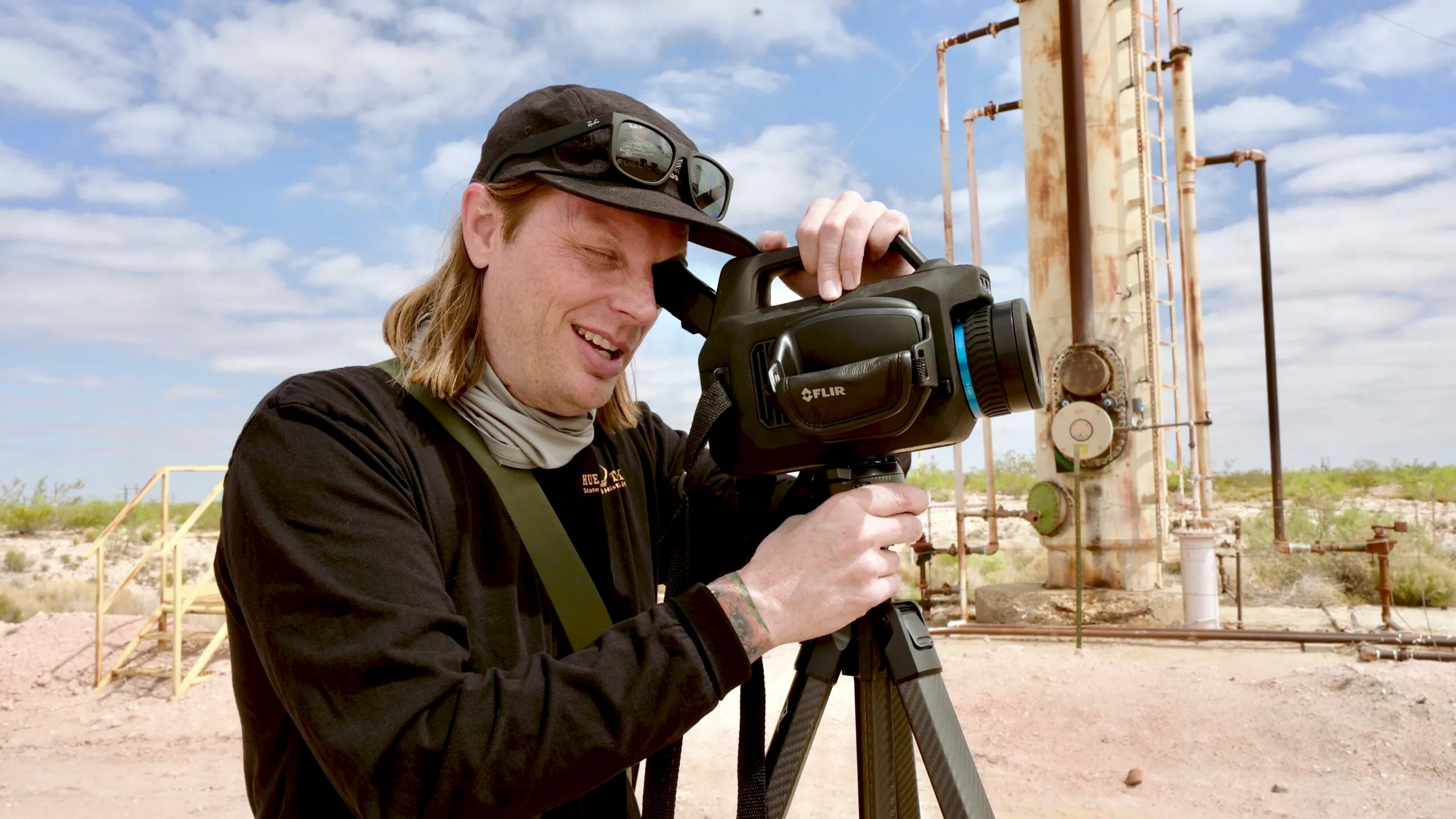
Barrett helps market guard dog Oilfield Witness as a thermographer, making use of a thermal camera to measure gaseous discharges from oilfield tools. As he established to document, produced water trucks rumbled by under a cloudless skies.
Barrett started filming. “Oh, guy, that’s fucking horrible,” he claimed. On its tv, in wavy, candy-colored tones, the video camera exposed the warm trademarks of three active flares near a home. “Obtained an individual’s home here and after that this mess … all generating carbon monoxide 2 and methane and other unstable organic compounds, blowing right into their home,” he stated, browsing the viewfinder. “Jesus, guy. It’s ridiculous.”
When he looked at the video footage in the future a larger screen, he found one more lit flare in the video clip, in addition to the first three. One shot– 4 flares. This despite the fact that New Mexico has actually outlawed almost all flaring because 2022
Companies burn off– or” flare — natural gas for a couple of reasons, including: it does not fulfill specifications; it is over pressurized in a pipeline; or it’s required for devices upkeep. Though better for the climate than venting unburned gas into the atmosphere, flaring still creates co2 and other harmful contaminants.
Jerry Redfern/ Capital & & Main
Later on, Barrett sat on a little boulder along a quiet bend in the Pecos River, talking about his work. The river gurgled; dragonflies hovered, and the yards rustled as even more oilfield trucks rolled over a close-by bridge, a tip that Barrett was sitting in one of one of the most prolific fossil fuel basins on earth.
“It sucks,” he said. “It’s a gorgeous river in the center of a hellscape.”
A number of months earlier, the last time Barrett visited this area, he found salt down payments covering the ground in between the bridge and the shore. “I mean, the entire road was swamped over,” he stated. “We could not validate somehow if that was an actual generated water spill,” he added, but there are few various other opportunities.
Such a spill would represent one more environmental shock for this distressed river. The irony: The river requires more water. U.S. Geological Survey information returning nearly 40 years reveals the yearly snowpack slowly but progressively declining in the mountains around the Pecos River’s headwaters. River circulation measurements in the upriver community of Pecos show the same.
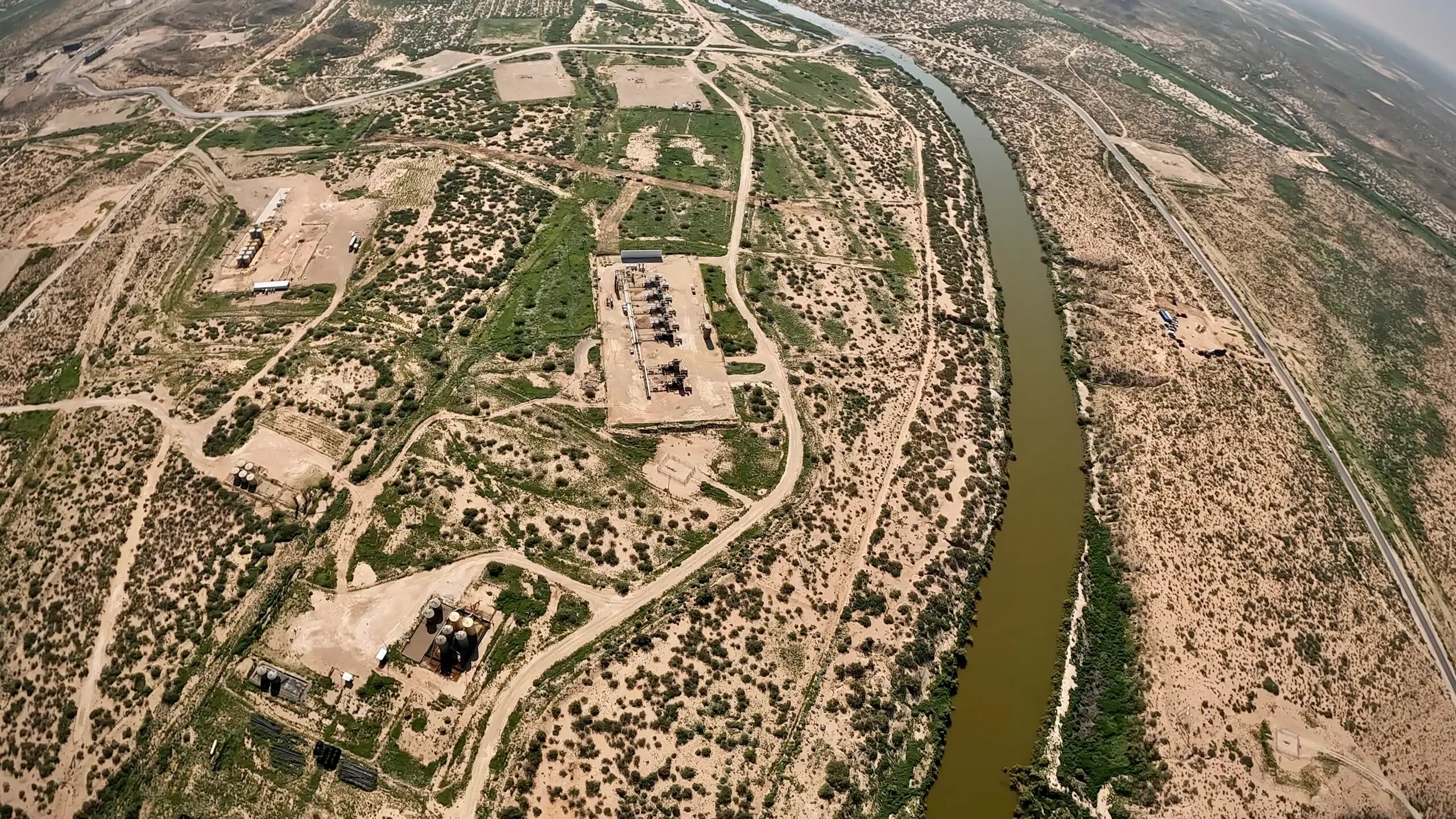
As climate change heats and dries New Mexico, and the Pecos River runs ever lower, one of the most significant motorists of that adjustment rests atop the river’s banks, just feet from where Barrett rests– 75, 000 square miles of oil and gas wells throughout 55 areas in New Mexico and Texas: the large Permian Container.
Water and geology
The Pecos River, favorite of Looney Tunes character Yosemite Sam and the historic separation line of the Wild West, starts amongst some of New Mexico’s highest possible mountains east of Santa Fe and runs southern for greater than 500 miles before getting in Texas at New Mexico’s floor.
Its headwaters rush untamed through miles of steep canyons and pine-covered slopes, gathering it a National Wild and Scenic River designation Its waters nurture ranches and cattle ranches across the facility of New Mexico. Yet where it departures the state, the Pecos looks more like a tightly taken care of creek– a conveyance providing carefully tallied water through the center of the Permian Container, the nation’s most efficient oil and gas area.
The ecological group American Rivers has two times called the Pecos among the country’s most endangered rivers: when in 2024 , together with New Mexico’s various other waterways, and in 2021 all by itself.
Both the river and the Permian Container are natural attributes of a landscape transmogrified by the human desire for power from nonrenewable fuel sources.
Over the last century, individuals have drilled 10s of hundreds of wells, stitched the basin with pipelines and launched carbon caught 10s of numerous years earlier, all to power autos and jets and structures. That released carbon changed the chemistry of the ambience, capturing warm that heats the planet and dries out New Mexico.
On the other hand, on the Pecos, as on various other rivers across the state, there is a better need for much less and less water year after year. Last winter’s snow breast only included in the stress.
“It is absolutely terrifying in a great deal of means,” claimed Hannah Riseley-White, the director of the New Mexico Interstate Stream Compensation. Her work is to make sure that the state satisfies its obligations to all of the groups that have a stake in river water.
“Every person this springtime obtained tired of me at the beginning of every conference screen-sharing the snowpack numbers for every one of the basins that we handle,” she stated. “It diminished the high cliff. It wasn’t just record damaging. It was beyond anything that we might have thought of in terms of snowpack.”
The previous winter season had not been better. Neither are the long-lasting projections. Riseley-White stated she expects a 25 % to 30 % decline in river water by 2070
“So the greatest challenge that the Pecos deals with is simply aridification as a result of environment modification,” she said.
The percents come from New Mexico Gov. Michelle Lujan Grisham’s 50 -Year Water Action Strategy , which outlines how worldwide warming will reduce New Mexico’s water materials in coming decades. It likewise proposes exactly how to save existing products and produce new water sources in a very completely dry state. That consists of dealing with oilfield wastewater– the stuff Barrett thinks he discovered on the roadside– to make it tidy enough that the state will allow it to be utilized outside the oilfield for industrial and various other, broader usages.
Jerry Redfern/ Capital & & Main
“The sector’s in fact supporting for repurposing created water and pumping it into this river,” Barrett claimed, while resting close to the Pecos.
To day, the legal maneuvering to make that occur has been not successful. A recent press to transform state guidelines and allow the broad use of cured wastewater finished when Lujan Grisham appeared to have influenced a rulemaking body’s considerations. One more press to transform state guidelines is underway, yet no target dates have been set. State environmental teams highly oppose the idea, arguing that it’s not feasible to be 100 % certain that all hazardous chemicals are eliminated from the water.
At the same time, over the boundary, the Texas branch of the Sierra Club has tallied 5 proposals to discharge treated produced water right into the Texas section of the Pecos River landmark, though none have actually yet been approved.
“Do I think [treated] created water will address every one of our troubles in the Pecos? No,” Riseley-White stated. “Yet thinking about it as one of the numerous sort of tools in the toolbox I believe makes good sense.”
She included: “Part of coming up with imaginative options is mosting likely to necessarily call for checking out every one of the options, which’s absolutely one of them. And I assume modern technology exists to clean water to various criteria. It’s just an inquiry of whether economically the motivations are there.”
Various other threats
Endangered animals live along the Pecos River, including the dunes sagebrush lizard and the Texas hornshell mussel. The lesser savanna poultry belonged to that team up until the united state Fish and Wildlife Service officially gotten rid of its protections under the Endangered Species Act in very early 2026, in spite of its declining population.
“There’s going to be just increasing difficulties in guaranteeing that there suffices water for those types, just like for the various other users that depend on it,” Riseley-White stated. One successful instance: While collaborating with the hornshell on a tributary of the Pecos, “landowners identified that if there was water in the Black [River] for the hornshell, that suggested that there was water there for them, as well,” she stated.
The latest challenges to jeopardized animals’ survival originates from Washington. In very early July, the Department of the Inside curtailed the definition of “harm” to suggest only straight wounding or eliminating threatened types. Sound and habitat damage would certainly no more be taken into consideration threats to a threatened varieties’ health.
In late July, the department retracted the supposed “covering policy” that covered threatened types with most of the same securities paid for endangered types. It additionally imposed consideration of the economic cost of shielding plants and animals– i.e. the added prices to oil and gas manufacturing.
Taken with each other, the two modifications reverse historical securities for plants and pets throughout the nation, including those that call the Pecos River watershed home. Of the thousands of oil and gas wells that pierce the ground in New Mexico’s share of the Permian Container, 380 are within a half mile of the river. One more 11 injection wells– utilized to throw away produced water– lie within that very same stretch.
“The audio air pollution and light pollution likewise influence this river ecosystem,” Barrett said. He researched ecology and wildlife monitoring and formerly benefited the Texas Parks and Wildlife Department and the Texas A&M Forest Service as a staff ecologist. He claimed the oilfield disruption “drives a great deal of types far from this environment, which can cause extirpation, which is regional extinction.”
Despite the massive challenges, Riseley-White said she remains positive.
“My hope in the Pecos is that as we deal with these obstacles, we can get every one of the various passions at the table and locate options that make good sense to everyone,” she said.
“I assume it’s challenging, yet I believe it’s certainly possible,” she said.
Copyright 2026 Resources & & Main
Review the full article from the original resource
