




Black History & Cultural Perspectives:
- Operation Zebra led San Francisco police to stop and search more than 600 Black men based largely on race and a generalized description.
- A federal court challenged the stops, finding that resemblance alone could not justify searches without individualized grounds for suspicion.
- Similar investigations in other cities swept up innocent Black men, sometimes after accusations against Black suspects proved false.
- The author’s mother’s fear reflects a lasting reality: when a suspect is Black, entire Black communities can face suspicion.
I heard this in my home. An especially grievous occasion would find the news. Possibly the accountable event was still unknown, or perhaps a person had actually been detained, and the photo had not been launched yet, and the name didn’t make their ethnic beginning clear. I heard my mommy claim to nobody particularly. “I hope he had not been Black.”
The first time I can remember hearing this was when 2 young white girls went missing out on in Minneapolis. For days, the local stations concentrated on trying to locate the ladies, that were at some point located dead in a wooded location about 12 miles from where they lived. The situation is still unresolved, though one lady’s stepfather was discovered to have actually abused her. Another man who was convicted of eliminating two different girls was a suspect. There wasn’t adequate evidence against either man to get a conviction, though the second male was arraigned and released. Both suspects were white, and no Black suspect was ever openly identified.
I was as well young to have a sense of the background of what happened to Black people believed to have actually dedicated savage crimes. Certainly, the criminal offenses didn’t need to be savage. Fourteen-year-old Emmett Till was brutally killed for presumably whistling at a white female. The Black Wall surface Road massacre was started because a Black teenage elevator operator touched the arm of a white lady. The Ocoee Bloodbath was sparked when 2 Black Florida males attempted to vote. All I knew was that my mother feared what might happen if individuals who killed those 2 white women were Black.
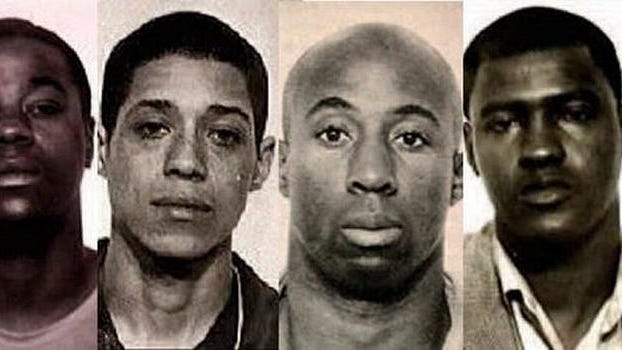
Somebody pointed out the Zebra Murders in San Francisco in a conversation; they occurred in between October 1973 and April 1974 The criminal activities entailed a group of Black males who targeted white people, usually shooting complete strangers apparently randomly on city roads. The cover picture is of the 4 guys who were eventually jailed and convicted for the murders. Among the 4 males, I see 3 distinctive hairdos and a variety of pigmentation. Some basic descriptions and illustrations made practically every Black man in the area a suspect. San Francisco authorities called their manhunt Operation Zebra.
Procedure Zebra was an eight-day cops dragnet in San Francisco in April 1974 throughout which greater than 600 Black men were stopped and subjected to police searches and questioning, frequently without any personalized proof that they had actually dedicated a criminal offense.
What made the procedure particularly questionable was that the authorities division accredited police officers to stop guys greatly because they were Black and looked like a generalized physical description of the believed awesomes.
A government civil-rights claim, Williams v. Alioto, 549 F. 2 d 136 (9 th Cir. 1977, documents the details. The instance provides an uncommonly enlightening account of exactly how the procedure was arranged and how average Black homeowners were dealt with.
Between December 1973 and April 1974, San Francisco experienced a collection of shootings in which white individuals were targeted. Witnesses defined the criminals as Black males, usually between 20 and 30 years of ages. The attacks produced significant fear throughout the city.
San Francisco authorities had actually been not able to determine the criminals through their regular investigative approaches. Police Principal Donald Scott and various other authorities for that reason licensed an escalated project to situate suspects.
On April 17, 1974, police Captain Taylor issued a regulation licensing patrol policemans to stop individuals who fit the description of the suspected killers.
The profile included:
-
Black men.
-
Around 20 to 30 years of ages.
-
In between 5 feet 8 inches and 6 feet high.
-
Slim to tool develop.
-
Perhaps taking a trip on foot or in a guest automobile.
-
Suspected of carrying a. 32 -caliber automatic pistol.
2 composite drawings based on witness descriptions were additionally distributed. The issue was that the initial instruction did not need officers to observe dubious behavior before quiting somebody. Physical similarity to the account might be adequate.
Under the initial instructions, a police officer that encountered a Black guy fitting the physical profile could:
-
Stop him on the road, even if he was doing nothing questionable.
-
Conduct a pat-down search of his outer clothing for tools.
-
Question him concerning his identity and activities.
-
Total a Field Examination Card recording the experience.
The searches were intended to locate weapons, specifically the. 32 -caliber handgun thought to have actually been used in the murders.
Notably, the authorities did not need to develop that the person had actually been involved in a capturing, had endangered anyone, or had engaged in suspicious conduct before making the first stop.
A Black guy might be walking home from job, mosting likely to a store, or just standing on a street corner and end up being a cops suspect because he fit the physical summary.
The government court document especially noted that the original directives did not need officers to think about a person’s habits when determining whether to stop him.
More than 600 Black guys were quit during the 8 days from April 17 through April 25, 1974
These were not 600 individuals determined via individual investigations. They were hundreds of men subjected to police scrutiny via a broad racial and physical account.
The court document files stops and pat-downs, but it does not develop that all 600 were jailed or held in protection.
The authorities division differed about exactly how strongly to carry out the procedure. On April 23, Captain Barca advised the unique Zebra information to be more careful.
Police officers were informed to quit somebody not merely due to the fact that he looked like the suspect however also since he was acting, or seemed acting, unusually. Nevertheless, the court discovered that this instruction had actually not been dispersed to the much bigger pressure of ordinary patrol policemans. Consequently, the original method can continue among policemans that had actually not gotten the revised direction.
On April 25, Police Chief Donald Scott released modified guidelines for the entire department. These guidelines attempted to develop more particular demands for quits and searches. However the federal district court concluded that the new directions still allowed stops based primarily on physical similarity to the composite drawings.
2 civil-rights suits were filed on April 19 and April 22, 1974
The plaintiffs included Joseph B. Williams and Leo Bazille. They brought the activities in support of Black men who had been quit or underwent being stopped under Procedure Zebra.
Their argument was uncomplicated: The police were breaking the constitutional securities against unreasonable searches and seizures.
The court combined the situations, and government Area Judge Alfonso J. Zirpoli held an evidentiary hearing. On April 25, he provided an initial order limiting the operation.
The court wrapped up that authorities could not by force stop somebody simply because he looked like the suspected awesome. Police officers required extra reputable evidence to develop reasonable uncertainty that the person had actually dedicated or was committing a crime. The court additionally forbade pat-down searches and the preparation of interrogation cards without the essential independent reason.
The district court issued the initial injunction, but the city appealed. In January 1977, the Ninth Circuit Court of Appeals dismissed the allure as moot since the murders had actually finished, the examination had actually ended, and 4 defendants had actually been convicted.
The appellate court as a result did not release a final ruling on the constitutional qualities of the initial police techniques.
In 1980, nonetheless, the Ninth Circuit promoted an award of lawyers’ charges to the civil-rights complainants, recognizing their success in challenging the cops practices.
There is a vital historic distinction in between the conduct of the killers and the conduct of the authorities. The Zebra killings were racially motivated criminal offenses dedicated by participants of a tiny group. The police had a genuine duty to determine and capture those accountable. Yet the police action efficiently made numerous Black men accountable for criminal activities devoted by individuals they did not understand.
The men quit were not necessarily linked to the suspects, the company connected with them, or the murders. Their common attribute was that they were Black and fit a generalised physical description.
The constitutional question was whether the federal government might substitute racial and physical similarity for individualized grounds to think somebody of criminal task.
If Procedure Zebra were the only circumstances of Black individuals facing unreasonable examination complying with a crime versus a white individual. I would not be writing this tale. Here are 5 various other instances in which cops examinations including Black male suspects resulted in broad scrutiny of innocent Black guys.
What happened: Charles Stuart told police that a Black shooter had actually fired him and his pregnant better half, Carol, while they were driving through Boston.
Authorities responded by deploying more than 100 additional officers into predominantly Black communities, especially Roxbury. Black males were quit, searched, and occasionally compelled to reveal their underwear while policemans looked for weapons or other evidence.
The investigation ultimately exposed that Stuart himself had actually murdered his spouse and blamed a fictitious Black assailant. He later on died by self-destruction. The instance is especially important because a fabricated complaint caused a massive cops procedure versus innocent Black residents.
What took place: A 77 -year-old white woman was assaulted in her home by a male she described as young and Black. She likewise stated he may have reduced his hand throughout the battle. Police got a list of roughly 80 Black male students from the State University of New York City at Oneonta.
Officers tried to find and examine every pupil on the list. They also stopped Black males on the streets, analyzed their hands for cuts, and examined Black people reaching or leaving the bus terminal. Greater than 200 individuals were questioned. The sweep nabbed no suspects.
The situation generated a federal lawsuit, Brown v. City of Oneonta , 221 F. 3 d 329 (2 d Cir.2000
The appellate court eventually rejected the plaintiffs’ government constitutional insurance claims, a controversial aspect of the case that is entitled to conversation in any short article regarding racial profiling.
What occurred: Susan Smith declared that a Black man had hijacked her vehicle and kidnapped her two young boys, Michael and Alexander. She explained the claimed criminal as a young Black guy using a knit cap.
Police distributed a composite illustration and started trying to find the supposed kidnapper. A minimum of 6 Black men were restrained or examined. One was Harold Browning, a Black building and construction employee who was questioned at his home for around 2 hours. Cops additionally went door to door in the Black area seeking information.
On November 3, Smith confessed that she had actually sunk her children by enabling her car to roll right into John D. Long Lake. There had actually never ever been a Black carjacker.
The case developed considerable racial stress in Union. Smith’s family members subsequently released an apology to the Black neighborhood.
What happened: Cops were examining a series of sexual assaults credited to a Black male criminal.
The summary was relatively broad: a Black man around 6 feet tall. Authorities determined roughly 730 Black males as prospective suspects and questioned them. They also gathered blood samples from 160 guys for DNA testing.
The investigation generated considerable bitterness amongst Black citizens, that really felt that virtually every Black guy fitting the basic summary was being treated as a prospective rapist.
One specifically uncomfortable facet was that the DNA collection did not recognize the wrongdoer. Investigators ultimately captured the real suspect, Ervin Mitchell, through other proof, consisting of details about his gloves.
This case is especially appropriate due to the fact that it highlights just how contemporary forensic modern technology can become part of a broad racial investigation.
What took place: Cops explored a collection of eight rapes entailing a wrongdoer explained by sufferers as a slim Black male. The summary was used to stop and question various Black men throughout the city.
The men questioned apparently varied significantly in age, height, and weight, consisting of men in between roughly 20 and 40 years old. The description was adequately broad that it encompassed lots of innocent Black homeowners.
Legal scholarship subsequently cited the Philly investigation as an example of exactly how a generalized racial summary can lead cops to treat an entire populace as possible suspects.
There are two various other instances worth thinking about;
– Homestead, Pennsylvania (1987: Police went door to door seeking finger prints from greater than 700 Black men while exploring a series of rapes of older ladies. The eventual suspect, Dennis Foy, was identified with finger prints from an unassociated apprehension, not the mass fingerprinting project.
– Baltimore, Maryland (2002: After a lady was raped at a bus quit, a cops leader released an order advising policemans to stop every Black male around the bus stop up until the suspect was collared. The directive provoked an uproar, and the leader retired after the memorandum came to be public.
I can think of extremely recent episodes where I hoped the suspicious or perpetrator had not been Black. Visualize what the manhunt would certainly look like if authorities had a Black suspect in the Charlie Kirk murder or the efforts against Donald Trump. For a lot of my life, I’ve generally been also high, or now as well old and grey to “fit the description,” but I can still hope the suspect isn’t Black.
Had Operation Zebra been commissioned to look for white suspects randomly eliminating Black people, I don’t presume they would have been so diligent in their tasks. Eliminating Black individuals exclusively due to their race has taken place throughout American history. We haven’t advanced even a culture that specific criminal activities still evoke the idea, “I hope he/she isn’t Black.”
Read the full post on the original source
