




Aging Well: News & Insights for Seniors and Caregivers
- Begin with a bathroom safety assessment to spot hazards, mobility issues, and needed changes before making modifications.
- Reduce fall risks around tubs and showers: use non-slip mats, a shower chair, handheld showerhead, and easy-reach toiletries.
- Install sturdy grab bars near the toilet and inside the shower, anchored into studs at ADA-recommended heights for reliable support.
- Have an emergency plan: waterproof call buttons, medical alert devices, and clear steps for caregivers if a fall occurs.
For many aging adults, the bathroom can be one of the most dangerous rooms in the house. Hard, slick surfaces combined with the need to sit, stand, and transfer in and out of tubs or showers create a perfect environment for falls. In fact, the Centers for Disease Control and Prevention (CDC) reports that each year, about 3 million older adults are treated in emergency departments for fall-related injuries — many of which occur in the bathroom.
For family caregivers, creating a safe bathroom environment is one of the most important steps you can take to help your loved one remain independent and confident at home. Here are practical bathroom safety tips that can help reduce the risk of falls and promote senior independence.
1. Start with a Bathroom Safety Assessment
Before making any changes, start by walking through the bathroom as if you were your aging loved one. Look for slippery floors, cluttered countertops, awkward reaching, or poor lighting. Consider how easy it is for your loved one to enter, exit, and move around the space.
A professional safety assessment can also identify risks you might overlook, such as floor transitions, loose rugs, or insufficient grab bar placement. Caring Senior Service offers a free home safety assessment to help families pinpoint hazards and develop practical solutions for safer daily routines.
2. Reduce Fall Risks Around the Tub or Shower
Most bathroom falls happen when entering or exiting the shower. Traditional tubs require seniors to lift their legs over a high ledge, which increases the risk of tripping and losing balance.
If major renovations aren’t possible, there are still affordable ways to make the space safer:
- Use non-slip mats inside and outside the shower.
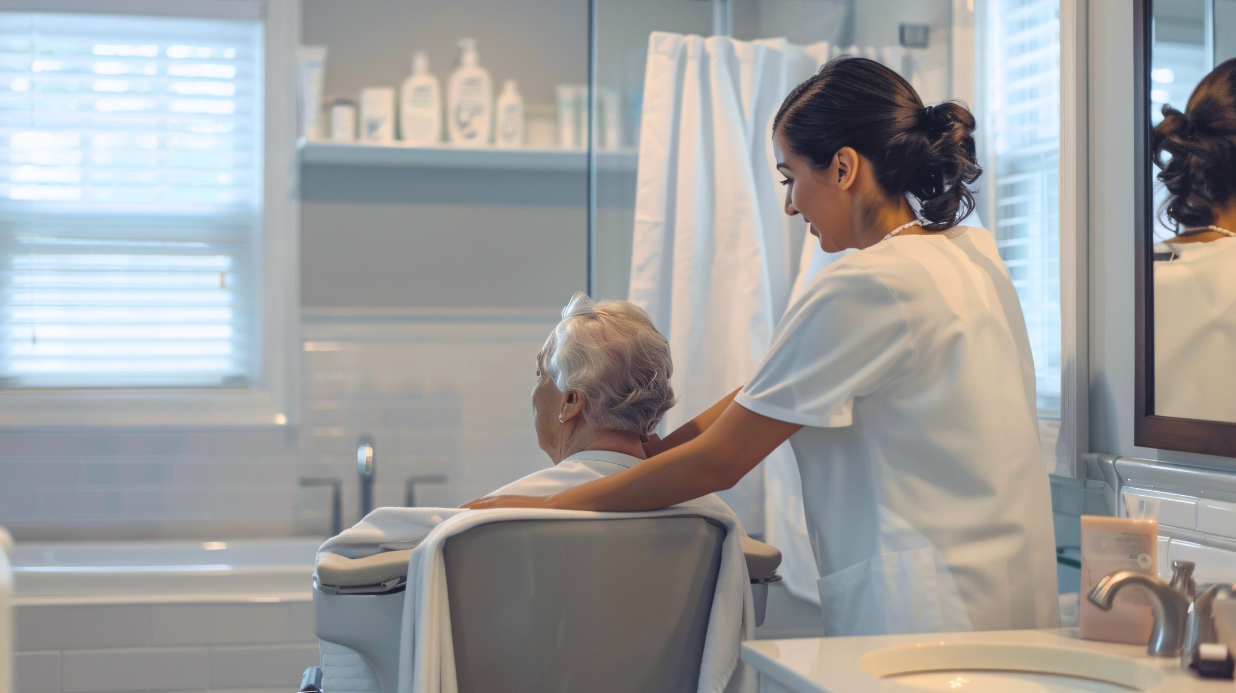
- Install a shower chair so your loved one can bathe while seated.
- Add a handheld showerhead for greater control and comfort.
- Place toiletries within easy reach to prevent stretching or bending.
For seniors who use a wheelchair or have limited mobility, a transfer bench can make getting in and out of the tub much easier. These small adjustments can make bathing safer and less stressful for both seniors and caregivers.
Caregiver Safety Tip: Do not try to lift your loved one to help them get into or out of the bath. This puts you at risk of falling, too.
RELATED CONTENT: How to Help a Loved One Shower
3. Add Grab Bars Where They’re Needed Most
Grab bars are essential for bathroom fall prevention. They offer stable support when sitting down, standing up, or moving around wet areas.
Install sturdy, wall-mounted grab bars near the toilet, inside the shower, and along any walls where your loved one may need extra support. Aim for ADA-recommended height (33–36 inches from the floor) and ensure the bars are securely anchored into wall studs.
Caregiver Safety Tip: Encourage your loved one to use grab bars regularly instead of towel racks or counters, which aren’t designed to bear weight. For added home safety for seniors, choose bars with textured or anti-slip finishes.
4. Improve Bathroom Lighting
Good lighting is critical for senior bathroom safety, especially for those with vision impairments or dementia. Poor lighting can make it difficult to see water on the floor, leading to slips and trips.
Replace dim or flickering bulbs with bright, energy-efficient LEDs that illuminate the entire room evenly. Consider motion-sensor lights or nightlights to guide your loved one to the bathroom at night without fumbling for switches.
Caregiver Safety Tip: Use soft, warm lighting to reduce glare on shiny tile surfaces. This helps seniors feel more comfortable and oriented in the space.
5. Adjust Toilet & Sink Heights for Comfort
Sitting down and standing up can be difficult for seniors with arthritis, joint pain, or limited leg strength. Installing a raised toilet seat or a comfort-height toilet can make this much easier and safer.
Caregivers can also add grab bars beside the toilet for extra stability. When it comes to sinks, choose lever-style handles instead of twist knobs because they’re easier for arthritic hands to use. For seniors who use wheelchairs, ensure there’s adequate knee clearance and easy access to faucet controls.
These adjustments help seniors maintain independence with personal care tasks while reducing the strain on caregivers. Simple changes go a long way toward making the bathroom safer for seniors.
6. Prevent Scalds & Temperature-Related Burns
Hot water can cause burns in seconds, especially for seniors with reduced sensitivity or slower reaction times. Installing anti-scald devices on faucets and showerheads can help regulate water temperature automatically.
You can also adjust the home’s water heater to 120°F (per the Consumer Product Safety Commission) to prevent accidental burns. Caregivers should always check the water temperature before seniors bathe or wash their hands.
Caregiver Safety Tip: Label faucet handles with “hot” and “cold” in large, high-contrast lettering for seniors with low vision.
7. Keep Pathways & Surfaces Clutter-Free
Even a tidy bathroom can hide tripping hazards. Keep pathways clear of laundry baskets, trash bins, and extra toiletries. Immediately wipe up water spills, and secure rugs or mats with non-slip backing.
Avoid using small throw rugs altogether because they can slide easily on wet floors. Instead, choose rubber-backed mats or grip tiles designed for bathroom use.
Store everyday items like soap, towels, and toilet paper at waist level to minimize bending and stretching. A clutter-free bathroom gives seniors the space they need to move safely and confidently.
8. Have a Plan in Case of a Fall
Even with senior fall prevention measures, accidents can still happen. Having an emergency plan in place ensures help arrives quickly if your loved one falls.
Encourage your senior to carry a cell phone, medical alert pendant, or smartwatch with fall detection when bathing. Place a waterproof emergency call button within reach of the shower and toilet.
Caregivers should also discuss what to do if a fall occurs:
- Remain calm
- Call for help
- Avoid risky attempts to lift the person alone
Learn more in our guide on what to do when a senior falls.
Empowering Caregivers to Support Independence
Bathroom safety for seniors isn’t just about grab bars and lighting. It’s about creating a space that supports dignity, independence, and peace of mind for both seniors and caregivers.
Simple modifications can make daily routines safer, reduce the risk of falls, and help your loved one remain at home longer. If you’re unsure where to begin, Caring Senior Service can help. Our caregivers provide companionship, personal care, and free home safety assessments to identify risks and offer solutions that fit your loved one’s needs.
Contact a Caring team near you to schedule your free assessment and take the first step toward a safer home environment today.
Read the full article on the original source
