


Close Menu
Savannah HeraldSavannah Herald
    • Home
    • News
      • Local
      • State
      • National
      • World
      • HBCUs
    • Events
    • Directories
    • Weather
    • Traffic
    • Jobs
    • Sports
    • Politics
    • Lifestyle
      • Faith
      • Senior Living
      • Health
      • Travel
      • Beauty
      • Fashion
      • Food
      • Art & Literature
    • Business
      • Real Estate
      • Entertainment
      • Investing
      • Education
    • Guides
      • Summer Camp Guide
      • Juneteenth Guide
      • Black History Savannah
      • MLK Guide Savannah
    We're Social
    • Twitter
    • Facebook
    • YouTube

    Subscribe to Updates

    Get the latest creative news from FooBar about art, design and business.

    Trending
    • Off-Roading Adventures for Black Americans’ Physical and Mental Well-Being
    • Alicia Keys to Perform “Empire State of Mind” at Knicks Championship Celebration
    • Jelly Roll: Daughter Speaks As Fans React To Bunnie XO Divorce
    • MEAC adds women’s flag football and women’s golf
    • 10 Executive Branding Strategies | Obsidi®
    • JD Vance Faces off With ‘The View’ Hosts, Defends Trump Policies
    • Laughlin wins Work-Based Learning scholarship
    • The ‘Black Chef Series’ Is Turning Juneteenth Jubilee Into A Movement On Martha’s Vineyard –
    Facebook X (Twitter) Instagram YouTube
    Login
    Savannah HeraldSavannah Herald
    Savannah HeraldSavannah Herald
    Home » At Brazil’s Carnival, the country’s religions fight for respect on a global stage
    Faith

    At Brazil’s Carnival, the country’s religions fight for respect on a global stage

    Savannah HeraldBy Savannah HeraldMarch 2, 20267 Mins Read
    Facebook Twitter Pinterest LinkedIn WhatsApp Reddit Tumblr Email
    At Brazil’s Carnival, the country’s religions fight for respect on a global stage
    Share
    Facebook Twitter LinkedIn Pinterest Email

    Faith & Reflection: Voices from the Black Church and Beyond

    Key takeaways
    • Afro-Brazilian religiosity like Candomblé and Umbanda is embedded in samba schools' social and ritual life year-round.
    • Samba schools syncretize orixás with Catholic saints, shaping parade imagery and spiritual practices.
    • Historical tensions: the Catholic Church has at times condemned or constrained Carnival representations of sacred figures.
    • Growth of evangelical Christianity added political pressure, proposing bans on supposedly disrespectful religious portrayals.
    • Carnival functions as a stage for racial and cultural legitimacy, amplifying Afro-Brazilian religion and resistance.

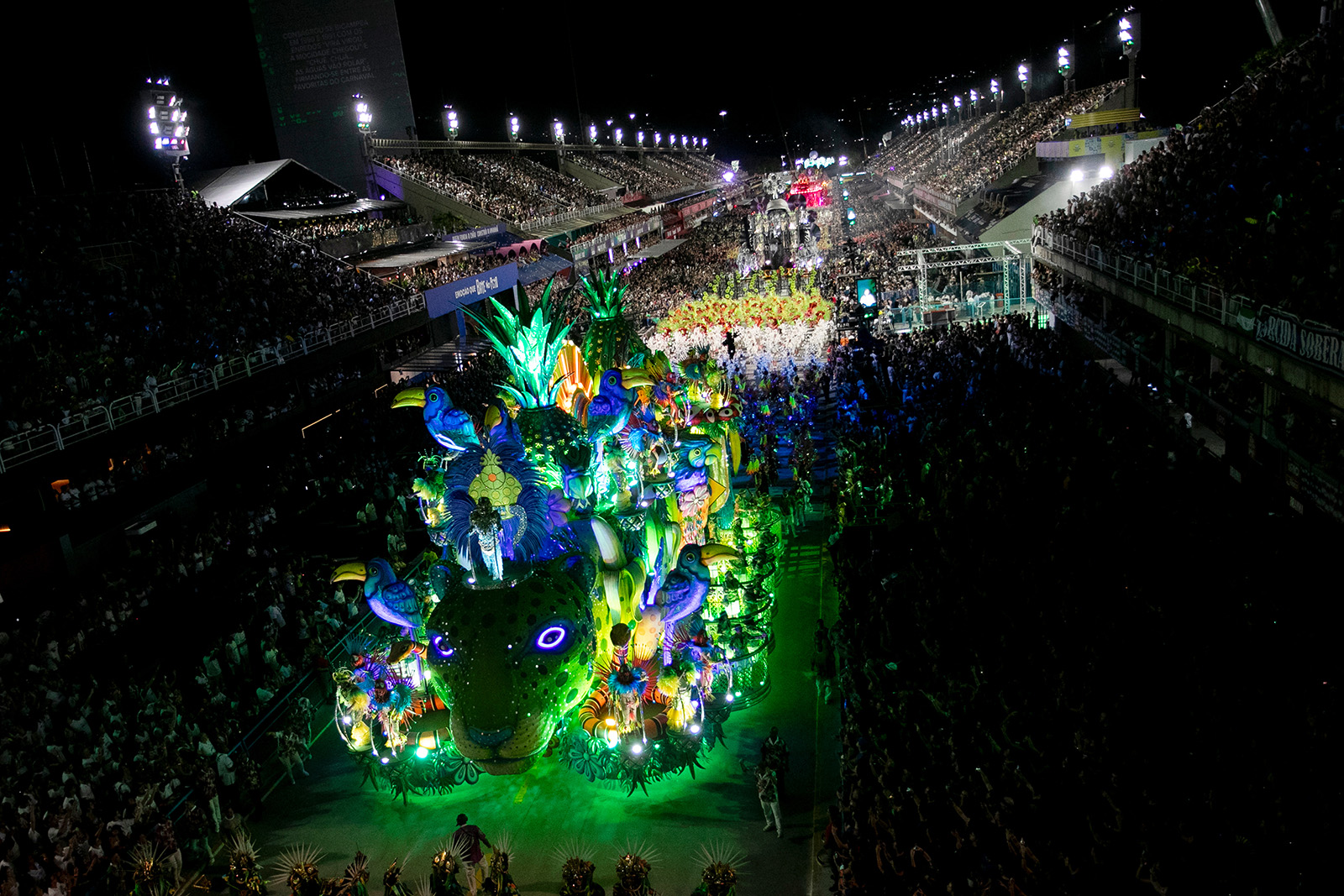
    (RNS) — Rio de Janeiro’s lavish Carnival parades, which burst to life in the days before Lent begins, are famous for their colorful costumes, giant floats and the driving rhythm of samba that is a hallmark of Brazilian culture and a magnet for tourists from around the globe. Each parade is produced by one of Rio’s samba schools, which work year-round to prepare them, and each has its own “plot” — enredo in Brazilian Portuguese — that guides its aesthetic. Themes range from tributes to historical figures or artists to pop culture to social and political critique.

    These parades all compete on craftsmanship, choreography, rhythmic precision, narrative coherence and the poetic quality of their original song lyrics. They are broadcast nationwide and make headlines around the world.

    What is less known about the samba communities behind the parades is their Afro-Catholic religiosity — Afro-Brazilian spirituality that coexists with popular Catholicism: Each school has an orixá — an African deity and a catholic saint of devotion — and at the altars found in the rehearsal halls, the schools’ spiritual guides perform rituals and Masses.

    “They are recreational organizations, but religion is present in their social life throughout the year,” said Lucas Bártolo, anthropologist and author of a study titled, “On the Altar of Samba: Religion in the World of Carnival.” “Both the worship of orixás and the devotion to Catholic saints organize the religious life of carnival groups and ground their symbolic dimension.”

    In Brazil, as in other Latin American countries, the Catholicism of the Iberian Peninsula arrived with colonization. The church maintained strong links with the state, setting dates and festivals that structured the calendar. Carnival begins the Saturday before Ash Wednesday and ends on Shrove Tuesday, also known as Fat Tuesday, or Mardi Gras, before Lent’s 40 days of fasting start.


    RELATED: New Orleans celebrates Mardi Gras, the indulgent conclusion of Carnival season

    “It is a festive period, deeply religious, representing an opposition between Carnival and Lent, which is very strong in Iberian culture, and has also been appropriated by African-derived groups,” Bártolo said.

    Afro-Brazilian religions have interacted with Catholicism and Christian festivals since the Portuguese arrived, reinterpreting the colonial religion through their own practices and worldviews, even observing aspects of Lent.

    “The origins of Carnival in Brazil are linked to enslaved Africans who were brought here and came together to create samba using percussion instruments,” Aydano André Motta, journalist, screenwriter, writer and Carnival researcher, told Religion News Service. “Samba gave rise to samba schools as community spaces in the neighborhoods where these people settled after abolition — predominantly low-income communities, known as favelas.

    “Every samba school has always included a priest or priestess from Candomblé or Umbanda,” Motta added, referring to two dominant Afro-Brazilian religions. “The social dynamics of samba schools are guided by (their) rituals.”

    Before official parade competitions began in the 1930s, and before state authorities, the media, wealthy classes, corporate sponsors and tourists became involved, the samba schools were confined mostly to homes in the Afro-Brazilian community.

    The rhythms of Carnival are derived from the drumming that is central to communication and spirit invocation in Africa. “The instruments used in ritual spaces are the same as those in the school’s percussion section,” said Carlos Monteiro, a journalist and sociologist from the Federal Fluminense University.

    Samba brought together the descendants and the percussion of Africans with distinct languages and cultures. “What the diaspora separated, cultural diasporic practice united,” Monteiro said.

    Of the two main branches of Afro-Brazilian traditions, Candomblé focuses on orixás, while Umbanda is more given to blending Catholic and Indigenous spirituality, religious mixing that emerged when, under slavery, African practices were forbidden. The orixás each have Catholic equivalents: “Oxum is syncretized with Our Lady of Conception, Oxóssi with Saint Sebastian, Xangô with Saint Peter, and more than any other, Ogum with Saint George. Ogum is the orixá of war and metals, and Saint George is the most popular saint in Rio, and therefore in the samba schools,” said Motta.

    The Catholic Church’s relationship with Carnival and samba schools has historically involved periods of “absolute rejection and condemnation of public discourse, including attempts to prohibit and criminalize these practices,” according to Bártolo. In Rio, city laws were proposed to restrict or regulate Catholic symbols in parades, claiming they profaned sacred images, and schools have often had to modify images of Mary and other Catholic saints to avoid clashes with religious authorities.

    In 1989, when a samba school called Beija-Flor planned to depict Christ as a beggar, the church prevailed, but the float entered the Sambadrome — the stadium built for viewing the parades — covered in black trash bags with a banner reading, “Even forbidden, look upon us.” 

    The opposition has a racial element, given that samba schools have always been predominantly Black institutions. At times, this opposition takes theological form, particularly in the demonization of Afro-Brazilian deities. Exú, a central figure in Candomblé and Umbanda, is a messenger between the human and divine worlds and has long been associated with the devil by Christian groups. But Afro-Brazilian religions, which don’t have a concept of absolute evil, see Exú as playful.

    Although African-derived religiosity has been embedded in samba schools since their origins, it was only in the 1960s that they began to explicitly incorporate Black Brazilian culture into their plots. “From there, numerous parade themes highlighted Black history and figures who had previously been invisible in Brazil’s official history,” Motta said.

    Under Dom Orani Tempesta, archbishop of Rio de Janeiro since 2009, and with the election of Pope Francis, the Argentine bishop who championed the Amazon and its culture, the church came to support Catholic-themed parade narratives. “Today, it is common for Masses to be held at samba school headquarters, for Carnival groups to be received in sanctuaries and for their flags to be blessed in churches,” Bártolo said, though he added that the rapprochment still has its limits. 

    The growth of evangelical Christianity in Brazil since the 1980s has added a new dimension to the religious disputes over Carnival. Initially, evangelicals avoided the celebrations, organizing spiritual retreats during this period. Later, as they became more publicly active and aligned with conservative Catholics in criticizing Carnival, they drew political and social criticism from samba schools, while framing themselves as victims of religious persecution.


    RELATED: Brazilian evangelical Christians disrupt pre-Lenten partying with ‘Gospel Carnival’

    When Rio elected Marcelo Crivella, bishop of the Universal Church of the Kingdom of God, mayor in 2017, “he tried, very hard, to destroy samba schools and Carnival,” Motta said. 

    The debate intensified recently when Pastor Gil, an evangelical Rio de Janeiro legislator, proposed a bill that would ban the use of sacred images or representations deemed disrespectful to Christian, Catholic or Evangelical faith in Carnival parades and events.

    Still, Carnival has served as a space for coexistence of Brazil’s wildly divergent social, racial and cultural differences, allowing marginalized groups to gain legitimacy as they express their culture. In recent years, the parades have emphasized Afro-Brazilian religions, as if to say, Bártolo said, “This is religion, too, not just Afro culture or Brazilian culture.”

    “The people of samba schools are experts in resistance,” said Motta. “They survived slavery, structural racism, state violence and state repression. The schools survived and will continue surviving.”

    Read the full article on the original source


    African American Religion AME Church Biblical Wisdom Black Faith Christian Living Christian Women of Color Church Leadership COGIC Community Churches Cultural Christianity Devotional Messages Faith and Culture Faith and Justice Faith-Based News Gospel and Grace Inspirational Writing Religion and Identity Religious Commentary Spiritual Reflection The Black Church
    Share. Facebook Twitter Pinterest LinkedIn WhatsApp Reddit Tumblr Email
    Savannah Herald
    • Website

    Related Posts

    Faith June 17, 2026

    HOW POPE FRANCIS REQUESTS AEPPEAO PRAYERS FOR FAMILIES, JUBILEE FILM REVIEW, VIEW THE WORLD WITH A GENTLE GAZE

    Faith June 17, 2026

     Zahra Tabari by WNCRI – Feminism and Religion

    Faith June 16, 2026

    Overcoming Regret: Finding Joy in Your Mission Journey

    Faith June 15, 2026

    Hare Krishnas celebrate a 50-year milestone with a parade of chariots in Manhattan

    Faith June 14, 2026

    May Alcott Nieriker (1840-1879): Little Woman, Big Ambition, part 1 by Maria Dintino – Feminism and Religion

    Faith June 14, 2026

    Our Ecofeminist World. – Feminism and Religion

    Comments are closed.

    Don't Miss
    Health May 23, 2026By Savannah Herald06 Mins Read

    Black Moms And Dads Required Assistance With The Autism Medical Diagnosis Refine

    May 23, 2026

    Health That Issues: Black Wellness Information & Neighborhood Treatment Autism is ending up being much…

    Snazzy Charlotte presents complimentary health and fitness collection

    August 28, 2025

    ChudTheBuilder is not inevitable or permanent

    May 21, 2026

    Oklahoma Black Lives Matter Leader Indicted for Fraud

    December 14, 2025

    Crochet Throw Blanket in Progress (Scrap Yarn + Moss Stitch)

    March 11, 2026
    Archives
    • June 2026
    • May 2026
    • April 2026
    • March 2026
    • February 2026
    • January 2026
    • December 2025
    • November 2025
    • October 2025
    • September 2025
    • August 2025
    • July 2025
    • June 2025
    • May 2025
    • April 2025
    • March 2025
    • February 2025
    Categories
    • Art & Literature
    • Beauty
    • Black History
    • Business
    • Climate
    • Culture
    • Education
    • Employment
    • Entertainment
    • Faith
    • Fashion
    • Food
    • Gaming
    • Georgia Politics
    • HBCUs
    • Health
    • Health Inspections
    • Investing
    • Lifestyle
    • Local
    • Lowcountry News
    • National
    • National Opinion
    • News
    • Politics
    • Real Estate
    • Senior Living
    • Sports
    • State
    • Tech
    • Traffic
    • Transportation
    • Travel
    • World
    Savannah Herald Newsletter

    Subscribe to Updates

    A round up interesting pic’s, post and articles in the C-Port and around the world.

    About Us
    About Us

    The Savannah Herald is your trusted source for the pulse of Coastal Georgia and the Low County of South Carolina. We're committed to delivering timely news that resonates with the African American community.

    From local politics to business developments, we're here to keep you informed and engaged. Our mission is to amplify the voices and stories that matter, shining a light on our collective experiences and achievements.
    We cover:
    🏛️ Politics
    💼 Business
    🎭 Entertainment
    🏀 Sports
    🩺 Health
    💻 Technology
    Savannah Herald: Savannah's Black Voice 💪🏾

    Our Picks

    Commanders training camp: With Terry McLaurin holding out, other pass catchers hope to step up

    June 9, 2026

    After 8 years, Steven Spielberg is finally returning to the genre he helped define

    June 12, 2026

    Fresh Out of Graduate School, Christine Sun Kim Helped to Greatly Improve Experiences of Deaf Audiences at the Whitney Museum

    December 7, 2025

    Recognizing & Preventing Caregiver Burnout Before It Starts

    May 27, 2026

    Most Useful Caregiver Apps for 2026

    April 16, 2026
    Categories
    • Art & Literature
    • Beauty
    • Black History
    • Business
    • Climate
    • Culture
    • Education
    • Employment
    • Entertainment
    • Faith
    • Fashion
    • Food
    • Gaming
    • Georgia Politics
    • HBCUs
    • Health
    • Health Inspections
    • Investing
    • Lifestyle
    • Local
    • Lowcountry News
    • National
    • National Opinion
    • News
    • Politics
    • Real Estate
    • Senior Living
    • Sports
    • State
    • Tech
    • Traffic
    • Transportation
    • Travel
    • World
    Copyright © 2002-2026 Savannahherald.com All Rights Reserved. A Veteran-Owned Business

    Type above and press Enter to search. Press Esc to cancel.

    Manage Consent
    To provide the best experiences, we use technologies like cookies to store and/or access device information. Consenting to these technologies will allow us to process data such as browsing behavior or unique IDs on this site. Not consenting or withdrawing consent, may adversely affect certain features and functions.
    Functional Always active
    The technical storage or access is strictly necessary for the legitimate purpose of enabling the use of a specific service explicitly requested by the subscriber or user, or for the sole purpose of carrying out the transmission of a communication over an electronic communications network.
    Preferences
    The technical storage or access is necessary for the legitimate purpose of storing preferences that are not requested by the subscriber or user.
    Statistics
    The technical storage or access that is used exclusively for statistical purposes. The technical storage or access that is used exclusively for anonymous statistical purposes. Without a subpoena, voluntary compliance on the part of your Internet Service Provider, or additional records from a third party, information stored or retrieved for this purpose alone cannot usually be used to identify you.
    Marketing
    The technical storage or access is required to create user profiles to send advertising, or to track the user on a website or across several websites for similar marketing purposes.
    • Manage options
    • Manage services
    • Manage {vendor_count} vendors
    • Read more about these purposes
    View preferences
    • {title}
    • {title}
    • {title}
    Ad Blocker Enabled!
    Ad Blocker Enabled!
    Our website is made possible by displaying online advertisements to our visitors. Please support us by disabling your Ad Blocker.

    Sign In or Register

    Welcome Back!

    Login below or Register Now.

    Lost password?

    Register Now!

    Already registered? Login.

    A password will be e-mailed to you.