


Close Menu
Savannah HeraldSavannah Herald
  • Home
  • News
    • Local
    • State
    • National
    • World
    • HBCUs
  • Events
  • Directories
  • Weather
  • Traffic
  • Sports
  • Politics
  • Lifestyle
    • Faith
    • Senior Living
    • Health
    • Travel
    • Beauty
    • Fashion
    • Food
    • Art & Literature
  • Business
    • Real Estate
    • Entertainment
    • Investing
    • Education
  • Guides
    • Juneteenth Guide
    • Black History Savannah
    • MLK Guide Savannah
We're Social
  • Twitter
  • Facebook
  • YouTube

Subscribe to Updates

Get the latest creative news from FooBar about art, design and business.

Trending
  • Margo’s Got Money Troubles Recap, Episode 4: ‘Buddies’
  • Woodville-Tompkins girls' soccer wins first playoff game in school history
  • What a Patients’ Bill of Rights Could Mean for Black Women
  • Hiring Mistakes to Avoid in the Tech Industry
  • Georgia Trend Daily – April 22, 2026
  • Sandy Springs art show reclaims what we throw away
  • Learnmore Jonasi ups GoFundMe target amid Lebo M’s lawsuit
  • Gibraltar macaques are self-medicating with dirt to help them digest human. junk food
Facebook X (Twitter) Instagram YouTube
Login
Savannah HeraldSavannah Herald
  • Home
  • News
    • Local
    • State
    • National
    • World
    • HBCUs
  • Events
  • Directories
  • Weather
  • Traffic
  • Sports
  • Politics
  • Lifestyle
    • Faith
    • Senior Living
    • Health
    • Travel
    • Beauty
    • Fashion
    • Food
    • Art & Literature
  • Business
    • Real Estate
    • Entertainment
    • Investing
    • Education
  • Guides
    • Juneteenth Guide
    • Black History Savannah
    • MLK Guide Savannah
Savannah HeraldSavannah Herald
Home » Augustus Washington: One of the Earliest Black Studio Photographers
Art & Literature

Augustus Washington: One of the Earliest Black Studio Photographers

Savannah HeraldBy Savannah HeraldApril 21, 20266 Mins Read
Facebook Twitter Pinterest LinkedIn WhatsApp Reddit Tumblr Email
Augustus Washington: One of the Earliest Black Studio Photographers
Share
Facebook Twitter LinkedIn Pinterest Email

Black Arts & Culture Feature:

Key takeaways
  • Positions Augustus Washington among the earliest professional photographers, asserting Black presence in photography's formative decades.
  • Daguerreotype of John Brown foregrounds questions of authorship, revealing how Augustus Washington shaped political conviction's visual expression.
  • Operated a studio that served diverse clientele while teaching at Talcott Street Congregational Church, linking photography to Black institution-building and civic life.
  • Career expands Black Atlantic visual history, demonstrating photography's role in mobility, self-representation, and national debates about citizenship.

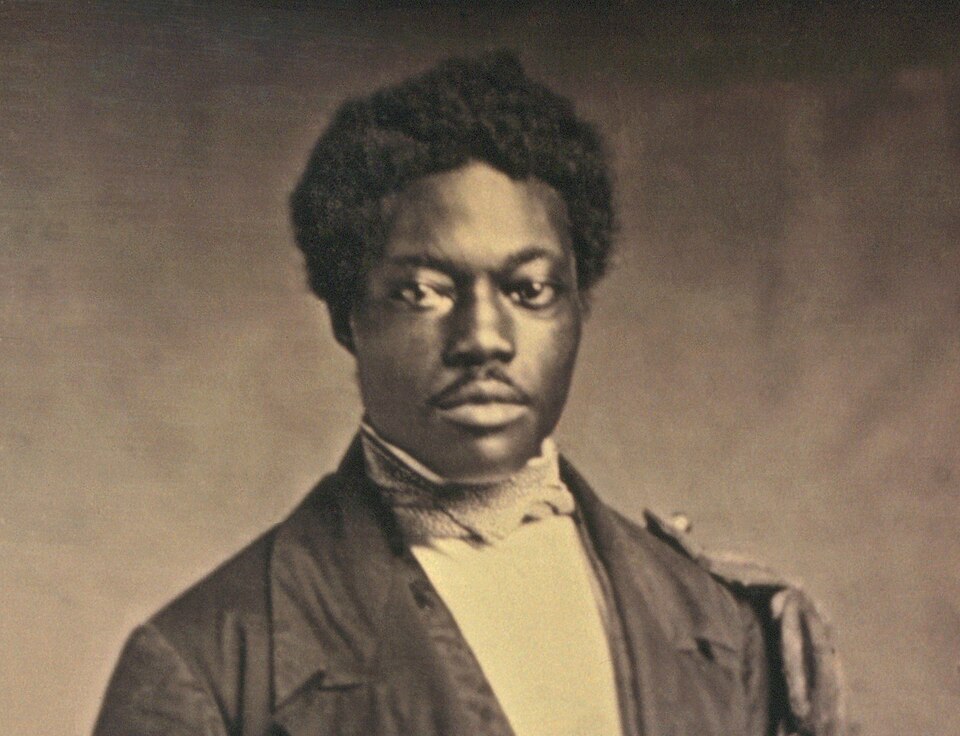
Long before photography became a familiar part of daily life, Augustus Washington had already claimed a place within its first generation of practitioners. Born free in Trenton, New Jersey, in 1820 or 1821, Washington came of age at nearly the same moment that the daguerreotype emerged as a new visual technology. By the mid-1840s, he had learned the process well enough to use it not simply as a trade, though as a means of self-determination, intellectual survival, and eventually public authorship. After learning daguerreotypy while enrolled at Dartmouth, he went on to establish himself in Hartford, Connecticut, where he built a respected studio during photography’s infancy. In 1853, he later moved to Liberia, carrying that practice into a different political and geographic context and extending early photographic history beyond the boundaries it is often given.

Augustus Washington’s career places a Black photographer within the earliest professional history of the medium itself. He was working during the daguerreian era, running a studio in Hartford by 1846 and establishing a reputation substantial enough to attract clients from the city’s white professional and business classes. Connecticut historical sources describe him as one of the most talented and successful photographers in mid-nineteenth-century Hartford, and the Smithsonian has identified him alongside James Presley Ball and Glenalvin Goodridge as one of the earliest known African American studio photographers.

Washington’s Entry Into Photography


Dartmouth Hall, Dartmouth College.

Washington’s entry into photography was tied to education. While enrolled at Dartmouth in the winter of 1843, he learned daguerreotypy in order to earn money for school. Financial pressures pulled him out of college, though the medium he turned to for support soon became the center of his career. Washington entered the field through technical skill, entrepreneurial discipline, and the ability to convert a new invention into a profession.

His Hartford years are especially important because they place a Black photographer inside one of the earliest commercial image economies in the United States. The daguerreotype was still a relatively new form, prized for its precision and for the novelty of likeness fixed on a reflective metal plate. Hartford was crowded with studios in the 1840s and 1850s, many of them short-lived. Washington’s was one of the businesses that endured. Surviving portraits help explain why he earned that reputation. His subjects appear composed, deliberate, and self-possessed. The work carries technical assurance, though what lingers even more is the atmosphere of seriousness he was able to construct in the studio.

The John Brown Portrait


Augustus Washington, John Brown, 1846–1847. National Portrait Gallery.

One of the most widely discussed surviving works from this period is his daguerreotype of John Brown, the white abolitionist who would later become one of the most polarizing figures in the fight over slavery. The portrait is recognized as the earliest known likeness of Brown which writes Washington’s name inside a major chapter of American visual history.

It also raises a more interesting question about authorship. A free Black daguerreotypist in Hartford made one of the nineteenth century’s most memorable images of a white abolitionist. The intensity of Brown’s pose invites closer attention to the interaction that produced it: who directed the scene, who shaped the image, who decided how political conviction would register on the body. Washington authored that encounter as much as he recorded it.

Even so, Washington’s significance cannot be reduced to a single famous subject. His broader career shows how Black photographic authorship was embedded in abolition-era public life, education networks, and entrepreneurial culture before the Civil War. In Hartford he taught at the Talcott Street Congregational Church’s school for Black students, a church deeply connected to antislavery activity. He moved within free Black civic life while also operating a studio that served a broader clientele. In Black art history, that combination places him at the intersection of Black institution-building, visual modernity, and political thought. Photography became one of the forms through which Black presence entered the public record.

Moving to Liberia


Monrovia, Liberia in the 19th century.

In 1853, Washington left the United States for Liberia with his wife and children, convinced that life in America would continue to place hard limits on Black freedom and advancement. That move has to be read with care. Liberia offered him political possibility and professional continuation, though it was also shaped by the deeply complicated history of colonization and Black emigration. What is clear is that Washington continued his photographic practice after crossing the Atlantic. He opened a studio in Monrovia and produced portraits of Liberian political and civic figures, contributing to the visual culture of a young Black republic. The Metropolitan Museum of Art notes that he opened the first studio in Monrovia in 1853 and later traveled through West Africa, with documented activity reaching Senegal by 1860.

This Liberian chapter expands the meaning of Washington’s career. He belongs to early American photography, though he also belongs to a larger Black Atlantic history of image-making. His work in Liberia shows photography moving with Black migration, aspiration, governance, and self-representation across national lines. It suggests that early Black photographic history was never confined to a single U.S. narrative. Washington’s studio practice linked Hartford to Monrovia and, through circulation and patronage, linked portraits to debates about nationhood, citizenship, and the visual terms on which Black people would be seen.

How Augustus Washington Made Black Art History

Photo by Augustus WashingtonPhoto by Augustus Washington

Augustus Washington, Portrait of Chancy Brown.

In Black art history, Augustus Washington offers a crucial correction to the way origins stories are often told. It is easy to picture the beginnings of photography in America as a largely white technical frontier, with Black makers entering the story later. Washington’s career presses against that framing. He shows that Black photographers were participating in photography’s early professional culture while the form itself was still new, while its conventions were still being worked out, and while portraiture was still being democratized through the camera. The Smithsonian American Art Museum’s decision to collect work by Augustus Washington, James Presley Ball, and Glenalvin Goodridge reflects the broader historical point at stake here: African American photographers were present during the medium’s formative decades and belong within any serious account of its early development.

Washington’s place in Black art history becomes especially powerful at that level. He was an early architect of photographic self-fashioning, a studio professional working close to the medium’s beginnings, and a figure whose career opens onto larger questions about Black mobility, authorship, and visibility in the Atlantic world. To study Augustus Washington is to see that Black photography was present at the formation of the American image world itself.

Sources

Library of Congress: Augustus Washington, Daguerreotypist

Connecticut History: Augustus Washington (1820–1875): African American Daguerreotypist

National Portrait Gallery: John Brown

Metropolitan Museum of Art: Augustus Washington

Smithsonian American Art Museum: Early Photography from the Collection of Larry J. West

Read more from the original source


African Art African Textiles Afrofuturism Art and Identity Arts and Culture News Black Art History Black Artists Black Authors Black Creators Black Literature Black Sci-Fi and Fantasy Black Women in Art Black-Owned Bookstores Book Reviews Contemporary Black Art creative expression Cultural Commentary Fashion and Expression Poetry and Prose Street Art and Design
Share. Facebook Twitter Pinterest LinkedIn WhatsApp Reddit Tumblr Email
Savannah Herald
  • Website

Related Posts

Entertainment April 22, 2026

Margo’s Got Money Troubles Recap, Episode 4: ‘Buddies’

Art & Literature April 22, 2026

Sandy Springs art show reclaims what we throw away

Entertainment April 21, 2026

Alain Martin and The Forgotten Occupation: Jim Crow Goes to Haiti 

Entertainment April 21, 2026

This Earth Day, Humanity Is Failing Our “First Commandment”

Entertainment April 21, 2026

‘The Daily Show’: Jon Stewart Derides Trump’s Iran Negotiation Skills

Entertainment April 19, 2026

New Music Friday: 50 Hip-Hop, R&B Releases You Need On Your Playlist

Comments are closed.

Don't Miss
Sports March 26, 2026By Savannah Herald05 Mins Read

2026 NFL combine results: Measurements, 40 times, biggest takeaways

March 26, 2026

Game On: Sports News, Highlights & Commentary USATSI INDIANAPOLIS — It’s Thursday of NFL combine…

State Department may require visa applicants to post bond of up to $15,000 to enter the US

August 4, 2025

Groundbreaking Achievement: 2025 Turner Prize Goes to Nnena Kalu, First Artist With Learning Disability to Win Prestigious Award

December 14, 2025

Candida auris: Study reveals who is most vulnerable to deadly fungus infection

September 3, 2025

Woodville-Tompkins girls' soccer wins first playoff game in school history

April 22, 2026
Archives
  • April 2026
  • March 2026
  • February 2026
  • January 2026
  • December 2025
  • November 2025
  • October 2025
  • September 2025
  • August 2025
  • July 2025
  • June 2025
  • May 2025
  • April 2025
  • March 2025
  • February 2025
  • January 2025
  • December 2024
Categories
  • Art & Literature
  • Beauty
  • Black History
  • Business
  • Climate
  • Education
  • Employment
  • Entertainment
  • Faith
  • Fashion
  • Food
  • Gaming
  • Georgia Politics
  • HBCUs
  • Health
  • Health Inspections
  • Home & Garden
  • Investing
  • Local
  • Lowcountry News
  • National
  • National Opinion
  • News
  • Obituaries
  • Politics
  • Real Estate
  • Science
  • Senior Living
  • Sports
  • SSU Homecoming 2024
  • State
  • Tech
  • Transportation
  • Travel
  • World
Savannah Herald Newsletter

Subscribe to Updates

A round up interesting pic’s, post and articles in the C-Port and around the world.

About Us
About Us

The Savannah Herald is your trusted source for the pulse of Coastal Georgia and the Low County of South Carolina. We're committed to delivering timely news that resonates with the African American community.

From local politics to business developments, we're here to keep you informed and engaged. Our mission is to amplify the voices and stories that matter, shining a light on our collective experiences and achievements.
We cover:
🏛️ Politics
💼 Business
🎭 Entertainment
🏀 Sports
🩺 Health
💻 Technology
Savannah Herald: Savannah's Black Voice 💪🏾

Our Picks

Georgia Southern University expands Sponsored Student Programs with new TRIO Grant for students with disabilities

November 6, 2025

A Visit With Your Provider From The Comfort Of Your Home » Inland Valley News

November 1, 2025

Apple Cinnamon Scones with Maple Luster

September 13, 2025

The Savannah State Baseball Team gets ready for their 2026 season

January 31, 2026

Back-to-school events in metro Atlanta: Gwinnett, Fulton, DeKalb, Cobb schools

November 11, 2025
Categories
  • Art & Literature
  • Beauty
  • Black History
  • Business
  • Climate
  • Education
  • Employment
  • Entertainment
  • Faith
  • Fashion
  • Food
  • Gaming
  • Georgia Politics
  • HBCUs
  • Health
  • Health Inspections
  • Home & Garden
  • Investing
  • Local
  • Lowcountry News
  • National
  • National Opinion
  • News
  • Obituaries
  • Politics
  • Real Estate
  • Science
  • Senior Living
  • Sports
  • SSU Homecoming 2024
  • State
  • Tech
  • Transportation
  • Travel
  • World
  • Privacy Policies
  • Disclaimers
  • Terms and Conditions
  • About Us
  • Contact Us
  • Opt-Out Preferences
  • Accessibility Statement
Copyright © 2002-2026 Savannahherald.com All Rights Reserved. A Veteran-Owned Business

Type above and press Enter to search. Press Esc to cancel.

Manage Consent
To provide the best experiences, we use technologies like cookies to store and/or access device information. Consenting to these technologies will allow us to process data such as browsing behavior or unique IDs on this site. Not consenting or withdrawing consent, may adversely affect certain features and functions.
Functional Always active
The technical storage or access is strictly necessary for the legitimate purpose of enabling the use of a specific service explicitly requested by the subscriber or user, or for the sole purpose of carrying out the transmission of a communication over an electronic communications network.
Preferences
The technical storage or access is necessary for the legitimate purpose of storing preferences that are not requested by the subscriber or user.
Statistics
The technical storage or access that is used exclusively for statistical purposes. The technical storage or access that is used exclusively for anonymous statistical purposes. Without a subpoena, voluntary compliance on the part of your Internet Service Provider, or additional records from a third party, information stored or retrieved for this purpose alone cannot usually be used to identify you.
Marketing
The technical storage or access is required to create user profiles to send advertising, or to track the user on a website or across several websites for similar marketing purposes.
  • Manage options
  • Manage services
  • Manage {vendor_count} vendors
  • Read more about these purposes
View preferences
  • {title}
  • {title}
  • {title}
Ad Blocker Enabled!
Ad Blocker Enabled!
Our website is made possible by displaying online advertisements to our visitors. Please support us by disabling your Ad Blocker.

Sign In or Register

Welcome Back!

Login below or Register Now.

Lost password?

Register Now!

Already registered? Login.

A password will be e-mailed to you.