




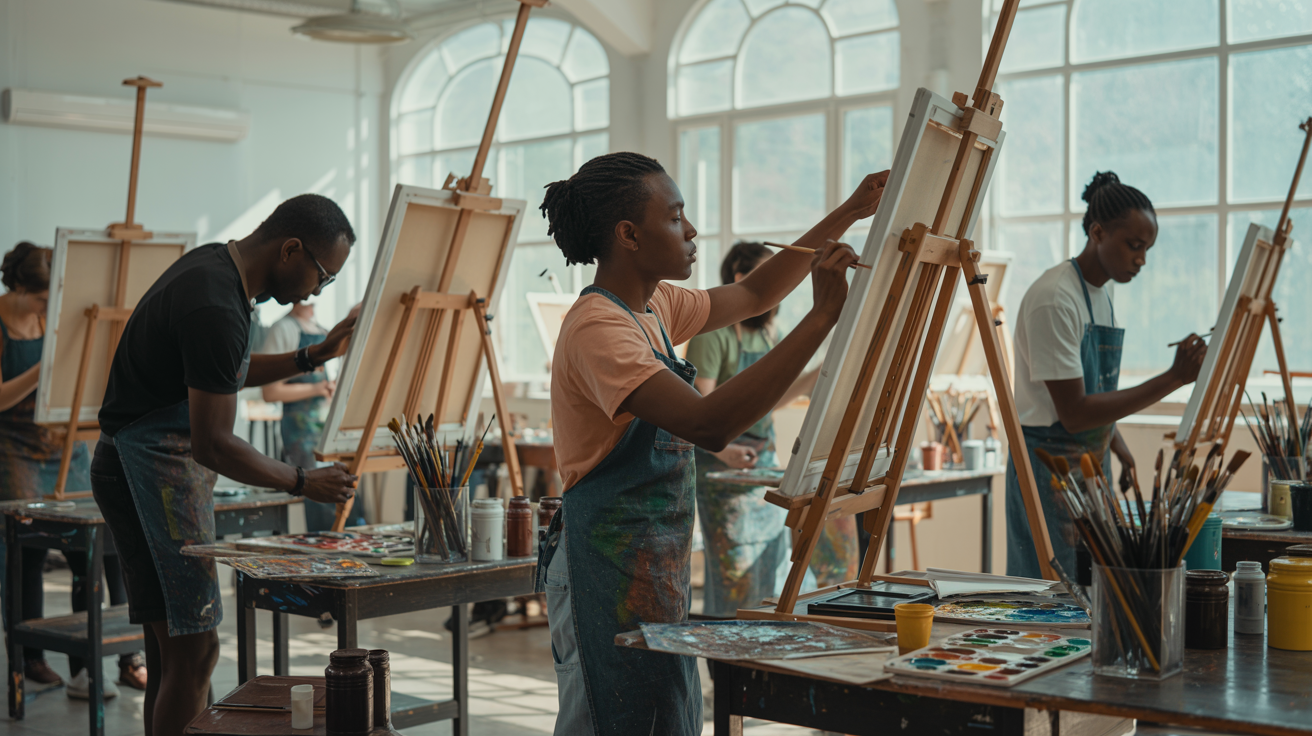
Black Arts & Culture Feature:
- Adopt strategic networking: research peers, present professionally, offer value, and sustain connections with follow-up and organized contact systems.
- Cultivate peer networks through collaborative learning, identify complementary skills, leverage geographic diversity, and maintain contact with regular project sharing.
- Build instructor and industry relationships via professional respect, focused questions, demonstrable improvement, and sustain ties with value-added updates and strategic introductions.
Building Professional Networks Through Art Education
Professional art education provides unparalleled networking opportunities that often prove more valuable than technical instruction itself. Understanding how to strategically build, maintain, and leverage educational networks transforms workshops from isolated learning experiences into comprehensive career development platforms that generate ongoing opportunities and professional support.
Strategic Networking Approach
Effective artistic networking requires systematic relationship building that extends beyond casual social interaction to purposeful professional engagement. Educational settings provide natural networking environments where shared learning experiences create foundations for lasting professional relationships.
Pre-workshop networking begins before formal instruction through research into fellow participants, instructor backgrounds, and potential collaboration opportunities. Many workshop organizers provide participant lists or encourage pre-event communication that enables strategic relationship planning. Understanding who will attend allows focused networking preparation and goal setting.
Professional presentation during workshops includes maintaining appropriate demeanor, demonstrating serious artistic commitment, and engaging constructively with peers and instructors. First impressions formed during intensive learning experiences often influence long-term professional relationships. Artists who present themselves professionally while remaining approachable create optimal conditions for meaningful network development.
Value-based networking focuses on mutual benefit rather than one-sided promotion or opportunistic relationship exploitation. The most successful artistic networks develop through genuine interest in others’ work, generous knowledge sharing, and collaborative problem-solving. Artists who consistently provide value to their networks receive proportional support when pursuing their own professional objectives.
Follow-up communication maintains relationships established during workshops through regular contact, project updates, and continued collaboration opportunities. Educational networking requires ongoing cultivation rather than single-event connection attempts. Artists who maintain consistent professional relationships often receive referrals, collaboration invitations, and career opportunities years after initial workshop meetings.
Documentation and organization systems help manage expanding professional networks through contact databases, interaction histories, and relationship categorization. As artistic careers develop, network complexity increases beyond casual memory management. Systematic network organization ensures valuable relationships receive appropriate attention and cultivation.
Peer Relationship Development
Fellow workshop participants often become the most valuable long-term professional relationships through shared experience levels, complementary skills, and ongoing career development parallels. Understanding how to build meaningful peer relationships creates support networks that provide career-long benefits.
Collaborative learning approaches during workshops create natural bonding experiences while demonstrating professional working styles and creative approaches. Artists who engage generously with peer learning often form relationships that continue long after formal instruction concludes. These relationships provide ongoing critique partnerships, emotional support, and practical collaboration opportunities.
Skill complementarity identification helps recognize peers whose capabilities complement personal strengths and weaknesses. Successful artistic relationships often involve partners with different but compatible skills who can support each other’s professional development. Mixed media artists might partner with traditional painters, while digital specialists could collaborate with conventional practitioners.
Professional reciprocity establishes mutual support relationships through consistent assistance, referral sharing, and promotional cooperation. Artists who actively support peers’ career advancement typically receive similar support when pursuing their own opportunities. This reciprocal relationship building creates powerful professional alliances that benefit all participants.
Geographic diversity in peer networks expands market access and opportunity awareness beyond local artistic communities. Workshop participants often represent diverse geographic regions, creating network access to distant markets and regional opportunities. Maintaining relationships with geographically distributed peers provides market intelligence and potential collaboration possibilities across broader regions.
Ongoing communication strategies maintain peer relationships through regular updates, project sharing, and continued learning discussions. Social media platforms, email newsletters, and periodic phone calls help sustain relationships that might otherwise fade due to geographic distance or busy professional schedules. Consistent communication prevents network decay while maintaining relationship strength for mutual professional benefit.
Instructor and Mentor Relationships
Workshop instructors represent experienced professionals whose guidance and industry connections can significantly accelerate career development. Understanding how to build appropriate relationships with instructors creates mentorship opportunities that provide long-term career benefits.
Professional respect and appropriate boundaries establish foundations for meaningful instructor relationships while acknowledging experience differences and professional hierarchies. Students who demonstrate serious commitment while respecting instructor expertise often receive additional attention and guidance beyond basic workshop instruction.
Specific question preparation demonstrates serious engagement while maximizing valuable instructor time. Generic questions receive generic responses, while thoughtful, specific inquiries about technique challenges or career strategies often generate detailed guidance that benefits individual development. Prepared questions also demonstrate professionalism and serious artistic commitment.
Work quality and improvement demonstration shows instructors that their guidance produces results and justifies continued investment in student development. Instructors naturally gravitate toward students who implement feedback effectively and show genuine artistic growth. This responsiveness often leads to ongoing mentorship relationships beyond formal workshop boundaries.
Professional follow-up communication maintains instructor relationships through periodic updates, continued question asking, and demonstration of career progress. Many instructor relationships evolve into informal mentorships when students maintain appropriate contact and continue demonstrating professional development. These relationships often provide career opportunities, recommendation letters, and industry introductions.
Value provision to instructors through assistance, promotion, or specialized skills creates mutually beneficial relationships rather than one-sided guidance seeking. Students with complementary skills, marketing abilities, or organizational capabilities can provide value to instructors while receiving career guidance. These reciprocal relationships often prove more sustainable and beneficial than traditional hierarchical arrangements.
Industry Professional Engagement
Many workshop organizations invite gallery owners, collectors, art dealers, and other industry professionals as guest speakers or participants. Understanding how to engage appropriately with these professionals creates opportunities for career advancement and market access.
Professional presentation becomes particularly important when interacting with industry professionals who regularly evaluate artists for representation, exhibition, or purchase opportunities. First impressions formed during workshop interactions often influence future professional consideration. Appropriate presentation includes portfolio quality, professional communication, and respectful engagement.
Industry knowledge demonstration through informed questions and relevant discussion topics shows professionals that artists understand market realities and business requirements. Industry professionals appreciate artists who comprehend practical business aspects rather than focusing exclusively on creative concerns. This understanding often leads to serious professional consideration.
Market intelligence gathering provides valuable information about industry trends, pricing standards, and professional opportunities through direct conversation with industry professionals. Workshop settings often enable informal discussions that provide insights unavailable through formal business meetings. This intelligence helps inform career decisions and market positioning strategies.
Portfolio presentation opportunities during workshops enable direct feedback from industry professionals who regularly evaluate artistic work. Many workshops include portfolio review sessions or informal critique opportunities that provide professional perspectives on work quality and market positioning. These reviews often generate specific guidance for portfolio improvement and market preparation.
Relationship building with industry professionals requires patience and professionalism while avoiding overly aggressive promotion or inappropriate opportunity seeking. Industry professionals attend workshops for various reasons and may not be actively seeking new artists. Respectful relationship building often produces future opportunities when timing and circumstances align appropriately.
Long-Term Network Maintenance
Professional networks require ongoing cultivation and maintenance to provide sustained career benefits. Understanding effective network maintenance strategies ensures that educational investments in relationship building produce long-term value and ongoing professional support.
Regular communication schedules prevent relationship decay through consistent but appropriate contact maintenance. This might include quarterly update emails, holiday greetings, or periodic project sharing that maintains relationship awareness without creating communication burden. Consistent contact keeps artists visible within their professional networks when opportunities arise.
Value-added communication provides useful information, opportunities, or resources to network contacts rather than focusing exclusively on personal promotion. Artists who consistently share valuable information with their networks often receive priority consideration when contacts encounter relevant opportunities. This generous approach builds strong relationship foundations.
Network expansion through introductions and connection facilitation creates broader professional communities while strengthening existing relationships. Artists who actively introduce contacts with complementary interests often become central network nodes who receive enhanced support and opportunity access. This connector role provides significant professional advantages.
Professional milestone sharing keeps networks informed about career achievements and current projects without excessive self-promotion. Appropriate milestone sharing might include exhibition announcements, award recognition, or significant commission completion. These updates maintain network awareness of professional development and current availability.
Relationship categorization helps prioritize network maintenance efforts while ensuring appropriate attention for different relationship types. Close professional relationships require more frequent communication than casual acquaintances, while potential mentors might need different engagement approaches than peer artists. Understanding relationship types informs appropriate maintenance strategies.
Geographic and virtual relationship balance accommodates both local professional community participation and broader network maintenance through digital communication. Successful artists often maintain strong local relationships while cultivating broader networks that provide expanded opportunities and market access. This balance requires strategic attention allocation and appropriate communication methods for different relationship categories.
Read more from the original source
