


Close Menu
Savannah HeraldSavannah Herald
    We're Social
    • Twitter
    • Facebook
    • YouTube

    Subscribe to Updates

    Get the latest creative news from FooBar about art, design and business.

    Trending
    • 9 of The Best Braiders in LA
    • Billy Graham’s grandson joins board as Leighton Ford Ministries builds for the future
    • From Office to After-Party: The Chane Button-Up Shirt
    • Author Details History of Black Leisure Sites in Southland
    • The Checks and Balances that Preserve Injustice and Power
    • “We’re All Mad Here.” “Curiouser and Curiouser Indeed!” – NormaZager.com
    • How to Stage Your Outdoor Space to Sell Your Home Faster
    • MPC to host Open House for review of the Chatham County-Savannah Plan – Savannah Herald
    Facebook X (Twitter) Instagram YouTube
    Login
    Savannah HeraldSavannah Herald
    Savannah HeraldSavannah Herald
    Home » Author Details History of Black Leisure Sites in Southland
    Art & Literature

    Author Details History of Black Leisure Sites in Southland

    Savannah HeraldBy Savannah HeraldMay 27, 20266 Mins Read
    Facebook Twitter Pinterest LinkedIn WhatsApp Reddit Tumblr Email
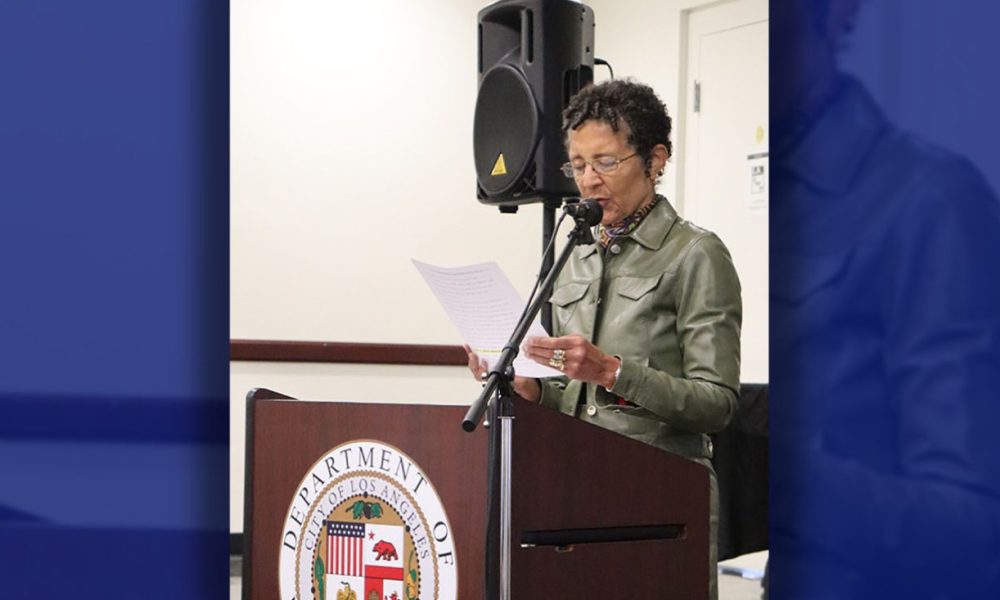
    At a Black Women for Wellness Black History Month presentation Feb. 13, Alison Rose Jefferson spoke about the impact of Blacks creating spaces for leisure in the 20th century had on the surrounding community and the challenges Blacks faced by white residents and local government. Photo by Cynthia Gibson.
    Share
    Facebook Twitter LinkedIn Pinterest Email

    Black Arts & Culture Feature:

    Key takeaways
    • Research shows racial discrimination in California occurred through implicit practices rather than explicit laws.
    • Bruce's Beach in Manhattan Beach faced KKK harassment and 1924 eminent domain seizure; state later authorized property return to Bruce descendants.
    • Lake Elsinore resorts and the Park Ridge Country Club were built by Black entrepreneurs; local histories frequently omit their contributions.
    • Bay Street Beach (Inkwell) and Phillips CME Church anchored a Black enclave; landmarked in 2005, historic district in 2008.

    By BlackPressUSA Newswire

    By Cynthia Gibson, Contributing Writer | WAVE Publications

    In her latest book, “Living the California Dream – African American Leisure Sites during the Jim Crow Era,” author Alison Rose Jefferson provides new insights into how the great migration of Blacks beginning in 1910 from the American South to the urban North, Midwest, and West challenged the prevailing narratives that exclude African Americans and shows their active role in shaping regional identity.

    Her research demonstrates that in California and other western states — unlike the South — racial discrimination existed in implicit practice rather than explicit legal prescriptions.

    At a Black Women for Wellness Black History Month presentation on Feb. 13, Jefferson chronicled the history of several recreational sites developed by African Americans. She spoke about the impact that Blacks creating spaces for leisure had on the surrounding community and the challenges that Blacks faced from white residents and local government.

    Jefferson’s presentation focused on several specific Southern California leisure sites created in the 20th century by and for African Americans — Bruce’s Beach in Manhattan Beach, Lakeshore Beach Club in Lake Elsinore, and Santa Monica’s Bay Street Beach.

    In 1912, Willa Bruce and her husband Charles purchased oceanfront property to establish a resort for Black residents who were barred from other beaches. It became a popular gathering place for African Americans on weekends and in the summer.

    The successful venture spurred other African Americans to buy land and build vacation cottages nearby.

    From the first days of operation, white neighbors and members of the Ku Klux Klan harassed the Bruces and their customers, including setting fire to a mattress under the resort’s main deck and burning down a nearby home belonging to another Black family.

    When harassment failed to drive the Bruces out, the city used eminent domain in 1924 to seize the land under the pretense of building a park. The Bruces and other resort community property owners challenged those proceedings but were unsuccessful.

    Nearly a century later, the state passed legislation authorizing Los Angeles County to return the property to the Bruce family’s descendants.

    “These moves are good things, but this restitution does not provide tangible collective benefits to the purged African Americans of all classes from Manhattan Beach and the loss of a vibrant socioeconomic cultural space where to this day Black people make up less than half a percent of the city’s 35,000 population,” Jefferson said.

    Another of the earliest places African Americans went for recreation and relaxation was Lake Elsinore in Riverside County, one of the furthest inland among African American leisure sites. The Mission in Palm Springs and Lake Elsinore were among numerous resorts in Riverside County that were popular from the 1880s to the 1960s, according to Jefferson. People from around the Southland, especially from the Los Angeles area, visited the resorts to soak in and drink the cold and hot mineral waters for health, healing, and relaxation.

    By the late 1920s, Riverside was proclaimed the empire of recreation and health in the Lake Elsinore Valley. Several local Black residents established businesses, purchased vacation homes, and a few invested in resorts and recreation spaces.

    The Lake Shore Beach Company began developing the largest resort for Black patrons at Lake Elsinore. The leaders of this investment group were prominent Black Angelenos: physician Wilbur C. Gordon, attorney Charles Darden, businesswoman Sally Taylor Richardson, and businessman Arthur L. Reese.

    Jefferson noted that the Black community’s presence has been omitted from local history narratives and landmark designation programs, thereby obstructing understanding of the full shared collective history of the range of community builders and their impact and contributions to the development of Lake Elsinore and the Southern California region.

    Another Black-owned resort in Riverside County, the Park Ridge Country Club, opened in 1927.

    The local elite and other white racist citizens strongly contested the African American reconstruction of this venture. In the Corona community, the Black businessmen’s efforts to make the venture a success have been left out of local history narratives and public memory, thereby limiting understanding of the Corona community’s historical actors and evolution, Jefferson said. The omission of this history of Corona, like Lake Elsinore, erases the complicated layers of social dynamics of race, space, power, and capitalism in California.

    In Santa Monica, African Americans have built and sustained a community since the city’s founding in 1875. Early residents established themselves a few blocks away from the Pacific shoreline in the environs of Bay Street Beach. This is near the civic center today and Phillips Chapel Christian Methodist Episcopal Church, the first national African American organization established by formerly enslaved citizens in 1870. During the same time period, just south of Santa Monica, a Venice enclave of African Americans also began to form.

    Both communities have managed to survive waves of discrimination and the encroachment of wealthy residents for more than a century.

    In 1908, at 4th and Bay Street near Phillips CME, the oceanfront area emerged as a gathering place where African Americans from all over Los Angeles could enjoy the beachfront. From 1900 to the 1960s, many Black beachgoers referred to this area as the Bay Street Beach.

    White people, referring to the darker-skinned beachgoers, referred to it as the Inkwell, Jefferson said. Some Black people repurposed this name as a badge of pride, while others refused to use the name.

    Accessible by streetcar, the blossoming African American enclave centered around Phillips CME Church saw Black-owned businesses and leisure sites emerge. The area became a place of refuge and a site of community formation.

    Prominent attorney Charles S. Darden, a resort developer in Lake Elsinore, and Norman O. Euston, founder of Golden State Mutual Life Insurance Company, led a Santa Monica Black enterprise in the 1920s. It was one of the important attempts at beach area business development, sabotaged by white supremacists. This was at a time overlapping the rise of Black beach culture and residency that supported a deeper African American community in Southern California in the first half of the 20th century.

    While white supremacist actions hindered African Americans from buying property throughout the urban region and sabotaged their beach service businesses into the 1950s, their communities, presence, and agencies sustained their use of public space. In 2005, the city of Santa Monica designated the Phillips CME Church as a local landmark at the oceanfront, near Crescent Bay Park and Bay Street. This set the stage for the official recognition of the African American cultural monument, the Bay Street Historic District, in 2008.

    Jefferson said her goal is to bring attention to the contributions of Black businessmen and women who sought to take advantage of everything California had to offer and to develop businesses that served their communities.

    “I’m also interested in people understanding that Black people have been here and enjoying the resources that California has to offer, even if sometimes they were pushed around a bit in terms of prejudice or discrimination,” Jefferson said.

    Cynthia Gibson is a freelance reporter for Wave Newspapers. She can be reached at [email protected].

    Read more from the original source


    African American beach resorts African American health resorts African American leisure sites history African American recreation history African Art African Textiles Afrofuturism Alison Rose Jefferson author Art and Identity Arthur L. Reese businessman Arts and Culture News Black Art History Black Artists Black Authors Black Creators Black entrepreneurs Southern California Black history California Black leisure spaces segregation Black Literature Black Sci-Fi and Fantasy Black Women for Wellness Black History Month Black Women in Art Black-Owned Bookstores Book Reviews Bruce family eminent domain Bruce’s Beach Manhattan Beach history Bruce’s Beach restitution Los Angeles County Charles Darden attorney Contemporary Black Art Corona California Black history creative expression Cultural Commentary eminent domain racial injustice Fashion and Expression Featured Great Migration African Americans West implicit racial discrimination California Jim Crow era California Ku Klux Klan harassment California Lake Elsinore Black resorts Lakeshore Beach Club history Living the California Dream book Manhattan Beach Black history mineral springs Black history Park Ridge Country Club Corona Poetry and Prose Riverside County Black history Sally Taylor Richardson businesswoman Street Art and Design Wilbur C. Gordon physician willa and charles bruce
    Share. Facebook Twitter Pinterest LinkedIn WhatsApp Reddit Tumblr Email
    Savannah Herald
    • Website

    Related Posts

    Art & Literature May 27, 2026

    Dominion by Addie Citchens – African Book Addict!

    Entertainment May 27, 2026

    ‘VIBE’ Returning to Print With Limited-Edition Issue

    Entertainment May 27, 2026

    Howard Storm Dead: Veteran TV Director Of ‘Mork & Mindy,’ ‘Valerie,’ ‘Rhoda’

    Entertainment May 26, 2026

    Rob Base, ‘It Takes Two’ Rapper, Dead at 59

    Entertainment May 26, 2026

    Vivica A. Fox Says Morris Chestnut Was Her Best On-Screen Kiss

    Entertainment May 25, 2026

    Mark Ulriksen’s “Kings of New York”

    Comments are closed.

    Don't Miss
    Health August 28, 2025By Savannah Herald02 Mins Read

    Meghan Markle Shows Off the Perfect Summer Pedicure While Giving Us a Peek Into Her Garden

    August 28, 2025

    Health Watch: Wellness, Research & Healthy Living Tips Meghan Markle is fully embracing the slow-life…

    Taco Sliders: A Perfect Celebration Attack

    August 28, 2025

    8 Genius Hacks to Pack a Carry-on Luggage

    September 3, 2025

    New Report from Pobal Highlights Important Role Community Services Play in Supporting Independent Living Nationwide

    November 6, 2025

    Bogalusa’s Struggle Against Gun Violence

    May 2, 2026
    Archives
    • May 2026
    • April 2026
    • March 2026
    • February 2026
    • January 2026
    • December 2025
    • November 2025
    • October 2025
    • September 2025
    • August 2025
    • July 2025
    • June 2025
    • May 2025
    • April 2025
    • March 2025
    • February 2025
    Categories
    • Art & Literature
    • Beauty
    • Black History
    • Business
    • Climate
    • Culture
    • Education
    • Employment
    • Entertainment
    • Faith
    • Fashion
    • Food
    • Gaming
    • Georgia Politics
    • HBCUs
    • Health
    • Health Inspections
    • Investing
    • Lifestyle
    • Local
    • Lowcountry News
    • National
    • National Opinion
    • News
    • Politics
    • Real Estate
    • Senior Living
    • Sports
    • State
    • Tech
    • Transportation
    • Travel
    • World
    Savannah Herald Newsletter

    Subscribe to Updates

    A round up interesting pic’s, post and articles in the C-Port and around the world.

    About Us
    About Us

    The Savannah Herald is your trusted source for the pulse of Coastal Georgia and the Low County of South Carolina. We're committed to delivering timely news that resonates with the African American community.

    From local politics to business developments, we're here to keep you informed and engaged. Our mission is to amplify the voices and stories that matter, shining a light on our collective experiences and achievements.
    We cover:
    🏛️ Politics
    💼 Business
    🎭 Entertainment
    🏀 Sports
    🩺 Health
    💻 Technology
    Savannah Herald: Savannah's Black Voice 💪🏾

    Our Picks

    Oil Prices Climb Further After Israel Strikes Iran’s Energy Assets

    August 28, 2025

    Return-To-Office Mandates Pose Challenges To Families

    September 3, 2025

    At an LA Costco, Skateboarding and Learning About Loss

    May 24, 2026

    What We’re Watching: Medicaid Matters More Than Ever

    March 22, 2026

    Czech police find stolen skull of medieval saint encased in concrete | Czechia

    May 16, 2026
    Categories
    • Art & Literature
    • Beauty
    • Black History
    • Business
    • Climate
    • Culture
    • Education
    • Employment
    • Entertainment
    • Faith
    • Fashion
    • Food
    • Gaming
    • Georgia Politics
    • HBCUs
    • Health
    • Health Inspections
    • Investing
    • Lifestyle
    • Local
    • Lowcountry News
    • National
    • National Opinion
    • News
    • Politics
    • Real Estate
    • Senior Living
    • Sports
    • State
    • Tech
    • Transportation
    • Travel
    • World
    Copyright © 2002-2026 Savannahherald.com All Rights Reserved. A Veteran-Owned Business

    Type above and press Enter to search. Press Esc to cancel.

    Manage Consent
    To provide the best experiences, we use technologies like cookies to store and/or access device information. Consenting to these technologies will allow us to process data such as browsing behavior or unique IDs on this site. Not consenting or withdrawing consent, may adversely affect certain features and functions.
    Functional Always active
    The technical storage or access is strictly necessary for the legitimate purpose of enabling the use of a specific service explicitly requested by the subscriber or user, or for the sole purpose of carrying out the transmission of a communication over an electronic communications network.
    Preferences
    The technical storage or access is necessary for the legitimate purpose of storing preferences that are not requested by the subscriber or user.
    Statistics
    The technical storage or access that is used exclusively for statistical purposes. The technical storage or access that is used exclusively for anonymous statistical purposes. Without a subpoena, voluntary compliance on the part of your Internet Service Provider, or additional records from a third party, information stored or retrieved for this purpose alone cannot usually be used to identify you.
    Marketing
    The technical storage or access is required to create user profiles to send advertising, or to track the user on a website or across several websites for similar marketing purposes.
    • Manage options
    • Manage services
    • Manage {vendor_count} vendors
    • Read more about these purposes
    View preferences
    • {title}
    • {title}
    • {title}
    Ad Blocker Enabled!
    Ad Blocker Enabled!
    Our website is made possible by displaying online advertisements to our visitors. Please support us by disabling your Ad Blocker.

    Sign In or Register

    Welcome Back!

    Login below or Register Now.

    Lost password?

    Register Now!

    Already registered? Login.

    A password will be e-mailed to you.