




Black Arts & Culture Feature:
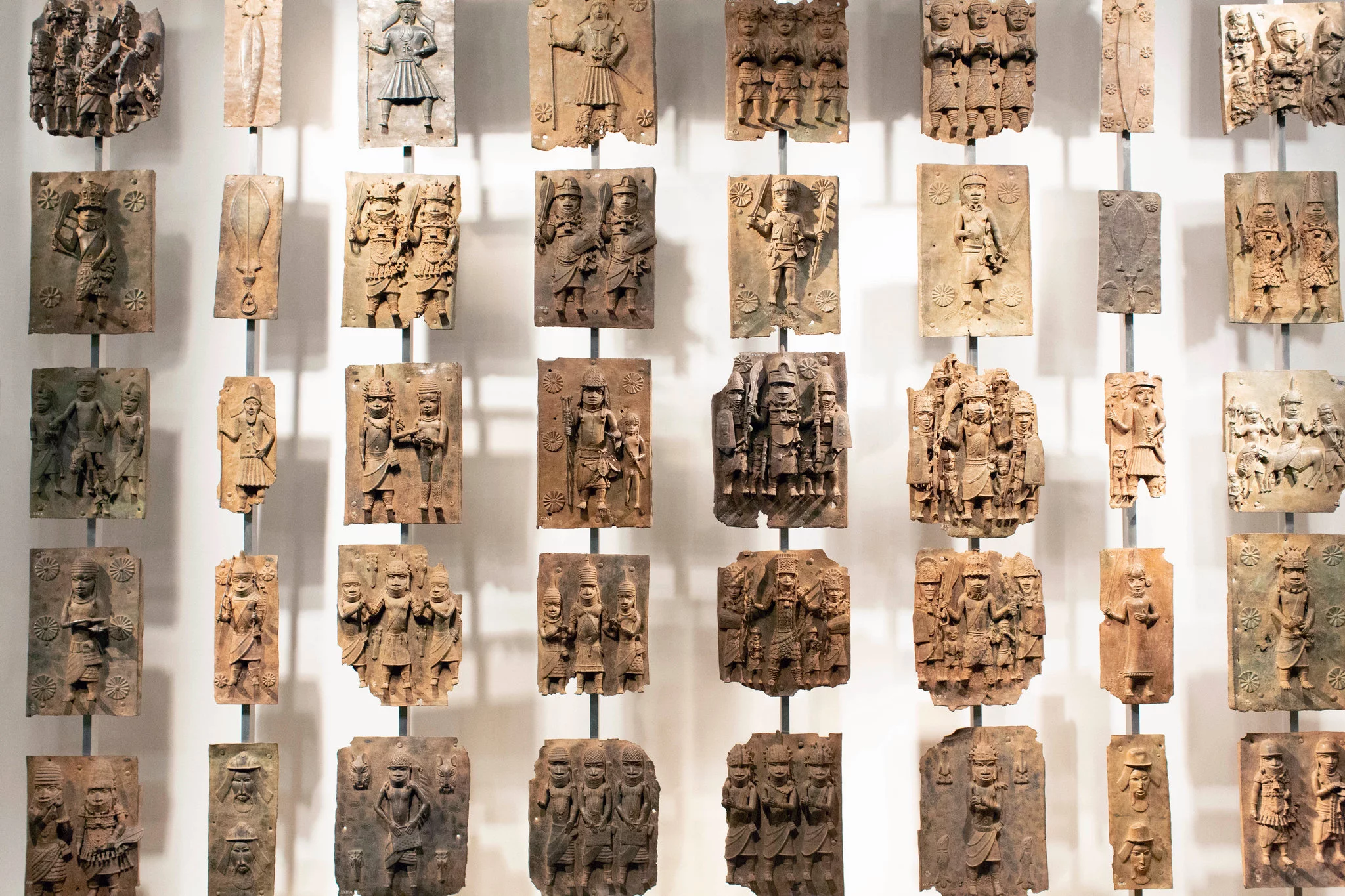
- Meticulous provenance research left Swiss museums, including Musée d’ethnographie de Genève, Ethnographic Museum, University of Zurich, and Museum Rietberg, certain the objects were looted.
- Legal ownership transferred to Nigeria while most works remain in physical custody on loan; nine stay temporarily, two to be repatriated.
- Destination uncertain: Museum of West African Art plan scrapped; ownership given to Oba Ewuare II, who plans a royal museum, display gaps remain.
Switzerland’s Coordinated Reckoning
What distinguishes the March 2026 transfers from earlier, isolated acts of return is their coordinated character. Led by Museum Rietberg, eight Swiss museums came together in 2021 to research the provenance of the works they held from Benin, working in collaboration with partners from Nigeria. In total, 96 works are held by the eight participating museums in German- and French-speaking Switzerland. myScience
The research was methodical and, in the end, unambiguous. The directors of the Musée d’ethnographie de Genève, the Ethnographic Museum at the University of Zurich, and Museum Rietberg stated that meticulous research had left them with no doubt that their museum collections contained looted objects. Ocula Alongside the Rietberg’s eleven, the Ethnographic Museum at the University of Zurich repatriated fourteen objects, and the Musée d’ethnographie de Genève also participated in the transfers. AOL
The Swiss action does not exist in isolation. German museums restituted some 1,100 works to Nigeria in 2022, the Netherlands returned 119 objects in 2025, and the University of Cambridge announced in February 2026 that it would restitute 116 works to Nigeria. ArtDependence What was once treated as an exceptional gesture is becoming, incrementally, a professional norm.
The Terms of Return: Ownership Versus Physical Presence
Here it is worth being precise, because the distinction matters for how we evaluate these transfers. Not all eleven objects are physically leaving Zurich immediately. Two will be repatriated, while nine will remain on loan in the museum’s collections. AOL Legal ownership transfers to Nigeria; physical custody, at least temporarily, does not. The remaining works will be returned to Nigeria in summer 2026. ArtDependence
One object merits its own note: a pendant bronze mask dating as far back as the 17th century, also found in Benin City’s sacked Royal Palace, did not arrive at the Rietberg until 2011. After an auction in 1902, it was sold to German and American collectors, before returning to Europe after a Dutch dealer acquired it in 2009. It will now stay in Zurich as a permanent loan. The Art Newspaper The object’s itinerary — auction, American collection, Dutch dealer, Swiss museum — maps neatly onto the infrastructure of the twentieth-century art market’s willingness to absorb unresolved provenance without asking too many questions.
Where the Objects Will Go
The question of destination is not settled. Around 150 original artworks have been physically returned to Nigeria in the last five years, but none are currently on display. A new Museum of West African Art (MOWAA) in Benin City was originally expected to house the returned Benin Bronzes, but the plan was scrapped in 2023 when Nigeria’s federal government granted ownership of the bronzes to Ewuare II, the current ceremonial Oba of Benin, a descendant of the royals who once owned the artworks. He has since announced plans to build a royal museum for their display. Artnews
The gap between legal return and public accessibility is a legitimate critical point — not a reason to delay restitution, but a challenge that Nigeria, with appropriate international support, must now address. The infrastructure of display and conservation is not the responsibility of the institution that looted the objects, but it is a practical reality that determines whether communities can engage with their reclaimed heritage.
Read more from the original source
